

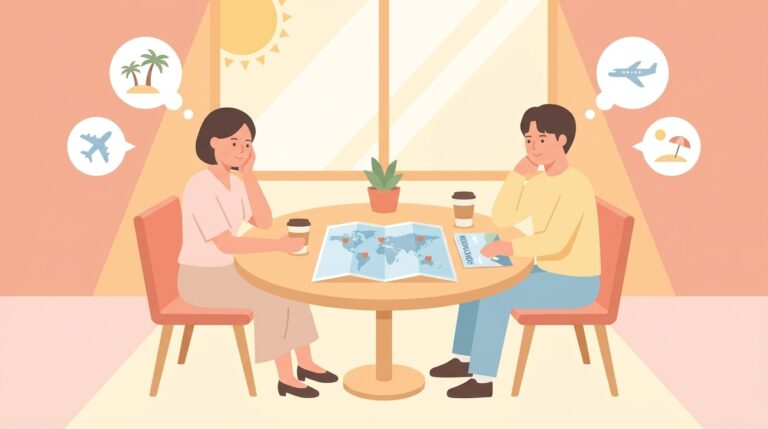
Planning a Korean Honeymoon: Essential Phrases and Cultural Insights
Phase 1: Empathy & K-Culture Opening
안녕하세요! Welcome to Daily Hangul! I’m your local cultural navigator. If you’ve ever watched a Korean drama like Queen of Tears or Crash Landing on You, you know that in Korea, a wedding isn’t just a one-day celebration—it’s the culmination of months of intense coordination, compromise, and social etiquette. Nowhere is this dynamic more alive than in 신혼여행 (Sinhon-yeohaeng)—the honeymoon planning stage!
Planning a honeymoon in Korean culture involves balancing mutual romance with family considerations, vacation day limits, and realistic budgets. Many intermediate learners stumble when trying to express subtle preferences, politely negotiate destinations with a partner or travel agent, or talk naturally with Korean in-laws. Based on real feedback from hundreds of our B2 learners, navigating these nuanced conversations requires more than dictionary definitions—it requires intermediate cultural vocabulary. By mastering this unit, you will learn how to discuss vacation styles, align budgets, and gracefully navigate Korean couples’ negotiation strategies.
Phase 2: Key Expressions Breakdown
1. 휴양지 vs 관광지 (Hyuyangji vs Gwangwangji)
- Pronunciation: [Hyu-yang-ji vs Gwan-gwang-ji] (Sounds like “hyoo-yahng-jee” vs “gwahn-gwahng-jee”)
- Meaning: Resort/relaxation getaway vs Sightseeing/active tour destination.
- K-Culture Moment: Couples sitting in a cozy café in Yeonnam-dong with iPads open, debating whether to take a relaxing beach trip to Bali or a packed museum tour across Europe.
- Editor’s Insight: This is the ultimate Korean honeymoon dilemma. Koreans categorize almost every travel destination into whether the trip focuses on healing (휴양) or exploration (관광).
- Situation Spectrum: Casual ✅ | Semi-formal ✅ | Formal ✅
- 🤔 Think About It: Does your native culture divide vacations strictly into “resting” vs “seeing things”? How does this binary affect your travel choices?
2. 가성비 vs 가심비 (Gaseongbi vs Gasimbi)
- Pronunciation: [Ga-seong-bi vs Ga-sim-bi] (Sounds like “gah-sung-bee” vs “gah-shim-bee”)
- Meaning: Cost-effectiveness (Value for Money) vs Psychological satisfaction (Value for Emotion).
- K-Culture Moment: Browsing flight tickets and luxury pool villas late at night, saying: “신혼여행이니까 가심비를 챙기자!” (“It’s our honeymoon, let’s prioritize emotional happiness over cost!”)
- Editor’s Insight: While 가성비 has been standard for years, 가심비 has become vital among Millennials and Gen Z Koreans for once-in-a-lifetime events like weddings.
- Situation Spectrum: Casual ✅ | Semi-formal ✅ | Formal ⚠️
- 🤔 Think About It: When planning a milestone trip, where do you draw the line between sticking to a budget and indulging in a dream experience?
3. 의견을 조율하다 (Uigyeoneul joyulhada)
- Pronunciation: [Ui-gyeo-neul jo-yul-ha-da] (Sounds like “wee-gyun-eul joh-yool-hah-dah”)
- Meaning: To coordinate / reconcile differing opinions (literally “to tune opinions like an instrument”).
- K-Culture Moment: Discussing flight dates and budget with wedding planners, gently adjusting plans to satisfy both partners.
- Editor’s Insight: 조율하다 implies finding harmony without confrontation. It is polite, mature, and essential for intermediate Korean speakers.
- Situation Spectrum: Casual ⚠️ | Semi-formal ✅ | Formal ✅
- 🤔 Think About It: Notice the musical metaphor (“tuning”). How does using harmonious language change how conflicts are resolved in Korean relationships?
Phase 3: Textbook Korean vs Real Korean
Situation 1: Expressing preference for a relaxing trip
- 📖 교과서 한국어 (Textbook): 저는 편안하게 쉴 수 있는 바다로 여행을 가고 싶습니다. (Jeoneun pyeonanhage swil su inneun badaro yeohaengeul gago sipseumnida.)
- 🗣️ 진짜 한국어 (Real-life B2): 결혼식 끝나면 진짜 지칠 텐데, 이번엔 그냥 푹 쉬는 휴양지로 가자. (Gyeolhonsik kkeunnamyeon jinjja jichil tende, ibonen geunyang puk swineun hyuyangjiro gaja.)
- 💡 Why the difference? Real Koreans mention post-wedding exhaustion directly using descriptive adverbs like 푹 (deeply/thoroughly) rather than robotic sentence patterns.
Situation 2: Suggesting an upgrade within reasonable boundaries
- 📖 교과서 한국어 (Textbook): 호텔의 등급을 조금 더 높이는 것이 어떨까요? (Hoterui deunggeubeul jogeum deo nop-ineun geosi eotteolkkayo?)
- 🗣️ 진짜 한국어 (Real-life B2): 평생 한 번뿐인 신혼여행인데, 숙소는 조금 무리해서라도 좋은 데로 잡을까? (Pyeongsaeng han beonppunin sinhon-yeohaeng-inde, suksoneun jogeum murihaeseorado joeun dero jabeulkka?)
- 💡 Why the difference? The phrase 평생 한 번뿐인 (once in a lifetime) is universally understood in Korean wedding culture to justify splashing out on special memories.
Phase 4: K-Culture Deep Dive & Non-Verbal Manners
4-1. Nunchi & Non-Verbal Etiquette during Honeymoon Discussions
When discussing honeymoon destinations with your partner or potential in-laws, avoid dogmatic declarations like “I definitely won’t go to Europe.” Instead, soften statements with a thoughtful nod and open posture. Use sentence endings like ~는 편이 좋을 것 같아요 (“I think it might be better to…”) to demonstrate consideration (배려).
4-2. Cultural Code: The Post-Wedding Fatigue Factor
Korean weddings are fast-paced, high-energy events often squeezed into 60-to-90-minute wedding hall slots followed by greeting hundreds of guests. Because of this social intensity, the preference for luxury pool villas in Bali, Hawaii, or the Maldives has surged over exhausting 10-city European sightseeing itineraries. Understanding this collective exhaustion helps you appreciate why “healing travel” is treated as an absolute priority.
Phase 5: Real-Life Roleplay Scenario
Setting: A stylish café in Gangnam on a Sunday afternoon. You and Min-woo (민우), your Korean fiancé, are meeting with Su-jin (수진), an experienced honeymoon travel coordinator.
- Turn 1 (수진 – Travel Agent): 두 분, 생각해 두신 신혼여행지나 선호하는 여행 스타일이 있으실까요?
(Du bun, saenggakhae dusin sinhon-yeohaengjina seonhohaneun yeohaeng seutairi isseusilkkayo?)
🎭 Leans forward with a warm smile, opening a portfolio of travel destinations.
“Do you two have a specific destination or preferred travel style in mind?” -
Turn 2 (You): 저희는 관광보다는 푹 쉴 수 있는 휴양지 위주로 알아보고 있어요.
(Jeohuineun gwangwangbodaneun puk swil su inneun hyuyangji wijuro arabogo isseoyo.)
🎭 Looking at your partner with a gentle smile before answering.
“We are looking mainly at relaxing resort destinations rather than active sightseeing.” -
Turn 3 (민우 – Partner): 맞아요. 결혼 준비하느라 둘 다 에너지를 많이 써서 힐링이 필요해요.
(Majayo. Gyeolhon junbihaneura dul da eneojireul mani sseoseo hilling-i pil-yohaeyo.)
🎭 Nodding in complete agreement, exhaling with relief.
“That’s right. We used so much energy preparing for the wedding that we really need healing.” -
Turn 4 (수진 – Travel Agent): 그렇다면 하와이나 발리 풀빌라를 추천해 드려요. 일정과 예산은 어떻게 잡고 계세요?
(Geureotamyeon Hawaina Balli pulbillareul chucheonhae deuryeoyo. Iljeong-gwa yesaneun eotteoke japgo gyeseyo?)
🎭 Showing vivid photos of ocean-view villas on a tablet.
“In that case, I recommend Hawaii or a private pool villa in Bali. What timeline and budget are you considering?” -
Turn 5 (You): 5박 7일 정도로 생각 중인데, 숙소 컨디션이 제일 중요해요.
(Obak chiril jeongdoro saenggak jung-inde, sukso keondisyeoni jeil jung-yohaeyo.)
🎭 Tapping on the villa images attentively.
“We are thinking about 5 nights and 7 days, and room quality is our top priority.” -
Turn 6 (민우 – Partner): 비행시간이 너무 길지 않으면서도 가심비를 채울 수 있는 곳이면 좋겠어요.
(Bihaengsigani neomu gilji aneumyeonseodo gasimbireul chae-ul su inneun gosimyeon jokesseoyo.)
🎭 Looking back and forth between you and the planner.
“We’d love somewhere without an overly long flight that still gives great emotional satisfaction.” -
Turn 7 (수진 – Travel Agent): 딱 맞는 맞춤형 패키지가 있습니다. 두 분 일정에 맞춰 항공권과 리조트를 조율해 드릴게요.
(Ttak manneun matchumhyeong paekijiga itseumnida. Du bun iljeong-e matchwo hanggonggwon-gwa rijoteureul joyulhae deurilgeyo.)
🎭 Taking notes quickly with an encouraging expression.
“I have the perfect customized package. I will coordinate the flights and resort according to your schedule.” -
Turn 8 (You): 네, 세부 견적서 나오면 상의해 보고 결정할게요! 감사합니다.
(Ne, sebu gyeonjeokseo naomyeon sang-uihae bogo gyeoljeonghalgeyo! Gamsahamnida.)
🎭 Nodding politely and taking the brochure.
“Great, once the detailed quote comes out, we will discuss it together and decide! Thank you.”
🔀 Interactive Choice Point
The agent asks if you would like to include a mandatory group photoshoot package in your itinerary for an extra fee. How do you respond?
- Option A: “스냅 촬영은 저희끼리 자유롭게 찍는 편이 더 편할 것 같아서, 빼주셔도 괜찮아요.” (Polite negotiation)
- Feedback (Best!): Perfect B2 phrasing! It softens the rejection politely without awkwardness.
- Option B: “그거 완전 돈 낭비 아니에요? 절대 안 해요.” (Blunt and dismissive)
- Feedback (Bad): Extremely rude in Korean business etiquette; causes awkward tension.
- Option C: “필요 없는데… 혹시 공짜로는 안 돼요?” (Passive-aggressive request)
- Feedback (Risk): Demanding complimentary add-ons outright damages rapport with your coordinator.
Phase 6: 10-Second Emotion Shadowing Drill
Practice reading these with authentic rhythm and pitch dynamics:
[😊 설레고 기대에 차서]
평생 한 번뿐인 신혼여행이니까 / 우리 마음에 쏙 드는 곳으로 가자!
(Pyeongsaeng han beonppunin sinhon-yeohaeng-inikka / uri ma-eume ssok deuneun gosuro gaja!)-
[🤔 진지하고 조심스럽게]
예산 범위 안에서 / 가성비랑 가심비를 둘 다 챙길 수 있는 곳을 찾아보자.
(Yesan beomwi an-eseo / gaseongbirang gasimbireul dul da chaenggil su inneun goseul chajaboja.) -
[🥺 아쉽지만 다정하게 설득하며]
유럽 관광도 좋지만 / 이번에는 몸도 쉴 겸 / 따뜻한 휴양지로 가는 건 어때?
(Yureop gwangwangdo jochiman / ibon-eneun momdo swil gyeom / ttatteutan hyuyangjiro ganeun geon eottae?)
Phase 7: K-Culture Mini Dictionary
- 호캉스 (Hokangseu) | Hotel + Vacance (Staycation) | Staying at high-end hotels purely for indoor relaxation and amenities rather than sightseeing.
- 얼리버드 예약 (Eollibeodeu Yeyak) | Early-Bird Booking | Reserving flights and luxury suites 6 to 9 months in advance to secure prime wedding season dates.
- 스냅사진 (Seunaep-sajin) | Honeymoon Snap Photography | Hiring a local professional photographer at the honeymoon spot for aesthetic couple photos.
- 답례품 (Dangnyepum) | Return Favors / Small Gifts | Souvenirs brought back from honeymoons to gift to colleagues and close relatives.
Phase 8: Traveler’s Survival Kit
Top 3 Survival Expressions
- 견적서 이메일로 보내주실 수 있나요? (Gyeonjeokseo imeillo bonaejusil su innayo?)
- Pro Tip: Always ask for written quotes via email when comparing wedding and travel packages.
- 허니문 특전이나 프로모션이 포함되어 있나요? (Heonimun teukjeonina peuromosyeoni pohamdoeeo innayo?)
- Pro Tip: In Korea, honeymoons frequently come with complimentary room upgrades or champagne.
- 취소 및 환불 규정이 어떻게 되나요? (Chwiso mit hwanbul gyujeong-i eotteoke doenayo?)
- Pro Tip: Clarify refund deadlines clearly before placing down payments (계약금).
Editor’s Travel Note
When planning travel within Korea or researching destination reviews from Korean travelers, rely on 네이버 지도 앱 다운로드 for real customer reviews and domestic travel booking. For international itineraries, Korean couples heavily use dedicated wedding platforms like Make My Wedding and Blind to cross-check reasonable market rates.
Phase 9: “A Step Deeper” (Cultural Reflection)
In Western individualism, a honeymoon is purely an intimate escape between two individuals. In Korean society, however, the honeymoon still subtly connects to social reciprocation. Couples often budget specifically for 답례품 (return souvenirs) for their company teams who covered their shifts during marriage leave. The selection of the destination reflects not only personal taste, but also mutual consideration and social awareness. Planning a honeymoon in Korean is therefore a masterclass in relational harmony.
💬 Your Turn: How does your home culture view honeymoon planning? Do you prioritize total relaxation or busy exploration? Share your thoughts in the comments below!
Phase 10: FAQ & Common Mistakes
Q: Is it rude to negotiate wedding package prices in Korea?
A: Not at all! However, directly demanding discounts (“깎아주세요”) is frowned upon. Instead, ask politely for value additions: “혹시 추가 혜택이나 포함된 서비스가 더 있을까요?” (“Are there any additional benefits or included services?”).
Q: What is the most popular Korean honeymoon destination today?
A: For overseas travel, Hawaii, Bali, and the Maldives remain the top tier. Domestically, Jeju Island luxury resort stays remain the timeless favorite.
Q: Can I use informal speech (반말) when talking to a wedding travel planner?
A: No. Always use 해요체 or 하십시오체 formal language when dealing with service coordinators to maintain professional respect.
🚨 Common Mistakes Warning Board
- Mistake: Confusing 휴양 (rest/resort) with 관광 (tour/sightseeing) when booking.
- Correct Action: Clearly specify your vacation style early to prevent mismatched packages.
- Mistake: Saying “가격을 줄여라” (imperative command).
- Correct Action: Say “예산에 맞게 일정을 조정할 수 있을까요?” (“Could we adjust the itinerary to match our budget?”).
- Mistake: Forgetting to ask about 유류할증료 (fuel surcharges) and taxes in quotes.
- Correct Action: Always ask: “유류할증료와 세금이 모두 포함된 최종 금액인가요?”.
Phase 11: Action Missions
- 🥉 Bronze Mission: Practice saying the 3 Shadowing Drill sentences aloud three times with correct intonation.
- 🥈 Silver Mission: Write a 2-sentence comment below stating your dream honeymoon destination using 휴양지 or 관광지.
- 🥇 Gold Mission: Use the phrase 의견을 조율하다 in a real Korean conversation or language exchange session this week.
- 🎮 K-Culture Mission: Watch an episode of a modern romance K-Drama and spot when the characters debate travel or wedding preparations!
Phase 12: Interactive Quiz Challenge
Test your understanding of Korean honeymoon culture and vocabulary!
1. Situation Quiz: You want to tell your coordinator that psychological satisfaction is more important to you than just finding the cheapest deal. Which keyword should you use?
* A) 가성비
* B) 가심비
* C) 답례품
2. Fill-in-the-Blank:
“결혼식 끝나고 너무 힘들 것 같아서, 관광보다는 푹 쉴 수 있는 ( )(으)로 가기로 했어요.”
* A) 관광지
* B) 휴양지
* C) 출장지
3. True or False: In Korean travel culture, asking for a detailed quote (견적서) before confirming a booking is considered impolite.
* A) True
* B) False
🔍 Click here to reveal the Answers & Explanations!
- Answer: B (가심비) — 가심비 refers to emotional and psychological value, whereas 가성비 is strict price-to-performance ratio.
- Answer: B (휴양지) — A relaxing destination focused on recuperation is a 휴양지.
- Answer: B (False) — Requesting a detailed quote (견적서) is standard and recommended practice in Korean wedding and travel planning.







