

Phase 1: Empathy (Story-Immersive Opening)
안녕하세요! 매일한글 에디터입니다. (Hello! I’m your Daily Hangul Editor.)
Picture this: You are sitting at a bustling cafe in Euljiro, Seoul, surrounded by the hum of espresso machines and keyboard clicks. You need to log into your Korean banking app or enter your friend’s passcode to open their door lock, but your mind suddenly goes completely blank. You reach into your pocket, panic rising—wait, what was that four-digit pin again? In high-tech, ultra-connected South Korea, where everything from ordering tteokbokki to paying subway fares happens in a split second via smartphone, a growing phenomenon known as 디지털 치매 (Dijiteol Chimae – Digital Dementia) has become a major societal talking point.
At a C2 mastery level, discussing cognitive health, screen dependency, and mindfulness isn’t just about memorizing vocabulary; it’s about navigating the subtle socio-cultural discourse of modern Korean life. Whether you’re conversing with colleagues about workplace burnout, discussing digital fasting trends in Seongsu-dong, or engaging in a deep debate on neurological wellness, this guide is crafted from real-world advanced learner feedback to give you the precise, natural expressions native speakers use when their brains need a hard reboot. Let’s dive into sharpening your linguistic and cognitive edge!
Phase 2: Top 3 Core Advanced Expressions
1. 뇌를 쉬게 하다 / 멍때리다 (Noereul swige hada / Meongttaerida)
- Pronunciation: [Noe-reul swi-ge ha-da / Meong-ttae-ri-da] (Sounds like “Nway-reul swee-geh ha-da” / “Mung-tteh-ree-dah”)
- Meaning: Literal: To let the brain rest / To hit a blank daze. | Nuance: Engaging in intentional cognitive downtime to counter information overload.
- K-Culture Moment: Frequently featured on variety shows like I Live Alone (나 혼자 산다), where celebrities participate in the famous “Han River Space-out Contest” (한강 멍때리기 대회) to destress.
- Editor’s Insight: While
멍때리다was once considered slang, it is now an acknowledged wellness cultural concept in Korea. At the C2 level, pairing it with뇌를 쉬게 하다creates an elegant balance between conversational warmth and thoughtful insight.- Situation Spectrum: Casual (✅ 멍때리다) / Semi-formal (✅ 뇌에 휴식을 주다) / Formal (✅ 뇌 피로를 완화하다)
- 🤔 Think About It: In hyper-productive societies, why has “doing nothing” evolved from a perceived vice into an essential therapeutic skill?
2. 깜빡깜빡하다 (Kkamppak-kkamppakhada)
- Pronunciation: [Kkam-ppak-kkam-ppak-ha-da] (Think of a blinking light: “Ggahm-ppahk-ggahm-ppahk-ha-da”)
- Meaning: Literal: To blink or flicker repeatedly. | Nuance: Experiencing temporary memory lapses or brain fog where short-term details slip away.
- K-Culture Moment: Common in K-Dramas when a sharp, perfectionist corporate lead realizes they forgot their spouse’s anniversary or an essential meeting detail due to sheer digital burnout.
- Editor’s Insight: This onomatopoeic verb mimics the flickering of a dying lightbulb. Saying “요즘 자꾸 깜빡깜빡해요” conveys a self-deprecating, relatable human touch without sounding clinically ill.
- Situation Spectrum: Casual (✅) / Semi-formal (✅) / Formal (⚠️ Prefer
단기 기억 저하를 겪다)- 🤔 Think About It: How does using visual onomatopoeia change our psychological attitude toward cognitive lapses compared to clinical terms in your native language?
3. 뇌세포를 깨우다 (Noeseporeul kkaeuda)
- Pronunciation: [Noe-se-po-reul kkae-u-da] (Sounds like “Nway-seh-poh-reul ggeh-oo-dah”)
- Meaning: Literal: To awaken one’s brain cells. | Nuance: Stimulating cognitive agility through analog activities like reading, writing by hand, or mental arithmetic.
- K-Culture Moment: Often heard among Korean MZ generations embracing the Godsaeng (갓생 – diligent life) trend, swapping smartphone scrolling for morning journaling or chess.
- Editor’s Insight: This phrase is dynamic and empowering. Use it when suggesting stimulating activities rather than just passively resting.
- Situation Spectrum: Casual (✅) / Semi-formal (✅) / Formal (✅)
- 🤔 Think About It: Why is physical handwriting (필기) experiencing a major renaissance among younger Koreans in the age of generative AI?
Phase 3: Textbook Korean vs. Real Native Korean
Situation 1: Talking about forgetting simple numbers due to smartphone reliance
- 📖 교과서 한국어 (Textbook): 저는 스마트폰 때문에 기억력이 감퇴하고 있습니다. (Jeoneun seumateu-pon ttaemune gieongnyeogi gamtoehago itseumnida. – “My memory capacity is declining because of my smartphone.”)
- 🗣️ 진짜 한국어 (Real Native): 핸드폰 없으면 가족 번호도 안 떠올라요. 완전 디지털 치매라니까요. (Haendeupon eopseumyeon gajok beonhodo an tteoollayo. Wanjeon dijiteol chimaeranikkayo. – “Without my phone, I can’t even recall my family’s numbers. It’s totally digital dementia.”)
- 💡 왜 다를까? (Why the difference?): Native Korean speakers favor experiential evidence (like not recalling phone numbers) and casual hyperbole over rigid academic terminology.
Situation 2: Proposing a screen-free weekend
- 📖 교과서 한국어 (Textbook): 주말 동안 전자기기 사용을 중단합시다. (Jumal dongan jeonjagigi sayongeul jungdanhapssida. – “Let us cease electronic device usage during the weekend.”)
- 🗣️ 진짜 한국어 (Real Native): 이번 주말엔 폰 끄고 ‘도파민 디톡스’나 한번 제대로 해보려고요. (Ibeon jumalen pon kkeugo ‘dopamin ditokseu’na hanbeon jedaero haeboryeogoyo. – “This weekend, I’m planning to turn off my phone and do a proper dopamine detox.”)
- 💡 왜 다를까? (Why the difference?): Contemporary Korean conversation integrates modern psych-wellness terms like ‘도파민 디톡스’ (Dopamine Detox) with conversational sentence endings like
-(으)려고요.
Phase 4: K-Culture Deep Dive & Non-Verbal Manners
4-1. 눈치 (Nunchi) & Mindful Gestures
When discussing memory lapses or brain fatigue in Korean social settings:
* Head-Tapping with Modesty: Lightly tapping the side of your forehead with index fingers while smiling awkwardly softens the admission of forgetfulness without signaling professional incompetence.
* Screen Inversion Manner: In modern Korean etiquette, placing your smartphone face down (액정을 엎어놓기) during meetings or deep conversations signals total presence and active listening, demonstrating high social 눈치 (nunchi).
4-2. The Analog Retro Craze (뉴트로 & 텍스트 힙)
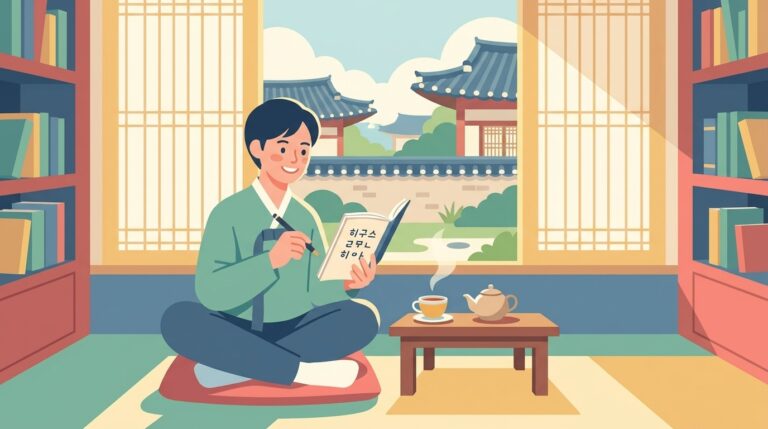
South Korea is currently riding the ‘Text Hip’ (텍스트 힙) wave—where reading physical books, writing analog diaries (다꾸 – 다이어리 꾸미기), and visiting silent book cafes in neighborhoods like Mangwon and Paju Book City are considered the pinnacle of aesthetic cool. Koreans are actively resisting cognitive decline by turning screen-free moments into artistic self-care.
Phase 5: Real-World Roleplay Scenario
Setting: A quiet indie book cafe in Yeonnam-dong. You are chatting with Min-seo, a senior product designer who is feeling completely overwhelmed by notifications.
- 민서: 요즘 화면만 쳐다봤더니 머리가 굳는 느낌이에요. 어제는 제 집 현관 비밀번호도 깜빡한 거 있죠? (Yojeum hwamyeonman chyeodabwatdeoni meoriga gunneun neukkimieyo. Eojeneun je jip hyeongwan bimilbeonhodo kkamppak-han geo itjyo?)
🎭 이마를 짚으며 쓴웃음을 짓는다. (Min-seo touches her forehead with a rueful smile.)
(English: “Looking at screens all day makes my brain feel frozen. Yesterday, I even blanked out on my door passcode!”) -
나 (You): 맞아요, 저도 그래요. 알림에 치이다 보면 뇌세포가 파업하는 기분이라니까요. (Majayo, jeodo geuraeyo. Allime chiida bomyeon noesepoga paeophaneun gibuniranikkayo.)
🎭 고개를 격하게 끄덕이며 공감한다. (Nodding vigorously in empathy.)
(English: “I know right! Being bombarded with notifications makes it feel like my brain cells are on strike.”) -
민서: 그래서 특단의 조치로 오늘부터 디지털 디톡스를 시작했어요. (Geuraeseo teukdanui jochiro oneulbuteo dijiteol ditokseureul sijakhaesseoyo.)
🎭 가방에서 가죽 다이어리와 만년필을 꺼내 보여준다. (Pulling out a leather journal and fountain pen.)
(English: “So as a drastic measure, I started a digital detox today.”) -
나 (You): ─── (Interactive Choice below) ───
🔀 Interactive Choice Point
- Option A: 와, 아날로그 감성 제대로네요! 손으로 직접 쓰면 뇌 자극에도 훨씬 좋대요. (Wa, analogeu gamseong jedaeroneyo! Soneuro jikjeop sseumyeon noe jageugedo hwolssin jotaeyo.)
- Option B: 비밀번호를 잊어버리셨으면 병원에 가서 치매 검사를 받아보세요. (Bimilbeonhoreul ijeobeorisyeosseumyeon byeongwone gaseo chimae geomsareul badaboseyo.)
- Option C: 핸드폰 앱에 다이어리 쓰면 더 편하고 백업도 잘 되는데요? (Haendeupon aebe daieori sseumyeon deo pyeonhago baegeopdo jal doeneundeyo?)
💡 Branch Feedback
- Option A (Best – Natural & Culturally Astute): Praises the analog aesthetic while reinforcing the cognitive wellness topic smoothly. Deepens rapport.
- Option B (Bad – Socially Awkward): Excessively literal and alarmist. Recommending a clinical dementia test for a relatable digital slip kills the warm vibe.
- Option C (Risk – Tone-Deaf): Undermines the friend’s intentional detox effort by steering them right back to smartphone apps.
Phase 6: 10-Second Emotional Shadowing Drill
Practice matching pitch, rhythm, and nuanced emotional intent:
[😅 멋쩍고 공감대를 형성하며]
“스마트폰 없으면 / 아무것도 못 외우는 거, / 저만 그런 거 아니죠?”
(Seumateupon eopseumyeon / amugeotdo mot oeuneun geo, / jeoman geureon geo anijyo?)
(English: “Not being able to memorize anything without a smartphone… I’m not the only one, right?”)-
[🧠 결연하고 상쾌하게]
“오늘은 폰 딱 덮어두고, / 머리 좀 맑게 비워내 보려고요!”
(Oneureun pon ttak deopeodugo, / meori jom makge biwonae boryeogoyo!)
(English: “Today, I’m shutting my phone down and thoroughly clearing my mind!”)
Phase 7: K-Culture Mini Dictionary
- 도파민 네이션 (Dopamin Neisyeon – Dopamine Nation): Widely used in Korean essay circles and tech discussions to describe smartphone addiction and short-form video dependency.
- 뇌피셜 (Noepisyal – Brain + Official): A blend of Brain (뇌) and Official (오피셜) meaning an unverified, subjective thought or opinion based on one’s own intuition.
- 필사 (Pilsa – Transcribing/Handwriting texts): The cultural practice of meticulously copying classic literary excerpts into a notebook to calm anxiety and sharpen memory.
- 갓생 (Godsaeng – God-level Productive Life): A portmanteau of God (갓) and Life (생), describing a disciplined daily routine emphasizing analog mindfulness and self-betterment.
Phase 8: Traveler’s Cognitive Survival Kit
Survival Expressions Top 3
- 1. 배터리가 방전돼서 길을 못 찾겠어요. (Baeteoriga bangjeondwaeseo gireul mot chatgesseoyo.)
Pro Tip: Use this when your phone dies in Seoul and you must rely on asking real people for navigation. - 2. 혹시 메모지랑 펜 좀 빌릴 수 있을까요? (Hoksi memojirang pen jom billil su isseulkkayo?)
Pro Tip: Great for cafes when you want to write by hand instead of typing notes. - 3. 잠시 머리 좀 식히고 올게요. (Jamsi meori jom sikigo olgeyo.)
Pro Tip: A refined, C2-level way to step out for fresh air during high-intensity group activities or meetings.
Editor’s Travel Note
When navigating Korea without over-relying on screens, practice memorizing subway station numbers along Seoul Metro Line 2. Before stepping out, search destinations via the 네이버 지도 앱 다운로드 page, sketch the landmarks on a paper memo, and try navigating solely with your spatial memory!
Phase 9: “Think Deeper” (한 발 더 깊이)
Korea’s legendary ‘빨리빨리’ (Ppalli-ppalli – Hurry-hurry) culture built one of the world’s most advanced 5G digital infrastructures, yet it also created unprecedented cognitive fatigue. In response, modern Korean society is pioneering counter-cultural movements—from “screen-free temple stays” in Gangwon-do to cafes that lock your phone in a safe upon entry. Reflecting on this balance teaches us that true technological fluency is not just about hyper-connectivity, but knowing when to deliberately disconnect.
💬 Your Turn: Have you ever experienced 디지털 치매 where you forgot a basic routine number or word? What is your favorite analog strategy to wake up your brain? Share your thoughts below in Korean!
Phase 10: FAQ & Common Mistakes
Q: Is using the term ‘디지털 치매’ offensive to elderly people?
A: No, it is an established socio-cultural buzzword used widely across Korean news, literature, and casual conversations to describe tech-induced absentmindedness among all age groups.
Q: What is the exact difference between ‘건망증’ and ‘치매’?
A: 건망증 (Geonmangjeung) refers to simple, benign forgetfulness (where a hint jogs your memory), whereas 치매 (Chimae) refers to clinical dementia. When joking about tech habits, stick to 건망증 or 디지털 치매.
Q: How do I naturally ask someone to put their phone down during dinner?
A: You can say with a warm smile: “우리 밥 먹는 동안만 폰 내려놓고 수다 떨어요!” (Let’s put our phones down and just chat while eating!)
🚨 Common Mistakes Alert
- ❌ “제 뇌가 죽었어요.” (Literal translation of ‘My brain is dead’ – sounds morbid/unnatural)
➡️ Correct Action: Say “머리가 안 돌아가요” (My brain isn’t spinning/working) or “머리에 과부하가 걸렸어요” (My brain is overloaded). - ❌ “스마트폰을 금지해요.” (Sounds like an authoritative government ban)
➡️ Correct Action: Say “스마트폰 사용을 줄이고 있어요” (I’m reducing my smartphone usage) or “디지털 단식 중이에요” (I’m on a digital fast). - ❌ “기억이 사라졌어요.” (Sounds like permanent amnesia in a melodrama)
➡️ Correct Action: Say “기억이 가물가물해요” (The memory is hazy) or “생각이 안 떠올라요” (It doesn’t come to mind).
Phase 11: Action Mission
- 🥉 Bronze Level: Write down 3 essential Korean phrases by hand in a notebook using a fountain pen or pencil.
- 🥈 Silver Level: Spend 30 minutes in a cafe without touching your phone. Post a photo of your book or handwritten notes on Instagram with the caption: #디지털디톡스 #뇌를쉬게하자 #매일한글.
- 🥇 Gold Level: Have a 5-minute conversation with a Korean speaker discussing your screen-time habits using the phrase “요즘 깜빡깜빡해서 디지털 디톡스 중이에요.”
- 🎮 K-Culture Mission: Watch an episode of a Korean variety show or reality program and spot every time a cast member zones out (멍때리기) or talks about information overload!
Phase 12: Interactive Quiz Challenge
1. Situational Judgment:
Which phrase is best when explaining that you can’t recall an everyday address because you rely entirely on map bookmarks?
(A) 뇌세포가 완전히 파괴되었어요.
(B) 즐겨찾기만 쓰다 보니 주소가 가물가물하네요.
(C) 전자기기를 절대로 사지 마세요.
🔍 Click to Reveal Answer & Explanation
- Correct Answer: (B)
- Explanation:
가물가물하다perfectly describes a hazy, fading memory in a natural, sophisticated native tone.
2. Fill-in-the-Blank:
“복잡한 생각은 다 비우고 한강을 보면서 멍(____) 시간을 가졌어요.”
🔍 Click to Reveal Answer & Explanation
- Correct Answer: 때리는 (멍때리는)
- Explanation: The idiomatic phrase
멍(을) 때리다means to space out or allow the brain to rest peacefully.
3. True or False:
In modern Korean culture, ‘도파민 디톡스’ and ‘필사’ are seen as outdated practices that only the elderly participate in. (T/F)
🔍 Click to Reveal Answer & Explanation
- Correct Answer: False
- Explanation: These are trending massively among Korean Gen Z and Millennials as part of the stylish Text Hip and Godsaeng lifestyle movements!







