

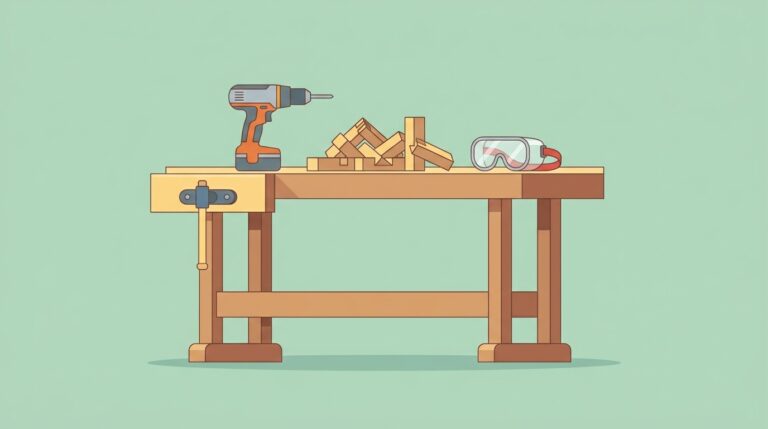
Master Korean DIY Woodworking: Power Drill Operation and Workshop Safety
Phase 1: Empathy & Storytelling Opening
안녕하세요! Welcome back to Daily Hangul! As your trusted local culture navigator, I’m thrilled to dive into a creative and rewarding side of modern Korean living today: DIY furniture making and woodworking (셀프 인테리어와 목공).
Picture this scenario straight out of a slice-of-life K-Drama: You have moved into a trendy, sunlit officetel in Mapo-gu, Seoul. Inspired by aesthetic room-makeover YouTube channels like Today’s House (오늘의집), you decide to assemble an oak wall shelf and custom stool from scratch at a local public woodworking studio (목공방). You confidently pick up a cordless power drill (충전식 전동 드릴), but as soon as you squeeze the trigger, the screw head strips with an ear-splitting screech, the drill bit slips off the wood, and the master carpenter (공방장님) rushes over looking worried, shouting technical instructions in rapid-fire Korean!
Woodworking in Korea is not just a weekend hobby; it is a full-blown cultural movement emphasizing mindfulness, tactile craftsmanship, and neighbor-friendly DIY etiquette. Navigating a bustling Korean woodworking studio requires precise technical vocabulary, command of workplace safety honorifics, and quick auditory comprehension of drill mechanics. Drawing on years of mentoring expatriates and international makers in Korea, this C1-level guide will equip you with native expressions for power drill torque adjustment, bit replacement, and proactive safety communication so you can build with total confidence.
Phase 2: Core Expressions Deep Dive
1. 드릴 비트가 헛돌지 않게 수직으로 꽉 누르세요.
- Pronunciation: Deuril biteuga heotdolji anke sujigeuro kkwak nureuseyo. (Think: Deu-ril bee-teu-ga hut-dol-jee an-keh soo-jeeg-eu-ro kwak noo-reu-seh-yo)
- Meaning: Literal: “Press down tightly perpendicular so the drill bit doesn’t spin in vain.” / Practical Nuance: “Maintain a firm 90-degree downward pressure so the bit doesn’t cam out or strip the screw head.”
- K-Culture Moment: Commonly heard in home renovation shows when an experienced contractor corrects a celebrity rookie who is holding the drill at a slanted angle.
- Editor’s Insight: The verb 헛돌다 (heotdolda) combines the prefix 헛- (futile/wasted/empty) with 돌다 (to spin). In mechanical contexts, it means spinning without grip or slipping.
- Situation Spectrum: Casual: ⚠️ (Use with studio peers as 헛돌지 않게 꽉 눌러) | Semi-formal: ✅ | Formal: ✅ (비트가 헛돌지 않도록 수직 압력을 유지하십시오)
- 🤔 Think About It: Why does Korean craft instruction emphasize directional adverbs like 수직으로 (perpendicularly) and tactile onomatopoeia like 꽉 (tightly/firmly) rather than just saying “be careful”?
2. 목재가 갈라지지 않도록 이중기리로 이중비트를 내주세요.
- Pronunciation: Mokjaega gallajiji antorok ijunggiri-ro ijungbiteureul naejuseyo. (Think: Mok-jeh-ga gal-la-jee-jee an-toh-rok ee-joong-gee-ree-ro ee-joong-bee-teu-reul neh-joo-seh-yo)
- Meaning: Literal: “Make a counter-sink hole with a counterbore bit so the timber doesn’t split.” / Practical Nuance: “Pre-drill countersink pilot holes to prevent the hardwood grain from cracking under screw pressure.”
- K-Culture Moment: A veteran craftsman guiding an apprentice during an artisan wood-turning studio workshop in Yangpyeong.
- Editor’s Insight: 이중기리 (ijunggiri) is widely used workshop jargon originating from mechanical terms referring to countersink/counterbore pilot bits. At the C1 level, mastering workshop-floor vernacular (현장 용어) immediately earns respect from master woodworkers.
- Situation Spectrum: Casual: ⚠️ | Semi-formal: ✅ | Formal: ✅
- 🤔 Think About It: How do specific compound nouns in specialized hobbies reflect the precision of Korean artisanal culture?
3. 토크 조절 다이얼을 목재 경도에 맞춰 한 단계 낮추세요.
- Pronunciation: Tokeu jojeol daieoreul mokjae gyeongdoe matchwo han dangye natchuseyo. (Think: Toh-keu joh-jeol da-ee-ul-eul mok-jeh gyung-doh-eh mat-chwo han dahn-gyeh nat-choo-seh-yo)
- Meaning: Literal: “Lower the torque adjustment dial by one stage in accordance with the timber’s hardness.” / Practical Nuance: “Back off the clutch setting by one click so you don’t overdrive and damage the soft wood surface.”
- K-Culture Moment: Seen in DIY vlog tutorials on Naver TV when assembling soft pine (레드파인/삼나무) flatpack furniture.
- Editor’s Insight: 경도 (gyeongdo) refers to material hardness. In C1 Korean, substituting general terms like 단단함 (hardness) with Sino-Korean technical vocabulary (경도, 강도, 장력) elevates your professional precision.
- Situation Spectrum: Casual: ⚠️ | Semi-formal: ✅ | Formal: ✅
- 🤔 Think About It: How does adjusting speech formality mirror the mechanical calibration of tools in collaborative workspaces?
Phase 3: Textbook Korean vs. Real-World Korean
Situation 1: Warning someone that the screw thread or bit is stripped
- 📖 Textbook Korean: 나사가 손상되어 더 이상 들어가지 않습니다. (The screw is damaged and goes in no further.)
- 🗣️ Real-World Korean: 나사산이 완전히 뭉개졌네요. 비트 빼고 역방향으로 천천히 빼내세요. (The screw thread is completely stripped. Pull the bit and back it out slowly in reverse.)
- 💡 Why the difference?: Textbook Korean uses broad descriptors like 손상되다 (to be damaged), whereas actual Korean woodworkers pinpoint the specific mechanical defect (나사산이 뭉개지다 / 야마나다) to suggest immediate physical countermeasures.
Situation 2: Asking for proper safety goggles and hearing protection before high-RPM drilling
- 📖 Textbook Korean: 안전을 위해 보호 장비를 착용해야 합니다. (We must wear protective equipment for safety.)
- 🗣️ Real-World Korean: 분진 날리니까 보안경이랑 방진마스크 꼭 챙겨 쓰세요. (Wood dust will fly everywhere, so make sure to strap on safety goggles and a dust mask.)
- 💡 Why the difference?: Real craft spaces specify hazard types (분진 – fine particulate dust, 비산물 – flying debris) rather than reciting generic safety slogans.
Phase 4: K-Culture Deep Dive & Non-Verbal Etiquette
4-1. Nunchi & Workshop Body Language
- The Two-Handed Tool Handover: When passing a power drill or impact driver to a coworker or instructor, never point the chuck or bit toward them. Grip the handle, invert the tool so the battery base faces upward or sideways, and present it with both hands (양손으로 건네기). Keep your index finger completely away from the trigger mechanism.
- Auditory Nunchi (소음 눈치): In Korean community workshops or multi-unit housing (빌라/오피스텔), high-impact drilling (해머 기능) produces structure-borne noise. Always announce high-noise operations before engaging your tool by calling out: 소음 납니다! (Making noise!) so others are not startled.
4-2. Cultural Insight: The Korean Maker Movement & “One-Day Classes”
Woodworking in Korea has transformed from an industrial trade into an upscale wellness trend. Across trendy neighborhoods like Seongsu-dong and Yeonhui-dong, “One-Day Woodworking Classes” (목공 원데이 클래스) allow urbanites to craft walnut cutting boards, lamp stands, and custom chairs to decompress from hectic corporate life. Respecting safety protocols and master-craftsman etiquette (공방 예절) is essential for forming genuine community bonds in these spaces.
Phase 5: Real-World Roleplay Scenario
- Setting: Open Woodworking Studio “Namoo Forest” in Seongsu-dong.
- Characters:
- You (Learner): An eager DIY enthusiast assembling a solid white oak bookshelf.
- Master Park (공방장 박 대표님): A veteran woodworker with 25 years of timber craftsmanship.
- [Turn 1] Master Park: 이 목재는 하드우드인 화이트 오크라서 바로 피스를 박으면 100% 쪼개집니다.
(I mokjaeneun hadeuwodeuin hwaiteu okeuraseo baro piseureul bageumyeon baek peosenteu jjogaejimnida.)
“This timber is White Oak hardwood, so if you drive the screw straight in, it will split 100% of the time.”
🎭 Pointing at the clean wood grain with a marking gauge. -
[Turn 2] You: 아, 그럼 결 방향을 고려해서 먼저 이중비트로 예비 구멍을 타공해야겠네요?
(A, geureom gyeol banghyangeul goryeohaeseo meonjeo ijungbiteuro yebi gumeongeul tagonghaeyagetneyo?)
“Ah, so taking the grain direction into account, I should first drill a pilot hole using a countersink bit?”
🎭 Holding the drill body securely and checking the bit alignment. -
[Turn 3] Master Park: 그렇죠! 척(Chuck)을 단단히 조이고, 회전 방향이 정방향인지 꼭 확인하세요.
(Geureochyo! Cheogeul dandanhi joigo, hoejeon banghyangi jeongbanghyanginji kkok hwaginhaseyo.)
“Exactly! Tighten the chuck firmly and make sure the rotation direction is set to forward.”
🎭 Tapping the forward/reverse toggle switch on the drill body. -
[Turn 4] You: 네, 드릴 모드로 맞추고 수직 상태에서 클램프로 부재를 고정한 뒤 작업하겠습니다.
(Ne, deuril modeuro matchugo sujig sangtaeeseo keullaempeuro bujaereul gojeonghan dwi jageophagetseumnida.)
“Yes, I’ll set it to drill mode and clamp the workpiece down while maintaining a 90-degree vertical angle before working.”
🎭 Fastening the F-clamp to lock the oak board to the workbench. -
[Turn 5] Master Park: 완벽하네요. 방아쇠(트리거)를 당길 때 처음부터 풀 악셀 밟지 말고 천천히 속도를 올리세요.
(WanbyeokhTransformationhaeneyo. Bangasoi-reul dang-gil ttae cheoeumbuteo pul aksel balpji malgo cheoncheonhi sokdoreul olliseyo.)
“Flawless. When pulling the trigger, don’t go full throttle right away; build up the RPM gradually.”
🎭 Demonstrating smooth trigger feathering with his index finger. -
[Turn 6] You: 힘으로만 누르려다 비트가 부러질 뻔했네요. 일정한 압력으로 밀어 넣겠습니다.
(Himeuroman nureuryeoda biteuga bureojil ppeonhaetneyo. Iljeonghan amnyeogeuro mireo neokgetseumnida.)
“I almost snapped the bit trying to force it with pure strength. I will push forward with consistent, steady pressure.”
🎭 Taking a deep breath and aligning sightlines with the drill axis. -
[Turn 7] Master Park: 좋습니다. 깊이 스토퍼 위치까지 깔끔하게 들어갔으니 이제 피스 결합으로 넘어가시죠.
(Jotseumnida. Gipi seutopeo wihikkaji kkalkkeumhage deureogatseuni ije piseu gyeolhabeuro neomeogasijyo.)
“Great. It went in cleanly up to the depth stopper, so let’s move on to screw fastening.”
🎭 Inspecting the smooth pilot bevel with a magnifying glass. -
[Turn 8] You: 감사합니다, 반장님! 토크 클러치를 15단으로 세팅하고 마무리 체결 진행하겠습니다.
(Gamsahamnida, banjangnim! Tokeu keulleochireul sibodan-euro seting-hago mamuri chegyeol jinhaenghagetseumnida.)
“Thank you, Master Park! I’ll set the torque clutch to step 15 and complete the final fastening.”
🎭 Bowing respectfully while toggling the torque ring.
🔀 Interactive Decision Branch
What would you say if the drill suddenly locks up and smells faintly of electrical heat while driving a long screw?
- Option A: “어? 이거 고장 났나 봐요. 그냥 힘으로 세게 끝까지 박아버릴게요!” (Oh? Looks broken. I’ll just force it all the way through with raw power!)
- ❌ Bad Outcome: High risk of burning out the drill motor (모터 과열 소손) or snapping the screw head inside the oak piece.
- Option B: “모터에 부하가 걸린 것 같습니다. 트리거 놓고 역방향으로 풀어서 규격을 재확인하겠습니다.” (The motor seems overloaded. I’ll release the trigger, back it out in reverse, and recheck the specifications.)
- ✅ Best Outcome (Score: 100/100): Professional, safety-conscious C1 response demonstrating mechanical insight and risk prevention.
- Option C: “그냥 드릴 던져두고 쉴게요.” (I’ll just throw the drill aside and take a break.)
- ⚠️ Risk Outcome: Rude workshop etiquette and leaves a hazardous, half-driven fastener on the bench.
Phase 6: 10-Second Emotion Shadowing Drill
- Drill 1 [⚠️ 긴급하고 침착하게 / Urgent yet Composed]:
비트 흔들려요! / 즉시 트리거 놓고 / 척 상태부터 다시 점검하세요!
(Biteu heundeullyeoyo! / Jeuksi teurigeo noko / cheok sangtaebuteo dasi jeomgeomhaseyo!)
“The bit is wobbling! / Release the trigger immediately / and recheck the chuck tightness first!” -
Drill 2 [🧐 전문적이고 꼼꼼하게 / Analytical & Precise]:
소프트우드는 토크를 5단 이하로 낮춰야 / 나사가 헛돌면서 목재를 갉아먹지 않습니다.
(Sopeuteuudeuneun tokeureul odan iharo natchwoya / nasaga heotdolmyeonseo mokjaereul galgameokji anseumnida.)
“For softwood, you must lower torque below step 5 / to prevent the screw from stripping out and chewing up the wood.” -
Drill 3 [😄 성취감 넘치고 경쾌하게 / Accomplished & Cheerful]:
이중기리 깊이가 딱 맞아떨어져서 / 목심(목다보) 마감까지 아주 매끄럽게 끝났습니다!
(Ijunggiri gipiga ttak majatteoreojyeoseo / moksim magamkkaji aju maekkeureopge kkeutnatseumnida!)
“The countersink depth matches up perfectly, / so even the wood dowel plug finish came out completely seamless!”
Phase 7: K-Culture Mini Dictionary
- 목다보 / 목심 (Mokdabo / Moksim): Wooden dowel pins used to conceal screw holes for a refined, seamless grain aesthetic.
- 클램핑 (Keullaemping – Clamping): The indispensable practice of securing workpieces with F-clamps/bar clamps before drilling to avoid dangerous torque spin.
- 집진기 (Jipjingi – Dust Collector): High-power vacuum extraction units connected directly to power tools in Korean eco-workshops to maintain clean air.
- 오발탄 / 야마나다 (Obaltan / Yamanada – Slang): Field slang for a stripped screw head or misaligned hole (나사 머리 마모). The standard Korean term to use is 나사 머리가 뭉개지다.
Phase 8: Traveler’s & Resident’s Survival Kit
TOP 3 Survival Phrases
- 임팩트 드릴 말고 일반 드라이버 드릴로 빌릴 수 있을까요?
(Impaekteu deuril malgo ilban deuraibeo deurillo billil su isseulkkayo?)
Pro Tip: Essential when visiting public tool-rental centers (공구 대여소) inside Seoul Community Service Centers (주민센터). - 보안경과 귀마개는 어디에 비치되어 있나요?
(Boangyeong-gwa gwimagae-neun eodie bichidoeeo innayo?)
Pro Tip: Always locate Personal Protective Equipment (PPE) before switching on heavy machinery. - 목재 결에 맞춰서 샌딩하는 방법 좀 봐주시겠어요?
(Mokjae gyeore matchwoseo saendinghaneun bangbeop jom bwajusigesseoyo?)
Pro Tip: Polite way to request hands-on supervision from studio masters without sounding demanding.
Editor’s Travel & Lifestyle Note
Living in Seoul and need tools for home assembly without buying an expensive kit? Download the Smart Seoul Portal Map Service or check your local Doseo-gwan / Community Center (주민센터 공구도서관) where residents can rent high-grade cordless drills, levelers, and sanders for under 3,000 KRW per day with a simple alien registration card.
Phase 9: A Step Deeper (Reflection)
Korean craft culture is rooted in 정성 (Jeongseong – sincere devotion) and 배려 (Baeryeo – consideration for others). Unlike purely solitary construction, operating in a shared Korean woodworking shop requires acute awareness of ambient safety, noise dissipation, and shared tool stewardship. By honoring the mechanics of the tool and the grain of the wood, the language of Korean craft transforms manual labor into an art form of mutual respect.
💬 Your Turn: Have you ever experienced stripping a screw or running a power drill while making your own furniture? How does your culture handle tool-sharing etiquette? Let’s discuss in the comments below!
Phase 10: FAQ & Common Mistakes
Q: What is the linguistic difference between an 임팩 드라이버 (Impact Driver) and an 해머 드릴 (Hammer Drill) in Korean?
A: An 임팩 드라이버 (Impact Driver) delivers rotational concussive force for driving tough screws into wood/metal without stripping, whereas an 해머 드릴 (Hammer Drill) provides forward hammering percussion specifically designed for penetrating concrete walls (콘크리트 타공).
Q: Can I use informal Banmal (반말) with younger fellow woodcrafters in a studio?
A: Even if workshop peers look younger, community craft spaces in Korea operate under mutual respect honorifics (존댓말). Stick to polite 해요체 (e.g., 비트 좀 빌려주시겠어요?) until mutual intimacy is established.
Q: How do I express that the drill battery is drained and needs swapping?
A: You can say: 배터리 잔량이 다 떨어져서 완충된 팩으로 교체하겠습니다 (The battery level is depleted, so I will swap it with a fully charged pack).
🚨 Common Mistakes Alert Board
- Mistake: Using the drill with loose long hair or gloves with loose fabric strings near rotating chucks.
- Correct Action: Tie hair securely and use tight polyurethane-coated safety gloves (반코팅/PU 장갑).
- Mistake: Forgetting to toggle the forward/reverse lever (정/역회전 레버) and forcing a reverse-spinning drill bit into hardwood.
- Correct Action: Always verify clockwise rotation (시계 방향 회전) before pressing down.
- Mistake: Leaving the drill resting on a high workbench edge where cord tension or vibration can cause it to drop.
- Correct Action: Lay the tool flat on its side in the center of the workbench or hang it via the tool belt clip.
Phase 11: Action Missions
- 🥉 Bronze Mission (Self Practice): Recite the drill trigger safety rule aloud 5 times: “트리거를 당기기 전에 비트 결합 상태와 회전 방향을 먼저 확인한다.”
- 🥈 Silver Mission (Social Engagement): Visit an aesthetic Korean woodworking Instagram or YouTube channel and leave an encouraging comment: “이중기리 가공과 목다보 마감이 정말 깔끔하시네요! 많이 배웁니다.”
- 🥇 Gold Mission (Real Life Application): Rent a drill from your local 주민센터 or visit a Seongsu-dong 목공 원데이 클래스, using at least 3 expressions from this lesson with the instructor.
Phase 12: Interactive Quiz Challenge
1. Situational Judgment: You are driving a 50mm screw into dense walnut timber. The drill bit begins slipping and producing a harsh grinding noise. What is the most appropriate action and phrasing?
* A) 비트가 헛도니까 회전 속도를 최대로 올려서 억지로 밀어 넣는다.
* B) 즉시 트리거를 떼고 비트 규격과 토크 설정을 재점검한다.
* C) 드릴을 바닥에 던져 열을 식힌다.
2. Fill-in-the-Blank: 목재 표면이 쪼개지는 것을 방지하기 위해 본 체결 전에 (__________)로 예비 타공을 해야 합니다.
3. True or False: In Korean community workshops, it is considered normal etiquette to operate high-noise hammer drilling without announcing it to adjacent makers.
🔍 Click here to reveal Answer Key & Explanations
- Answer: B. (Releasing the trigger immediately avoids stripped screw heads (나사산 마모) and motor overload).
- Answer: 이중기리 (Countersink pilot bit) or 이중비트 / 예비드릴 (Pilot bit).
- Answer: False. One must always exercise 눈치 (Nunchi) and verbally alert surrounding makers with “소음 납니다!” before engaging heavy acoustic tools.






