

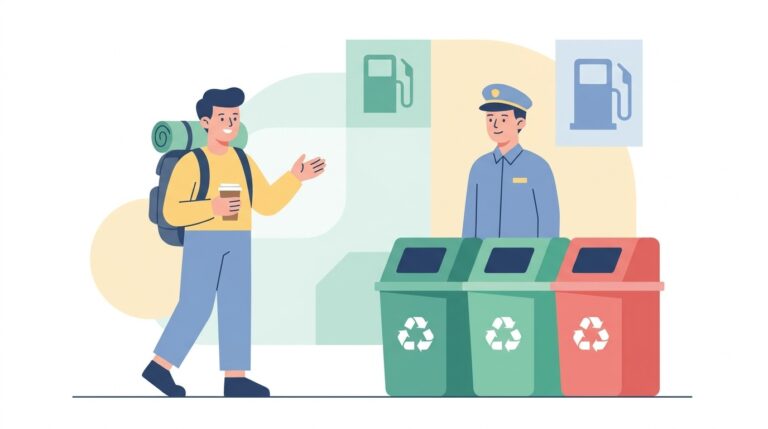
Master Korean Gas Station Etiquette: How to Toss Your Road Trip Trash Like a Pro
Phase 1: Empathy & Storytelling Opening
안녕하세요! (Annyeonghaseyo!) It’s your Daily Hangul editor and favorite Korean culture navigator!
Picture this: You are on an epic road trip across Jeju Island or heading down toward Busan. Your rental car cup holders are overflowing with empty Iced Americano cups, dried squid wrappers, and half-eaten triangle kimbap packaging. You pull into a bright Korean gas station (주유소) to refuel. You spot a neat row of bins near the car wash tunnel, grab your accumulated garbage bag, and step out—only to freeze in panic. In Korea, throwing away trash isn’t just about finding a bin; it’s an art form called Bunrisugeo (분리수거, recycling separation). If you dump everything into one bin, will the attendant scold you? Where do you even ask to throw it away?
Many of our beginner learners tell us they end up hoarding empty coffee cups in their bags for days just to avoid this awkwardness! Don’t worry. With just three simple A2-level sentences, you will confidently clear your car trash without breaking any unwritten local rules.
Phase 2: Core Expressions Deep-Dive
1. 쓰레기 어디에 버려요? (Sseuregi eodie beoryeoyo?)
- Pronunciation: [Sseu-reh-gee uh-dee-eh buh-ryuh-yo?] (Think: “Say-gi” said quickly with a soft double ‘s’, and ‘buh-ryuh-yo’ rhymes with ‘audio’)
- Meaning: Literal: “Where do I throw trash?” | Natural Nuance: “Where can I toss this trash?”
- K-Culture Moment: You hear this in every Korean road trip vlog on YouTube whenever friends clean out their car snacks at a rest stop or gas station.
- Editor’s Insight: 쓰레기 means trash, and 버리다 means to throw away. Adding -어/아요 makes it polite, clear, and perfectly suited for speaking with gas station staff.
- Situation Spectrum: Casual: ⚠️ (Only with close friends: 쓰레기 어디 버려?) | Semi-formal: ✅ (쓰레기 어디에 버려요?) | Formal: ✅ (쓰레기는 어디에 버리면 됩니까?)
- 🤔 Think About It: In many Western countries, public bins take all waste in one go. In Korea, asking where often implies asking which specific bin to use!
2. 이거 버려도 돼요? (Igeo beoryeodo dwaeyo?)
- Pronunciation: [Ee-guh buh-ryuh-doh dway-yo?]
- Meaning: Literal: “Is it okay even if I throw this away?” | Natural Nuance: “May I throw this out here?”
- K-Culture Moment: Seen in K-Dramas when a character nervously holds up a bulky box or an empty coffee cup to ask a convenience store owner or attendant for permission.
- Editor’s Insight: The grammar pattern
-(아/어)도 돼요means “Is it okay to…?” It’s a lifesaver phrase whenever you are unsure if personal trash is allowed in a commercial bin.- Situation Spectrum: Casual: ⚠️ (이거 버려도 돼?) | Semi-formal: ✅ (이거 버려도 돼요?) | Formal: ✅ (이것을 버려도 되겠습니까?)
- 🤔 Think About It: Why ask permission for a trash can? In Korea, dumping large household waste in commercial bins is illegal, so asking shows high social consideration (Nunchi).
3. 분리수거 해야 해요? (Bunrisugeo haeya haeyo?)
- Pronunciation: [Boon-ree-soo-guh hae-ya hae-yo?]
- Meaning: Literal: “Do I have to do separate collection?” | Natural Nuance: “Should I separate the recyclables?”
- K-Culture Moment: A classic line in sitcoms like Work Later, Drink Now when characters clean up after a party.
- Editor’s Insight: 분리수거 (Recycling/sorting) is an essential civic duty in Korea. Asking this shows immense respect for local culture and will instantly win over any station staff.
- Situation Spectrum: Casual: ⚠️ (분리수거 해야 돼?) | Semi-formal: ✅ (분리수거 해야 해요?) | Formal: ✅ (분리수거를 해야 합니까?)
- 🤔 Think About It: Korea ranks among the top recycling nations in the world. How does sorting trash reflect communal responsibility versus individual convenience?
Phase 3: Textbook Korean vs. Real Korean
Situation 1: Asking where the trash can is located
- 📖 Textbook Korean: “휴지통이 어디에 위치하고 있습니까?” (Hyujitong-i eodie wichi-hago itsseumnikka? – Where is the wastebasket located?)
- 🗣️ Real Korean: “쓰레기통 어디 있어요?” (Sseuregitong eodi isseoyo? – Where’s the trash can?)
- 💡 Why the difference? Textbook phrases sound like an official robot announcement. Locals use the everyday word 쓰레기통 combined with the soft -어/아요 ending.
Situation 2: Asking if you can discard a beverage cup
- 📖 Textbook Korean: “이 폐기물을 수거함에 투입해도 무방합니까?” (Is it permissible to insert this waste into the collection receptacle?)
- 🗣️ Real Korean: “이거 버려도 돼요?” (Igeo beoryeodo dwaeyo? – Can I toss this?)
- 💡 Why the difference? Overly formal Sino-Korean words create distance. Real conversation is short, sweet, and focused on polite consent.
Phase 4: K-Culture Deep Dive & Non-Verbal Manners
4-1. 눈치 (Nunchi) & Gestures
- The Two-Handed Hold: When showing your trash to the gas station attendant, hold the bag or cup lightly with both hands or gesture toward it politely with an open palm. Never toss it toward their feet or point with a single finger.
- The Quick Pre-Sort: Empty out leftover liquid from your plastic iced coffee cup before asking. Throwing liquids into general trash is a major faux pas in Korea!
4-2. Cultural Code: The Road Trip & Gas Station Life
In Korea, gas stations are high-efficiency hubs. While highway rest stops (휴게소, Hyugeso) are famous for snacks like Sotteok Sotteok (sausage and rice cake skewers) and walnut cakes (호두과자), neighborhood gas stations are often compact. Space is tight, and waste disposal costs are high for owners. When you politely ask and sort your waste, attendants will often happily guide you to their private bins or even offer you a free wet wipe (물티슈) for your car!
Phase 5: Real-Life Roleplay Scenario
- Setting: A self-service gas station on the outskirts of Gangneung. You just finished fueling your rental car and have a bag of snack trash.
- Characters: You (Traveler) & Kim Ban-jang (Friendly Gas Station Attendant wearing a high-vis vest).
Dialogue:
1. You: 🎭 (Bowing slightly with a polite smile) 저기요, 사장님! (Jeogiyo, sajangnim! / Excuse me, boss!)
2. Kim Ban-jang: 🎭 (Wiping hands on a towel and walking over) 네, 손님! 주유 다 하셨어요? (Ne, sonnim! Juyu da hasyeosseoyo? / Yes, customer! All done fueling?)
3. You: 🎭 (Holding up a small convenience store plastic bag) 네! 그런데 쓰레기 어디에 버려요? (Ne! Geureonde sseuregi eodie beoryeoyo? / Yes! By the way, where do I throw away trash?)
4. Kim Ban-jang: 🎭 (Pointing toward the side of the car wash machine) 저기 세차장 옆에 파란 통 보이시죠? (Jeogi sechajang yeope paran tong boisijyo? / You see that blue bin next to the car wash over there?)
5. You: 🎭 (Checking the contents of your bag) 아, 네! 분리수거 해야 해요? (A, ne! Bunrisugeo haeya haeyo? / Ah, yes! Do I need to separate recyclables?)
6. Kim Ban-jang: 🎭 (Nodding warmly) 캔이랑 페트병만 따로 빼서 옆 바구니에 넣어주세요! (Kaen-irang peteubyeong-man ttaro ppaeseo yeop bagunie neoeojuseyo! / Just take out cans and plastic bottles and put them in the basket next to it!)
7. You: 🎭 (Bowing in appreciation) 알겠습니다. 감사합니다! (Algetseumnida. Gamsahamnida! / Understood. Thank you!)
8. Kim Ban-jang: 🎭 (Waving warmly) 네, 안전 운전하세요! (Ne, anjeon unjeonhaseyo! / Sure, drive safely!)
🔀 Interactive Choice Point
Imagine the attendant says there are no public bins available at this small branch. What do you do?
* Option A: Silently leave your trash on top of the fuel dispenser pump.
* Feedback (Bad): 🚫 Huge fine and high risk of being reported via CCTV for illegal dumping (무단투기).
* Option B: Say “아, 알겠습니다! 차에 둘게요.” (Ah, I understand! I will keep it in the car.) and throw it away at the next highway rest stop.
* Feedback (Best): ✅ Highly respectful. Express highway rest areas always have large, organized recycling stations.
* Option C: Shove it into a nearby vending machine’s narrow can-slot.
* Feedback (Risk): ⚠️ It jams the recycling slot and causes severe inconvenience to the staff.
Phase 6: 10-Second Emotion Shadowing Drill
Practice these natural rhythm pauses (/) with vocal emotion:
[😊 Polite & Inquiring]저기요, / 쓰레기 / 어디에 버려요? (Jeogiyo, / sseuregi / eodie beoryeoyo?)[🤔 Curious & Mindful]캔이랑 플라스틱은 / 따로 버려요? (Kaen-irang peullaseutigeun / ttaro beoryeoyo?)[🙏 Bright & Grateful]감사합니다! / 안녕히 계세요! (Gamsahamnida! / Annyeonghi gyeseyo!)
Phase 7: K-Culture Mini Dictionary
- 쓰레기통 (Sseuregitong) | Trash can / Waste bin | Used everywhere from subway stations to gas stations. Note that street bins can be rare in residential areas.
- 분리수거 (Bunrisugeo) | Separate garbage collection / Recycling | The core system in Korea separating Paper (종이), Plastic (플라스틱/페트), Can (캔), and Vinyl wrappers (비닐).
- 일반쓰레기 (Ilban-sseuregi) | General waste | Non-recyclable trash that goes into standard incinerator/landfill bags, such as used tissues and food-stained wrappers.
- 주유소 (Juyuso) | Gas station / Petrol station | Self-service stations (셀프 주유소) are the standard across modern Korea.
Phase 8: Traveler Survival Kit
Top 3 Survival Phrases:
- “일반쓰레기는 어디예요?” (Ilban-sseuregi-neun eodiyeyo? / Where is the general trash?)
- Pro Tip: Use this when your item isn’t recyclable plastic or can.
- “음료수 남은 거 버려도 돼요?” (Eumryosu nameun geo beoryeodo dwaeyo? / Can I pour out leftover drink here?)
- Pro Tip: Always ask before dumping liquid into a sink or drain.
- “영수증 버려주세요.” (Yeongsujeung beoryeojuseyo. / Please throw away the receipt for me.)
- Pro Tip: Gas pumps print paper receipts automatically; say this if the attendant offers it to you.
Editor’s Travel Note:
When driving in South Korea, download the Naver Map Navigation App or KakaoMap rather than relying solely on Google Maps, as local maps provide real-time updates on self-service gas stations, fuel prices, and rest stops (휴게소). Most Korean gas stations accept international Visa and Mastercard cards at automated kiosks!
Phase 9: Step Deeper (Reflection)
In Korea, trash management is deeply tied to the collective social contract. Because South Korea transitioned rapidly from post-war recovery into a dense, hyper-efficient society, clean streets and strict recycling systems are viewed as shared community duties rather than individual burdens. Showing mindfulness with your trash communicates that you respect the shared environment.
💬 Your Turn: How does waste disposal at gas stations in your home country compare to Korea’s strict Bunrisugeo system? Share your thoughts below!
Phase 10: FAQ & Common Mistakes
Q: Can I throw away my large household luggage or hotel trash at a gas station?
A: No. Korean gas stations only allow small car-related trash (drink cups, tissue, snack wrappers). Dumping personal hotel waste or large boxes is illegal.
Q: What should I do if there is liquid left in my disposable coffee cup?
A: Remove the plastic lid, empty the liquid into a designated sink or toilet, and place the plastic cup in the plastic (플라스틱) bin.
Q: What does ‘셀프’ (Self) mean at a gas station?
A: It indicates a self-service gas station where you operate the pump yourself on a touch screen (most have English language options).
🚨 Common Mistakes Alert:
- Mistake 1: Tossing plastic coffee cups with straws attached.
- Correct Action: Pull out the plastic straw (General Waste) and toss only the clear cup into the Plastic bin.
- Mistake 2: Leaving trash beside an overflowing bin.
- Correct Action: Keep the trash in your car and dispose of it at the next highway rest area (휴게소).
- Mistake 3: Speaking without ‘저기요’ (Jeogiyo).
- Correct Action: Always start your question with a soft “저기요” (Excuse me) to politely catch the attendant’s attention.
Phase 11: Action Mission & Engagement
- 🥉 Bronze Mission: Stand in front of your mirror and say “쓰레기 어디에 버려요?” three times with a bright smile.
- 🥈 Silver Mission: Post a picture of your favorite Korean road trip beverage on Instagram or X and caption it: “다 마시고 분리수거 꼭 해요! (Separate recycling after drinking!)” tagging
#DailyHangul. - 🥇 Gold Mission: On your next visit to a Korean gas station or convenience store, ask the staff directly using “이거 버려도 돼요?”.
- 🎮 K-Culture Mission: Watch any Korean variety show (like 2 Days & 1 Night) and spot the moment the cast members sort their trash at a rest stop or camp site!
Phase 12: Interactive Quiz Challenge
Q1. Situational Judgment: You have an empty iced latte cup with ice remaining and a plastic straw. What is the correct order of action?
* A) Dump the whole cup into the nearest blue bin.
* B) Throw away the ice/liquid, place straw in general waste, and cup in plastic recycling.
* C) Leave it on the gas pump counter for the attendant.
Q2. Fill in the Blank: “Excuse me, where do I throw away trash?”
“저기요, 쓰레기 _______ 버려요?”
Q3. True or False: In Korea, throwing unseparated trash into commercial bins without asking is totally fine everywhere.
👉 Click here to check the answers & explanations!
- A1: B (Liquids must be emptied, plastic cups recycled, and small straws go to general waste).
- A2: 어디에 (eodie – where / in which place).
- A3: False! Korea enforces strict recycling laws (분리수거), and thoughtful sorting is expected.






