

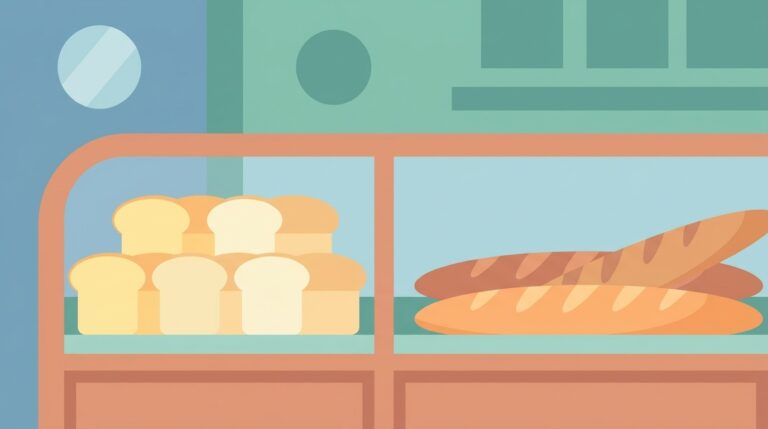
Master Korean Textures: Is It Hard or Soft?
Phase 1: Empathy & Story Opening
안녕하세요! 매일한글 에디터입니다.
Have you ever walked into a trendy bakery in Seongsu-dong, stared at a gorgeous loaf of bread or a dessert, and wondered: Is this going to be crusty and firm, or super pillowy and soft? Or maybe you were shopping for a cushion in Daiso or testing a mattress in an Airbnb, and you needed to tell your Korean friend whether it feels stiff or cozy. Describing how things feel to the touch is one of the quickest ways to sound natural in daily conversations.
Many beginner learners freeze because English texture words like “hard” can mean “firm” (like an apple) or “rigid/stiff” (like a rock), while “soft” can mean “fluffy,” “smooth,” or “tender.” In this guide, built directly from real questions sent in by our beginner learners, you’ll learn the two most essential Korean touch adjectives—단단해요 (it is firm/solid) and 부드러워요 (it is soft/tender)—along with practical real-life shortcuts that will make your Korean sound alive from day one!
Phase 2: Key Expressions Deep Dive
1. 단단해요 (dan-dan-hae-yo)
- Pronunciation: [Dan-dan-hae-yo] (Think of a drum beat: ‘Dan-Dan’, then ‘hey-yo’)
- Meaning: Literal: It is firm / solid / sturdy. Real Nuance: Used when an object has healthy resistance or structural strength (e.g., fresh fruit, a firm mattress, ice).
- K-Culture Moment: In K-Dramas, when characters buy sweet potatoes or fruit at a traditional market (shijang), they lightly squeeze them and say: “이거 단단하고 좋아요!” (This one is firm and good!).
- Editor’s Insight: Notice that 단단해요 has a positive, solid tone. If something is painfully rock-hard or uncomfortably stiff, native speakers often use 딱딱해요 instead.
- Situation Spectrum: Casual ✅ | Semi-formal ✅ | Formal ✅
- 🤔 Think About It: Why does Korean have distinct words for “sturdy/firm” (단단하다) versus “rock-hard” (딱딱하다)? How does your native language separate good firmness from uncomfortable hardness?
2. 부드러워요 (bu-deu-reo-wo-yo)
- Pronunciation: [Bu-deu-reo-wo-yo] (Sounds like: ‘Boo-duh-raw-wo-yo’)
- Meaning: Literal: It is soft / smooth / tender. Real Nuance: Anything pleasingly soft—from fluffy cake and silk blankets to tender meat or even gentle voices.
- K-Culture Moment: On K-variety food shows like Delicious Rendezvous, whenever idols take a bite of slow-cooked meat or souffle pancakes, they close their eyes and whisper: “진짜 부드러워요…” (It’s so tender/soft…).
- Editor’s Insight: 부드러워요 comes from the base adjective 부드럽다. Because of the irregular ‘ㅂ’ rule, it turns into 부드러워요 in polite daily speech.
- Situation Spectrum: Casual ✅ | Semi-formal ✅ | Formal ✅
- 🤔 Think About It: In Korean, the same word describes both soft fabric and tender food texture. Does your language use the same word for texture and food tenderness?
3. 딱딱해요 (ttak-ttak-hae-yo)
- Pronunciation: [Ttak-ttak-hae-yo] (Crisp double ‘tt’ sound like clicking your tongue: ‘Ttak-Ttak-hey-yo’)
- Meaning: Literal: It is hard / stiff. Real Nuance: Often implies something is rigid, dried out, or uncomfortably hard (like stale bread or a wooden floor).
- K-Culture Moment: In Korean webtoons and dramas, when someone sleeps on a stiff floor without a sleeping mat, they complain the next morning: “바닥이 너무 딱딱해요!” (The floor is way too hard!).
- Editor’s Insight: The double consonant ㄸ gives an acoustic impression of knocking against a hard surface.
- Situation Spectrum: Casual ✅ | Semi-formal ✅ | Formal ✅
- 🤔 Think About It: Notice the onomatopoeic punch in 딱딱. Korean sensory adjectives often mirror the sound of physical interaction!
Phase 3: Textbook Korean vs. Real Korean
Situation 1: Describing a Fresh Bakery Treat
- 📖 Textbook Korean: 이 빵은 매우 유연합니다. (I ppang-eun mae-u yu-yeon-ham-ni-da. / “This bread is very flexible.”)
- 🗣️ Real Korean: 와, 이 빵 진짜 부드러워요! (Wa, i ppang jin-jja bu-deu-reo-wo-yo! / “Wow, this bread is super soft!”)
- 💡 Why is it different? Words like 유연하다 (flexible) belong in engineering or yoga descriptions, not bakeries. Real Koreans immediately reach for 부드러워요 or slang like 푹신해요 (fluffy).
Situation 2: Choosing a Firm Pillow at a Store
- 📖 Textbook Korean: 이 베개는 경도가 높습니다. (I be-gae-neun gyeong-do-ga nop-seum-ni-da. / “This pillow has high hardness.”)
- 🗣️ Real Korean: 이 베개는 조금 단단한 편이에요. (I be-gae-neun jo-geum dan-dan-han pyeon-i-e-yo. / “This pillow is on the firmer side.”)
- 💡 Why is it different? Everyday shopping uses descriptive adjective forms combined with -편이에요 (on the side of) to sound natural and polite rather than technical.
Phase 4: K-Culture Deep Dive & Non-Verbal Manners
4-1. Nunchi & Shopping Touch Etiquette
When shopping for fruit at Korean markets or boutique stores in Hongdae, avoid squeezing produce aggressively. Instead, use a two-handed cradle gesture, gently feeling the weight and surface. If an item is wrapped in plastic, tapping it with two fingers rather than digging fingernails in shows respect and good Nunchi (tactful situational awareness).
4-2. The Ultimate Korean Texture Obsession: 겉바속촉 (Geot-Ba-Sok-Chok)
Koreans are deeply passionate about contrasting textures in food. The most beloved concept is 겉바속촉—an abbreviation for 겉은 바삭하고 속은 촉촉/부드럽다 (Crispy on the outside, moist and soft on the inside). Whether it is Korean fried chicken (Chimaek), roasted sweet potatoes, or freshly baked croffles, praising the soft interior with “속이 정말 부드러워요!” will instantly win you warm smiles from any chef or host.
Phase 5: Real-Life Roleplay Scenario
Setting: Minji and you are visiting a trendy dessert cafe in Ikseon-dong, Seoul. You are deciding which cake and pastry to order.
- Turn 1 (Minji): 여기 시그니처 케이크 진짜 맛있대요. 어떤 거 먹을래요?
(Yeo-gi si-geu-ni-cheo ke-i-keu jin-jja mas-it-dae-yo. Eo-tteon geo meog-eul-lae-yo?)
“They say the signature cake here is really delicious. Which one do you want to try?”
🎭 [Minji points excitedly at the display glass with sparkling eyes] -
Turn 2 (You): 이 초코 빵 어때요? 겉이 조금 단단해 보여요.
(I cho-ko ppang eo-ttae-yo? Geot-i jo-geum dan-dan-hae bo-yeo-yo.)
“How about this chocolate pastry? The outside looks a bit firm/crusty.”
🎭 [You lean in closer to inspect the shiny pastry crust] -
Turn 3 (Minji): 맞아요! 겉은 단단한데, 안은 엄청 부드러워요.
(Maj-a-yo! Geot-eun dan-dan-han-de, an-eun eom-cheong bu-deu-reo-wo-yo.)
“That’s right! It’s firm outside, but crazy soft inside.” -
Turn 4 (You): 와, 좋아요. 그럼 치즈 타르트는 어때요?
(Wa, joh-a-yo. Geu-reom chi-jeu ta-reu-teu-neun eo-ttae-yo?)
“Wow, sounds great. Then how about the cheese tart?” -
Turn 5 (Minji): 치즈 타르트는 전체적으로 다 부드러워요. 입에서 녹아요!
(Chi-jeu ta-reu-teu-neun jeon-che-jeog-eu-ro da bu-deu-reo-wo-yo. Ib-e-seo nog-a-yo!)
“The cheese tart is completely soft all over. It melts in your mouth!” -
Turn 6 (You): 둘 다 시켜서 나눠 먹어요!
(Dul da si-kyeo-seo na-nwo meog-eo-yo!)
“Let’s order both and share!” -
Turn 7 (Minji): 좋아요! 제가 주문할게요. 자리 잡고 계세요!
(Joh-a-yo! Je-ga ju-mun-hal-ge-yo. Ja-ri jab-go gye-se-yo!)
“Great! I’ll order. Go grab a seat!” -
Turn 8 (You): 네, 고마워요! 맛있겠다!
(Ne, go-ma-wo-yo! Mas-it-get-da!)
“Sure, thank you! It’s gonna be delicious!”
🔀 Interactive Decision Point
When the food arrives, the chocolate pastry crust is surprisingly hard to cut with a fork. What do you say to Minji?
- Option A: “이거 너무 부드러워요!” (I-geo neo-mu bu-deu-reo-wo-yo!)
- Option B: “포크로 자르기 조금 딱딱해요/단단해요.” (Po-keu-ro ja-reu-gi jo-geum ttak-ttak-hae-yo / dan-dan-hae-yo.)
- Option C: “빵이 유연해요.” (Ppang-i yu-yeon-hae-yo.)
Feedback:
* Option A (Bad): 부드러워요 means soft! Saying this when you’re struggling to cut it will cause confusion.
* Option B (Best ✅): Perfect! Describing the crust as 단단해요 (firm) or 딱딱해요 (stiff/hard to cut) accurately explains the situation.
* Option C (Risk): Too robotic and unnatural for food descriptions.
Phase 6: 10-Second Emotional Shadowing Drill
- Line 1 [😊 Excited & impressed]:
와! / 겉은 바삭하고 / 속은 진짜 부드러워요!
(Wa! / Geot-eun ba-sak-ha-go / sog-eun jin-jja bu-deu-reo-wo-yo!)
(Pause after ‘와!’ and ‘바삭하고’ with rising intonation, then drop smoothly on ‘부드러워요’) -
Line 2 [🤔 Contemplative & careful]:
이 베개는 / 조금 단단해요. / 다른 거 있어요?
(I be-gae-neun / jo-geum dan-dan-hae-yo. / Da-reun geo iss-eo-yo?)
(Short pause after ‘베개는’, gentle flat tone on ‘단단해요’, ending with a soft question lilt on ‘있어요?’)
Phase 7: K-Culture Mini Dictionary
- 겉바속촉 (Geot-ba-sok-chok): Crispy on outside, soft inside. Used for fried chicken, pastries, and dumplings.
- 푹신푹신 (Puk-sin-puk-sin): Fluffy / Pillowy. Commonly used for cushions, hotel beds, and fluffy pancakes.
- 쫀득쫀득 (Jjon-deuk-jjon-deuk): Chewy / Mochi-like. Used for tteokbokki, boba, and gummy textures.
- 말랑말랑 (Mal-lang-mal-lang): Squishy / Soft-elastic. Used for jelly, cute silicone keychains, and ripe peaches.
Phase 8: Survival Kit for Travelers
Top 3 Texture Survival Phrases
- 더 부드러운 거 있어요? (Deo bu-deu-reoun geo iss-eo-yo?)
Pro Tip: “Do you have something softer?” (Great for mattresses, cushions, or clothes shopping). - 너무 딱딱해요. (Neo-mu ttak-ttak-hae-yo.)
Pro Tip: “It’s too hard/stiff.” (Helpful when asking hotel staff for an extra mattress topper). - 고기가 진짜 부드러워요! (Go-gi-ga jin-jja bu-deu-reo-wo-yo!)
Pro Tip: “The meat is so tender!” (A guaranteed compliment for any BBQ restaurant owner).
Editor’s Travel Note
When traveling in South Korea, checking cafe menus or interior reviews is easiest through local tools. You can install the Naver Map navigation app to search for keywords like “수플레 팬케이크” (souffle pancake) or “베이커리” (bakery) to find spots known for their soft and fresh baked goods.
Phase 9: Think Deeper
Korean culture places extraordinary value on mouthfeel and tactile comfort. While English often relies on broad descriptors like “good” or “tasty,” Korean features dozens of rich, mimetic words to express distinct layers of firmness, elasticity, and softness. Paying attention to whether something is 단단하다 (firm/resilient) or 부드럽다 (gentle/soft) will train your ears to hear the subtle harmony Koreans seek in everyday life.
💬 Your Turn: What is your favorite food texture? Is it crispy, chewy, or super soft? Tell us in the comments using 부드러워요 or 단단해요!
Phase 10: FAQ & Common Mistakes
Q: Can I use 부드러워요 to describe someone’s personality?
A: Yes! When you say “그 사람은 성격이 부드러워요” (That person has a gentle/soft personality), it is a wonderful compliment meaning they are warm, approachable, and mild-mannered.
Q: What is the exact difference between 단단해요 and 딱딱해요?
A: 단단해요 highlights firmness, strength, and solid quality (positive or neutral). 딱딱해요 highlights stiffness or rigidity, frequently with an uncomfortable or tough nuance.
Q: How do I say something is fluffy like a cloud?
A: Use the mimetic adverb 푹신푹신해요 (puk-sin-puk-sin-hae-yo)! It is the go-to word for clouds, thick rugs, and sofa cushions.
🚨 Common Mistakes Warning Board
- Mistake: Using 유연해요 for soft food.
Correction: Always use 부드러워요 for edible textures. - Mistake: Pronouncing 부드러워요 as 부드럽어요.
Correction: Remember the irregular ‘ㅂ’ drop! ㅂ turns into 워요 (부드러워요). - Mistake: Saying 딱딱해요 when you want to praise firm fruit.
Correction: Use 단단해요 to compliment fresh, crisp fruit.
Phase 11: Action Missions
- 🥉 Bronze Mission: Look around your room right now. Touch your desk and your pillow. Say aloud: “책상은 단단해요!” (The desk is firm/hard) and “베개는 부드러워요!” (The pillow is soft).
- 🥈 Silver Mission: Post an Instagram story or note with a picture of your meal and caption it: “진짜 부드러워요! #매일한글”.
- 🥇 Gold Mission: Walk into a local Korean cafe or bakery and use “부드러운 빵 추천해 주세요” (Please recommend a soft bread).
- 🎮 K-Culture Mission: Watch a food segment in any Korean variety show (like Jinny’s Kitchen or Running Man) and count how many times cast members say 부드러워요!
Phase 12: Interactive Quiz Challenge
1. Situation Quiz: You take a bite of slow-cooked Korean braised short ribs (Galbi-jjim), and the meat melts without chewing. What do you say?
* A) 고기가 너무 딱딱해요.
* B) 고기가 정말 부드러워요.
* C) 고기가 유연해요.
2. Fill-in-the-Blank:
겉은 바삭하고, 속은 ______ (It is crispy outside, and soft inside).
3. True or False:
You can use 단단해요 to describe a solid, healthy apple.
👉 Click here to reveal the answers and explanations!
-
Answer: B (고기가 정말 부드러워요)
Explanation: 부드러워요 describes tender meat perfectly. 딱딱해요 means tough/hard. -
Answer: 부드러워요 (or 촉촉해요 / 푹신해요)
Explanation: In the famous phrase 겉바속촉, the inside is soft (부드러워요) or moist (촉촉해요). -
Answer: True (O)
Explanation: 단단해요 represents good, crisp firmness in fresh fruit!







