

Phase 1: Empathy & Immersion (Opening Story)
안녕하세요! 매일한글 에디터입니다. (Hello! This is your Daily Hangul editor.)
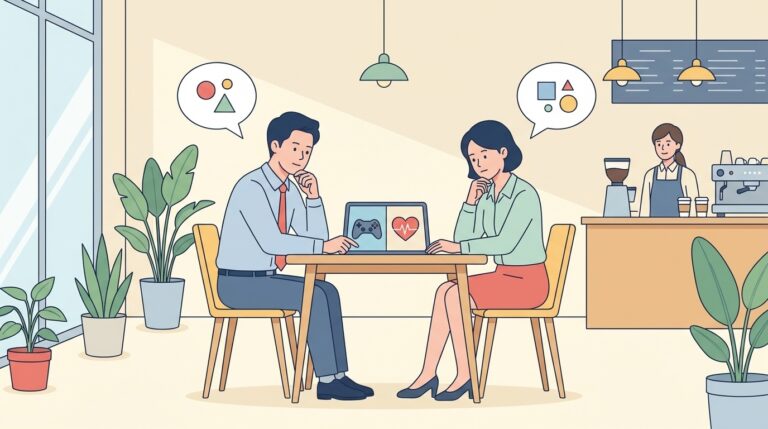
Picture this: You are sitting at a bustling craft beer pub near Gangnam Station with your Korean colleagues. The conversation shifts from weekend plans to Faker’s legendary play in the League of Legends World Championship. Suddenly, someone mentions the recent government debate over whether gaming disorder should be formally registered as a medical condition in the Korean Standard Classification of Diseases (KCD). Within seconds, the mood pivots from casual banter to an electrifying, high-level debate. One side passionately argues that gaming is South Korea’s premier digital cultural export and cultural asset, while the other expresses grave concerns over adolescent mental health and excessive screen time.
You want to jump into this rich cultural and intellectual discussion, but you hesitate. At a C1 level, textbook vocabulary like ‘저는 게임을 많이 해요’ (I play games a lot) simply doesn’t cut it when discussing public policy, societal stigmatization, or cultural identity. Over the years, dozens of advanced Korean learners have told me: ‘I can hold daily conversations, but the moment the room dives into heated social debates, I feel completely muted.’
Mastering advanced, discourse-level Korean around modern social debates will elevate your fluency from everyday transactional chat to intellectual and professional camaraderie. Today, let’s unpack the cultural friction, sophisticated terminology, and conversational nuances surrounding the gaming disease classification debate in South Korea.
Phase 2: Deep-Dive into 3 Core Expressions
1. 질병 코드를 부여하다 (Jil-byeong ko-deu-reul bu-yeo-ha-da)
- Pronunciation: [jil-byeong kko-deu-reul bu-yeo-ha-da] (Think of jil-byung like ‘chill-byung’, kodeu like ‘code’, and buyeo like ‘boo-yuh’)
- Meaning: Literal: To assign a disease code | Nuance: To officially categorize a behavioral pattern or symptom as a diagnosable medical disorder.
- K-Culture Moment: Seen in debate panels on JTBC or news specials covering the World Health Organization (WHO) ICD-11 adoption timeline in Korea.
- Editor’s Insight: ‘부여하다’ (to grant/assign) carries administrative and institutional weight. It signals that a medical or state authority is conferring formal status upon something.
- Situation Spectrum: Casual 🚫 | Semi-formal ⚠️ | Formal ✅
- 🤔 Think About It: How does assigning a formal classification shift public perception of individual habits in your culture versus Korea’s community-driven medical framework?
2. 낙인 효과를 우려하다 (Na-gin hyo-gwa-reul u-ryeo-ha-da)
- Pronunciation: [na-gin hyo-gwa-reul u-ryeo-ha-da] (Nagin rhymes with ‘nah-gin’, hyogwa sounds like ‘hyo-gwa’)
- Meaning: Literal: To worry about the stigma effect | Nuance: To be deeply concerned that labeling an activity or group will cause harmful stereotyping and institutional bias.
- K-Culture Moment: Used by esports commentators, gaming industry executives, and youth advocates arguing against sweeping regulatory labels.
- Editor’s Insight: ‘낙인’ originally refers to branding livestock with a hot iron. In modern sociology and media, it denotes indelible societal prejudice.
- Situation Spectrum: Casual ⚠️ | Semi-formal ✅ | Formal ✅
- 🤔 Think About It: Why is the fear of social stigma particularly acute in a high-density, reputation-conscious society like South Korea?
3. 과몰입과 중독의 경계 (Gwa-mo-rip-gwa jung-dog-ui gyeong-gye)
- Pronunciation: [gwa-mo-rip-kkwa jung-dog-eui gyeong-gye] (Gwamorip sounds like ‘gwa-moh-rip’)
- Meaning: Literal: The boundary between hyper-immersion/deep engagement and addiction | Nuance: The critical distinction between passionate dedication (flow state) and pathological dependence.
- K-Culture Moment: Discussed in academic forums and cultural podcasts when analyzing whether professional esports training is distinct from problematic gaming.
- Editor’s Insight: ‘과몰입’ (over-immersion) is preferred by the cultural sector because it highlights focus without inherently pathologizing the individual.
- Situation Spectrum: Casual ⚠️ | Semi-formal ✅ | Formal ✅
- 🤔 Think About It: Where does healthy passion end and pathological habit begin in your home language’s cultural framework?
Phase 3: Textbook Korean vs. Real Native Korean
Situation A: Expressing that excessive gaming has deep structural causes
- 📖 교과서 한국어 (Textbook): 게임을 너무 많이 하는 것은 공부 스트레스 때문입니다. (Playing games too much is due to studying stress.)
- 🗣️ 진짜 한국어 (Real Native): 과도한 게임 이용은 단순한 개인의 의지 박약이라기보다, 입시 위주 교육 환경에서 비롯된 도피성 과몰입으로 봐야 합니다. (Excessive gaming should be viewed as an escapist hyper-immersion stemming from an exam-centric educational climate, rather than mere lack of personal willpower.)
- 💡 왜 다를까?: C1 speakers avoid simple cause-and-effect clauses (‘~때문입니다’) and instead frame issues around societal context (‘~에서 비롯된’) and nuanced perspectives (‘~로 봐야 합니다’).
Situation B: Debating the impact on the esports and content ecosystem
- 📖 교과서 한국어 (Textbook): 법이 바뀌면 게임 회사들이 돈을 못 벌고 산업이 망해요. (If the law changes, game companies won’t make money and the industry will be ruined.)
- 🗣️ 진짜 한국어 (Real Native): 무분별한 질병화는 K-콘텐츠의 핵심 축인 게임 산업의 성장 동력을 위축시키고 생태계 전반에 악영향을 미칠 수 있습니다. (Indiscriminate pathologization could stifle the growth engine of the gaming sector—a core pillar of K-content—and negatively impact the entire ecosystem.)
- 💡 왜 다를까?: Native speakers in intellectual discussions leverage conceptual nouns (‘성장 동력’, ‘질병화’, ‘생태계’) to present balanced, macro-level economic insights.
Phase 4: K-Culture Deep Dive & Non-Verbal Manners
4-1. 눈치 (Nunchi) & Non-Verbal Nuance in Policy Debates
When discussing polarising topics like gaming addiction in Korea, non-verbal cues indicate intellectual maturity. Avoid aggressive hand-chopping gestures or direct dismissals like ‘그건 틀렸어요’ (That is wrong). Instead, adopt a thoughtful head nod followed by a deliberate pause, using softening markers such as ‘일견 타당한 측면이 있지만…’ (While that has some validity at first glance…). Maintain calm eye contact without staring confrontingly.
4-2. The Cultural Paradox: Esports Mecca vs. Academic Pressure
Korea is internationally celebrated as the cradle of global esports—housing state-of-the-art PC bangs (PC방), world-championship teams like T1, and prime-time broadcast matches. Simultaneously, the country maintains one of the world’s most rigorous academic systems (입시 지옥). This dual reality turns the ‘gaming disorder’ debate into a profound cultural proxy war: Is gaming a legitimate creative sport and viable career, or a disruptive distraction from academic advancement? Understanding this tension allows you to grasp why the debate is intensely personal for Korean parents, youth, and policymakers alike.
Phase 5: Real-World Roleplay Scenario
Setting: A cozy seminar after-party near Hyehwa with Min-jun (a game UI designer) and Hye-jin (a youth counseling researcher).
- 민준 (Min-jun): 이번 WHO 가이드라인을 국내에 그대로 도입하는 건 K-게임 생태계에 치명타가 될 수 있어요.
(Ibeon WHO gaideu-raineul gungnae-e geudaero doiphaneun geon K-geim saengtae-gye-e chimyeongtaga doel su isseoyo.)
“Introducing the WHO guideline domestically without adjustments could deal a critical blow to the K-gaming ecosystem.”
🎭 Glass in hand, gesturing with furrowed brows. -
혜진 (Hye-jin): 하지만 임상 현장에서 학업과 일상생활이 완전히 무너진 청소년들을 보면, 체계적인 의료 지원 시스템이 시급한 것도 사실이에요.
(Hajiman imsang hyeonjang-eseo hageop-gwa ilsangsaenghwari wanjeonhi muneojin cheongsonyeon-deureul bomyeon, chegyejeogin uiryo jiwon siseutemi sigeubhan geotdo sasirieoyo.)
“Yet seeing adolescents whose daily routines and schooling have collapsed in clinical settings, establishing a structured medical support system is indeed urgent.”
🎭 Setting down her cup, speaking in a measured, empathetic tone. -
You (Learner): 양측의 입장이 모두 이해가 되네요. 단순히 규제할 것이냐 치료할 것이냐의 이분법적 접근보다는 사회적 안전망 구축이 먼저 아닐까요?
(Yangcheugui ipjangi modu ihae-ga doeneyo. Dansunhi gyujehal geosinya chiryohal geosinya-ui ibunbeopjeok jeopgeunbodaneun sahoejeok anjeonmang guchugi meonjeo anilkkayo?)
“I understand both viewpoints. Rather than a binary approach of regulation versus medical treatment, shouldn’t building a social safety net come first?”
🎭 Nodding thoughtfully between both participants. -
민준 (Min-jun): 바로 그겁니다! 근본적인 스트레스 요인은 방치한 채 ‘게임’에만 모든 낙인을 씌우는 게 가장 큰 문제예요.
(Baro geugeomnida! Geunbonjeogin seuteureseu yoineun bangchihan chae ‘geim’eman modeun nagineul ssieuneun ge gajang keun munjeyeyo.)
“Exactly! The core problem is scapegoating games while leaving root stressors unaddressed.”
🎭 Exhaling with deep agreement. -
혜진 (Hye-jin): 맞아요. 다만 치료 지원을 제도화하려면 명확한 진단 기준이 선행되어야 한다는 딜레마가 있죠.
(Majayo. Daman chiryo jiwoneul jedohwaharyeomyeon myeonghwakhan jindan gijuni seonhaengdoeeoya handaneun dillemaga itjyo.)
“True. However, to institutionalize medical aid, we face the dilemma that clear diagnostic criteria must precede it.”
🎭 Tapping a notebook lightly. -
You (Learner): 결국 ‘게임 과몰입’을 유발하는 입시 스트레스 완화와 건강한 여가 문화 조성이 병행되어야겠군요.
(Gyeolguk ‘geim gwamorim’eul yubalhaneun ipsi seuteureseu wanhwawa geonganghan yeoga munhwa joseongi byeonghaengdoeeoyagetgunyo.)
“Ultimately, easing exam stress that drives game hyper-immersion and fostering healthy leisure culture must go hand-in-hand.”
🎭 Delivering a balanced synthesis with a calm smile. -
민준 (Min-jun): 맞습니다. 그런 균형 잡힌 시각이 정책 입안자들에게 꼭 필요해요.
(Matseumnida. Geureon gyunhyeong japin sigagi jeongchaek ibanjadeurege kkok piryohaeyo.)
“Spot on. That balanced perspective is precisely what policymakers need.”
🎭 Smiling and pouring tea. -
혜진 (Hye-jin): 오늘 대화 덕분에 양측의 접점을 찾은 것 같아서 정말 유익하네요!
(Oneul daehwa deokbune yangcheugui jeopjeomeul chajeun geot gataseo jeongmal yuikhadaeyo!)
“Thanks to this conversation, we’ve found common ground—this was very fruitful!”
🎭 Nodding pleasantly.
🔀 Interactive Choice Point
Now it’s your turn to respond to Hye-jin’s dilemma. What do you say?
- Option A: “게임 중독은 개인이 의지력이 약해서 그런 거니까 병원에 갈 필요 없어요.”
Feedback: [Bad 🚫] Overly dismissive and blames personal willpower, which alienates the clinical perspective and drops the intellectual level of a C1 debate. - Option B: “의료적 개입의 필요성은 인정하되, 게임 산업 전반의 창의성이 위축되지 않도록 신중한 사회적 합의가 필요해 보입니다.”
Feedback: [Best ✅] Demonstrates exceptional C1 balance, utilizing nuanced phrasing (‘인정하되’, ‘위축되지 않도록’, ‘사회적 합의’). - Option C: “그냥 외국에서 하는 대로 한국도 똑같이 따라 하면 문제없을 텐데요.”
Feedback: [Risk ⚠️] Ignores Korea’s distinct educational pressure cooker and esports heritage, coming across as simplistic.
Phase 6: 10-Second Emotion Shadowing Drill
Read aloud with emotional intonation, pausing at each / mark:
[🧐 신중하고 객관적인 어조 / Thoughtful & Objective]
단순한 찬반 논리를 넘어서 / 산업적 파급 효과와 / 공중보건의 가치를 / 균형 있게 검토해야 합니다.
(Dan-sun-han chan-ban non-ri-reul neo-meo-seo / san-eop-jeok pa-geup hyo-gwa-wa / gong-jung-bo-geon-ui ga-chi-reul / gyun-hyeong it-ge geom-to-hae-ya ham-ni-da.)-
[💡 깨달음을 얻은 어조 / Insightful Synthesis]
과몰입의 근본 원인을 해소하지 않고 / 질병 분류만 고집한다면 / 사회적 갈등만 증폭될 뿐이에요.
(Gwa-mo-rib-ui geun-bon won-in-eul hae-so-ha-ji an-ko / jil-byeong bun-ryu-man go-jib-han-da-myeon / sa-hoe-jeok gal-deung-man jeung-pok-doel ppun-i-e-yo.) -
[🤝 공감과 설득의 어조 / Empathetic & Persuasive]
청소년들에게 무조건 게임을 금지하기보다 / 건강한 디지털 리터러시 교육을 / 선행하는 것이 바람직합니다.
(Cheong-so-nyeon-deu-re-ge mu-jo-geon ge-im-eul geom-ji-ha-gi-bo-da / geon-gang-han di-ji-teol ri-teo-reo-si gyo-yug-eul / seon-haeng-ha-neun geos-i ba-ram-jik-ham-ni-da.)
Phase 7: K-Culture Mini Dictionary
-
셧다운제 (Syeot-da-un-je)
- Meaning: The ‘Shutdown Law’ (historical Cinderella law restricting youth gaming past midnight, now largely revamped).
- Practical Use: Cited frequently in policy retrospectives to discuss government intervention versus family autonomy.
- 디지털 리터러시 (Di-ji-teol Ri-teo-reo-si)
- Meaning: Digital Literacy.
- Practical Use: Prominently used by educators advocating for self-regulation and healthy media consumption over outright bans.
- 사회적 합의 (Sa-hoe-jeok Hap-ui)
- Meaning: Social Consensus.
- Practical Use: The quintessential phrase in Korean policy formulation when multiple ministries (e.g., Ministry of Culture vs. Ministry of Health) hold conflicting stances.
- 역기능과 순기능 (Yeok-gi-neung-gwa Sun-gi-neung)
- Meaning: Dysfunctions (adverse effects) and Positive functions.
- Practical Use: Standard analytical framework used in Korean academic discourse to present holistic evaluations of tech phenomena.
Phase 8: Traveler’s & Resident’s Survival Kit
- Survival Phrase 1: “이 PC방 요금제는 비회원 결제도 가능한가요?” (I PC-bang yo-geum-je-neun bi-hoe-won gyeol-je-do ga-neung-han-ga-yo? / Can non-members pay for this PC bang plan?)
- Pro Tip: PC bangs offer cheaper rates for registered members, but non-member kiosk tickets are ideal for travelers.
- Survival Phrase 2: “LCK 경기 직관 티켓 예매는 어디서 하나요?” (LCK gyeong-gi jik-gwan ti-ket ye-mae-neun eo-di-seo ha-na-yo? / Where can I book tickets to watch LCK matches live?)
- Pro Tip: LCK tickets sell out in seconds on Interpark; practice rapid clicking!
- Survival Phrase 3: “게임 개발자 콘퍼런스 통역 세션이 마련되어 있습니까?” (Ge-im gae-bal-ja kon-peo-reon-seu tong-yeok se-syeon-i ma-ryeon-doe-eo it-seum-ni-kka? / Are interpretation sessions provided for this game developer conference?)
- Pro Tip: For events like G-STAR or NDC, always confirm badge translation perks.
- Editor’s Travel Note:
Planning to visit LoL PARK in Jongno or mega esports arenas in Sangam? Check subway navigation via the Naver Map Application. PC bang food orders (like 치킨마요 덮밥 and 라면) can be completed directly from your desktop monitor using credit card or T-Money!
Phase 9: A Step Deeper (Reflective Essay)
In South Korea, language around social issues is rarely individualistic; it is communal and systemic. When a society considers labeling a behavior as a ‘질병’ (disease), it activates profound administrative, educational, and familial ripple effects. Unlike Western contexts where gaming debate often centers on personal recreation rights versus clinical health, in Korea it strikes at the core of national pride (esports dominance) and educational anxiety (수능 preparation). As advanced Korean learners, tuning into these cultural crosscurrents allows you to appreciate how every policy term reflects a delicate equilibrium between communal protection and individual self-expression.
💬 Your Turn: How does your home country navigate the boundary between dedicated hobby and clinical behavioral addiction? Drop your thoughts below in Korean using at least one advanced expression from today’s lesson!
Phase 10: Structured FAQ & Common Mistakes
Q: What is the main linguistic difference between ‘중독’ (jung-dok) and ‘과몰입’ (gwa-mo-rip)?
A: ‘중독’ (addiction/intoxication) carries strong pathological and clinical connotations, implying psychological dependency and harm. ‘과몰입’ (over-immersion/hyper-engagement) is a descriptive, neutral term highlighting intensive participation without medical stigmatization.
Q: Why do Koreans say ‘질병 코드를 등재하다’ instead of ‘등록하다’?
A: ‘등재하다’ (to register/list in a formal index) is the accurate institutional term for catalogs, encyclopedias, and official classification systems (like KCD or UNESCO lists), whereas ‘등록하다’ is used for general registrations like signing up for courses or vehicle registration.
Q: Can I use ‘게임 폐인’ (game pe-in) in formal conversations?
A: No. ‘게임 폐인’ (literally ‘game invalid/hermit’) is casual early-2000s slang for a heavy gamer. In C1 professional or academic discussions, use terms like ‘고위험 이용자군’ (high-risk user group) or ‘과몰입 이용자’ (over-immersed user).
🚨 Common Mistakes Alert Board
- ❌ Mistake 1: Saying “게임이 병이에요” in a policy debate.
- Correct Action: Use “게임 이용 장애의 질병 분류화 논의가 진행 중입니다.” (Discussions on classifying gaming disorder as a disease are underway.)
- ❌ Mistake 2: Using informal “내 생각에는” during semi-formal discussions.
- Correct Action: Elevate to “제 견해로는…” or “제가 바라보는 관점에서는…”.
- ❌ Mistake 3: Conflating ‘e스포츠’ with casual phone mini-games in business contexts.
- Correct Action: Distinguish between ‘전문 e스포츠 산업’ (professional esports industry) and ‘캐주얼 모바일 게임 시장’ (casual mobile game market).
Phase 11: Action Missions
- 🥉 Bronze Mission (Solo Practice): Record a 30-second voice memo summarizing your stance on gaming regulation using the phrase ‘낙인 효과를 우려하다’.
- 🥈 Silver Mission (Social Sharing): Post a short paragraph on your language exchange profile (HelloTalk/Tandem) debating ‘과몰입 vs 중독’ and solicit native feedback.
- 🥇 Gold Mission (Real-World Application): Join a Korean discussion club or Discord server discussing K-Content/Esports and use the expression ‘균형 잡힌 시각이 필요합니다’ during a voice chat.
- 🎮 K-Culture Mission: Watch a YouTube clip of an LCK post-match interview or a Korean news panel on gaming policy, and identify three instances where speakers soften their stance with polite hedging.
Phase 12: Interactive Quiz Challenge
1. Situation Judgment Quiz:
Which phrase is most appropriate when politely challenging someone’s viewpoint in an esports policy seminar?
* A) “그 의견은 완전히 틀린 생각입니다.”
* B) “말씀하신 취지에는 공감하지만, 산업적 파급 효과도 간과할 수 없습니다.”
* C) “저는 그렇게 생각 안 하니까 다시 말씀해 주세요.”
2. Fill-in-the-Blank Quiz:
사회적 [ ]을(를) 거치지 않은 일방적인 규제는 많은 부작용을 낳을 수 있습니다. (Unilateral regulations without going through social consensus can cause numerous side effects.)
3. True or False Cultural Quiz:
In Korean policy discussions, the term ‘과몰입’ is preferred by game developers and cultural advocates over ‘중독’ to prevent social stigmatization. (True / False)
🔍 Click here to reveal Answers & Explanations
- Answer: B | Explanation: ‘말씀하신 취지에는 공감하지만…’ (I empathize with the intent of what you said, but…) is the quintessential C1 debate hedging technique.
- Answer: 합의 (Hap-ui / Consensus) | Explanation: ‘사회적 합의’ (Social consensus) is the core term for multi-stakeholder policy agreement in Korean public discourse.
- Answer: True | Explanation: ‘과몰입’ (hyper-immersion) highlights engagement rather than pathology, making it the preferred terminology among industry advocates.







