

Decode Korean Skincare Labels Like a Local: Spotting Harmful Ingredients and Choosing Gentle Formulas
Phase 1: Empathy & Immersion
안녕하세요! 매일한글 에디터입니다. (Hello! This is your Daily Hangul editor.)
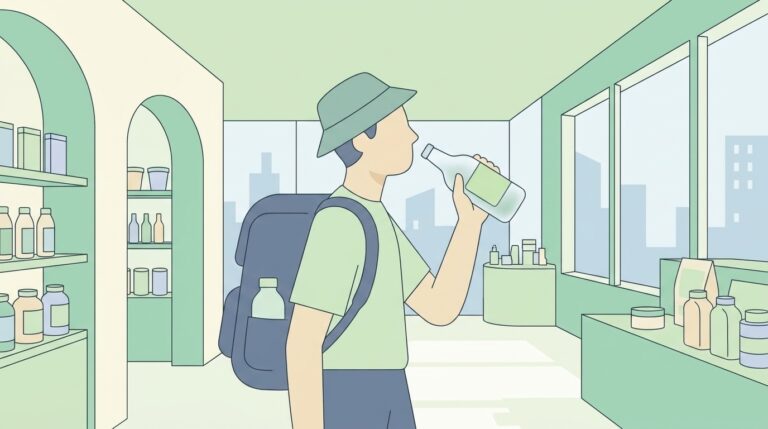
Picture this: You step into a dazzling flagship Olive Young in Myeongdong or Seongsu. The shelves are glowing with aesthetic glass bottles, soothing pastel packaging, and promising claims like “Glass Skin” and “Barrier Repair.” You eagerly flip a trendy serum bottle over to check if it suits your reactive skin, only to be confronted with a solid block of dense, microscopic Hangul titled 전성분 (Full Ingredients List).
Your eyes scan words like 부틸렌글라이콜, 페녹시에탄올, 향료… and your mind freezes. Is this formula truly soothing, or does it hide pore-clogging silicones and irritating synthetic scents?
Many intermediate Korean learners know everyday conversational terms, but stepping into the world of K-Beauty label literacy feels like sitting for a chemistry exam in pure Korean! Master this guide, and you will never again guess what touches your skin. Based on real questions from hundreds of skincare-obsessed Korean learners, this survival guide will empower you to browse, analyze, and speak with store staff with absolute confidence.
Phase 2: Core Expressions Deep Dive
1. 혹시 주의 성분이나 유해 성분 들어 있나요? (Hoksi ju-ui seong-bun-i-na yu-hae seong-bun deul-eo in-na-yo?)
- Pronunciation: Hok-shee joo-ui sung-boon-ee-nah yoo-hae sung-boon deul-eo een-nah-yo? (Think “Hok” like hockey + “shee” + “sung” as in sun + “boon”).
- Meaning: Literal: “By any chance, are caution ingredients or harmful ingredients contained?” | Nuance: “Does this contain any known irritants or harmful ingredients I should watch out for?”
- K-Culture Moment: Asking a staff member when browsing trending sheet masks or ampoules featured on Get It Beauty or YouTube beauty vlogs.
- Editor’s Insight: Using
혹시(by any chance) softens your question, turning a direct inquiry into a polite, respectful prompt.- Situation Spectrum: Casual ⚠️ | Semi-formal ✅ | Formal ✅
- 🤔 Think About It: In Korean beauty culture, consumers often categorize ingredients into “20 cautionary ingredients” (20가지 주의성분). How does your home country categorize cosmetic additives compared to Korea’s strict clean-beauty trends?
2. 민감성 피부에 자극적인 성분은 빼고 추천해 주세요. (Min-gam-seong pi-bu-e ja-geuk-jeok-in seong-bun-eun ppae-go chu-cheon-hae ju-se-yo.)
- Pronunciation: Meen-gahm-sung pee-boo-eh jah-geuk-jjeok-een sung-boon-eun ppeh-goh choo-chun-hae joo-seh-yoh.
- Meaning: Literal: “Please exclude irritating ingredients for sensitive skin and recommend.” | Nuance: “Could you recommend something gentle, free from harsh ingredients for sensitive skin?”
- K-Culture Moment: Stepping into a dermatological clinic’s skincare boutique in Gangnam after a skin treatment.
- Editor’s Insight: The verb phrase
~은/는 빼고(excluding X) is a powerhouse intermediate grammar pattern useful at restaurants, cafes, and cosmetic counters alike.- Situation Spectrum: Casual ⚠️ | Semi-formal ✅ | Formal ✅
- 🤔 Think About It: Notice how Korean places the condition (
민감성 피부에 자극적인 성분은 빼고) before the request (추천해 주세요). Why is context-first communication so pivotal in Korean etiquette?3. 전성분표에서 인공 향료랑 파라벤 확인해 주실 수 있나요? (Jeon-seong-bun-pyo-e-seo in-gong hyang-ryo-rang pa-ra-ben hwak-in-hae ju-sil su in-na-yo?)
- Pronunciation: Jun-sung-boon-pyoh-eh-suh een-gohng hyahng-ryoh-rahng pah-rah-ben hwahk-een-hae joo-sheel soo een-nah-yo?
- Meaning: Literal: “In the full ingredients table, can you confirm artificial fragrance and parabens?” | Nuance: “Could you help me check if this has artificial fragrances or parabens on the label?”
- K-Culture Moment: Asking a beauty counter specialist at Chicor or Lotte Department Store when the font on the box is too small to read.
- Editor’s Insight:
~해 주실 수 있나요?is an elevated, ultra-polite request pattern ideal for customer service interactions.- Situation Spectrum: Casual 🚫 | Semi-formal ✅ | Formal ✅
- 🤔 Think About It: In Korean, loanwords like 파라벤 (paraben) adapt to Korean phonology. How does hearing familiar English terms in Korean accent alter your comprehension flow?
Phase 3: Textbook Korean vs. Real-World Korean
Situation 1: Asking if a formula is gentle
- 📖 Textbook Korean: “이 화장품은 피부에 안전합니까?” (Is this cosmetic safe for skin?)
- 🗣️ Real-World Korean: “이거 성분 순해요? 트러블 잘 안 나요?” (Is this ingredient list gentle? Does it avoid causing breakouts?)
- 💡 Why is it different? Native speakers rarely say “안전합니까” for cosmetics. Instead, they use the adjective 순하다 (gentle/mild) and talk about 트러블 (trouble/breakouts).
Situation 2: Inquiring about scent additives
- 📖 Textbook Korean: “이 제품에 인공 향기가 첨가되어 있습니까?” (Is artificial scent added to this product?)
- 🗣️ Real-World Korean: “이거 무향이에요, 아니면 향료 들어갔어요?” (Is this fragrance-free, or does it have added fragrance?)
- 💡 Why is it different? Real shoppers use 무향 (fragrance-free) or ask directly about 향료 (synthetic fragrance/parfum) rather than using stiff literary verbs like “첨가되다” (to be added).
Phase 4: K-Culture Deep Dive & Non-Verbal Manners
4-1. Nunchi (눈치) & Body Language at Beauty Stores
When checking cosmetic boxes in Korea, staff often stand nearby to assist you. If you want to read the ingredients peacefully, a gentle two-hand hold of the product while offering a slight head nod and saying, “조금만 더 둘러볼게요!” (I’ll browse a bit more!) establishes comfortable personal space without seeming rude.
When pointing to an ingredient on the packaging, use your index finger lightly supported underneath by your other hand’s fingers—a subtle non-verbal signal of politeness and neatness.
4-2. The “Hwahae (화해)” Phenomenon
In Korea, skincare isn’t just vanity; it’s practically a science. Almost every beauty enthusiast uses an ingredient-ranking app like 화해 (Hwahae) or GlowPick. The term 착한 성분 (Good/Honest Ingredients) refers to EWG Green-grade formulas that exclude the infamous “20 Warning Ingredients” (20가지 주의성분), such as PEG surfactants, synthetic dyes, and parabens. Understanding this collective consciousness lets you bond instantly with local beauty advisors!
Phase 5: Real-Life Roleplay Scenario
Setting: A stylish cosmetic store in Hongdae. Store manager 수진 (Sujin) approaches Alex (B2 Learner) holding a cica-calming serum.
- 수진 (Sujin): 안녕하세요, 고객님! 진정 라인 찾으시나요? 🎭 미소를 지으며 친절하게 다가온다.
(An-nyeong-ha-se-yo, go-gaek-nim! Jin-jeong ra-in chat-eu-si-na-yo? / Hello, customer! Are you looking for a soothing line?) - Alex: 네, 요즘 피부가 뒤집어져서 성분이 순한 세럼을 찾고 있어요. 🎭 볼을 가리키며 난감한 표정을 짓는다.
(Ne, yo-jeum pi-bu-ga dwi-jip-eo-jyeo-seo seong-bun-i sun-han se-reom-eul chat-go iss-eo-yo. / Yes, my skin broke out recently, so I’m looking for a serum with gentle ingredients.) - 수진 (Sujin): 아, 그러셨군요. 이 어성초 앰플이 진정에 정말 좋아요! 🎭 어성초 앰플을 손등에 가볍게 덜어 보여준다.
(A, geu-reo-syeot-gun-yo. I eo-seong-cho aem-peul-i jin-jeong-e jeong-mal jo-a-yo! / Ah, I see. This Heartleaf ampoule is truly great for soothing!) - Alex: 혹시 전성분표에 알레르기 유발 성분이나 알코올 성분 들어 있나요? 🎭 단상자 뒷면을 유심히 살핀다.
(Hok-si jeon-seong-bun-pyo-e al-le-reu-gi yu-bal seong-bun-i-na al-ko-ol seong-bun deul-eo in-na-yo? / By any chance, does the ingredient list contain allergens or alcohol?) - 수진 (Sujin): 전혀요! 전성분 EWG 그린 등급이고 무향, 무알코올 제품이에요. 🎭 성분표의 무첨가 마크를 짚어준다.
(Jeon-hyeo-yo! Jeon-seong-bun EWG geu-rin deung-geup-i-go mu-hyang, mu-al-ko-ol je-pum-i-e-yo. / Not at all! All ingredients are EWG Green Grade, and it’s completely fragrance-free and alcohol-free.) - Alex: 다행이네요. 피이지(PEG)나 인공 색소도 안 들어갔죠? 🎭 안도하는 미소를 띤다.
(Da-haeng-i-ne-yo. Pi-i-ji-na in-gong saek-so-do an deul-eo-gat-jyo? / What a relief. No PEGs or synthetic colorants either, right?) - 수진 (Sujin): 네, 20가지 주의 성분은 모두 배제된 비건 인증 제품입니다. 🎭 자신감 넘치는 목소리로 고개를 끄덕인다.
(Ne, 20-ga-ji ju-ui seong-bun-eun mo-du bae-je-doen bi-geon in-jeung je-pum-im-ni-da. / Yes, it’s a certified vegan product with all 20 warning ingredients excluded.) - Alex: 마음에 쏙 드네요! 이걸로 두 병 주세요. 🎭 제품을 바구니에 담는다.
(Ma-eum-e ssok deu-ne-yo! I-geol-ro du byeong ju-se-yo. / I love it! Please give me two bottles of this.)
🔀 Interactive Choice Point
If the staff member hands you a cream with fragrance listed at the top, what do you say?
* Option A: “이거 향료 들어있어서 제 피부엔 좀 자극적일 것 같아요. 다른 무향 제품 있나요?”
* Option B: “이거 나쁜 성분이니까 당장 바꿔주세요.”
* Option C: “그냥 이거 쓸게요. 냄새 좋네요.”
- Feedback:
- Choice A (Best): Polite, articulates your skin sensitivity clearly, and requests an alternative naturally.
- Choice B (Bad): Overly aggressive and blunt. Calling an ingredient “나쁜 성분” directly to a clerk causes unnecessary friction.
- Choice C (Risk): You risk skin flare-ups just to avoid speaking up!
Phase 6: 10-Second Emotion Shadowing Drill
[🧐 꼼꼼하고 똑 부러지게 / Inquisitive & Sharp]
“전성분표 보니까 / 주의 성분은 / 다 빠져 있네요!”
(Jeon-seong-bun-pyo bo-ni-kka / ju-ui seong-bun-eun / da ppa-jyeo in-nae-yo!)-
[🌿 안도하며 부드럽게 / Relieved & Soft]
“인공 향료 없는 / 순한 제품이라 / 안심이에요.”
(In-gong hyang-ryo eop-neun / sun-han je-pum-i-ra / an-sim-i-e-yo.) -
[🙋♀️ 정중하게 확인하며 / Polite & Inquiring]
“민감성 피부 테스트 / 완료된 제품 맞나요?”
(Min-gam-seong pi-bu te-seu-teu / wan-ryo-doen je-pum man-na-yo?)
Phase 7: K-Culture Mini Dictionary
- 전성분 (Jeon-seong-bun) | Full Ingredients List
- The mandatory complete disclosure of all ingredients on cosmetic containers, listed in order of concentration.
- 유해 성분 / 주의 성분 (Yu-hae seong-bun / Ju-ui seong-bun) | Harmful / Cautionary Ingredients
- Additives like parabens, phenoxyethanol, sulfates, and mineral oil that conscious consumers avoid.
- 저자극 (Jeo-ja-geuk) | Low-irritation / Hypoallergenic
- A standard marketing and clinical claim indicating the formula passed irritation patch testing.
- 착한 성분 (Chak-han seong-bun) | “Kind” / Clean & Safe Ingredients
- A popular Korean colloquial phrase describing ethically formulated, skin-friendly, non-toxic products.
Phase 8: Traveler’s Survival Kit
Top 3 Survival Phrases
- “화해 어플 1위 제품 어디 있어요?” (Hwa-hae eo-peul il-wi je-pum eo-di iss-eo-yo? – Where are the #1 ranked products from the Hwahae app?)
- “알코올 프리(무알코올) 토너 추천해 주세요.” (Al-ko-ol peu-ri to-neo chu-cheon-hae ju-se-yo. – Please recommend an alcohol-free toner.)
- “피부 뒤집어졌을 때 바르는 진정 크림 있나요?” (Pi-bu dwi-jip-eo-jyeoss-eul ttae ba-reu-neun jin-jeong keu-rim in-na-yo? – Do you have a calming cream for when skin breaks out?)
Editor’s Travel Note
- Pro Navigation Tip: Download the Olive Young Official App before landing in Korea. You can check the Korean full ingredients list of any product by scanning the in-store barcode using their in-app search scanner!
- Tax-Free Tip: Keep your physical passport ready at checkout; instant tax refunds (즉시 환급) are available directly at the cashier for purchases over 15,000 KRW.
Phase 9: “One Step Deeper” (Sociocultural Insight)
In Korean society, the beauty standard has dramatically shifted from “covering flaws with heavy makeup” to cultivating an inherently healthy skin foundation (피부 본연의 건강함). This shift birthed a new consumer group known as 성분 깐깐족 (Meticulous Ingredient Checkers). Korean consumers do not buy blind hype; they dissect concentration percentages, botanical extracts (like Centella Asiatica and Mugwort), and clean packaging certifications. Being able to discuss cosmetic ingredients in Korean reveals that you truly comprehend the modern Korean lifestyle values of transparency, self-care, and health mindfulness.
💬 Your Turn: What is the number one ingredient you always avoid when shopping for skincare in your home country? Drop your thoughts in the comments below!
Phase 10: FAQ & Common Mistakes
Q: What is the difference between 무향 (Mu-hyang) and 무향료 (Mu-hyang-ryo)?
A: 무향 (Unscented/Fragrance-free) means the final product has no noticeable smell (though it might occasionally contain neutralizers). 무향료 (No Synthetic Fragrance Added) specifically guarantees that zero artificial fragrance chemicals (인공 향료) were added to mask raw ingredient odors.
Q: How do I say “EWG Green Grade” in Korean?
A: You can say “EWG 그린 등급” (E-W-G Geu-rin Deung-geup). Nearly all beauty staff in Korea recognize this exact term.
Q: If a product says ‘자연 유래 성분’, does it mean it’s 100% safe for sensitive skin?
A: Not necessarily! 자연 유래 성분 (Naturally-derived ingredients) like essential oils (라벤더오일, 티트리오일) can still trigger contact dermatitis on sensitive skin. Always verify specific essential oils on the 전성분 list.
🚨 Common Mistakes Alert
- Mistake: Saying “이거 독성 있어요?” (Does this have poison?).
- Correct Action: Say “주의 성분 들어 있나요?” (Are there cautionary ingredients?).
- Mistake: Confusing 여드름 (Acne) with 트러블 (General skin troubles/irritation).
- Correct Action: Use 트러블 케어 for general irritation and soothing needs.
- Mistake: Reading only the front English marketing buzzwords instead of the back label 전성분.
- Correct Action: Flip the packaging and spot keywords like 페녹시에탄올 (Phenoxyethanol) or 설페이트 (Sulfates).
Phase 11: Action Missions
- 🥉 Bronze Mission (Solo Drill): Pick one Korean cosmetic bottle in your bathroom right now. Find the word 전성분 on the back and read the first 5 ingredients aloud.
- 🥈 Silver Mission (Social Connection): Screenshot a K-Beauty product from an online retailer and circle the words 저자극 or 무향, sharing it on your Instagram story with the tag
#DailyHangulSkincare. - 🥇 Gold Mission (Real-World Test): Walk into a Korean beauty retailer (or comment on a K-beauty brand’s official Korean Instagram post) and ask: “이거 민감성 피부가 써도 순한가요?”
🎮 K-Culture Bonus Mission: In your next K-Drama binge, watch closely during the classic “vanity table skincare scene” (PPL). Can you identify whether the actor is applying an 앰플 (Ampoule) or a 수분 크림 (Moisture Cream)?
Phase 12: Interactive Quiz Challenge
1. [Situational Choice] You want to ensure a toner does not contain synthetic perfume. What is the most natural Korean phrase?
– ① 이 화장품 냄새가 나쁩니까?
– ② 인공 향료 안 들어간 제품으로 보여주세요.
– ③ 향기 없는 화학 물질을 주세요.
2. [Fill in the Blanks] Complete the sentence with the appropriate B2-level terms:
“제 피부가 워낙 민감해서, ( ) 성분은 빼고 ( ) 인증을 받은 순한 크림을 찾고 있어요.”
(Hint: Irritating / Low-irritation)
3. [True / False Cultural Check] In Korean cosmetics, ingredients listed earlier on the ‘전성분’ label have a higher concentration in the formula. (T / F)
🔍 Click here to reveal Answers & Explanations!
- Answer: ② (
인공 향료 안 들어간 제품으로 보여주세요.– Please show me products with no artificial fragrance added.)- Explanation: ① sounds awkward and accusatory, while ③ makes no sense in a store context.
- Answer:
자극적인(irritating) /저자극(low-irritation)- Full Sentence: “제 피부가 워낙 민감해서, 자극적인 성분은 빼고 저자극 인증을 받은 순한 크림을 찾고 있어요.”
- Answer: True (T)
- Explanation: In accordance with Korean Cosmetic Law, ingredients on the 전성분 (Full Ingredients) list must be written in descending order of volume concentration, with ingredients under 1% listed flexibly at the end.
- Explanation: In accordance with Korean Cosmetic Law, ingredients on the 전성분 (Full Ingredients) list must be written in descending order of volume concentration, with ingredients under 1% listed flexibly at the end.







