

Mastering K-REACH Deregulation: Advanced Korean for Corporate & Environmental Strategy
Phase 1: Empathy & Immersive Storytelling
안녕하세요! Welcome back to another edition of Daily Hangul. It is your chief editor and trusted cultural navigator here!
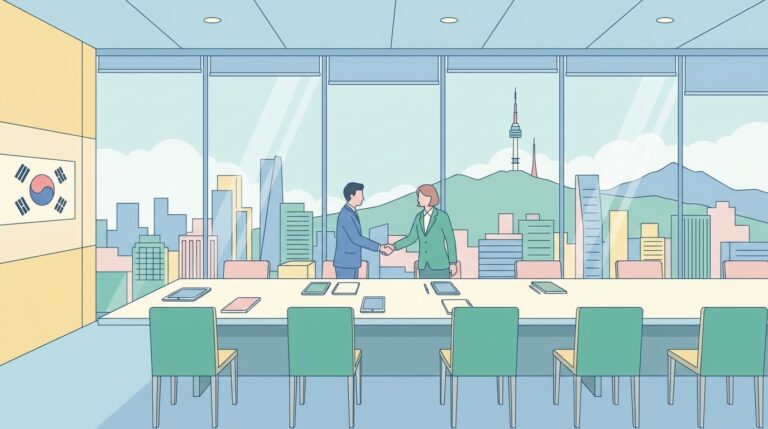
Picture this: You are sitting in an executive boardroom on the 28th floor of a shimmering skyscraper in Yeouido. Across from you are senior executives from Korea’s top chemical conglomerates, legal counsel, and government liaisons. The projector displays a slide titled: 화학물질 등록 및 평가 등에 관한 법률 개정안 (Amendments to K-REACH / Act on Registration and Evaluation of Chemical Substances). The debate is fierce. The industry side argues for easing compliance bottlenecks to foster competitive innovation, while compliance officers insist on stringent public safety measures reminiscent of post-Humidifier Disinfectant regulatory shifts.
If you have ever felt your Korean freezes right at the intersection of sophisticated policy jargon, high-stakes corporate diplomacy, and complex socio-political undercurrents, you are not alone. Advanced learners at the C2 level often know textbook Korean well, but falter when navigating the rhetorical nuance of deregulation (규제 완화), corporate social responsibility, and executive-level consensus building. Today’s guide is crafted directly from our executive coaching modules to give you native-level command over environmental compliance discourse.
Phase 2: Core Expressions Deep Dive
1. 규제 완화와 안전망 사이의 균형점을 모색하다 (Gyu-je wan-hwa-wa an-jeon-mang sai-ui gyun-hyeong-jeom-eul mo-saek-ha-da)
- Pronunciation: [Gyu-jeh wan-hwa-wah ahn-jeon-mang sah-ee-eui gyoon-hyeong-jeom-eul moh-saek-hah-dah] (Sound analogy: Gyu-jeh flows like ‘cue-jay’, mo-saek rhymes with ‘mosaic’ with a sharp ‘k’ ending).
- Meaning: Direct: To seek a balance point between deregulation and safety nets. / Nuance: Navigating the strategic tension between business efficiency and public safety accountability.
- K-Culture Moment: Seen frequently in K-Dramas like Stranger (비밀의 숲) or Misaeng (미생) during ministerial committee hearings and corporate crisis management scenes.
- Editor’s Insight: In high-level policy discussions, using 모색하다 instead of 찾다 elevates your rhetoric from casual problem-solving to strategic, multi-stakeholder deliberation.
- Situation Spectrum: Casual 🚫 | Semi-formal ⚠️ | Formal ✅
- 🤔 Think About It: In Korean corporate culture, why is balancing policy tensions expressed as an ongoing journey (모색) rather than a definitive final choice (결정)?
2. 산업계의 숨통을 트여주다 (San-eop-gye-ui sum-tong-eul teu-yeo-ju-da)
- Pronunciation: [Sahn-up-gyae-eui soom-tong-eul teu-yeo-joo-dah] (Sound analogy: Sum-tong sounds like a firm ‘soom-toang’, echoing relief).
- Meaning: Direct: To open the windpipe of the industry. / Nuance: To grant critical regulatory relief or alleviate suffocating administrative burdens.
- K-Culture Moment: Editorial headlines in business dailies (Maeil Business, Hankyung) reflecting corporate sentiment toward streamlining K-REACH testing protocols.
- Editor’s Insight: While metaphorical, this idiom is fully embraced in serious business journalism and policy advocacy speeches.
- Situation Spectrum: Casual ⚠️ | Semi-formal ✅ | Formal ✅
- 🤔 Think About It: Korean idioms often use somatic metaphors (e.g., windpipe, waist, pulse) to describe macro-economic phenomena. How does this reflect holistic thinking in Korean business philosophy?
3. 독성 정보의 투명성을 담보하다 (Dok-seong jeong-bo-ui tu-myeong-seong-eul dam-bo-ha-da)
- Pronunciation: [Dohk-seong jung-boh-eui too-myeong-seong-eul dahm-boh-hah-dah] (Sound analogy: Dam-bo sounds crisp like ‘dahm-boh’).
- Meaning: Direct: To collateralize/guarantee the transparency of toxicity data. / Nuance: To institutionalize ironclad verification and open public access regarding chemical hazard profiles.
- K-Culture Moment: Used by consumer watchdog leaders, ESG directors, and legal counsels during National Assembly audits (국정감사).
- Editor’s Insight: 담보하다 carries far more legal weight and institutional commitment than simple 보장하다 (to guarantee).
- Situation Spectrum: Casual 🚫 | Semi-formal ⚠️ | Formal ✅
- 🤔 Think About It: Why does Korean corporate governance place heavy linguistic stress on 투명성 (transparency) in the post-industrial era?
Phase 3: Textbook vs. Native Corporate Korean
Situation 1: Proposing streamlined registration thresholds for low-risk polymers
- 📖 Textbook Korean: “위험하지 않은 물질은 등록 기준을 낮추는 것이 회사에 좋습니다.” (For non-hazardous substances, lowering registration standards is good for the company.)
- 🗣️ Real Executive Korean: “인체 위해도가 미미한 물질군에 한해 등록 절차를 간소화함으로써 기업의 R&D 부담을 대폭 경감할 필요가 있습니다.”
- 💡 Why the Difference? C2-level corporate discourse replaces vague words (좋습니다) with precise administrative terminology (절차 간소화, 부담 경감) to project authority and institutional credibility.
Situation 2: Addressing civil society concerns over hazardous material exemptions
- 📖 Textbook Korean: “시민들이 걱정하니까 안전 관리를 철저히 해야 합니다.” (Citizens are worried, so we must manage safety thoroughly.)
- 🗣️ Real Executive Korean: “규제 유연화를 추진하되, 고위험 물질에 대한 사후 모니터링 체계를 촘촘히 구축해 대중의 우려를 선제적으로 불식시켜야 합니다.”
- 💡 Why the Difference? Native corporate Korean employs sophisticated conjunctions (-하되) and psychological/rhetorical verbs like 불식시키다 (to dispel anxieties proactively).
Phase 4: K-Culture Deep-Dive & Non-Verbal Nuance
4-1. Nunchi & Executive Non-Verbal Cues
When negotiating environmental deregulation in Korea, posture and subtle cadence (눈치 and 태도) speak louder than words. Avoid aggressive declarative confrontation. Instead, master the conciliatory nod with an affirmative preface (“말씀해주신 취지에 십분 공감하며…”). Keep steady, respectful eye contact without glaring, and use a moderate vocal pitch when delivering counter-proposals to convey grounded maturity (중후한 태도).
4-2. The Shadow of Precedent: Historical Context in Business
Korean chemical compliance is deeply intertwined with collective memory—particularly industrial chemical incidents that shaped contemporary environmental activism. When discussing K-REACH (화평법) and the Chemical Substances Control Act (화관법), understanding the societal demand for public safety prevents foreigners from sounding detached or purely profit-driven. Blending legal pragmatism with genuine public concern demonstrates an executive grasp of Korean corporate citizenship (기업 시민의식).
Phase 5: High-Stakes Roleplay Scenario
Setting: Ministry Conference Room in Sejong Government Complex.
Characters:
* Director Park (박 국장): Ministry of Environment Senior Official, balancing safety standards with industrial growth.
* You (Alex / 알렉스): VP of Global Regulatory Affairs representing an international advanced materials coalition.
- [Turn 1] 박 국장: “이번 화평법 개정안에서 신규 화학물질 등록 기준을 기존 0.1톤에서 1톤으로 완화하는 안에 대해 시민단체의 반발이 만만치 않습니다.”
(I-beon hwa-pyeong-beop gae-jeong-an-e-seo sin-gyu hwa-hak-mul-jil deung-nok gi-jun-eul gi-jon 0.1-ton-e-seo 1-ton-eu-ro wan-hwa-ha-neun an-e dae-hae si-min-dan-che-ui ban-bal-i man-man-chi an-seumnida.)
“Regarding the amendment to ease the new chemical registration threshold from 0.1 ton to 1 ton under K-REACH, civic groups are pushing back significantly.”
(🎭 Arms lightly resting on the table, brow furrowed with political weight) -
[Turn 2] Alex: “충분히 예견된 우려입니다. 다만 글로벌 스탠더드인 EU REACH나 미국 TSCA와의 정합성을 감안할 때, 등록 기준 합리화는 불가피한 수순입니다.”
(Chung-bun-hi ye-gyeon-doen u-ryeo-imnida. Da-man geul-ro-beol seu-taen-deo-deu-in EU REACH-na mi-guk TSCA-wa-ui jeong-hap-seong-eul gam-an-hal ttae, deung-nok gi-jun hap-ri-hwa-neun bul-ga-pi-han su-sun-imnida.)
“That is an understandable concern. However, considering alignment with global standards like EU REACH and US TSCA, rationalizing registration thresholds is inevitable.”
(🎭 Maintaining a calm, composed gaze while nodding slightly) -
[Turn 3] 박 국장: “등록 기준을 상향할 경우, 미등록 저용량 유해 물질로 인한 사각지대가 발생할 수 있다는 지적은 어떻게 보십니까?”
(Deung-nok gi-jun-eul sang-hyang-hal gyeong-u, mi-deung-nok jeo-yong-ryang yu-hae mul-jil-ro in-han sa-gak-ji-dae-ga bal-saeng-hal su it-da-neun ji-jeok-eun eo-tteo-ke bo-sim-ni-kka?)
“What is your view on concerns that raising thresholds may create regulatory blind spots for unlisted, low-volume hazardous substances?”
(🎭 Leaning forward, tapping a pen rhythmically) -
[Turn 4] Alex: “단순 면제가 아닙니다. 유해성 사전 신고제와 데이터베이스 연계를 의무화하여 관리의 사각지대를 원천 차단하는 보완책을 병행해야 합니다.”
(Dan-sun myeon-je-ga a-nim-nida. Yu-hae-seong sa-jeon sin-go-je-wa de-i-teo-be-i-seu yeon-gye-reul ui-mu-hwa-ha-yeo gwan-ri-ui sa-gak-ji-dae-reul won-cheon cha-dan-ha-neun bo-wan-chaek-eul byeong-haeng-hae-ya hamnida.)
“It is not a blank exemption. We must pair this with mandatory hazard pre-notification linked to central databases, preempting regulatory blind spots.” -
[Turn 5] 박 국장: “그렇다면 업계 차원에서도 사후 검증 비용 분강이나 인프라 구축에 적극 협조하겠다는 약속이 전제되어야겠군요.”
(Geu-reot-da-myeon eop-gye cha-won-e-seo-do sa-hu geom-jeung bi-yong bun-dam-i-na in-peu-ra gu-chuk-e jeok-geuk heop-jo-ha-get-da-neun yak-sok-i jeon-je-doe-eo-ya-get-gun-yo.)
“Then this hinges on the industry’s firm commitment to co-financing post-market surveillance and infrastructure.” -
[Turn 6] Alex: “물론입니다. 산학연 공동 안전 펀드 조성을 포함해 책임 있는 ESG 이행 방안을 명문화할 용의가 있습니다.”
(Mul-ron-imnida. San-hak-yeon gong-dong an-jeon peon-deu jo-seong-eul po-ham-hae chaek-im it-neun ESG i-haeng bang-an-eul myeong-mun-hwa-hal yong-ui-ga it-seumnida.)
“Certainly. We are willing to codify accountable ESG implementation, including joint industry-academia safety funds.” -
[Turn 7] 박 국장: “좋습니다. 그 정도 전향적인 대안이라면 부처 간 협의체 및 공청회 테이블에 정식 안건으로 상정해 볼 만하겠군요.”
(Jot-seumnida. Geu jeong-do jeon-hyang-jeok-in dae-an-i-ra-myeon bu-cheo gan hyeop-ui-che mit gong-cheong-hoe te-i-beul-e jeong-sik an-geon-eu-ro sang-jeong-hae bol man-ha-get-gun-yo.)
“Well noted. With such a constructive alternative, this warrants formal submission to the inter-ministerial council and public hearing agenda.” -
[Turn 8] Alex: “감사합니다, 국장님. 제도 개혁이 실질적인 산업 경쟁력과 국민 신뢰로 이어지도록 긴밀히 조율해 나가겠습니다.”
(Gam-sa-ham-ni-da, guk-jang-nim. Je-do gae-hyeok-i sil-jil-jeok-in san-eop gyeong-jaeng-ryeok-gwa guk-min sin-roe-ro i-eo-ji-do-rok gin-mil-hi jo-yul-hae na-ga-get-seumnida.)
“Thank you, Director. We will coordinate closely to ensure structural reform fosters both competitive edge and public trust.”
🔀 Interactive Decision Point
How would you handle Director Park’s sudden question in Turn 3 about public backlash?
* Choice A: “규제 완화 없이는 한국 시장에서 R&D 투자를 철수할 수밖에 없습니다.” (Threaten withdrawal of investment due to regulation).
* Choice B: “사각지대 우려를 해소할 대체 모니터링 시스템 구축안을 제시하며 제도 정합성을 강조한다.” (Propose alternative tracking solutions while emphasizing global harmonization).
* Choice C: “시민단체의 주장은 비과학적이니 무시하고 강행해야 합니다.” (Dismiss civic groups as unscientific).
Evaluation:
* Choice A (Risk): Damaging. Ultimatums alienate government counterparts and trigger fierce bureaucratic defensiveness.
* Choice B (Best): Flawless C2 diplomacy. It validates institutional risk while providing concrete policy off-ramps.
* Choice C (Bad): Disastrous. Overlooks democratic consensus-building, a core tenet of modern Korean public policy.
Phase 6: 10-Second Emotional Shadowing Drill
[👔 진중하고 확신에 찬 어조로 / Firm, authoritative, and visionary]
“규제 완화는 / 단순한 특혜가 아니라 / 글로벌 초격차 기술을 확보하기 위한 / 불가피한 결단입니다.”
(Gyu-je wan-hwa-neun / dan-sun-han teuk-hye-ga a-ni-ra / geul-ro-beol cho-gyeok-cha gi-sul-eul hwak-bo-ha-gi wi-han / bul-ga-pi-han gyeol-dan-imnida.)-
[🤝 정중하면서도 협상력을 발휘하며 / Diplomatic, empathetic yet persuasive]
“현장의 목소리를 경청하시되 / 산업 생태계 전반의 지속 가능성 또한 / 균형 있게 살펴주시길 기대합니다.”
(Hyeon-jang-ui mok-so-ri-reul gyeong-cheong-ha-si-doe / san-eop saeng-tae-gye jeon-ban-ui ji-sok ga-neung-seong tto-han / gyun-hyeong it-ge sal-pyeo-ju-si-gil gi-dae-hamnida.)
Phase 7: K-Culture Mini Dictionary
- 화평법 (Hwa-pyeong-beop) | Act on Registration and Evaluation of Chemical Substances (K-REACH)
Usage: The baseline statutory framework governing chemical risk assessment, compliance dossiers, and corporate testing liability in South Korea. - 모래주머니를 벗기다 (Mo-rae-ju-meo-ni-reul beot-gi-da) | To remove sandbags (eliminate bureaucratic obstacles)
Usage: Frequently invoked by economic policymakers to describe lifting heavy, archaic administrative burdens from agile businesses. - 사후 관리 (Sa-hu gwan-ri) | Post-market surveillance / Ex-post management
Usage: The regulatory trade-off where upstream registration is eased in exchange for punitive and thorough downstream enforcement. - 사회적 대타협 (Sa-hoe-jeok dae-ta-hyeop) | Grand socio-political consensus
Usage: Multi-party agreements involving government ministries, labor unions, corporate alliances, and civic environmental groups.
Phase 8: Business Traveler’s Survival Kit
Top 3 Survival Expressions for Corporate Delegations:
- “의전 및 회의 안건을 사전에 조율하고자 합니다.” (Ui-jeon mit hoe-ui an-geon-eul sa-jeon-e jo-yul-ha-go-ja hamnida.)
Pro Tip: Use when setting up protocol expectations and agendas with Korean state affiliates. - “대외비 자료이므로 보안 서약 후 열람 가능합니다.” (Dae-oe-bi ja-ryo-i-mru-ro bo-an seo-yak hu yeol-ram ga-neung-hamnida.)
Pro Tip: Crucial for proprietary chemical substance data exchange. - “차기 분과위원회 회의 일정은 서면으로 확정하시지요.” (Cha-gi bun-gwa-wi-won-hoe hoe-ui il-jeong-eun seo-myeon-eu-ro hwak-jeong-ha-si-ji-yo.)
Pro Tip: Professional closing for complex working group sessions.
Editor’s Corporate Travel Note:
When visiting the Sejong Government Complex (정부세종청사), reserve a clean taxi or express KTX via the KorailTalk mobile booking application well in advance. Government meetings require strict photo identification and pre-registered security clearance badges at the main gate.
Phase 9: Stepping Deeper (Cultural Perspective)
In Western legal discourse, deregulation is frequently framed through the lens of deregulation vs. over-regulation—a binary battle of market liberty versus state intervention. In Korea, policy reform operates within a profound paradigm of 공동체적 책임 (communal responsibility). Regulatory shifts are rarely viewed as absolute deregulation; rather, they are seen as 합리화 (rationalization) accompanied by higher moral stakes on corporate leaders. Demonstrating genuine reverence for collective safety while arguing for market agility is the hallmark of true cross-cultural mastery.
💬 Your Turn: How does environmental deregulation discourse in your home country compare to Korea’s collaborative, multi-stakeholder consensus model? Let us know in the comments below!
Phase 10: FAQ & Common Pitfalls
Q: What is the main driver behind the recent deregulation discussions around K-REACH (화평법)?
A: The primary catalyst is industrial competitiveness, particularly in semiconductor and secondary battery supply chains, aligning domestic testing mandates more closely with international frameworks like the EU and US while reducing administrative lead times.
Q: Can I use terms like “규제 철폐” (abolition of regulations) in official Korean meetings?
A: Exercise caution. 규제 철폐 sounds aggressive and dismissive of safety laws. Opt for 규제 합리화 (regulatory rationalization) or 규제 개선 (regulatory improvement), which are far more constructive.
Q: How do Korean government ministries distinguish between 화평법 (K-REACH) and 화관법 (CCA)?
A: 화평법 concentrates on the chemical substance registration, hazard testing, and risk assessment lifecycle, whereas 화관법 (Chemical Substances Control Act) governs physical chemical plant facilities, storage safety, and spill response management.
🚨 Common Mistakes Warning Board
- Mistake: Using casual conversational endings (-해요) in high-level public policy presentations.
Correct Action: Strictly use formal non-honorific/formal honorific structures (-ㅂ/습니다, -ㅂ/시오). - Mistake: Confusing 유해성 (hazard / intrinsic property) with 위해도 (risk / probability of harm under exposure).
Correct Action: Maintain technical precision: evaluate intrinsic 유해성, control operational 위해도. - Mistake: Overusing direct negatives like “그건 틀렸습니다” (That is wrong) with government officials.
Correct Action: Soften with “재고의 여지가 있어 보입니다” (There appears to be room for reconsideration).
Phase 11: Action Missions & Application
- 🥉 Bronze Mission (Self-Practice): Record yourself reading the Phase 6 Shadowing Drills with confident pacing and pauses.
- 🥈 Silver Mission (Social Engagement): Summarize one difference between chemical compliance in Korea and your home country on LinkedIn or your language journal using 규제 완화 and 사회적 합의.
- 🥇 Gold Mission (Live Application): In your next Korean business meeting or advanced class, frame an argument using the construct: “[A]의 취지에 공감하되, [B] 측면의 보완책을 병행해야 합니다.”
🎮 K-Culture Mission: Watch an episode of a Korean legal/corporate drama (such as Hyena or Agency) and note three formal rhetorical connectors (-하되, -에 비추어 볼 때, -을 전제로) used during corporate boardroom negotiations.
Phase 12: Interactive Quiz Challenge
- Context Judgement: Which phrase is most diplomatic when suggesting procedural simplification during a regulatory audit?
- (A) 복잡하니까 전부 없앱시다.
- (B) 행정적 비효율을 줄이기 위해 심사 절차를 간소화할 것을 제안드립니다.
- (C) 다른 나라는 안 이러는데 왜 한국만 이러나요?
- Fill in the Blank:
“단순한 규제 완화에 그치지 않고, 고위험 물질에 대한 사후 안전망을 철저히 ________ 할 필요가 있습니다.”- (A) 포기(abandon) | (B) 담보(guarantee/secure) | (C) 간과(overlook)
- True / False: In Korean corporate settings, arguing for chemical deregulation without acknowledging 국민 안전 (public safety) is considered sophisticated advocacy.
- (A) True | (B) False
👉 Click to Reveal Answers & Detailed Explanations
- Answer: (B)
Explanation: (B) maintains supreme professional courtesy and clear rationale (행정적 비효율, 간소화), whereas (A) and (C) are emotionally combative. - Answer: (B) 담보
Explanation: 담보하다 (to guarantee/secure institutional safety nets) perfectly completes the executive collocation with 안전망. - Answer: (B) False
Explanation: Disregarding public welfare violates Korean corporate citizenship expectations; advanced rhetoric always bridges industrial growth with social safety.







