

Phase 1: Empathy (Story-Driven Opening)
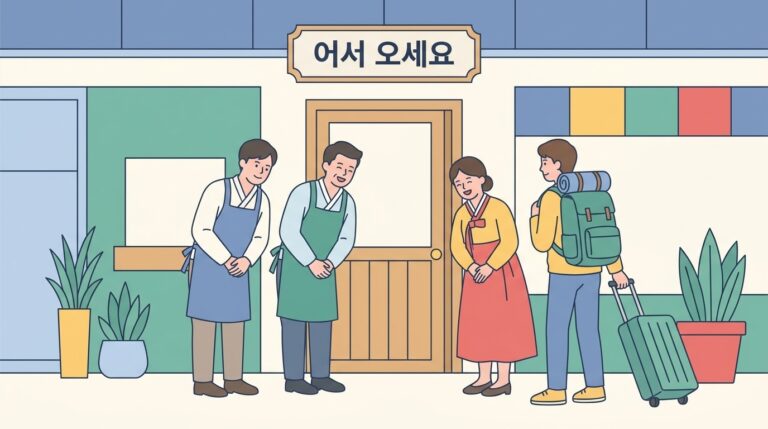
안녕하세요! This is your Daily Hangul editor. Imagine walking into a trendy BBQ restaurant in Hongdae with two of your closest friends. The enticing aroma of grilled pork belly fills the air, and your mouth is already watering. Suddenly, a friendly server approaches you with a warm smile and asks, “몇 분이세요?” (Myeot bun-iseyo?). You freeze. You know the numbers ‘il, i, sam’, but is ‘sam myeong’ correct? Or is it ‘se myeong’? Should you use your fingers?
If you have ever panicked at a restaurant entrance or felt confused between Native Korean and Sino-Korean numbers when counting people, don’t worry! You are definitely not alone. Counting people in Korea is one of the very first real-world hurdles learners face. But once you master Native Korean numbers paired with the counter ‘명’ (myeong) and ‘분’ (bun), you will confidently walk into any restaurant, cafe, or venue like a true local. Based on feedback from hundreds of our A2 learners, this guide will make counting people completely second nature for you!
Phase 2: Core Expressions Deep Dive
1. 한 명, 두 명, 세 명 (Han myeong, Du myeong, Se myeong)
- Pronunciation: [Han myeong, Du myeong, Se myeong] (Sounds like ‘Hahn’, ‘Doo’, ‘Seh’ combined with ‘myeong’ as in ‘young’ with an ‘m’)
- Meaning: One person, Two people, Three people
- K-Culture Moment: Stepping into a cozy cafe in Ikseon-dong and telling the host how many seats you need.
- Editor’s Insight: Notice how ‘하나’ (hana), ‘둘’ (dul), and ‘셋’ (set) change to ‘한’ (han), ‘두’ (du), and ‘세’ (se) when placed right before a counter noun like ‘명’!
- Situation Spectrum: Casual ✅ | Semi-formal ✅ | Formal ⚠️
- 🤔 Think About It: Why do you think Korean uses separate native counter words for people instead of just saying the bare number?
2. 몇 분이세요? (Myeot bun-iseyo?)
- Pronunciation: [Myeot bu-ni-se-yo?] (Sounds like ‘Myot boo-nee-seh-yoh?’)
- Meaning: How many people are in your party? (Honorific)
- K-Culture Moment: The standard greeting phrase every host or server uses as soon as you enter a Korean restaurant.
- Editor’s Insight: ‘분’ (bun) is the honorific counter for people. Servers use ‘분’ to show deep respect to you, the customer!
- Situation Spectrum: Casual 🚫 | Semi-formal ✅ | Formal ✅
- 🤔 Think About It: How does your native language handle polite forms when asking for party sizes at restaurants?
3. 두 명이에요 (Du myeong-ieyo)
- Pronunciation: [Du myeong-i-e-yo]
- Meaning: It’s two people / Table for two, please.
- K-Culture Moment: Answering the restaurant server smoothly without hesitation.
- Editor’s Insight: You reply with ‘명’ (myeong) for yourself, which is humble and natural, while the server addresses you with ‘분’ (bun).
- Situation Spectrum: Casual ⚠️ | Semi-formal ✅ | Formal ✅
- 🤔 Think About It: In Korean culture, why is it customary to use humble terms for oneself while receiving honorific terms from service staff?
Phase 3: Textbook Korean vs Real Korean
Situation 1: Telling the server your group size
- 📖 Textbook Korean: 저희는 세 명입니다. (Jeohineun se myeong-imnida.)
- 🗣️ Real Korean: 세 명이에요. (Se myeong-ieyo.)
- 💡 Why different?: While ‘입니다’ is perfectly grammatically correct, ‘이에요’ sounds much warmer and more natural in daily life.
Situation 2: Asking if a seat for one is available
- 📖 Textbook Korean: 혼자 왔습니다. 자리 있습니까? (Honja wat-seumnida. Jari it-seumnikka?)
- 🗣️ Real Korean: 혼자 왔는데 자리 있어요? (Honja wan-neundde jari it-seoyo?)
- 💡 Why different?: Korean speakers prefer connecting phrases like ‘~는데’ to soften requests and sound polite yet conversational.
Phase 4: K-Culture Deep Dive & Non-Verbal Manners
4-1. Nunchi (눈치) & Gestures
When stating your party size at a busy restaurant, raising your fingers alongside speaking is super helpful! However, hold your hand up near chest level with palms facing forward. Avoid pointing directly at staff members with a single index finger, as open palms or gentle finger counts look much more polite in Korea.
4-2. Culture Code: Honbap (혼밥) Culture
Korea’s dining scene has embraced ‘Honbap’ (혼밥 – solo dining). Saying “한 명이에요” (Han myeong-ieyo) is completely normal! Many casual eateries offer single-diner booths or counter seats perfect for solo travelers.
Phase 5: Real Roleplay Scenario
- Location: A popular K-BBQ restaurant in Seongsu-dong.
- NPC Server: Min-soo (Attentive and energetic restaurant host).
- Server: 어서 오세요! 몇 분이세요? (Eoseroseyo! Myeot bun-iseyo?) 🎭 [Smiles brightly and holds open the entrance doorway]
- Learner: 안녕하세요! 두 명이에요. (Annyeonghaseyo! Du myeong-ieyo.) 🎭 [Raises two fingers gently with a warm nod]
- Server: 안쪽에 자리 있어요. 이쪽에 앉으세요. (Anjjoge jari it-seoyo. Ijjoge anjeuseyo.) 🎭 [Gently gestures toward a cozy table near the window]
- Learner: 감사합니다! 혹시 아기의자도 있어요? (Gamsahamnida! Hoksi agi-uijado it-seoyo?) 🎭 [Looks around politely]
- Server: 네, 바로 가져다드릴게요! (Ne, baro gajyeoda-deurilgeyo!) 🎭 [Nods promptly and fetches high chair]
- Learner: 정말 감사합니다. (Jeongmal gamsahamnida.) 🎭 [Bows slightly in appreciation]
- Server: 메뉴판 여기 있습니다. 천천히 보세요! (Menyupan yeogi it-seumnida. Cheoncheonhi boseyo!) 🎭 [Hands over menus with both hands]
- Learner: 네, 고맙습니다! (Ne, gomapseumnida!) 🎭 [Receives menu with both hands]
🔀 Interactive Choice Point:
The server asks: “몇 분이세요?” How do you answer for a group of 4?
* Option A: 사 명이에요. (Sa myeong-ieyo.)
* Option B: 네 명이에요. (Ne myeong-ieyo.)
* Option C: 네 분입니다. (Ne bun-imnida.)
Feedback:
* Option A (BAD ❌): ‘사’ is Sino-Korean. Using it with ‘명’ sounds unnatural. Use Native Korean ‘네’ instead!
* Option B (BEST ✅): Perfect! Native number ‘네’ + counter ‘명’ + polite ending ‘이에요’ is 100% natural.
* Option C (RISK ⚠️): ‘분’ is honorific used for OTHERS. Using ‘분’ for yourself sounds overly self-elevating.
Phase 6: 10-Second Emotion Shadowing Drill
- [😊 Friendly & Bright] 안녕하세요! / 두 명이에요. (An-nyeong-ha-se-yo! / Du myeong-i-e-yo.)
- [🥺 Polite & Hopeful] 혹시 / 창가 자리 / 있어요? (Hok-si / chang-ga ja-ri / it-seo-yo?)
- [😃 Happy & Relieved] 네, / 세 명 맞아요! (Ne, / se myeong ma-ja-yo!)
Phase 7: K-Culture Mini Dictionary
- 한 명 (Han myeong) | One person | Used when dining or booking tickets solo.
- 두 명 (Du myeong) | Two people | The most common pair count at cafes/restaurants.
- 일행 (Ilhaeng) | Party / Group | Refers to companions coming together (e.g., “일행 있어요” = I have companions coming).
- 혼밥 (Honbap) | Solo dining | Slang blending ‘혼자’ (alone) and ‘밥’ (meal).
Phase 8: Traveler Survival Kit
Top 3 Survival Expressions
- 두 명이에요. (Du myeong-ieyo.) – Table for two, please.
- 세 명 자리 있어요? (Se myeong jari it-seoyo?) – Do you have room for three?
- 일행 더 와요. (Ilhaeng deo wayo.) – More people in my party are coming.
Editor’s Travel Note
Before heading out to explore Korea’s amazing food markets, make sure you download the Naver Map app for easy restaurant navigation. Knowing how to say your party size makes getting seated super quick during busy lunch hours!
Phase 9: One Step Deeper
In Korean culture, language mirrors social harmony. When servers refer to you as ‘손님’ (guest) and ask “몇 분이세요?”, they elevate your status using honorifics. Conversely, replying with “두 명이에요” uses the standard counter ‘명’, reflecting genuine humble courtesy. Language isn’t just about labels—it’s a dance of mutual respect.
💬 Your Turn: Have you ever used Korean at a restaurant before? Share your dining stories in the comments below!
Phase 10: FAQ & Common Mistakes
Q: Can I use Sino-Korean numbers (일, 이, 삼) with 명?
A: No, always pair Native Korean numbers (한, 두, 세, 네…) with the counter ‘명’ (myeong).
Q: Is it rude to say “두 명” instead of “두 분” when ordering?
A: Not at all! In fact, calling your own group ‘두 명’ is grammatically correct and humble.
Q: How do I say 5 people in Korean?
A: Use ‘다섯 명’ (Daseot myeong)!
🚨 Common Mistakes TOP 3:
1. Saying “이 명” instead of “두 명” -> Correct Action: Use Native number ‘두’.
2. Saying “저희는 두 분이에요” -> Correct Action: Don’t use honorific ‘분’ for yourself; say “두 명이에요”.
3. Saying “하나 명” -> Correct Action: Change ‘하나’ to ‘한’ before counter words (‘한 명’).
Phase 11: Action Mission & Engagement
- Bronze Level: Practice saying “한 명, 두 명, 세 명, 네 명” aloud 3 times.
- Silver Level: Write a comment below stating your party size for your next imaginary trip to Seoul!
- Gold Level: Order food or request a table in Korean at a local Korean eatery!
🎮 K-Culture Mission: Watch a K-Drama restaurant scene and spot when the waiter asks “몇 분이세요?”!
Phase 12: Interactive Quiz Challenge
- What is the correct way to say “Table for 3, please”?
A) 삼 명이에요
B) 세 명이에요
C) 셋 분이에요
Check Answer
Correct Answer: B) 세 명이에요! Native number ‘세’ pairs correctly with ‘명’.
- True or False: You should call yourself ‘분’ (bun) when telling a server your party size.
Check Answer
Correct Answer: False! ‘분’ is an honorific used by servers to show respect to you. You should use ‘명’ for yourself.







