

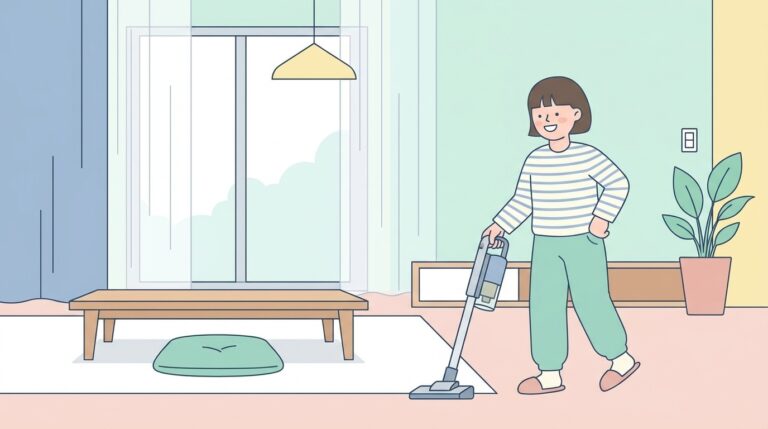
Clean Your Room Like a True Korean: Essential A1 Housework Guide
Phase 1: Empathy (Welcome to Daily Hangul!)
안녕하세요! (Annyeonghaseyo!) I’m your Daily Hangul editor and your 10-year local culture navigator!
Have you ever watched a K-drama scene where housemates put on cute headbands, crank up K-pop, and turn a messy apartment into a spotless home? It looks fun and cozy, but when you actually live in Korea or share a space with Korean friends, real-life housework can feel overwhelming. You might catch yourself standing in front of a pile of dust wondering: How do I say ‘I am cleaning my room’ in polite yet casual Korean without sounding like a robotic grammar textbook?
If you have ever felt nervous about talking about daily chores in Korean, don’t worry! This guide is crafted specifically from real foreign learner feedback. By the end of this lesson, you will confidently express cleaning routines, join house chores effortlessly, and understand the sweet cultural logic behind Korean home life.
Phase 2: Core Expressions Deep Dive
1. 방 청소해요 (Bang cheongsohaeyo)
- Pronunciation: [Bang cheong-so-hae-yo] (Sounds like bahng + chong-so like ‘chong’ + hae-yo)
- Meaning: Literal: “Room clean do.” / Real Nyanze: “I am cleaning my room” or “Let’s clean the room.”
- K-Culture Moment: You hear this in every Korean slice-of-life drama when a mother knocks on her child’s bedroom door on a Sunday morning!
- Editor’s Insight: The word 방 (bang) means room, and 청소해요 (cheongsohaeyo) comes from the verb 청소하다 (to clean). Adding -해요 keeps it friendly and polite for absolute beginners.
- Situation Spectrum:
- Casual: 방 청소해 (Bang cheongsohae) ✅
- Semi-formal: 방 청소해요 (Bang cheongsohaeyo) ✅
- Formal: 방 청소합니다 (Bang cheongsohamnida) ⚠️ (Too stiff for home!)
- 🤔 Think About It: In English, we usually specify “my room.” Why do you think Koreans often drop “my” and simply say “room clean”?
2. 쓰레기 버려요 (Sseuregi beoryeoyo)
- Pronunciation: [Sseu-rae-gi beor-yeo-yo] (Sseu like ‘soo’ with flat lips + rae-gi + beor-yeo-yo)
- Meaning: Literal: “Garbage throw away.” / Real Nyuance: “I’m taking out the trash.”
- K-Culture Moment: In Korean reality shows, housemates play rock-paper-scissors (가위바위보) to decide who will 쓰레기 버려요!
- Editor’s Insight: 쓰레기 (sseuregi) means trash. Taking out trash in Korea is a big deal due to strict recycling rules, so saying this phrase shows you are a responsible housemate!
- Situation Spectrum:
- Casual: 쓰레기 버려 (Sseuregi beorye) ✅
- Semi-formal: 쓰레기 버려요 (Sseuregi beoryeoyo) ✅
- Formal: 쓰레기 버립니다 (Sseuregi beorimnida) 🚫 (Unnatural at home)
- 🤔 Think About It: How does your home country handle garbage duty compared to playing games to assign chores?
3. 먼지 털어요 (Meonji teoreoyo)
- Pronunciation: [Meon-ji teor-eo-yo] (Meon like ‘money’ without ‘y’ + ji + teor-eo-yo)
- Meaning: Literal: “Dust shake off.” / Real Nyuance: “I’m dusting off / wiping the dust.”
- K-Culture Moment: Pre-spring cleaning scenes where characters pat down cushions or wipe bookshelves while singing.
- Editor’s Insight: 먼지 (meonji) is dust, and 털다 (teolda) means to brush off or shake off. It’s a quick, light chore phrase.
- Situation Spectrum:
- Casual: 먼지 털어 (Meonji teoreor) ✅
- Semi-formal: 먼지 털어요 (Meonji teoreoyo) ✅
- Formal: 먼지 틉니다 (Meonji teumnida) 🚫
- 🤔 Think About It: Why does Korean emphasize dust cleaning as a separate verb action?
Phase 3: Textbook Korean vs Real Korean
Situation 1: Declaring you are cleaning today
- 📖 Textbook Korean: 저는 오늘 방 청소를 합니다. (Jeoneun oneul bang cheongsoreul hamnida.)
- 🗣️ Real Korean: 오늘 방 청소해요! (Oneul bang cheongsohaeyo!)
- 💡 Why is it different? Native speakers skip the rigid topic markers (저는, 를) in daily spoken conversations to sound warmer and more conversational.
Situation 2: Asking your roommate to take out the trash
- 📖 Textbook Korean: 쓰레기를 버려 주시겠습니까? (Sseuregireul beoryeo jusigessimnika?)
- 🗣️ Real Korean: 쓰레기 좀 버려 줄래? / 쓰레기 버려요! (Sseuregi jom beoryeo jullae? / Sseuregi beoryeoyo!)
- 💡 Why is it different? Using 좀 (jom, meaning ‘a little’ or ‘please’) softens requests instantly in modern Korean standard speech.
Phase 4: K-Culture Deep Dive & Non-verbal Manners
4-1. Nunchi & Gestures
- Shoe-Free Zone Awareness: In Korean homes, you never wear outdoor shoes inside. When cleaning the entrance (현관 – hyeongwan), turn the shoes neatly facing toward the exit door as a sign of consideration.
- Rolling Up Sleeves: Before saying “청소하자!” (Let me clean!), rolling up your sleeves while wearing a house headband shows enthusiastic team spirit!
4-2. Cultural Code: The Art of Korean Trash Sorting (분리수거)
In Korea, waste management is precise and eco-friendly. Trash isn’t just thrown into one bag. Food waste (음식물 쓰레기), recyclables (재활용), and general waste (일반 쓰레기) must be separated. Participating in this process with a smile demonstrates top-tier 눈치 (Nunchi / social tact) and care for your community.
Phase 5: Real-Life Roleplay Scenario
Setting: Saturday morning at a cozy shared house in Hongdae, Seoul.
Character: Minju (민주) – Your friendly Korean housemate who loves clean spaces.
- Minju: 주말인데 방 청소해요! (Jumal-inde bang cheongsohaeyo!)
- (Translation: It’s the weekend, let’s clean the room!)
- 🎭 Action: Minju hands you a cleaning cloth with a energetic smile.
- You: 네! 같이 청소해요. (Ne! Gachi cheongsohaeyo.)
- (Translation: Yes! Let me/us clean together.)
- Minju: 저는 먼지 털게요. (Jeoneun meonji teolgeyo.)
- (Translation: I’ll dust off the surfaces.)
- You: 그럼 저는 청소기 돌릴게요! (Geureom jeoneun cheongsogi dollilgeyo!)
- (Translation: Then I will run the vacuum cleaner!)
- Minju: 와, 고마워요! 쓰레기도 버릴까요? (Wa, gomawoyo! Sseuregido beorilkayo?)
- (Translation: Wow, thank you! Shall we throw away the trash too?)
- You: 네, 제가 쓰레기 버려요! (Ne, jega sseuregi beoryeoyo!)
- (Translation: Yes, I will throw away the trash!)
- Minju: 분리수거 봉투는 여기 있어요. (Bullisugeo bongtuneun yeogi isseoyo.)
- (Translation: The recycling bag is right here.)
- You: 알겠어요! 방 청소 끝! (Algesseoyo! Bang cheongso kkeut!)
- (Translation: Got it! Room cleaning finished!)
🔀 Interactive Choice Point
Minju asks: “쓰레기 같이 버릴까요?” (Shall we throw out the trash together?)
- Option A: “아니요, 혼자 하세요.” (No, do it alone.)
- Option B: “좋아요! 같이 버려요.” (Sounds good! Let’s throw it out together.)
- Option C: “몰라요.” (I don’t know.)
Feedback:
* Option A (Risk): Too blunt! Sounds rude in Korean living culture.
* Option B (BEST ⭐): Warm, polite, and builds instant friendly team spirit!
* Option C (Bad): Leaves the other person hanging awkwardly.
Phase 6: 10-Second Emotional Shadowing Drill
Practice saying these aloud with rhythm and feeling!
[😊 Cheerful]오늘 / 방 청소해요!
(O-neul / bang cheong-so-hae-yo!)[🧹 Energetic]제가 / 쓰레기 / 버려요!
(Je-ga / sseu-rae-gi / beor-yeo-yo!)[🎉 Relieved]청소 / 끝! / 깨끗해요!
(Cheong-so / kkeut! / Kkae-kkeut-hae-yo!)
Phase 7: K-Culture Mini Dictionary
- 청소기 (Cheongsogi) | Vacuum Cleaner | Used daily: “청소기 돌려요” (I run the vacuum).
- 걸레 (Geolle) | Cleaning Rag / Mop | Used for wiping floors and tables.
- 분리수거 (Bullisugeo) | Recycling Separation | Essential Korean habit for eco-living.
- 쓰레기봉투 (Sseuregibongtu) | Standard Pay-as-you-throw Trash Bag | Purchased at convenience stores.
Phase 8: Traveler’s Survival Kit
Survival Expressions TOP 3
- 쓰레기통 어디 있어요? (Sseuregitong eodi isseoyo?) – Where is the trash can?
- 이거 버려도 돼요? (Igeo beoryeodo dwaeyo?) – Can I throw this away?
- 깨끗해요! (Kkaekkeut-haeyo!) – It is clean!
- Pro Tip: Public trash cans are rare on Seoul streets! Keep a small bag in your backpack while traveling.
- Editor’s Travel Note: To locate nearby convenience stores where you can buy official municipal trash bags, check out the Naver Map app download guide before your trip.
Phase 9: One Step Deeper (Culture Thought)
In Korea, cleaning isn’t just an individual chore—it’s tied to community care and starting fresh. The idea of clearing away old dust is believed to welcome good fortune (복 – bok) into your home. When roommates clean together, it signals harmony and mutual respect.
💬 Your Turn: What is your favorite routine when cleaning your own home? Tell us in the comments below!
Phase 10: FAQ & Common Mistakes
Q: Can I use ‘청소해요’ for cleaning dishes?
A: No! For cleaning dishes, use 설거지해요 (seolgeoji-haeyo). 청소해요 is reserved for spaces like rooms, houses, and streets.
Q: Is ‘쓰레기 버려요’ polite enough for elders?
A: Yes, but adding -습니다 (beorimnida) or saying 버려 드릴게요 (beoryeo deurilgeyo – I’ll throw it away for you) sounds even more respectful.
Q: Where do I get official trash bags in Korea?
A: You can buy them at any local convenience store (CU, GS25, Seven Eleven) at the counter by asking for 종량제 봉투 (jongryangje bongtu).
🚨 Common Mistakes
- Mistake: Saying “방을 씻어요” (Bang-eul ssiseoyo) for room cleaning.
- Correction: 씻다 means to wash your body/hands. Use 방 청소해요!
- Mistake: Throwing food waste into standard trash.
- Correction: Always put food waste into dedicated yellow/green food waste bags or bins!
- Mistake: Forgetting to soft-request with ‘좀’.
- Correction: Say “쓰레기 좀 버려 주세요” instead of demands.
Phase 11: Action Mission
- 🥉 Bronze Mission: Say “오늘 방 청소해요!” out loud 3 times today.
- 🥈 Silver Mission: Post a picture of your tidy desk on Instagram and tag
#DailyHangul #방청소! - 🥇 Gold Mission: Help a friend or roommate clean and say “같이 청소해요!”
- 🎮 K-Culture Mission: Watch a K-drama clip and spot if characters say “청소” or






