

Phase 1: Empathy (Storytelling Opening)
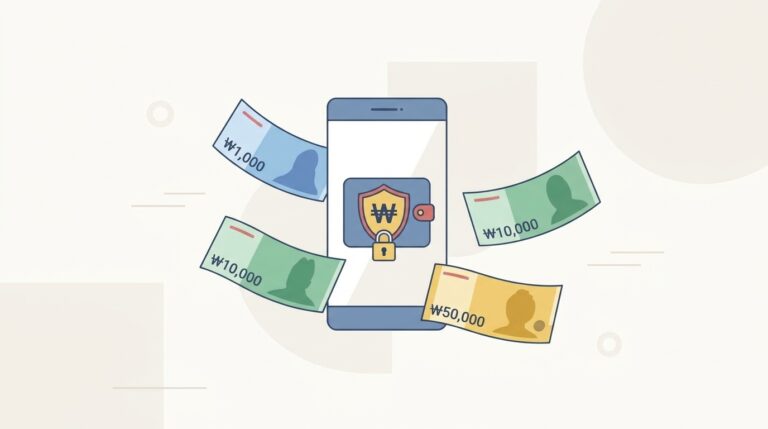
안녕하세요! 매일한글 에디터입니다. Welcome back to Daily Hangul! Have you ever tapped your smartphone against a payment terminal in Seoul and felt a strange mixture of awe and mild panic? With Korea’s cutting-edge fintech infrastructure—where Naver Pay, Kakao Pay, Toss, and Apple Pay process transactions in less than a second—spending money has never felt so delightfully painless. But therein lies the psychological trap.
Many advanced Korean learners tell us: “I can discuss macroeconomics in Korean, but I struggle to express the nuanced emotional conflict of frictionless overspending when talking to my Korean colleagues during lunch break!” You buy a ₩2,000 iced Americano, tap your phone, and before you know it, one-click add-ons, auto-reloads, and zero-friction checkouts have drained your bank account without a single physical bill leaving your hands. In this C2-level guide, grounded in real feedback from our global learner community, we will dissect the advanced linguistic nuances and consumer psychology behind Korea’s digital payment ecosystem so you can express complex social behaviors with absolute fluency.
Phase 2: Deep Analysis of 3 Core C2 Expressions
1. 손가락 하나로 지갑이 털리다 (Songarak hanaro jigabi teollida)
- Pronunciation: [손가락 하나로 지갑이 털리다] (son-ga-rak ha-na-ro ji-gap-i teol-li-da – Sounds like: Son-gah-rak ha-na-ro jee-gah-bee teol-ree-dah)
- Meaning: Literally “To have one’s wallet cleaned out with just a single finger.” Metaphorically, it describes losing a significant amount of money through frictionless digital payments or impulse online buying.
- K-Culture Moment: Seen in contemporary K-dramas when a character absentmindedly buys limited-edition goods via a single thumbprint scan on their smartphone while lounging on the couch.
- Editor’s Insight: The passive verb
털리다(to be raided/robbed) shifts the psychological blame slightly away from the spender onto the seductive ease of the fintech system, offering a humorous self-deprecating excuse.- Situation Spectrum: Casual ✅ | Semi-formal ✅ | Formal 🚫
- 🤔 Think About It: How does your native language linguistically attribute responsibility when digital convenience leads to unintended financial loss?
2. 홧김비용으로 탕진잼을 느끼다 (Hwatgimbiyong-euro tangjinjaem-eul neukkida)
- Pronunciation: [홧김비용으로 탕진잼을 느끼다] (hwat-gim-bi-yong-eu-ro tang-jin-jaem-eul neu-kki-da – Sounds like: Hwat-geem-bee-yong-oo-ro tang-jeen-jaem neu-kee-dah)
- Meaning: To experience the thrill of squandering money (
탕진잼) as a stress-relief coping mechanism (홧김비용).- K-Culture Moment: Frequently discussed on Korean productivity YouTube vlogs or workplace podcasts where burnt-out office workers detail their late-night online delivery splurges.
- Editor’s Insight: This compound expression merges
홧김(out of anger/frustration) +비용(cost) with탕진(dissipation) +잼(fun). It encapsulates modern Korean urban survival culture among young professionals.- Situation Spectrum: Casual ✅ | Semi-formal ⚠️ | Formal 🚫
- 🤔 Think About It: Is emotional spending viewed as a valid coping mechanism or a behavioral flaw in your home country?
3. 배보다 배꼽이 더 크다 (Baeboda baekkobi deo keuda)
- Pronunciation: [배보다 배꼽이 더 크다] (bae-bo-da bae-kkob-i deo keu-da – Sounds like: Bae-boh-dah bae-kkob-ee deo keu-dah)
- Meaning: Literally “The belly button is bigger than the belly.” Used when incidental costs (like micro-transaction fees, delivery charges, or impulse add-ons) exceed the main item’s cost.
- K-Culture Moment: Commonly heard when ordering a ₩4,000 bubble tea online only to find the quick-delivery service fee and digital convenience surcharge total ₩5,000.
- Editor’s Insight: At C2, using idiomatic proverbs (
속담) in discussions on fintech algorithms shows high cultural integration and refined conversational command.- Situation Spectrum: Casual ✅ | Semi-formal ✅ | Formal ✅
- 🤔 Think About It: What anatomical or spatial idioms does your language use to highlight absurd indirect costs?
Phase 3: Textbook Korean vs. Real Native Korean
Situation 1: Explaining how easy payment apps lead to impulse buying
- 📖 Textbook Korean: 간편 결제 시스템은 소비자가 돈을 쓰는 것을 깨닫지 못하게 하여 과소비를 유발할 수 있습니다.
(Easy payment systems can induce overspending by making consumers unaware that they are spending money.) - 🗣️ Real Native Korean: 간편 결제 버튼 몇 번 누르다 보면 결제 감각이 무뎌져서 나도 모르게 텅장이 되더라고요.
(If you tap that quick-pay button a few times, your sensation of spending gets dulled, and before you know it, your account is completely drained.) - 💡 Why the difference? Native speakers use psychological sensory verbs like
무뎌지다(to become numb/dulled) and expressive slang like텅장(empty bank account) to reflect subjective consumer sentiment.
Situation 2: Discussing auto-renewal traps and micro-subscriptions
- 📖 Textbook Korean: 정기 구독 서비스의 자동 결제 기능 때문에 불필요한 지출이 지속적으로 발생합니다.
(Unnecessary expenditure continuously occurs due to the automatic payment feature of regular subscription services.) - 🗣️ Real Native Korean: 자동 연장 결제 걸어두면 잔돈 빠져나가듯 돈이 새는데, 막상 해지하려니 귀찮더라고요.
(If you leave auto-renewal toggled on, money leaks out like loose change, but when you actually try to cancel, it feels like such a chore.) - 💡 Why the difference? Native Koreans employ metaphorical movement verbs like
돈이 새다(money leaking) to express passive, frictionless losses.
Phase 4: K-Culture Deep Dive & Non-Verbal Manners
4-1. Nunchi (눈치) & Non-Verbal Cues in Digital Transactions
In Korea, speed and seamlessness are supreme courtesy. When splitting a bill using Toss or Kakao Pay after a team dinner (회식), sending your share instantly before leaving the table is considered high 눈치. Hesitating or asking for physical receipts while others are using facial recognition creates subtle social friction. However, when discussing financial strain, a light tap on one’s heart accompanied by a dry laugh communicates: “I know it’s easy to pay, but my wallet is hurting inside.”
4-2. Cultural Code Analysis: The Naver Pay & Toss Ecosystem
Korea has effectively bypassed traditional credit cards in favor of platform-integrated fintech. Platforms offer point-back incentives (up to 5-10% return) that gameify consumption. This creates the psychological illusion that “spending is actually saving” (포인트 재테크). In modern K-dramas, young urbanites are frequently depicted managing their daily lives through single super-apps, reflecting how digital convenience and psychological nudges intersect in modern Korean consumer behavior.
Phase 5: Real-World Roleplay Scenario
- Setting: A trendy cafe in Seongsu-dong. Minjun (a fintech-savvy tech strategist) and You (an international consultant) are discussing credit control after receiving continuous push notifications.
Characters:
* Minjun (민준): Quick-thinking, enthusiast of frictionless payments, always collecting app points.
* You (당신): Analyzing the mental traps of mobile payment systems in fluent C2 Korean.
Dialogue
- Minjun: 🎭 (pointing phone at screen)
Frequently Asked Questions (FAQ)
Q: What does "손가락 하나로 지갑이 털리다 (Songarak hanaro jigabi teollida)" mean in Korean and how do you pronounce it?
A: In Korean, "손가락 하나로 지갑이 털리다 (Songarak hanaro jigabi teollida)" is pronounced [손가락 하나로 지갑이 털리다] and means: Literally "To have one's wallet cleaned out with just a single finger." Metaphorically, it describes losing a significant amount of money through frictionless digital payments or impulse online buying.
Q: What does "홧김비용으로 탕진잼을 느끼다 (Hwatgimbiyong-euro tangjinjaem-eul neukkida)" mean in Korean and how do you pronounce it?
A: In Korean, "홧김비용으로 탕진잼을 느끼다 (Hwatgimbiyong-euro tangjinjaem-eul neukkida)" is pronounced [홧김비용으로 탕진잼을 느끼다] and means: To experience the thrill of squandering money (탕진잼) as a stress-relief coping mechanism (홧김비용).
Q: What does "배보다 배꼽이 더 크다 (Baeboda baekkobi deo keuda)" mean in Korean and how do you pronounce it?
A: In Korean, "배보다 배꼽이 더 크다 (Baeboda baekkobi deo keuda)" is pronounced [배보다 배꼽이 더 크다] and means: Literally "The belly button is bigger than the belly." Used when incidental costs (like micro-transaction fees, delivery charges, or impulse add-ons) exceed the main item's cost.






