

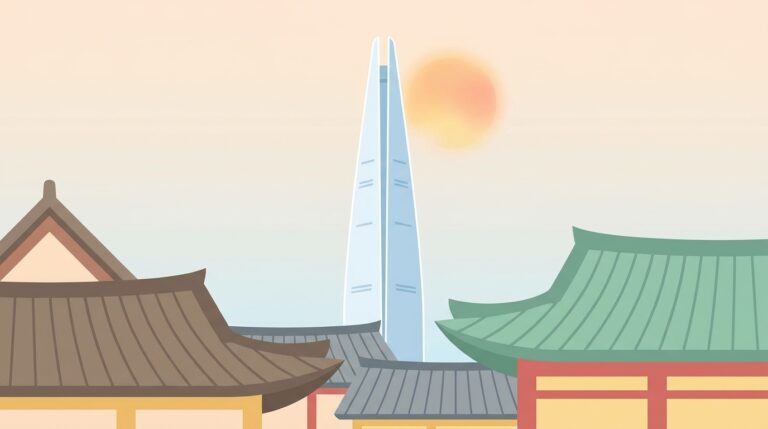
Mastering Korean Architecture & Landmarks: Navigating Skyscrapers and Urban Regeneration Like a Native
Phase 1: 공감 (Empathy & Opening)
안녕하세요! I’m your Daily Hangul editor, your trusted cultural navigator! Have you ever stood in the heart of Seoul—perhaps gazing up at the sleek, 123-story Lotte World Tower in Jamsil, or admiring the futuristic curve of the Dongdaemun Design Plaza (DDP)—and wanted to articulate something deeper than just “건물이 커요” (The building is big)?
As C1 advanced-intermediate learners, you are ready to move beyond basic descriptive phrases and dive into sophisticated architectural discourse. Korea’s urban landscape is a thrilling canvas where hyper-modern skyscrapers coexist with centuries-old royal palaces and thoughtfully regenerated alleyways. Many advanced learners feel stuck when transitioning from simple daily conversational Korean to nuanced discussions about urban identity, skyline transformation, and spatial heritage. This guide is crafted specifically to bridge that gap using real-world cultural contexts, sophisticated terminology, and practical insights.
Phase 2: 핵심 표현 3선 심층 분석 (Deep-Dive into 3 Key Expressions)
1. 도시의 궤적을 잇다
- Pronunciation: [Dosi-ui gwejeog-eul itda] (Sounds like Doh-shi-ui gway-juck-eul eet-dah)
- Meaning: Literal: To connect the city’s trajectory. | Nuance: To bridge a city’s historical heritage with modern development through thoughtful urban design.
- K-Culture Moment: Frequently featured in architecture documentaries and socio-cultural talk shows like Alssulsinjob (알쓸신잡) when discussing projects like Seunsangga or Seoullo 7017.
- Editor’s Insight: ‘궤적’ (trajectory/trace) adds an artistic, philosophical depth. Use this phrase when complimenting how modern architecture respects historic surroundings.
- Situation Spectrum: Casual 🚫 | Semi-formal ⚠️ | Formal ✅
- 🤔 Think About It: How does your home country balance preserving historic landmarks with erecting high-tech mega-structures?
2. 상징성을 지니다
- Pronunciation: [Sangjingseong-eul jinida] (Sounds like Sahng-jeeng-seung-eul jee-nee-dah)
- Meaning: Literal: To possess symbolism. | Nuance: To carry deep iconic or cultural significance that represents a community or era.
- K-Culture Moment: Used by news anchors describing N Seoul Tower or Lotte World Tower as architectural emblems representing South Korea’s economic development.
- Editor’s Insight: While ‘유명하다’ (famous) is basic, ‘상징성을 지니다’ elevates your vocabulary to professional and literary standards.
- Situation Spectrum: Casual ⚠️ | Semi-formal ✅ | Formal ✅
- 🤔 Think About It: What landmark in your country best embodies the nation’s identity, and why?
3. 스카이라인을 재정의하다
- Pronunciation: [Seukairain-eul jaejeong-uihada] (Sounds like Seu-ka-ee-ra-een-eul jae-jung-ee-hah-dah)
- Meaning: Literal: To redefine the skyline. | Nuance: To dramatically alter and modernize a cityscape’s horizon with high-rise landmarks.
- K-Culture Moment: Commonly heard in urban development press conferences or K-Drama scenes featuring visionary corporate CEOs discussing real estate projects.
- Editor’s Insight: Blending loan words like ‘스카이라인’ with native/Sino-Korean verbs like ‘재정의하다’ creates an expressive, contemporary tone.
- Situation Spectrum: Casual 🚫 | Semi-formal ✅ | Formal ✅
- 🤔 Think About It: Is a changing skyline always a sign of progress, or can it dilute local charm?
Phase 3: 교과서 한국어 vs 진짜 한국어 (Textbook vs. Real-Life Korean)
Situation 1: Expressing awe at a high-rise landmark
- 📖 교과서 한국어: 이 빌딩은 매우 높고 아름다운 랜드마크입니다. (This building is a very tall and beautiful landmark.)
- 🗣️ 진짜 한국어: 도시의 스카이라인을 아예 바꿔 놓은 독보적인 랜드마크네요. (It’s an unrivaled landmark that completely changed the city skyline.)
- 💡 왜 다를까?: Advanced speakers rarely use simple modifiers like ‘매우 높고’. Instead, they use words like ‘독보적인’ (unrivaled/unmatched) and dynamic verb phrases like ‘바꿔 놓다’ (completely transform).
Situation 2: Discussing urban regeneration projects
- 📖 교과서 한국어: 오래된 건물을 고쳐서 다시 사용하고 있습니다. (They fixed old buildings and are using them again.)
- 🗣️ 진짜 한국어: 구도심에 새로운 생명력을 불어넣는 도시 재생 사업이 한창이에요. (Urban regeneration projects that breathe new vitality into the old downtown are in full swing.)
- 💡 왜 다를까?: Native speakers use expressive metaphors such as ‘생명력을 불어넣다’ (breathe vitality into) when analyzing architectural renewal.
Phase 4: K-Culture 딥다이브 & 비언어적 매너
4-1. Nunchi & Spatial Etiquette
When discussing public space or visiting high-rise observatories (like Seoul Sky), Koreans value spatial harmony and quiet respect (Nunchi). When offering critique about architectural design in semi-formal group settings, adopt a balanced posture: open hands with palms slightly upward showing constructive reflection, rather than sharp pointings or overly dismissive gestures.
4-2. Cultural Code: The Harmony of Old and New
In modern Korea, the theme of ‘조화’ (harmony) dominates urban design discussions. High-rise structures aren’t praised solely for their height; they are judged on how seamlessly they integrate with surrounding nature (like the Han River or Mt. Namsan) and historical sites (like Gyeongbokgung). This principle reflects traditional Korean architectural principles (Baesansu-im / 背山臨水).
Phase 5: 실전 롤플레이 시나리오 (Interactive Roleplay Scenario)
Setting: You are discussing Seoul’s city architecture with Min-jun (민준), a senior urban planner, at a cafe overlooking the DDP.
- Min-jun: 서울의 현대 건축물 중에서 가장 인상 깊었던 곳은 어디였나요?
(Romanization: Seourui hyeondae geonchungmul jung-eseo gajang insang gipeotdeon goseun eodiyeotnayo?)
(English: Which modern architectural structure in Seoul impressed you the most?)
(🎭 Action: Looking curiously while sipping coffee) -
You: 롯데월드타워가 초고층 건물로서 스카이라인을 재정의했다고 생각해요.
(Romanization: Lotteworldtaawoga chogocheung geonmullosseo seukairaineul jaejeong-uihaetdago saenggakaeyo.)
(English: I think Lotte World Tower redefined the skyline as a super tall building.)
(🎭 Action: Pointing gently towards the skyline) -
Min-jun: 맞아요. 하지만 일각에서는 전통적 경관과의 조화를 우려하기도 했죠.
(Romanization: Majayo. Hajiman ilgageseonjeontongjeok gyeonggwangwaui johwareul ureohagido haetjo.)
(English: True. However, some expressed concern over its harmony with traditional landscapes.)
(🎭 Action: Nodding thoughtfully) -
You: 네, 그래서 구도심의 역사적 가치를 살리는 도시 재생도 병행되어야 해요.
(Romanization: Ne, guraeseo gudosimui yeoksajeok gachireul sallineun dosi jaesaengdo byeonghaengdoe-eo-ya haeyo.)
(English: Yes, which is why urban regeneration preserving the historical value of the old city center must run parallel.)
(🎭 Action: Maintaining confident eye contact) -
Min-jun: 정답입니다! 도시의 과거와 미래를 잇는 작업이 핵심이죠.
(Romanization: Jeongdabimnida! Dosiui gwageowa miraereul itneun jak-eobi haeksimijyo.)
(English: Exactly! Bridging the city’s past and future is key.)
(🎭 Action: Smiling broadly and clapping lightly)
🔀 Interactive Branching Point
How would you respond to Min-jun asking about your view on historical preservation?
* Option A: “옛것은 모두 없애고 더 높은 빌딩을 세워야 합니다.” (Discard everything old and build taller skyscrapers.)
* Option B: “역사적 건축물과 현대적 랜드마크가 공존할 때 도시의 독창성이 살아납니다.” (City originality shines when historic buildings and modern landmarks coexist.)
* Option C: “저는 건축에 대해 잘 몰라서 대답하기 어렵네요.” (I don’t know much about architecture, so it’s hard to answer.)
Feedback:
* Option A (Risk): Too abrupt and ignores modern urban design ethics.
* Option B (Best): Perfect C1 level expression showcasing analytical depth and rich vocabulary.
* Option C (Bad): Misses an opportunity to engage in a high-level conversation.
Phase 6: 10초 감정 섀도잉 드릴 (10-Second Emotional Shadowing Drill)
Practice reading these aloud with speech markers and natural emotion!
[😊 자부심에 차서]이 건물은 / 단순한 구조물을 넘어 / 도시의 상징성을 지니고 있습니다.
(E-geonmureun / dansunhan gujomureul neomeo / dosi-ui sangjingseong-eul jinigo isseumnida.)-
[🤔 진지하고 깊이 있게]과거와 현재가 공존하는 / 도시 재생의 가치를 / 재조명해야 합니다.
(Gwageowa hyeonjaega gongjonhaneun / dosi jaesaeng-ui gachireul / jaejomyeonghaeya hamnida.)
Phase 7: K-Culture 미니 사전 (Mini Dictionary)
- 랜드마크 (Raendemaakeu) | Landmark | Any prominent structure representing a region’s identity.
- 도시 재생 (Dosi Jaesaeng) | Urban Regeneration | Revitalizing rundown urban areas while maintaining historical structure.
- 조망권 (Jomanggwon) | View Rights | The legal or aesthetic right to enjoy scenic views from a property.
- 용적률 (Yongjeongnyul) | Floor Area Ratio (FAR) | Key urban design term used when discussing building height regulations.
Phase 8: 여행자를 위한 생존 키트 (Traveler’s Survival Kit)
Top 3 Survival Expressions for Landmark Visitors
- 전망대 입장이 몇 시까지인가요? (When is the deadline for observatory entrance?)
- 야경을 한눈에 담을 수 있는 스팟이 어디예요? (Where is the best spot to capture the night view all at once?)
- 이 부근에 도시 재생 성공 사례로 꼽히는 장소가 있나요? (Are there any places nearby considered successful urban regeneration examples?)
Editor’s Travel Note
Before exploring Seoul’s landmarks, make sure to download the Naver Map App. Use search terms like “도시재생공간” (urban regeneration space) or “전망대” (observatory) for curated spatial tours.
Phase 9: 한 발 더 깊이 (One Step Deeper)
Seoul’s architectural progression reflects Korea’s miraculous economic leap (한강의 기적). While vertical growth symbolizes national drive, modern urban regeneration projects like Seongsu-dong represent a shift toward sustainability and artistic nostalgia. True mastery of Korean involves recognizing how language mirrors this architectural shift from mere growth to identity preservation.
💬 Your Turn: What is your favorite landmark in Korea, and why? Share your thoughts in Korean in the comments below!
Phase 10: FAQ & Common Mistakes
Q: What is the difference between ‘건물’ and ‘건축물’?
- A: ‘건물’ refers to any general physical building, while ‘건축물’ emphasizes the architectural design, artistic value, or structural significance of a building.
Q: Can I use ‘도시 재생’ when renovating my house?
- A: No. ‘도시 재생’ refers to urban/community scale revitalization. For personal house renovation, use ‘리모델링’ or ‘개보수’.
Q: How do I express “skyline” naturally in Korean?
- A: Use the loan word ‘스카이라인’. It is widely accepted in urban design, real estate, and everyday conversation.
🚨 Common Mistakes TOP 3
- Incorrect: 이 빌딩은 높아서 상징을 가져요. (Awkward phrasing)
Correct: 이 빌딩은 높아서 상징성을 지녀요. - Incorrect: 도시를 다시 만들어요. (Too simplistic)
Correct: 도시 재생 사업을 추진해요. - Incorrect: 뷰가 좋아요. (Casual)
Correct: 조망권이 훌륭해요 / 경관이 뛰어나요.
Phase 11: 액션 미션 & 참여 유도 (Action Missions)
- 🥉 Bronze Mission: Pronounce “스카이라인을 재정의하다” 3 times out loud.
- 🥈 Silver Mission: Write a 2-sentence post on social media describing your city’s landmark in Korean.
- 🥇 Gold Mission: Visit a landmark or urban regeneration project in Korea and ask a staff member a question using C1 vocabulary!
🎮 K-Culture Mission: Watch an episode of a Korean urban travel documentary and listen for terms like ‘공존’ (coexistence) or ‘재생’ (regeneration).
Phase 12: 인터랙티브 퀴즈 챌린지 (Interactive Quiz Challenge)
Question 1: Fill in the blank
“이 초고층 건물은 구도심과 신도심의 경계를 조화롭게 연결하며 도시의 ( )을/를 잇고 있다.”
1) 궤적 2) 면적 3) 가격 4) 면적
🔍 정답 및 해설 보기 (Click to reveal answer)
Answer: 1) 궤적 (Trajectory)
Explanation: ‘도시의 궤적을 잇다’ means to connect the historical trajectory of a city.
Question 2: True / False
In Korean, ‘건축물’ and ‘건물’ are completely identical in nuance and can be interchanged without any subtle stylistic difference.
🔍 정답 및 해설 보기 (Click to reveal answer)
Answer: False
Explanation: ‘건축물’ carries a more professional, formal, and design-oriented nuance compared to the everyday word ‘건물’.







