

Phase 1: Empathy & Storytelling Opening
안녕하세요! I’m your Daily Hangul editor, back with another real-talk guide to Korean culture and language. Have you ever set an alarm for 7:59 AM, refreshing a website frantically with sweaty palms, just to buy a pair of limited-edition sneakers or an idol merch capsule collection—only to see “품절” (Pumjeol – Sold Out) in two seconds? And then, just ten minutes later, you see those exact same sneakers listed on an app like KREAM or Danggeun Market for triple the original price?
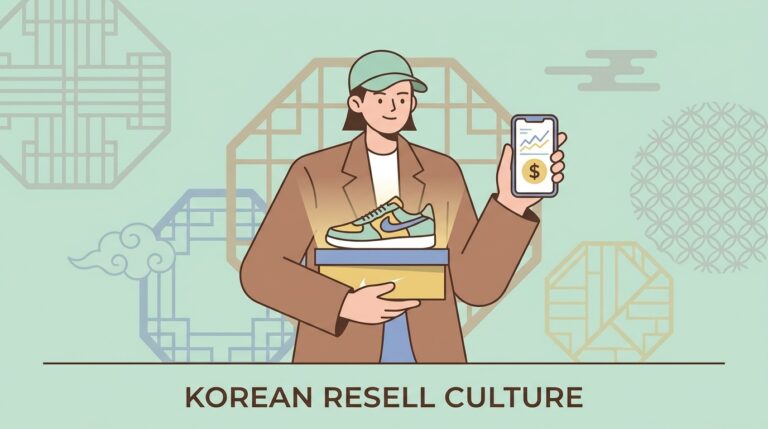
Welcome to Korea’s hyper-intense 리셀 문화 (Resell Culture) and 한정판 드롭 (Limited-Edition Drops)! In modern Korea, grabbing limited drops isn’t just about shopping; it’s a competitive sport, an investment strategy, and a major psychological driver for Gen Z and Millennials (MZ generation).
Navigating these high-stakes consumer behaviors requires more than just dictionary Korean. To truly understand the market dynamics, join the hype, or negotiate on resell platforms, you need C2-level nuance. Based on authentic feedback from advanced learners who struggled to express complex consumer psychology in Korean, this guide is your insider playbook. Let’s master the art of limited-edition dynamics and resell speak like a native!
Phase 2: Core Expressions Deep Dive
1. 피가 붙다 (Pi-ga but-da)
- Pronunciation: [Pi-ga but-da] (Sounds like pee-gah boot-dah, literally “blood attaches,” but metaphorically means a premium/markup is added! Think of ‘blood’ here as ‘sweat, tears, and precious value’).
- Meaning: Literal: Blood is attached. / Nuance: To have a heavy resale premium/markup added to the original price.
- K-Culture Moment: Used extensively when talking about sold-out concert tickets, rare designer collaborations, or luxury watch drops. “노스페이스 한정판 패딩에 피가 50만 원이나 붙었어.” (The limited-edition North Face puffer has a 500,000 KRW premium added!).
- Editor’s Insight: Beyond a simple price hike, “피가 붙다” captures the sheer desperation and high demand in the resale market. When a product is ultra-rare, people say “피가 엄청 붙었다.”
- Situation Spectrum: Casual ✅ | Semi-formal ⚠️ | Formal 🚫
- 🤔 Think About It: Why do you think Korean consumers use a vivid word like ‘blood’ (피) to describe market premiums? How does your culture describe inflated resale value?
2. 소장 가치 (So-jang ga-chi)
- Pronunciation: [So-jang ga-chi] (Sounds like so-jahng gah-chee).
- Meaning: Literal: Value of possession. / Nuance: High collectible value or sentimental worth that justifies spending a high price.
- K-Culture Moment: Frequently used by unboxing vloggers and consumer psychological analysts on YouTube. “이 앨범은 디자인도 예쁘지만, 한정판이라 소장 가치가 충분해요.” (This album has a pretty design, but since it’s a limited drop, its collectible value is undeniable).
- Editor’s Insight: This phrase is the ultimate psychological justification for impulse buys. If a Korean consumer wants to justify spending $1,000 on a collectible plushie, they say “소장 가치가 있잖아!” (It has collectible value!).
- Situation Spectrum: Casual ✅ | Semi-formal ✅ | Formal ✅
- 🤔 Think About It: Is there a specific item you purchased purely for its ‘소장 가치’ rather than its practical utility?
3. 상술에 놀아나다 (Sang-sul-e nol-a-na-da)
- Pronunciation: [Sang-sul-e nol-ah-nah-dah] (Sounds like sahng-sool-eh noh-rah-nah-dah).
- Meaning: Literal: To dance around in commercial tactics. / Nuance: To fall hook, line, and sinker for marketing gimmicks or FOMO tactics.
- K-Culture Moment: Heard when reflecting on buying something unnecessary just because it was a “limited drop” or came with an idol photo card. “내가 또 기업의 한정판 상술에 놀아났지 뭐야.” (I fell for the company’s limited-edition marketing scheme again).
- Editor’s Insight: This expression shows high self-awareness and critical thinking. It combines ‘상술’ (commercial tricks) with ‘놀아나다’ (to be manipulated/played).
- Situation Spectrum: Casual ✅ | Semi-formal ✅ | Formal ⚠️
- 🤔 Think About It: How does critical consumer discourse in your native language frame FOMO (Fear Of Missing Out) compared to Korean?
Phase 3: Textbook Korean vs. Real Korean
Situation 1: Expressing that a product’s price increased significantly due to rarity.
- 📖 Textbook Korean: “희소성이 높아서 재판매 가격이 원가보다 매우 많이 올라갔습니다.” (Because rarity is high, the resale price has risen significantly above original cost.)
- 🗣️ Real Korean: “희귀템이라 웃돈에 피까지 엄청 얹혀서 거래되고 있어요.” (It’s a rare item, so it’s trading with a huge premium and blood money tacked on.)
- 💡 Why the Difference? C2 speakers use native slang like ‘웃돈’ (extra money/bonus) and ‘피를 얹다’ (add markup) instead of formal economic phrasing to convey market volatility with flavor.
Situation 2: Admitting you bought something impulsively because of FOMO.
- 📖 Textbook Korean: “한정 수량 판매라는 광고를 보고 충동적으로 구매하게 되었습니다.” (Seeing the advertisement for limited quantity sales, I came to purchase it impulsively.)
- 🗣️ Real Korean: “‘오늘 아니면 못 산다’는 생각에 덜컥 지르고 말았어요.” (Thinking ‘it’s today or never,’ I ended up impulse-buying it on the spot.)
- 💡 Why the Difference? Native speakers use the vivid sensory verb ‘지르다’ (to make a big/impulsive purchase) and sound mimetic words like ‘덜컥’ (suddenly/without thinking) to highlight psychological triggers.
Phase 4: K-Culture Deep Dive & Non-Verbal Nuances
4-1. Nunchi & Gestures in Resell Transactions
When conducting face-to-face resell trades (직거래) via platforms like Danggeun Market, non-verbal etiquette is crucial:
* The Subdued Nung-che (눈치): When inspecting an expensive resale item in person, never show overly excited facial expressions—it ruins your bargaining power. Maintain a calm, appreciative nod.
* Two-Handed Respect: Even in casual peer-to-peer trades, hand over cash or inspect high-value luxury drops holding the item with both hands or supporting your wrist with the other hand. This signals sincerity and trust.
4-2. Cultural Code: The Psychology of ‘Open Run’ (오픈런)
In Korea, consumer behavior around limited drops has birthed the phenomenon known as ‘오픈런’ (Open Run)—literally sprinting into a department store or store the second doors open at 10:30 AM. Why are Koreans so obsessed with drops? It’s a blend of 집단 심리 (collectivist dynamics) and 희소성 욕구 (desire for rarity). Owning a limited-edition sneaker isn’t just about style; it represents speed, diligence, and elevated social capital within digital communities.
Phase 5: Interactive Roleplay Scenario
Setting: A trendy cafe in Seongsu-dong. Min-jun (a seasoned reseller) and Sarah (an advanced Korean learner and sneaker collector) are discussing a recent limited-edition streetwear drop.
Dialogue
- 민준: 사라 씨, 어제 ‘K-드롭’ 스니커즈 라플(Raffle) 응모 결과 나왔죠? 당첨됐어요?
(Min-jun: Sarah, the raffle results for the ‘K-Drop’ sneakers came out yesterday, right? Did you win?) - 사라: 🎭 [한숨을 푹 쉬며 머리를 긁적인다] 말도 마세요. 또 미당첨이에요. 초 단위로 컷당했다니까요.
(Sarah: [Sighs deeply and scratches head] Don’t even get me started. Another loss. I got cut off within seconds.) - 민준: 아쉽네요! 그거 지금 리셀 플랫폼에서 피가 30만 원 넘게 붙었던데… 구매할 거예요?
(Min-jun: That’s a bummer! A markup of over 300,000 KRW is attached on resell platforms right now… Are you going to buy it?) - 사라: 🎭 [단호한 표정으로 진지하게] 고민 중이에요. 사실 상술에 놀아나는 것 같기도 한데, 소장 가치가 워낙 높아서요.
(Sarah: [With a resolute and serious expression] I’m contemplating. Honestly, I feel like I’m falling for marketing tricks, but its collectible value is just so high.) - 민준: 맞아요. 이번 디자인은 디테일이 잘 빠져서 나중엔 더 프리미엄이 붙을 수도 있어요.
(Min-jun: True. The design details are so well-executed this time that even higher premiums might attach later.) - 사라: 🎭 [핸드폰 화면을 보여주며 눈을 반짝인다] 직거래로 웃돈 조금만 더 주고 사겠다고 글 올려볼까요?
(Sarah: [Eyes sparkling as she shows her phone screen] Should I post a listing offering a slight premium for a direct local trade?) - 민준: 좋은 생각이에요! 상태 좋은 미개봉 상품으로 잘 찾아봐요.
(Min-jun: Great idea! Look carefully for a mint, unopened box item.) - 사라: 네, 이번에는 합리적인 소비자가 되려고 했는데… 결국 희소성 심리에 무너졌네요!
(Sarah: Yeah, I tried to be a rational consumer this time… but in the end, I collapsed under the psychology of scarcity!)
🔀 Interactive Choice Point
Min-jun offers to negotiate with a reseller friend for Sarah. How should Sarah respond?
- Option A: “우와, 정말요? 지인 찬스로 피 좀 깎아달라고 부탁해 주시면 안 될까요?”
- Option B: “됐어요. 어차피 다 상술인데 제가 왜 돈을 더 내요? 안 사요.”
- Option C: “친분 거래는 부담스러우니, 그냥 정식 리셀 플랫폼에서 안전거래 할게요.”
🔍 Click to see Feedback for Options
- Option A (Best): Highly natural! Uses native expressions like ‘지인 찬스’ (acquaintance chance/discount) and gracefully negotiates price markup (‘피를 깎다’).
- Option B (Bad): Too aggressive and dismisses Min-jun’s polite gesture abruptly. Breaks the conversational harmony.
- Option C (Risk): Very polite and pragmatic, but slightly formal for a close friend setting. Good if you want to set firm boundaries without offending.
Phase 6: 10-Second Emotional Shadowing Drill
Practice these lines with the exact emotional tone indicated to master real native intonation!
[😤 억울하고 아쉬운 톤으로]“아, 진짜! / 초 단위로 컷당해서 / 피 눈물 난다니까요!”
(Ah, seriously! / I got cut off within seconds / It literally makes me cry tears of blood!)[😏 은밀하고 자신감 있게]“이건 한정판이라 / 시간이 지나면 / 소장 가치가 더 올라갈 수밖에 없어.”
(This is a limited edition / so as time passes / its collectible value has no choice but to rise.)[😮💨 자조적이고 위트 있게]“내가 또 / 기업들의 한정판 마케팅 상술에 / 덜컥 놀아났네, 놀아났어.”
(Here I go again / dancing around falling for / corporations’ limited-edition marketing schemes.)
Phase 7: K-Culture Mini Dictionary
- 라플 (Ra-ple): English ‘Raffle’. A lottery system where winners earn the right to buy a limited-edition product at retail price.
- 미개봉 신품 (Mi-gae-bong Sin-pum): Brand new, unopened product still in factory wrapping. Commands the highest resale value.
- 웃돈 (Ut-don): Premium money paid over the official retail price to secure rare goods.
- 손품 팔다 (Son-pum Pal-da): Literally “selling hand-labor.” Refers to diligently searching the internet, refreshing apps, and doing digital research to find rare deals.
Phase 8: Traveler’s Survival Kit
Survival Expressions TOP 3
- “이거 혹시 미개봉 상품인가요?” (Is this an unopened product?)
- RR: I-geo hok-si mi-gae-bong sang-pum-in-ga-yo?
- Pro Tip: Essential when inspecting resell items offline in trendy areas like Hongdae or Seongsu.
- “네고 가능한가요?” (Is negotiation/discount possible?)
- RR: Ne-go ga-neung-han-ga-yo?
- Pro Tip: ‘Nego’ comes from negotiation. Use it politely on secondhand trading apps.
- “직거래는 어디서 하시나요?” (Where do you do direct in-person trades?)
- RR: Jik-geo-rae-neun eo-di-seo ha-si-na-yo?
- Pro Tip: Usually done near subway station exits for safety.
Editor’s Travel Note
When hunting for limited drops or navigating local peer-to-peer markets in Korea, clear navigation and instant payment tools are mandatory. Make sure to download the Naver Map Application to locate precise underground subway exit meetup points for trades, and check out peer-to-peer trading hubs like KREAM or 번개장터 for price benchmarking before making any purchases.
Phase 9: A Step Deeper (Consumer Psychology Essay)
In Western consumer culture, luxury resale often centers around individual investment and personal prestige. In Korea, however, the resale market and limited drops reflect a fascinating tension between 동질감 (seeking solidarity) and 차별화 (desire for differentiation). Purchasing a limited drop proves that one has the speed, cultural literacy, and digital skill to participate in the nation’s trend stream. However, when resale premiums skyrocket unnaturally, public discourse quickly shifts to criticizing unethical speculation. Understanding Korean consumer psychology means seeing how collective FOMO and individual savvy constantly reshape the market.
💬 Your Turn: Have you ever paid a huge premium (‘피’) for a limited-edition drop in your country? Let us know in the comments below!
Phase 10: FAQ & Common Mistakes
Q: Is ‘피가 붙다’ formal enough to use in a business meeting?
A: No! ‘피가 붙다’ is informal market slang. In formal or business settings, use refined phrases like “프리미엄이 형성되다” (A premium has formed) or “웃돈이 거래되다”.
Q: What is the difference between ‘덕질’ and limited-edition resale culture?
A: ‘덕질’ refers to fan activities (collecting idol merch, anime gear), whereas resale culture (‘리셀 문화’) spans sneakers, luxury bags, and technology driven heavily by financial gain and consumer investment psychology.
Q: Can I use ‘지르다’ for small daily purchases like buying coffee?
A: Usually, ‘지르다’ implies spending a significant amount of money or making a sudden, big decision. For small things, use “소소하게 샀어요” instead.
🚨 Common Mistakes Warning
- ❌ Mistake: “이 신발은 피가 많이 피었어요.” (Trying to say “markup bloomed”)
- ⭕ Correct Action: Use the verb 붙다 (attach/stick). Say: “이 신발은 피가 많이 붙었어요.”
- ❌ Mistake: Using “중고” (used item) to describe a pristine, unopened resell sneaker.
- ⭕ Correct Action: Use “미개봉 신품” (unopened brand new item) or “새상품급” to protect value.
Phase 11: Action Missions
- 🥉 Bronze Mission: Read the Phase 6 Shadowing Drill out loud 3 times with exaggerated emotional expression.
- 🥈 Silver Mission: Search the Korean hashtag
#내돈내산(My money, my buy) or#한정판on Instagram and write one comment using “소장 가치 최고예요!”. - 🥇 Gold Mission: Write a 3-sentence blog post or journal entry in Korean analyzing why you bought your favorite item using the expressions
상술,희소성, and지르다.
🎮 K-Culture Mission: Watch a Korean streetwear unboxing vlog on YouTube. Listen closely and spot if the creator uses the words ‘실물 영접’ (seeing the item in person) or ‘오픈런’!
Phase 12: Interactive Quiz Challenge
1. Situation Quiz
You want to politely tell a seller on a secondhand app that you think the resale price is too high due to artificial hype. Which phrase fits best?
* A) “선생님, 상술에 놀아나지 마세요.”
* B) “현재 시장가 대비 프리미엄이 조금 많이 붙은 것 같아요.”
* C) “피가 전혀 안 붙어서 안 사요.”
2. Fill-in-the-Blank Quiz
“이 음반은 한정 수량으로 제작되어 십 년이 지나도 ( ____ ____ )이/가 높을 것으로 예상됩니다.”
* A) 소장 가치
* B) 상술 표기
* C) 미개봉 유통
3. Cultural True or False
In Korea, ‘오픈런’ refers exclusively to running in a marathon that opens early in the morning. (T/F)
🎉 Click to Reveal Quiz Answers & Explanations
- Answer: B
- Explanation: Option B politely points out the heavy markup using refined C2 vocabulary. Option A is rude, and Option C makes no logical sense.
- Answer: A (소장 가치)
- Explanation:







