

안녕하세요! 매일한글 에디터입니다. (Hello! I’m your Daily Hangul editor.)
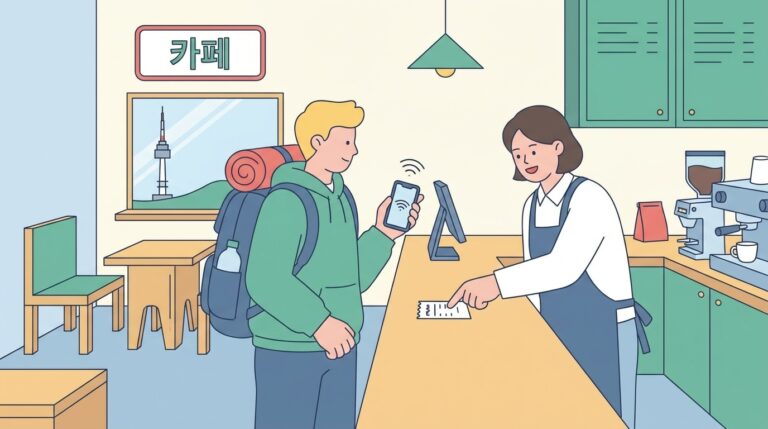
You’ve just arrived in Seoul after a long flight. You step into a trendy Seongsu-dong cafe, craving an iced Americano and desperate to message your family that you arrived safely. You open your phone settings, search for Wi-Fi, and see a list of twenty different networks—some secured with passwords, some named after the store, and others like ‘Public_WiFi_Free’. You spot a tiny handwritten sign near the counter with letters and numbers, but you are not quite sure if it’s the password or the network name. Asking the barista feels intimidating, especially when there’s a line of busy Seoulites behind you! Sound familiar? Connecting to free Wi-Fi in Korea is usually effortless because Korea has one of the world’s fastest digital infrastructures, but navigating public facilities and asking for credentials in Korean can trigger serious anxiety for travelers. Based on real feedback from over 500 foreign learners, this guide will give you exact, natural B1-level phrases and local cultural insights so you can get online smoothly anywhere in Korea without breaking a sweat.
Phase 2: Core Expressions Deep Dive
1. 와이파이 비밀번호가 뭐예요? (Wi-Fi bimilbeonhoga mwoyeyo?)
- Pronunciation: [Wi-Fi bee-meel-buhn-ho-ga mwo-yeh-yo?] (Think of ‘bimil’ like ‘be secret’ and ‘beonho’ like ‘number’).
- Meaning: What is the Wi-Fi password? (Literal: “Wi-Fi secret-number what is it?”)
- K-Culture Moment: In K-Dramas, characters instantly ask for Wi-Fi upon entering a cafe or study room before even sitting down.
- Editor’s Insight: ‘비밀번호’ (bimilbeonho) is frequently abbreviated to ‘비번’ (bibeon) in casual chat or daily spoken Korean among young people.
- Situation Spectrum: Casual ⚠️ | Semi-formal ✅ | Formal ✅
- 🤔 Think About It: In English, we ask “What’s the password?”. In Korean, ‘비밀번호’ literally means ‘secret number’. How does naming it a ‘secret number’ reflect the security-conscious digital culture in Korea?
2. 와이파이 이름이 어떻게 돼요? (Wi-Fi ireumi eotteohge dwaeyo?)
- Pronunciation: [Wi-Fi ee-reum-ee uh-ttuhk-keh dwae-yo?]
- Meaning: What is the Wi-Fi network name? (Literal: “How does the Wi-Fi name become?”)
- K-Culture Moment: When a cafe has multiple Wi-Fi routers (e.g., 2.4G vs 5G), locals ask this to pinpoint the exact network.
- Editor’s Insight: Using ‘어떻게 돼요?’ instead of ‘뭐예요?’ makes your English-to-Korean translation sound instantly more natural and polite at a intermediate B1 level.
- Situation Spectrum: Casual 🚫 | Semi-formal ✅ | Formal ✅
- 🤔 Think About It: Why do Koreans use ‘어떻게 돼요?’ (How does it become?) when asking for names, ages, or network titles instead of directly asking ‘What is it?’
3. 와이파이가 안 잡혀요. (Wi-Fi-ga an jabhyeoyo.)
- Pronunciation: [Wi-Fi-ga an jahp-hyeh-yo?]
- Meaning: The Wi-Fi isn’t connecting/signal isn’t catching. (Literal: “Wi-Fi is not being caught.”)
- K-Culture Moment: Saying this to staff when the signal icon displays zero bars despite putting in the correct password.
- Editor’s Insight: Koreans use the verb ‘잡히다’ (to be caught) for wireless signals, radio waves, and Wi-Fi networks!
- Situation Spectrum: Casual ✅ | Semi-formal ✅ | Formal ✅
- 🤔 Think About It: Viewing signals as something you ‘catch’ (잡다) reveals how Koreans conceptualize invisible radio signals in daily language.
Phase 3: Textbook Korean vs Real Korean
Situation 1: Asking where the Wi-Fi password is written
- 📖 Textbook Korean: 와이파이 비밀번호는 어디에 있습니까? (Where is the Wi-Fi password?)
- 🗣️ Real Korean: 와이파이 비번 어디 적혀 있어요? (Where is the Wi-Fi password written down?)
- 💡 Why different? Textbook versions sound like a audio listening test. Real Koreans use ‘비번’ (short for 비밀번호) and ask where it is ‘written’ (적혀 있어요) because passwords are usually printed on receipts or taped on walls.
Situation 2: Asking if there is free Wi-Fi available
- 📖 Textbook Korean: 여기 무료 와이파이가 있습니까? (Is there free Wi-Fi here?)
- 🗣️ Real Korean: 여기 와이파이 되나요? (Does Wi-Fi work here?)
- 💡 Why different? Free Wi-Fi is so ubiquitous in Korean public facilities that asking if it’s ‘free’ is redundant. Asking ‘되나요?’ (Does it work / Is it available?) is much punchier and natural.
Phase 4: K-Culture Deep Dive & Non-verbal Etiquette
4-1. Nunchi (눈치) & Gestures
Before rushing to the counter, use your ‘Nunchi’ (quick situational awareness). Look at the bottom of your printed receipt first! 90% of Korean cafes (like Starfield malls, Mega Coffee, or local aesthetic cafes) print the Wi-Fi ID and password right at the very bottom of the receipt. If you must ask the staff, politely hold up your phone screen showing the Wi-Fi setting page while asking. A gentle head nod combined with holding your phone with two hands shows respectful etiquette.
4-2. Culture Code: Public Wi-Fi Infrastructure
Korea offers ‘Public WiFi Free’ nationwide across subways, buses, district offices, and public parks. You don’t need a registration password for government public networks—just select ‘Public WiFi Free’, wait for the browser splash screen to load, and click ‘Use Internet’ (인터넷 이용하기). Telekom giants (KT, SKT, LGU+) also host open networks in public spaces.
Phase 5: Practical Roleplay Scenario
Setting: A modern cafe in Hongdae. Staff member (Minjun) is behind the counter wiping espresso machines.
Characters: You (Learner) & Minjun (Cafe Barista)
- Learner: 저기요, 혹시 여기 와이파이 되나요?
(Jeogiyo, hoksi yeogi wi-fi dwaenayo? / Excuse me, does Wi-Fi work here?)
🎭 Stage Direction: Politely calling staff with a raised hand. - Barista: 네, 가능하세요! 와이파이 연결해서 쓰시면 돼요.
(Ne, ganeunghaseyo! Wi-Fi yeongyeolhaeseo sseusimyeon dwaeyo. / Yes, it is! You can just connect and use it.) - Learner: 와이파이 이름이 어떻게 돼요?
(Wi-Fi ireumi eotteohge dwaeyo? / What is the Wi-Fi network name?) - Barista: ‘Cafe_Hongdae_5G’ 잡으시면 됩니다.
(Cafe_Hongdae_5G jabeusimyeon doembnida. / You can catch ‘Cafe_Hongdae_5G’.) - Learner: 아, 네! 혹시 비밀번호가 뭐예요?
(A, ne! Hoksi bimilbeonhoga mwoyeyo? / Ah, okay! By any chance, what is the password?) - Barista: 영수증 맨 아래쪽에 적혀 있어요!
(Yeongsujeung maen araejjoge jeokformatted-hyeo isseoyo! / It’s written at the very bottom of your receipt!) - Learner: 아, 여기 있네요! 그런데 계속 와이파이가 안 잡혀요.
(A, yeogi issneyo! Geuraonde gyesok Wi-Fi-ga an jabhyeoyo. / Ah, here it is! But it keeps not connecting.) - Barista: 아, 대문자 C로 입력해 보시겠어요?
(A, daemunja C-ro imryeokhae bosigess-eoyo? / Ah, try typing it with a capital C!)
🔀 Interactive Choice Point
You typed the password, but the connection icon keeps spinning. What do you say?
- Option A: “이거 안 돼요. 새 비밀번호 주세요.” (This doesn’t work. Give me a new password.)
- Option B: “죄송하지만, 비밀번호 다시 확인해 주시겠어요?” (Sorry, but could you check the password once more?)
- Option C: “핸드폰이 고장 났어요.” (My phone is broken.)
Feedback:
* Option A (Risk 🚫): Too blunt and demanding. Cafes don’t generate individual passwords on demand.
* Option B (Best ✅): Extremely polite, soft, and effective B1-level request!
* Option C (Bad ⚠️): Unrelated excuse that doesn’t solve your connectivity problem.
Phase 6: 10-Second Emotional Shadowing Drill
[😊 Friendly & Inquiring]저기요, / 혹시 / 여기 와이파이 되나요?
(Jeogiyo, / hoksi / yeogi wi-fi dwaenayo?)[🧐 Slightly Confused]와이파이 비밀번호가 / 어디 적혀 있어요?
(Wi-fi bimilbeonhoga / eodi jeok-hyeo isseoyo?)[🥺 Apologetic & Asking for Help]죄송한데, / 와이파이가 / 잘 안 잡혀요.
(Joesonghande, / wi-fi-ga / jal an jabhyeoyo.)
Phase 7: K-Culture Mini Dictionary
- 영수증 (Yeongsujeung) | Receipt | In Korea, Wi-Fi credentials are standardly printed on the bottom of store receipts.
- 공공 와이파이 (Gonggong Wi-Fi) | Public Wi-Fi | Government-provided free internet network in public facilities.
- 대문자 / 소문자 (Daemunja / Somunja) | Capital letter / Lowercase letter | Essential words when staff clarify Wi-Fi password cases.
- 콘센트 (Konsenteu) | Power Outlet (Socket) | Derived from ‘concentric plug’. Crucial word paired with Wi-Fi when working at cafes!
Phase 8: Traveler’s Survival Kit
Top 3 Survival Phrases
- 와이파이 비밀번호 보여주세요. (Wi-Fi bimilbeonho boyeojuseyo.) – Please show me the Wi-Fi password.
Pro Tip: Use when you want them to point at a menu card or handwritten note. - 와이파이 재설정해야 하나요? (Wi-Fi jaeseoltjeonghaeya hanayo?) – Do I need to reset the Wi-Fi?
Pro Tip: Handy when connected without internet access. - 콘센트 자리가 어디예요? (Konsenteu jari-ga eodiyeyo?) – Where are the seats with power outlets?
Pro Tip: Wi-Fi plus battery charging is the ultimate Korean cafe survival combo!
Editor’s Travel Note
Before heading out, make sure to get the 네이버 지도 앱 다운로드 (Naver Map app download) and KakaoMap. Naver Map clearly lists whether public amenities, cafes, or subway facilities offer public Wi-Fi and power outlets in their facility detailed info tab!
Phase 9: One Step Deeper (Culture Insight)
Korea’s high internet speed and universal access stem from the nation’s rapid IT infrastructure development starting in the late 1990s. Offering free, high-speed Wi-Fi is considered a basic customer service standard rather than a luxury perk. This reflects a broader collective cultural mindset: public convenience and digital connectivity are essential social infrastructure. When visiting public facilities in Korea, accessing internet seamlessly allows everyone to participate smoothly in this fast-paced digital ecosystem.
💬 Your Turn: Have you ever struggled to find Wi-Fi while traveling in Korea or your home country? Share your experience in the comments below!
Phase 10: FAQ & Common Mistakes
Q: Do I need a Korean phone number to connect to public Wi-Fi?
A: No! ‘Public WiFi Free’ in public locations and most cafe networks do not require SMS verification with a local phone number. Simply accept the browser terms.
Q: Why does the Wi-Fi connect but say ‘No Internet Access’?
A: You usually need to open your web browser (Safari or Chrome). A splash page will pop up requiring you to click a button that says ‘인터넷 이용하기’ (Use Internet) or accept terms.
Q: Can I use public Wi-Fi for banking apps safely?
A: Korean public networks are generally secure, but it’s recommended to use a VPN or local eSIM data when accessing sensitive financial transactions.
🚨 Common Mistakes TOP 3
- Mistake: Looking around for a Wi-Fi poster for 10 minutes without looking at your receipt.
Correct Action: Check the receipt header or footer first! - Mistake: Confusing upper and lowercase letters in Korean Wi-Fi passwords.
Correct Action: Ask staff: “대문자예요, 소문자예요?” (Is it uppercase or lowercase?). - Mistake: Asking “Do I have to pay for Wi-Fi?”
Correct Action: Wi-Fi in Korean commercial facilities is almost 100% free for customers; just ask where the password is.
Phase 11: Action Mission & Engagement
- 🥉 Bronze Mission: Practice saying “와이파이 비밀번호가 뭐예요?” out loud 3 times with natural pauses.
- 🥈 Silver Mission: Screenshot your phone’s Wi-Fi network list, identify a public network, and post the Korean phrase on your Instagram story!
- 🥇 Gold Mission: Walk into a local Korean cafe or public library during your trip and successfully connect using only Korean phrases!
🎮 K-Culture Mission: Watch a recent vlog on YouTube set in a Seoul cafe and spot where the Wi-Fi credentials are placed in the video!
Phase 12: Interactive Quiz Challenge
Quiz 1. Situation Judgment
You received a receipt at a cafe in Myeongdong. Where should you look first for the Wi-Fi password?
🔍 Show Answer & Explanation
At the very bottom (맨 아래쪽) of the receipt!
Quiz 2. Fill in the Blank
Complete the natural spoken sentence: “여기 와이파이가 안 ________.” (The Wi-Fi isn’t connecting here.)
🔍 Show Answer & Explanation
잡혀요 (jabhyeoyo). Remember, wireless signals are ‘caught’ in Korean!
Quiz 3. True / False Cultural Quiz
True or False: In Korea, you must pay an extra charge to use high-speed Wi-Fi at cafes.
🔍 Show Answer & Explanation
False! Cafe Wi-Fi is free for customers as standard courtesy in Korea.







