

안녕하세요! 매일한글 에디터입니다.
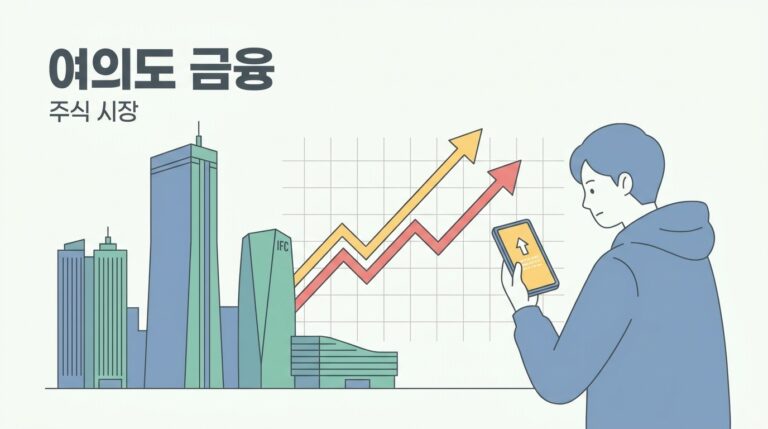
Imagine sitting in a cozy Yeouido cafe near the Korea Exchange, sipping an iced Americano while listening to two seasoned investors debate the latest financial news. Suddenly, the headline flashes across the screen: “주식 양도소득세 전면 도입 전격 유예!” (Full implementation of stock capital gains tax dramatically deferred!). One investor lets out a huge sigh of relief, while another passionately explains how this decision will impact market liquidity. As an advanced Korean learner aiming for native-level proficiency (C2), understanding these intricate socioeconomic debates is your ultimate milestone. Today, we are diving deep into the sophisticated world of South Korean stock market policy, legislative phrasing, and real investor terminology so you can navigate financial discussions with total nuance and confidence.
1. 유예되다 (Yuye-doeda)
- Pronunciation: [유예되다 / Yuye-doeda] (Sounds like you-yeah-dwae-da)
- Meaning: Literally “to be deferred/postponed.” Nuance: A formal administrative or legislative deferral of a legal policy or tax imposition.
- K-Culture Moment: Frequently heard in news broadcasts when government measures or legal deadlines are delayed due to market reaction or public pushback.
- Editor’s Insight: Unlike simple delay words like ‘연기되다’ (to be delayed), ‘유예되다’ carries legal weight and systemic authority. Use it when discussing regulations, grace periods, or official deadlines.
- Situation Spectrum: Casual 🚫 | Semi-formal ⚠️ | Formal ✅
- 🤔 Think About It: How does your country’s legal system communicate grace periods, and how does public sentiment influence policy deferrals?
2. 양도소득세 (Yangdo-sodukse)
- Pronunciation: [양도소득세 / Yangdo-sodukse] (Sounds like yang-doh-soh-deuk-seh)
- Meaning: Capital Gains Tax (literally: Transfer Income Tax).
- K-Culture Moment: Featured in K-Dramas like Reborn Rich or Queen of Tears whenever major corporate restructuring or stock transfers take place.
- Editor’s Insight: Often abbreviated informally as ‘양도세’. Understanding this term allows you to comprehend debate around market thresholds for major shareholders (대주주 요건).
- Situation Spectrum: Casual ⚠️ | Semi-formal ✅ | Formal ✅
- 🤔 Think About It: Why do retail investors in Korea react so strongly to changes in capital gains tax thresholds?
3. 개미투자자 (Gaemi-tujaja)
- Pronunciation: [개미투자자 / Gaemi-tujaja] (Sounds like gae-mi-too-ja-ja)
- Meaning: Retail investors (Literally: “Ant investors”).
- K-Culture Moment: Widely used in news titles and economic blogs to describe hard-working individual investors moving in unison like ants.
- Editor’s Insight: Often shortened to just ‘개미’. While informal, it carries a sense of solidarity and collective economic power among common citizens.
- Situation Spectrum: Casual ✅ | Semi-formal ✅ | Formal ⚠️
- 🤔 Think About It: What metaphorical animal is used in your native culture to represent individual everyday investors?
📖 교과서 한국어: 정부가 주식 세금 부과 계획을 나중으로 미루기로 결정했습니다.
🗣️ 진짜 한국어: 정부가 주식 양도소득세 전면 도입 시기를 전격 유예하기로 했습니다.
💡 왜 다를까?: Advanced native speech in financial contexts favors precise Sino-Korean legal vocabulary (‘전격 유예’) rather than plain verb phrasing (‘나중으로 미루다’).
📖 교과서 한국어: 개인 투자자들이 이 뉴스 때문에 매우 기뻐하고 있습니다.
🗣️ 진짜 한국어: 양도세 유예 소식에 동학개미들이 일제히 환호하는 분위기예요.
💡 왜 다를까?: ‘동학개미’ is a iconic socio-cultural term referencing domestic retail investors who saved the Korean stock market during past volatility.
4-1. 눈치(Nunchi) & Non-verbal Etiquette
When discussing financial politics in Korea, maintain a balanced, analytical tone. Nodding slowly while using soft sentence endings like ‘~아무래도 시장 충격을 고려한 조치겠죠?’ demonstrates respect for economic complexity without forcing polarized debate.
4-2. Culture Code Deep Dive
The term 동학개미운동 (Donghak Ant Movement) links modern retail stock trading to the historic 1894 Donghak Peasant Revolution. It highlights Korea’s deep cultural belief in collective action against institutional power.
Setting: Yeouido Financial District coffee shop. You are discussing tax policy with Senior Analyst Min-woo (민우).
- 민우: 이번에 주식 양도세 전면 도입이 또 유예된다는 뉴스 보셨어요?
(Did you see the news that the full implementation of stock capital gains tax is deferred again?) - You: 네, 봤어요. [😊 약간 고개를 끄덕이며] 시장 변동성을 감안하면 어쩔 수 없는 선택이었던 것 같아요.
(Yes, I saw it. Considering market volatility, it seems like an unavoidable choice.) - 민우: 맞아요. 개미투자자들 반발도 엄청났으니까요.
(Right. The pushback from retail investors was immense too.) - You: [🤔 신중하게 손짓하며] 하지만 세수 확보나 과세 형평성 측면에서는 논란이 계속될 텐데요.
(However, in terms of tax revenue and fairness, controversies will likely continue.) - 민우: 정확한 지적이십니다! 유예 기간 동안 제도 보완이 시급해요.
(Spot-on observation! Institutional revisions are urgent during this grace period.) - You: [😌 진지하게] 부작용을 최소화하는 방향으로 정착되면 좋겠네요.
(I hope it settles in a way that minimizes negative side effects.) - 민우: C2 수준의 한국어 실력에 진짜 감탄했습니다. 정책 뉘앙스를 완벽히 이해하시네요!
(I’m truly impressed by your C2 Korean skill. You understand policy nuances perfectly!) - You: [😄 겸손하게 웃으며] 감사해요. 매일한글 덕분에 깊이 있는 대화가 가능해졌어요.
(Thank you. Thanks to Daily Hangul, I can engage in deep conversations.)
🔀 Interactive Choice Point:
If Min-woo asks: “양도세 유예에 대해 어떻게 생각하세요?” (What do you think about the tax deferral?)
– Option A: “무조건 세금을 안 내는 게 좋죠!” (Bad: Too casual and misses economic nuance)
– Option B: “시장 활성화와 과세 형평성 사이에서 균형을 잡는 것이 핵심이라고 봅니다.” (Best: Highly polished C2 expression)
– Option C: “몰라요, 주식 안 해요.” (Risk: Ends professional networking opportunity)
Practice saying these with natural emotional rhythm (/ = brief pause):
- [😌 신중하고 격식 있게] 이번 유예 조치는 / 시장의 불안감을 완화하는 데 / 큰 역할을 할 것으로 보입니다.
- [💡 통찰력 있게] 과세 형평성도 중요하지만 / 지금은 금융 시장의 안정성이 / 우선이라는 의견이 많아요.
- 양도소득세 (Yangdo-sodukse) | Capital Gains Tax | Tax levied on profits from selling assets like stocks or real estate.
- 유예 (Yuye) | Deferral / Grace Period | Official temporary suspension of a law or requirement.
- 과세 형평성 (Gwase Hyeongpyeongseong) | Tax Fairness | The principle that taxes should be levied fairly relative to income.
- 매물 폭탄 (Maemul Poktan) | Selling Avalanche (Literally: Supply Bomb) | A sudden massive dumping of stocks before tax deadlines.
- Top 1: “양도세 유예 확정된 건가요?” (Has the capital gains tax deferral been finalized?)
- Top 2: “개미투자자 보호 대책이 필요한 시점입니다.” (It is time for protective measures for retail investors.)
- Top 3: “시장 충격을 줄이기 위한 유예 기간이 늘어났습니다.” (The grace period to reduce market shock has been extended.)
-
Pro Tip: Check official updates on the 금융감독원 공식 웹사이트 for authoritative legal updates.
Language reflects societal priority. Korea’s rapid economic growth created a population highly sensitive to capital market policy. Tax deferrals often reflect the government’s direct responsiveness to voter sentiment and economic stability.
💬 Your Turn: What is the most discussed financial news topic in your home country right now? Let us know in the comments using advanced Korean terms!
Q: ‘연기’와 ‘유예’의 차이점은 무엇인가요?
A: ‘연기’ refers to delaying an event or schedule (e.g., meeting, concert), whereas ‘유예’ refers to a legal or official grace period delaying the enforcement of a law, duty, or punishment.
Q: ‘개미’라는 표현을 비즈니스 미팅에서 사용해도 되나요?
A: Informal business chats are fine, but formal speeches or official presentations should use ‘개인 투자자’ (individual investor).
Q: ‘양도세’와 ‘소득세’는 같은 건가요?
A: ‘양도세’ (Capital Gains Tax) is a specific type of income tax imposed specifically on gains from asset transfers.
🚨 Common Mistakes:
* Mistake 1: Using ‘미루다’ in legal context ➔ Correct: ‘유예하다’
* Mistake 2: Calling capital gains ‘주식 돈’ ➔ Correct: ‘시세 차익’
* Mistake 3: Confusing ‘대주주’ (major shareholder) with ‘지주’ (landlord).
- Bronze: Read the Phase 5 roleplay script aloud 3 times focusing on
/pauses. - Silver: Write a 2-sentence comment on a Korean economic news video using ‘유예’ and ‘개미투자자’.
- Gold: Engage in a conversation about market policy with a Korean colleague or language partner.
🎮 K-Culture Mission: Watch a news clip on Korean financial policy and count how many times you hear ‘유예’ or ‘과세’.
- ‘유예’의 올바른 의미는?
a) 완전 폐지
b) 일정 기간 집행을 미룸
c) 즉시 시행
정답 및 해설 보기
정답: b) 일정 기간 집행을 미룸. (유예 means deferring implementation for a given period.)






