

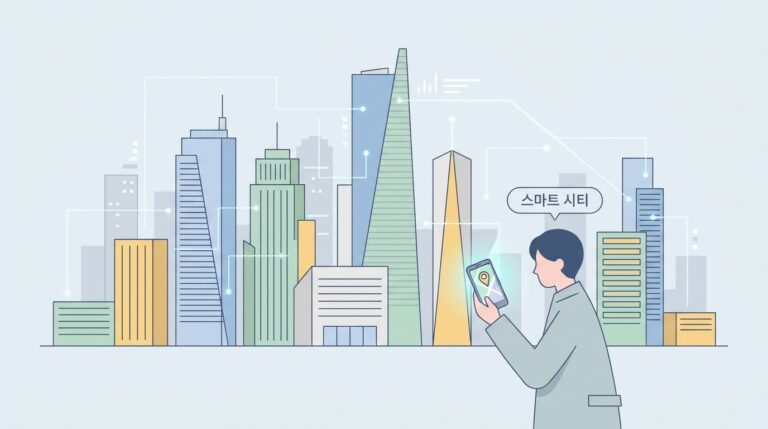
Phase 1: 공감 (Story-driven Opening)
안녕하세요! 매일한글 에디터입니다. Have you ever watched a futuristic K-drama set in a sleek modern metropolis like Seoul or Songdo and wondered, “Is this convenient smart city turning into a digital panopticon?” High-level Korean learners often hit a wall when transitioning from everyday casual chat to participating in high-stakes intellectual discussions. When debating complex topics like technology ethics, surveillance society, and artificial intelligence at the C2 level, relying on basic terms like “좋아요” (It’s good) or “나빠요” (It’s bad) simply won’t cut it.
In real Korean academic forums, panel discussions, or corporate ethics committees, native speakers use precise, nuanced phrasing to balance civic safety against individual privacy. Expressing subtle concerns without sounding overly aggressive requires a sophisticated mastery of nuance, formal honorifics, and context-aware rhetoric. Based on years of tutoring executive-level advanced learners, I’ve structured this guide to give you the exact linguistic tools and cultural finesse needed to articulate tech ethics with authentic authority. Let’s dive into C2-level fluency together!
Phase 2: 핵심 표현 3선 심층 분석
1. 빅브라더화 (Big Brother-fication)
- Pronunciation: [Big-beu-ra-deo-hwa] (Sounds like “Big Brother” followed by the Korean suffix ‘-hwa’ meaning ‘-ification’, pronounced like ‘hwa’ in ‘hawaii’)
- Meaning: Literal: Transformation into Big Brother. Nuance: The gradual shift of a society into a state of total surveillance and state control.
- K-Culture Moment: Frequently heard on Korean news debates (e.g., JTBC Newsroom) or tech thrillers when discussing city-wide facial recognition AI.
- Editor’s Insight: Adding the suffix
-화(-ification) to loanwords is a powerful C2 technique to form complex abstract nouns in formal debate settings. - Situation Spectrum:
- Casual: 🚫
- Semi-formal: ⚠️
- Formal (Debate/News): ✅
- 🤔 Think About It: How does using Orwellian terms in Korean frame public policy discussions compared to your native language?
2. 순기능과 역기능 (Positive Functions vs. Dysfunctions)
- Pronunciation: [Sun-gi-neung-gwa Yeok-gi-neung] (Pronounced smoothly with the soft ‘g’ sound; ‘sun’ like ‘soon’, ‘yeok’ like ‘yuck’ without the ‘ck’)
- Meaning: Literal: Proper function and reverse function. Nuance: The inherent benefits versus the unintended negative side effects of technology or policy.
- K-Culture Moment: Standard lexicon used by Korean tech CEOs and policymakers during panel conferences at COEX.
- Editor’s Insight: Instead of saying “장점과 단점” (pros and cons), using “순기능과 역기능” instantly elevates your Korean to an academic level.
- Situation Spectrum:
- Casual: 🚫
- Semi-formal: ⚠️
- Formal: ✅
- 🤔 Think About It: In Korean discourse, balance (조화) is valued. Presenting both sides before taking a stance reflects deep cultural awareness.
3. 사생활 침해의 여지 (Room for Infringement of Privacy)
- Pronunciation: [Sa-saeng-hwal Chim-hae-ui Yeo-ji] (‘Yeo-ji’ sounds like ‘yuh-jee’, meaning room/scope/potential)
- Meaning: Literal: Room for infringement of private life. Nuance: The latent potential or risk that a system could violate personal privacy.
- K-Culture Moment: Used by privacy advocates during debates over public CCTV expansion in Seoul districts.
- Editor’s Insight: The key word here is 여지 (potential/room). Rather than claiming absolute violation, stating there is room for violation sounds diplomatic yet firm.
- Situation Spectrum:
- Casual: 🚫
- Semi-formal: ⚠️
- Formal: ✅
- 🤔 Think About It: Why is diplomatic hedge phrasing crucial in Korean corporate and political debates?
Phase 3: 교과서 한국어 vs 진짜 한국어
Scenario 1: Expressing concern over smart cameras
- 📖 교과서 한국어: 감시 카메라가 너무 많아서 사생활이 침해됩니다. (There are too many surveillance cameras, so privacy is infringed.)
- 🗣️ 진짜 한국어: 도시 전역의 CCTV 망 구축은 사생활 침해의 여지가 다분합니다. (The establishment of a city-wide CCTV network leaves ample room for privacy infringement.)
- 💡 왜 다를까?: Textbooks use simple sentence joining (그래서/라서). Native C2 speakers use noun phrases like ~의 여지가 다분하다 (has ample potential for…) to sound authoritative.
Scenario 2: Proposing a balanced tech view
- 📖 교과서 한국어: 기술의 좋은 점과 나쁜 점을 모두 봐야 합니다. (We must look at both good and bad points of technology.)
- 🗣️ 진짜 한국어: 기술의 순기능과 역기능을 균형 있게 모니터링해야 합니다. (We must balance and monitor both the positive functions and dysfunctions of technology.)
- 💡 왜 다를까?: Replacing basic adjectives (좋은/나쁜) with Sino-Korean abstract nouns (순기능/역기능) creates a polished, professional cadence.
Phase 4: K-Culture 딥다이브 & 비언어적 매너
4-1. Debate Manners & Gestures
When debating smart city ethics in Korea, your posture reflects your intellectual respect for the opponent:
* Slight Nod Before Rebuttal: Always offer a minor head nod while saying, “말씀하신 부분도 일리가 있습니다만…” (What you said makes sense, but…).
* Open Palm Gesture: Keep hands open and slightly raised near chest level when outlining counter-arguments. Pointing fingers is considered highly aggressive.
* Eye Contact Rhythm: Maintain direct eye contact while delivering key thesis points, then soften your gaze slightly toward the center table when pondering a counterpoint.
4-2. Cultural Code: The Korean Safety Paradox
Korea boasts one of the lowest crime rates globally, largely credited to extensive public infrastructure and high-density CCTV coverage (often praised in K-travel vlogs). However, as smart cities advance toward AI predictive policing, a cultural friction arises between 공공의 안전 (public safety/common good) and 개인정보 자기결정권 (right to self-determination of personal information). Understanding this tension allows you to participate in debates with true cultural empathy.
Phase 5: 실전 롤플레이 시나리오
Setting: A live panel discussion at a Seoul Tech Ethics Forum.
Characters:
* You (C2 Learner): Guest AI Ethics Specialist.
* Dr. Min (민 박사): Smart City Development Director.
— Dialogue (8 Turns) —
- 민 박사: 스마트 시티의 AI 통합 관제 시스템은 범죄예방률을 40% 이상 향상시켰습니다.
([Min-bak-sa]: Seu-ma-teu si-ti-ui AI tong-hap gwan-je si-seu-tem-eun beom-joe-ye-bang-ryeul sa-sip-pro i-sang hyang-sang-si-kyeot-seum-ni-da.)
(Dr. Min: The smart city’s integrated AI control system has improved crime prevention by over 40%.)
🎭 행동 지문: Data chart를 가리키며 자부심 어린 표정을 지음 -
You: 범죄 예방이라는 순기능은 분명하지만, 시민들의 동선이 고스란히 추적된다는 점에서 빅브라더화에 대한 우려가 생깁니다.
(Beom-joe ye-bang-i-ra-neun sun-gi-neung-eun beun-myeong-ha-ji-man, si-min-deul-ui dong-seon-i go-seu-ran-hi chu-jeok-doen-da-neun jeom-e-seo big-beu-ra-deo-hwa-e dae-han u-ryeo-ga saeng-gim-ni-da.)
(While the positive function of crime prevention is clear, concerns about Orwellian surveillance arise as citizens’ movements are tracked in their entirety.)
🎭 행동 지문: 차분하게 고개를 끄덕인 뒤 미소를 띠며 발언 -
민 박사: 하지만 수집된 데이터는 철저히 암호화되어 관리되므로 남용될 위험이 없습니다.
(Ha-ji-man su-jip-doen de-i-teo-neun cheol-jeo-hi am-ho-hwa-doe-eo gwan-ri-doe-muro nam-yong-doel wi-hyeom-i eop-seum-ni-da.)
(However, because collected data is strictly encrypted and managed, there is no risk of misuse.)
🎭 행동 지문: 손사래를치며 완강한 태도를 보임 -
You: 기술적 보완책에도 불구하고, 제도적 장치가 미비하다면 사생활 침해의 여지는 여전히 남지 않겠습니까?
(Gi-sul-jeok bo-wan-chaek-e-do bul-gu-ha-go, je-do-jeok jang-chi-ga mi-bi-ha-da-myeon sa-saeng-hwal chim-hae-ui yeo-ji-neun yeo-jeon-hi nam-ji an-keet-seum-ni-kka?)
(Despite technical remedies, if institutional safeguards are lacking, wouldn’t there still remain room for privacy infringement?)
🎭 행동 지문: 경청하는 자세를 취하다 젠틀하게 질문을 던짐 -
민 박사: 그렇다면 감시와 안전 사이에서 어느 정도의 타협이 필요하다고 보십니까?
(Geu-reot-da-myeon gam-si-wa an-jeon sa-i-e-seo eo-neu jeong-do-ui ta-hyeop-i pfil-yo-ha-da-go bo-sip-ni-kka?)
(In that case, how much compromise do you believe is necessary between surveillance and safety?)
🎭 행동 지문: 팔짱을 끼고 당신의 솔루션을 기다림 -
You: 무조건적인 규제보다는 투명한 정보 공개와 시민 사회의 참여를 통한 견제와 균형이 시급합니다.
(Mu-jo-geon-jeok-in gyu-je-bo-da-neun tu-myeong-han jeong-bo gong-gae-wa si-min sa-hoe-ui chan-yeo-reul tong-han gyeon-je-wa gyun-hyeong-i si-geup-ham-ni-da.)
(Rather than unconditional regulation, checks and balances through transparent disclosure and civic participation are urgent.)
🎭 행동 지문: 두 손을 차분히 모으고 설득력 있는 목소리로 전달 -
민 박사: 시민 참여형 가이드라인 수립이라… 설득력 있는 제안이군요.
(Si-min chan-yeo-hyeong ga-i-deu-ra-in su-rip-i-ra… Seul-teuk-ryeok in-neun je-an-i-go-nyeo.)
(Establishing citizen-participatory guidelines… That is a persuasive proposal.)
🎭 행동 지문: 턱을 괴고 긍정적으로 생각에 잠김 -
You: 네, 기술의 발전이 인간의 존엄성을 위협하지 않도록 지속적인 사회적 합의가 필요합니다.
(Ne, gi-sul-ui bal-jeon-i in-gan-ui jon-eom-seong-eul wi-hyeop-ha-ji an-to-rok ji-sok-jeok-in sa-hoe-jeok hap-ui-ga pfil-yo-ham-ni-da.)
(Yes, continuous social consensus is needed so tech advancement does not threaten human dignity.)
🎭 행동 지문: 확신에 찬 표정으로 미소를 지으며 맺음
🔀 인터랙티브 분기점 (Choose Your Response in Turn 4)
How will you counter Dr. Min’s claim that encrypted data poses no risk?
- Option A: “기술을 너무 믿으시는 것 같네요. 데이터 유출 사건 몰라요?” (You seem to trust technology too much. Don’t you know about data leaks?)
- Feedback (Bad ❌): Too blunt and confrontational for formal Korean debate etiquette. Reduces diplomatic rapport.
- Option B: “기술적 보완책에도 불구하고, 제도적 장치가 미비하다면 사생활 침해의 여지는 여전히 남지 않겠습니까?” (Despite technical remedies, if institutional safeguards are lacking, wouldn’t there still remain room for privacy infringement?)
- Feedback (Best ⭐): Uses rhetorical questioning (~않겠습니까?) and formal vocabulary (제도적 장치, 사생활 침해의 여지) perfectly!
- Option C: “맞는 말이긴 한데… 그래도 좀 걱정이 됩니다.” (That’s true, but… I’m still a bit worried.)
- Feedback (Risk ⚠️): Sounds too passive and informal (B1/B2 level). Lacks authoritative impact.
Phase 6: 10초 감정 섀도잉 드릴
Practice these high-level rhetorical intonations with precision:
- [🧐 지적이고 신중하게]
기술의 / 순기능에만 치우치면 / 역기능에 대한 대비책을 / 놓칠 수 있습니다.
(Gi-sul-ui / sun-gi-neung-e-man chi-u-chi-myeon / yeok-gi-neung-e dae-han dae-bi-chaek-eul / not-chil su it-seum-ni-da.) -
[🏛️ 단호하고 설득력 있게]
시민의 안전도 중요하지만 / 개인정보 자기결정권 역시 / 결코 양보할 수 없는 / 가치입니다.
(Si-min-ui an-jeon-do jung-yo-ha-ji-man / gae-in-jeong-bo ja-gi-gyeol-jeong-gwon yeok-si / gyeol-ko yang-bo-hal su eop-neun / ga-chi-im-ni-da.)
Phase 7: K-Culture 미니 사전
- 개인정보 자기결정권 (Gae-in-jeong-bo Ja-gi-gyeol-jeong-gwon) | Right to Self-Determination of Personal Information
- Usage: A core constitutional concept cited in discussions regarding digital privacy, GDPR, and app permissions in Korea.
- 통제 사회 (Tong-je Sa-hoe) | Controlled/Surveillance Society
- Usage: Used when describing dystopias or warning against over-regulated urban environments.
- 공공재 (Gong-gong-jae) | Public Good
- Usage: Applied to public surveillance networks, open data systems, and municipal infrastructure.
- 견제와 균형 (Gyeon-je-wa Gyun-hyeong) | Checks and Balances
- Usage: The ideal principle invoked when balancing technical power with democratic oversight.
Phase 8: 여행자를 위한 생존 키트 (Tech & Resident Edition)
Survival Phrases TOP 3
- 개인정보 수집 동의서를 확인하고 싶습니다. (I would like to check the privacy consent form.)
- Pronunciation: [Gae-in-jeong-bo su-jip dong-ui-seo-reul hwa-kin-ha-go sip-seum-ni-da.]
- Pro Tip: Essential when registering for smart services, residency apps, or telecom services in Korea.
- CCTV 영상 열람을 요청할 수 있나요? (Can I request to view the CCTV footage?)
- Pronunciation: [CCTV yeong-sang yeol-ram-eul yo-cheong-hal su it-na-yo?]
- Pro Tip: Used in lost item situations or incidents; requires official police report procedures in Korea.
- 데이터가 삭제되었는지 확인 부탁드립니다. (Please confirm whether the data has been deleted.)
- Pronunciation: [De-i-teo-ga sak-je-doe-eot-neun-ji hwa-kin bu-tak-deu-rim-ni-da.]
- Pro Tip: Use this to ensure your personal info is purged after temporary service uses.
Editor’s Travel & Tech Note
Navigating Seoul’s smart services is effortless if you use official public portals. You can inspect civic data privacy policies directly on the 서울시 스마트시티 공식 포털 or manage your personal location privacy using the 네이버 지도 앱 다운로드.
Phase 9: 한 발 더 깊이 (Thinking Essay)
South Korea’s rapid transformation into a hyper-connected smart society represents one of the most intriguing socio-technical experiments of our era. The cultural value placed on collective security (공동체 안녕) often facilitates swift tech adoption, such as contact tracing during health crises or ubiquitous CCTV networks. However, as C2 Korean learners, engaging with this topic allows you to explore how modern Koreans increasingly champion individual liberty alongside collective harmony.
💬 Your Turn: Do you believe civic safety justifies AI surveillance in smart cities? Leave your thoughts in Korean using the expression ~의 여지가 있다 in the comments below!
Phase 10: FAQ & 오해 방지
Q: Can I use “빅브라더” (Big Brother) in casual conversation?
A: While understood, it sounds overly dramatic for daily chit-chat. Reserve it for formal debates, news commentaries, or intellectual discussions on tech ethics.
Q: What is the difference between “사생활” and “개인정보”?
A: 사생활 refers to your private life, lifestyle, and personal affairs. 개인정보 specifically refers to data points (phone number, facial data, resident number, location history).
Q: How do I disagree politely in an advanced debate without offending the speaker?
A: Start with an acknowledgment phrase like “말씀하신 취지에는 적극 공감합니다만…” (I deeply empathize with the intent of your point, but…).
🚨 Common Mistakes Warning Board
- ❌ Incorrect: 스마트시티는 사생활을 방해해요. (Smart cities disturb private life – sounds childlike)
- ✅ Correct Action: Use 사생활을 침해할 우려가 있습니다 (There is concern it may infringe on privacy).
- ❌ Incorrect: 이 기술은 나쁜 점도 있어요. (This tech has bad points too – B1 phrasing)
- ✅ Correct Action: Use 기술의 역기능 또한 간과할 수 없습니다 (We cannot overlook the dysfunctions of technology).
- ❌ Incorrect: 반대합니다! (I oppose! – overly abrupt)
- ✅ Correct Action: Use 다른 시각에서 접근할 필요가 있다고 봅니다 (I believe we need to approach this from a different perspective).
Phase 11: 액션 미션 & 참여 유도
- 🥉 Bronze Mission: Read Phase 6 Shadowing sentences aloud 3 times, focusing on proper pause points (
/). - 🥈 Silver Mission: Write a 2-sentence opinion on smart city CCTV usage in Korean using the keyword
역기능. - 🥇 Gold Mission: Record a 30-second audio clip arguing either FOR or AGAINST smart city surveillance using all 3 core expressions from Phase 2!
🎮 K-Culture Mission: Watch a scene from a Korean tech drama (e.g., Start-Up or SF8) and spot Sino-Korean ethics vocabulary in the dialogue!
Phase 12: 인터랙티브 퀴즈 챌린지
Question 1 (Situation Judgment)
Which phrase is most appropriate when pointing out potential risks during a professional ethics panel?
* A) 이거 좀 위험한 거 같아요.
* B) 사생활 침해의 여지가 다분합니다.
* C) 진짜 나쁜 아이디어입니다.
🔍 정답 및 해설 보기
정답: B
해설: B utilizes C2 level Sino-Korean vocabulary (사생활 침해, 여지, 다분하다) appropriate for formal panels. Options A and C are too colloquial or rude.
Question 2 (Fill-in-the-blank)
기술의 ( )은 극대화하고 ( )은 최소화해야 합니다. (We must maximize positive functions and minimize dysfunctions of technology.)
🔍 정답 및 해설 보기
정답: 순기능 / 역기능
해설: ‘순기능’ means positive/proper function, and ‘역기능’ means dysfunction or side effect.
Question 3 (True/False Culture Quiz)
In Korean debate culture, pointing directly at your opponent with your index finger while rebutting is considered a sign of strong leadership and clarity.
* True
* False
🔍 정답 및 해설 보기
정답: False
해설: Pointing fingers is considered rude and overly aggressive in Korean etiquette. Open palms facing upward should be used instead.







