

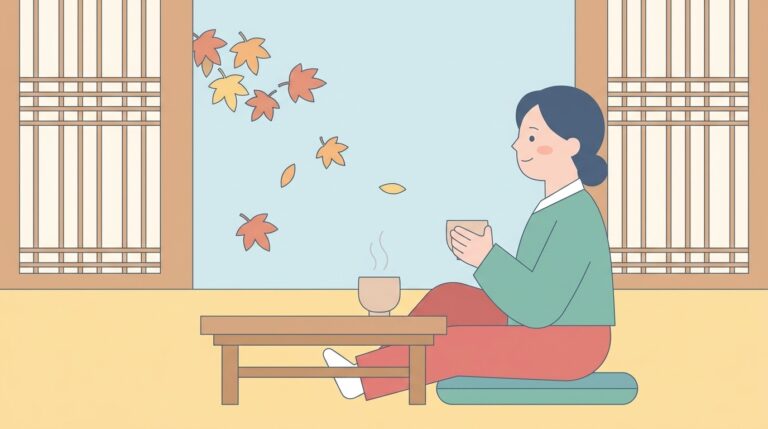
The Philosophy of Korean Happiness: Redefining Fulfillment Beyond Success
Phase 1: Empathy (Story-Driven Opening)
안녕하세요! 매일한글 에디터입니다. Have you ever found yourself in a deep, midnight conversation with a Korean friend at a cozy pojangmacha or a quiet café in Yeonnam-dong, discussing what it truly means to live a good life? If you are studying Korean at an advanced level, you have likely moved far beyond ordering food or asking for directions. You want to articulate the subtle intricacies of human emotion, existential fulfillment, and the philosophical shifts happening in modern Korean society.
In Korea, the concept of happiness has undergone a massive transformation. For decades, collective success, societal benchmarks, and hard work (인내와 노력) were seen as the sole pathways to well-being. Today, however, young Koreans are embracing nuanced ideals ranging from 소확행 (small but certain happiness) to deep psychological balance (마음의 평정). Yet, expressing these profound psychological concepts in natural, C2-level Korean can feel daunting. You might know the dictionary definitions, but how do native speakers subtly debate life goals without sounding like a textbook from the 1990s?
This guide was built directly from real conversations with advanced learners who struggled to express complex philosophical ideas in Korean. By mastering these expressions and cultural codes, you will gain the confidence to share your worldview seamlessly with native speakers.
Phase 2: Core Expressions Deep Dive
1. 소소하지만 확실한 행복 (소확행)
- Pronunciation: [so-so-ha-ji-man hwak-si-ran haeng-bok] (Sounds like so-so-ha-ji-man hwak-shi-ran hang-bok)
- Meaning: Literal: Small but sure happiness. Nuance: Finding deep joy in everyday micro-moments rather than chasing grandiose, societal benchmarks of success.
- K-Culture Moment: Frequently featured in slice-of-life K-dramas like My Liberation Notes (나의 해방일지), where characters seek relief from exhausting daily routines through quiet, personal pleasures.
- Editor’s Insight: While often abbreviated as 소확행, using the full phrase 소소하지만 확실한 행복 in philosophical discussions adds a thoughtful, poetic weight to your sentiment.
- Situation Spectrum:
- Casual: ✅
- Semi-formal: ✅
- Formal: ✅
- 🤔 Think About It: Does your culture prioritize big milestones (buying a house, getting promoted) or daily micro-moments as the key measure of a happy life?
2. 자기완성 (Self-Actualization / Self-Completion)
- Pronunciation: [ja-gi-wan-seong] (Sounds like jah-gee-wan-sung)
- Meaning: Literal: Self-completion. Nuance: The continuous psychological and spiritual process of achieving one’s fullest potential, independent of external validation.
- K-Culture Moment: Heard in podcasts or intellectual talk shows like 알쓸신잡 (Dictionary of Useless Knowledge) when discussing individual growth vs. societal expectations.
- Editor’s Insight: While 자아실현 (self-realization) is a common psychological term, 자기완성 carries an introspective, almost philosophical tone suggesting holistic inner growth.
- Situation Spectrum:
- Casual: ⚠️ (Can sound overly serious unless in a deep talk)
- Semi-formal: ✅
- Formal: ✅
- 🤔 Think About It: In Korean, ‘completion’ implies harmony between inner self and outer world. How does this compare to Western individual self-actualization?
3. 마음의 평정 (Peace of Mind / Inner Serenity)
- Pronunciation: [ma-eum-ui pyeong-jeong] (Sounds like mah-eu-mwe pyung-jung)
- Meaning: Literal: Equilibrium of the mind. Nuance: A state of calm emotional stability unaffected by external chaos or peer pressure.
- K-Culture Moment: Commonly cited in wellness content, Korean essay books, and introspective indie music lyrics.
- Editor’s Insight: Distinguish this from 평화 (peace in a general sense). 평정 emphasizes active mental control and equilibrium despite turmoil.
- Situation Spectrum:
- Casual: ✅
- Semi-formal: ✅
- Formal: ✅
- 🤔 Think About It: Is serenity viewed as emotional control or dynamic expression in your culture?
Phase 3: Textbook Korean vs. Real Native Korean
Situation 1: Discussing societal pressure regarding success
- 📖 Textbook Korean: “한국 사회에서는 남들의 시선을 신경 쓰지 않는 것이 행복의 조건입니다.”
(In Korean society, not caring about others’ views is the condition for happiness.) - 🗣️ Real Native Korean: “결국 남의 기준이 아닌, 내 안의 중심을 잡아야 진정한 마음의 평정이 찾아오는 것 같아요.”
(Ultimately, true peace of mind seems to come when you find your inner anchor rather than living by others’ standards.) - 💡 Why the difference? Advanced native speakers use metaphorical expressions like 내 안의 중심을 잡다 (holding one’s inner balance) to convey psychological autonomy gracefully.
Situation 2: Defining genuine contentment
- 📖 Textbook Korean: “저는 큰 돈을 버는 것보다 소소한 행복이 더 중요하다고 생각합니다.”
(I think small happiness is more important than earning big money.) - 🗣️ Real Native Korean: “거창한 성공보다는 일상 속에 스며있는 소확행이야말로 삶을 지속하게 하는 동력이죠.”
(Rather than grandiose success, the small joys woven into daily life are the true fuel that keeps life going.) - 💡 Why the difference? C2-level phrasing employs sophisticated vocabulary like 스며있다 (permeated/woven) and 동력 (driving force) to present well-articulated viewpoints.
Phase 4: K-Culture Deep Dive & Non-Verbal Manners
4-1. Nunchi & Philosophical Conversation Etiquette
When engaging in deep psychological topics in Korea, aggressive debate style can feel alienating. Instead, practice 공감적 끄덕임 (Empathic Nodding). Even when disagreeing with someone’s definition of happiness, native speakers begin with 맞아요, 그 말씀도 일리가 있네요 (That makes sense too) before offering a subtle counter-perspective. Maintain steady, soft eye contact without staring intently, which signals active listening (경청) rather than confrontation.
4-2. Cultural Code Analysis: The Shift in Korean Media
Modern Korean pop culture reflects a massive shift from collective ambition to individual psychological liberation. Shows like My Liberation Notes and essay bestsellers such as I Want to Die but I Want to Eat Tteokbokki highlight the growing acceptance of emotional vulnerability. Koreans are moving away from measuring happiness by external metrics (스펙, 집값) toward inner psychological resilience (정신적 건강).
Phase 5: Interactive Roleplay Scenario
Setting: A quiet roof terrace overlooking the Han River at dusk. You are sharing drinks with Min-woo (민우), a Korean philosophy researcher.
- Turn 1 (Min-woo): “요즘 한국 청년들 사이에서 행복의 기준이 많이 바뀐 것 같아요. 당신이 생각하는 행복이란 무엇인가요?”
(Yo-jeum han-guk cheong-nyeon-deul sai-e-seo haeng-bo-ge gi-ju-ni ma-ni ba-kkwin geot ga-ta-yo. Dang-si-ni saeng-ga-kha-neun haeng-bo-gi-ran mu-eo-si-n-ga-yo?)
(It seems the standards of happiness among Korean youth have changed a lot lately. What is happiness to you?)
🎭 Warmly sipping tea and looking out at the skyline -
Turn 2 (You): “글쎄요, 과거에는 거창한 성공이 행복이었을지 몰라도, 저는 마음의 평정이 핵심이라고 봐요.”
(Geul-sse-yo, gwa-geo-e-neun geo-chang-han seong-gong-i haeng-bo-gi-eot-seul-ji mol-la-do, jeo-neun ma-eum-ui pyeong-jeong-i hyaek-si-mi-ra-go bwa-yo.)
(Well, while grandiose success might have been happiness in the past, I view peace of mind as the core.)
🎭 Smiling thoughtfully -
Turn 3 (Min-woo): “마음의 평정이라… 하지만 치열한 현대 사회에서 그 평정을 유지하기가 쉽지 않잖아요?”
(Ma-eum-ui pyeong-jeong-i-ra… Ha-ji-man chi-yeol-han hyeon-dae sa-hoe-e-seo geu pyeong-jeong-ul yu-ji-ha-gi-ga swip-ji an-chan-ha-yo?)
(Peace of mind… But isn’t it hard to maintain that composure in today’s fiercely competitive society?)
🎭 Tilting head slightly with curiosity -
Turn 4 (You): “맞아요. 그래서 타인의 시선에서 벗어나 소소하지만 확실한 행복을 찾으려는 노력이 필요한 거죠.”
(Ma-ja-yo. Geu-rae-seo ta-i-nui si-seo-ne-seo beo-seo-na so-so-ha-ji-man hwak-si-ran haeng-bo-gul cha-jeu-ryeo-neun no-ryeo-gi pil-yo-han geo-jyo.)
(Exactly. That’s why we need an effort to step away from others’ gaze and seek small but certain happiness.)
🎭 Nodding gently -
Turn 5 (Min-woo): “그렇군요. 그렇다면 개인의 자기완성과 공동체의 행복은 어떻게 조화를 이룰 수 있을까요?”
(Geu-reot-gun-yo. Geu-reoh-ta-myeon gae-i-nui ja-gi-wan-seong-gwa gong-dong-che-ui haeng-bo-geun eo-tteo-khe jo-hwa-reul i-rul su is-seul-kka-yo?)
(I see. Then how can individual self-actualization and collective happiness achieve harmony?)
🎭 Adjusting glasses thoughtfully -
Turn 6 (You): “개인이 스스로의 삶에 만족할 때 비로소 타인에게도 긍정적인 영향을 미칠 수 있다고 생각해요.”
(Gae-i-ni seu-seu-ro-ui sal-me man-jok-hal ttae bi-ro-so ta-i-ne-ge-do geung-jeong-jeo-gin yeong-hyang-ul mi-chil su is-da-go saeng-ga-khae-yo.)
(I believe that only when individuals are satisfied with their own lives can they exert a positive influence on others.)
🎭 Expressing conviction with calm gestures -
Turn 7 (Min-woo): “깊은 통찰이네요! 결국 행복은 외부에 있는 게 아니라 내면의 성숙에 달린 거군요.”
(Gi-peun tong-cha-ri-ne-yo! Gyeol-guk haeng-bo-geun oe-bu-e in-neun ge a-ni-ra nae-myeon-ui seong-su-ge dal-lin geo-gun-yo.)
(What a deep insight! Ultimately happiness lies in inner maturity, not outside factors.)
🎭 Brightening up with agreement -
Turn 8 (You): “네, 바로 그 내면의 성숙이 우리 삶을 진정으로 풍요롭게 만드는 것 같습니다.”
(Ne, ba-ro geu nae-myeon-ui seong-su-gi u-ri sal-mul jin-jeong-eu-ro pung-yo-rop-ge man-deu-neun geot gat-seum-ni-da.)
(Yes, that very inner maturity is what truly enriches our lives.)
🎭 Raising glass for a gentle toast
🔀 Interactive Choice Point
How would you respond if someone claims success is purely measured by money?
- Option A: “돈은 행복의 필요조건일 뿐, 충분조건은 아닙니다. 마음의 평정이 없으면 무의미하죠.”
- Option B: “틀린 생각입니다. 돈만 좇으면 정신적으로 피폐해질 뿐입니다.”
- Option C: “돈도 중요하지만, 소소한 일상의 기쁨을 놓친다면 진정한 삶이라 할 수 없어요.”
Feedback:
* Option A (Best Choice): Uses formal philosophical logic (필요조건, 충구조건) smoothly without dismissing the speaker. Excellent C2 control!
* Option B (Risk): Too blunt (틀린 생각입니다). In Korean discussions, direct contradiction violates conversational harmony.
* Option C (Good Choice): Balanced and friendly, highlighting daily joy effectively.
Phase 6: 10-Second Emotion Shadowing Drill
Practice these lines with realistic emotional inflections:
[🧘 차분하고 진지하게 / Calm & Serious]
남의 기준이 아닌 / 내 안의 중심을 잡아야 / 진정한 마음의 평정이 찾아오는 것 같아요.
(Na-mui gi-ju-ni a-nin / nae a-nui jung-si-mul ja-ba-ya / jin-jeong-han ma-eum-ui pyeong-jeong-i cha-ja-o-neun geot ga-ta-yo.)-
[😊 따뜻하고 공감하며 / Warm & Empathic]
거창한 성공보다는 / 일상 속에 스며있는 소확행이야말로 / 삶의 진정한 동력이죠.
(Geo-chang-han seong-gong-bo-da-neun / il-sang so-ge seu-myeo-in-neun so-hwak-haeng-i-ya-mal-lo / sal-mui jin-jeong-han dong-ryeo-gi-jyo.)
Phase 7: K-Culture Mini Dictionary
- 안빈낙도 (An-bin-nak-do) | Peaceful Contentment in Simplicity | A classic Sino-Korean philosophical concept revived in modern mindfulness culture, meaning finding joy in simple living.
- 번아웃 증후군 (Burnout Jeung-hu-gun) | Burnout Syndrome | Highly discussed in Korean psychological podcasts; describes mental exhaustion from excessive societal pressure.
- 워라밸 (Wo-ra-bael) | Work-Life Balance | Short for Work-Life-Balance; often used when arguing that happiness requires boundary-setting.
- 주체성 (Ju-che-seong) | Autonomy / Self-Agency | Crucial keyword in modern Korean mental health; living life on one’s own terms.
Phase 8: Traveler’s Survival Kit
TOP 3 Phrases for Deep Talks in Quiet Korean Spots:
- 조용히 이야기 나누기 좋은 곳인가요? (Jo-yong-hi i-ya-gi na-nu-gi jo-eun go-sing-ga-yo?) – Is this a good spot for a quiet conversation?
- 생각이 많아질 때 오기 딱 좋네요. (Saeng-ga-gi ma-na-jil ttae o-gi ttak jo-ne-yo.) – This place is perfect to visit when you have a lot on your mind.
- 깊은 대화를 누눌 수 있어서 좋았습니다. (Gi-peun dae-hwa-reul na-nul su is-seo-seo jo-at-seum-ni-da.) – It was wonderful having a deep conversation with you.
Editor’s Travel Note:
When seeking contemplative places in Seoul (like atmospheric book cafes in Paju or quiet tea houses in Samcheong-dong), finding precise locations is key. Make sure to use the 네이버 지도 앱 다운로드 for real-time local reviews and quiet atmosphere indicators before heading out.
Phase 9:
Frequently Asked Questions (FAQ)
Q: What does "소소하지만 확실한 행복 (소확행)" mean in Korean and how do you pronounce it?
A: In Korean, "소소하지만 확실한 행복 (소확행)" is pronounced [so-so-ha-ji-man hwak-si-ran haeng-bok] and means: Literal: Small but sure happiness. Nuance: Finding deep joy in everyday micro-moments rather than chasing grandiose, societal benchmarks of success.
Q: What does "자기완성 (Self-Actualization / Self-Completion)" mean in Korean and how do you pronounce it?
A: In Korean, "자기완성 (Self-Actualization / Self-Completion)" is pronounced [ja-gi-wan-seong] and means: Literal: Self-completion. Nuance: The continuous psychological and spiritual process of achieving one's fullest potential, independent of external validation.
Q: What does "마음의 평정 (Peace of Mind / Inner Serenity)" mean in Korean and how do you pronounce it?
A: In Korean, "마음의 평정 (Peace of Mind / Inner Serenity)" is pronounced [ma-eum-ui pyeong-jeong] and means: Literal: Equilibrium of the mind. Nuance: A state of calm emotional stability unaffected by external chaos or peer pressure.







