

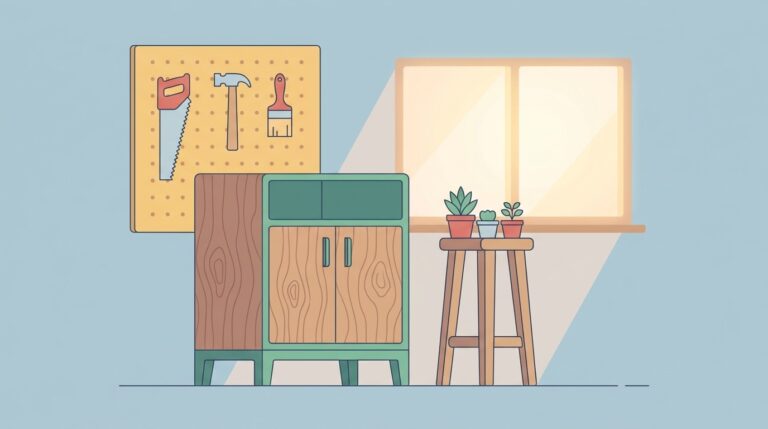
Elevate Your Space: Upcycling & Breathing New Life into Old Furniture in Korean
안녕하세요! Welcome back to another premium edition of Daily Hangul, your ultimate companion for mastering Korean through real, raw, and incredibly vibrant cultural contexts. I’m your Senior Editor and resident ‘Local Culture Navigator’.
Have you ever looked at a worn-out wooden coffee table or a creaky wardrobe and felt that sudden spark of creative inspiration? Upcycling and furniture DIY (목공, mok-gong) are taking Korea by storm. With more people staying home and investing in making their personal spaces unique, phrases like “셀프 인테리어” (self-interior) have become a mainstay in lifestyle magazines and social media trends.
Today, we’re diving deep into the sophisticated world of upcycling and DIY, tailored specifically for C1 (Advanced) learners. We will go beyond textbook formality to explore the actual, nuanced vernacular used by Korean woodworkers, designers, and trendy DIY vloggers.
Phase 1: Empathy (An Upcycling Adventure in Seoul)
Imagine walking through the charming, narrow alleys of Euljiro (을지로)—Seoul’s hip industrial district where old metal workshops meet trendy retro cafes. You spot an old, discarded wooden stool outside an abandoned factory. To the untrained eye, it’s trash. But to you, a passionate upcycler, it’s a diamond in the rough. You want to take it home, sand it down, apply a rich walnut stain, and turn it into a gorgeous plant stand.
However, when you head to a local woodshop (공방, gong-bang) or search on Korean forums for advice, you realize that basic textbook phrases like “가구를 고치고 싶어요” (I want to fix furniture) feel incredibly flat and dry. They don’t capture your artistic vision, nor do they help you bargain for the right type of sandpaper or understand the nuanced advice of a master carpenter.
This guide is built on actual case studies of foreign DIY enthusiasts living in Korea who struggled to communicate their design visions. By the end of this post, you’ll be able to discuss complex restoration techniques, express your aesthetic tastes fluently, and navigate any Korean DIY store like an absolute pro.
Phase 2: Deep Dive into 3 Essential Expressions
Let’s analyze three highly sophisticated expressions used when discussing furniture upcycling and restoration.
1. 손때가 묻다 (Sonttae-ga mut-da)
- Pronunciation: [Sohn-tte-gah moot-dah] (Sounds like sohn as in “son”, tte as in the tense “te” sound in “spit”, and moot-dah)
- Meaning: Lit. “stained with hand-dirt” $\rightarrow$ To look beautifully worn-in, aged gracefully, or carrying the warmth of human touch over time.
- K-Culture Moment: You will hear this in healing lifestyle K-Dramas set in the countryside or cozy neighborhoods (like Home Town Cha-Cha-Cha). A character might point to an old wooden dining table and say, “손때가 묻어서 더 정이 가요” (I like it more because it has that lived-in, warm feel).
- Editor’s Insight: While “dirty” sounds negative in English, 손때 carries a deeply nostalgic and affectionate connotation in Korea. It represents the soul and history of an object.
- Situation Spectrum: Casual ✅ | Semi-formal ✅ | Formal ⚠️
- 🤔 Think About It: In our fast-paced digital era, why do you think Koreans find comfort in things that are “손때가 묻은” (worn-in)? How does your native culture describe this cozy, antique feeling?
2. 리폼하다 (Ripom-hada) vs. 업사이클링하다 (Eopsaikeulling-hada)
- Pronunciation: [Ree-pohm-hah-dah] / [Uhp-sah-ee-keul-ring-hah-dah]
- Meaning: To reform/upcycle. 리폼 focuses on modifying an existing item for better look/utility, while 업사이클링 highlights environmental value by upgrading waste materials.
- K-Culture Moment: On trendy lifestyle YouTube channels, creators often do “방구석 리폼” (room-corner upcycling) challenges, showing how they transform cheap, discarded items into high-end aesthetic pieces.
- Editor’s Insight: While 리폼 is a classic Konglish (Korean-English) term that has been used for decades, 업사이클링 is the modern, eco-conscious buzzword preferred by trendy designers.
- Situation Spectrum: Casual ✅ | Semi-formal ✅ | Formal ✅
- 🤔 Think About It: How does borrowing English words like “Reform” and “Upcycling” change the vibe of a project compared to using pure Korean words like “고쳐 쓰기” (fixing and using)?
3. 결을 살리다 (Gyeol-eul sal-li-da)
- Pronunciation: [Gyuhl-eul sahl-lee-dah] (Sounds like gyuhl as in “gull” but with a soft “y” sound, and sahl-lee-dah)
- Meaning: Lit. “to save/revive the grain (of wood)” $\rightarrow$ To highlight and preserve the natural texture, pattern, or character of a material.
- K-Culture Moment: In premium woodworking classes in Bukchon Hanok Village, master carpenters often advise students, “사포질할 때 나무 결을 살리는 게 제일 중요해요” (When sanding, the most important thing is to preserve the natural grain of the wood).
- Editor’s Insight: 결 is a beautiful Korean word representing texture, grain, or even a person’s inner temperament. 결을 살리다 is also metaphorically used to describe respecting someone’s natural flow or personality.
- Situation Spectrum: Casual ✅ | Semi-formal ✅ | Formal ✅
- 🤔 Think About It: How does the concept of “preserving the natural grain” align with the traditional Korean aesthetic of harmonizing with nature rather than dominant shaping?
Phase 3: Textbook Korean vs. Real-Life Korean
Let’s compare stiff, textbook expressions with what native DIY enthusiasts actually say.
Situation 1: Explaining your plan to sand down old paint
- 📖 Textbook: 페인트를 지우고 다시 칠할 거예요. (I am going to remove the paint and paint it again.)
- 🗣️ Real-Life: 싹 벗겨내고 샌딩한 다음에 바니시로 마감하려고요. (I’m planning to completely strip it down, sand it, and finish it with varnish.)
- 💡 Why the difference? The real-life version uses precise technical terms (샌딩 – sanding, 바니시 – varnish, 마감 – finishing) and the vivid colloquial verb 싹 벗겨내다 (to completely strip/peel off), showing a high level of expertise.
Situation 2: Describing a rustic, vintage look
- 📖 Textbook: 이 가구는 옛날 느낌이 납니다. (This furniture has an old feeling.)
- 🗣️ Real-Life: 빈티지한 무드가 제대로 살아있네요. (It perfectly captures that authentic vintage mood.)
- 💡 Why the difference? Modern Koreans heavily use the English loanwords 빈티지 (vintage) and 무드 (mood) combined with the active verb 살아있다 (to be alive/vibrant) to express a trendy, aesthetic appreciation.
Phase 4: K-Culture Deep Dive & Non-Verbal Manners
4-1. The Body Language of a Craftsperson
When visiting a local woodshop (공방) in Korea, your posture speaks volumes.
* The “Respectful Inspection”: When examining a master’s work, lean in slightly, gently run your fingertips along the wooden joint, and nod slowly. This shows appreciation for the craftsmanship. Avoid tapping or knocking loudly on the wood, as it can be seen as disrespectful.
* The Humble Consultation: When asking a carpenter for advice, keep your hands lightly folded in front of you. This classic, polite posture immediately signals that you respect their years of experience.
4-2. The “Sok-gwang” (Inner Glow) Trend
In modern Korean interior design, the trend has shifted away from flashy, high-gloss finishes to “속광” (inner, subtle glow). This reflects a broader cultural aesthetic value: beauty that is quiet, understated, and natural. Whether it’s K-Beauty skin trends or furniture design, Koreans love finishes that look like they are glowing from within rather than being covered in artificial lacquer.
Phase 5: Real-Life Roleplay Scenario
Setting: A cozy upcycling workshop (공방) in Euljiro. You (민우/Minwoo) are consulting with Master Carpenter Park (박 목수) about a vintage wooden cabinet you picked up.
Character Profile:
- 박 목수 (Master Park): A warm, seasoned carpenter in his late 50s who loves coffee and passionate young creators.
- 민우 (Minwoo): An enthusiastic upcycler looking for expert tips.
- 민우: 🎭 (Gently touching the cabinet door) 사장님, 이 고가구 좀 보세요. 세월의 흔적이 고스란히 담겨 있죠?
(Sajangnim, ee go-gagu jom boseyo. Sewol-ui heunjeok-i go-seor-an-i damgyeot-jyo? / Boss, look at this antique furniture. It holds the traces of time so beautifully, doesn’t it?) -
박 목수: 🎭 (Adjusting his glasses, nodding with a smile) 허허, 진짜 그렇네. 손때가 제대로 묻었어. 아주 귀한 녀석을 구했구만. 이거 어떻게 리폼할 생각인가?
(Heoheo, jinja geureonne. Sonttae-ga jedaero mudeosseo. Aju gwihan nyeoseok-eul guhaetguman. Egeo eotteoke ripom-hal saenggak-inga? / Haha, indeed. It’s got a great worn-in feel. You found a rare gem. How are you planning to upcycle this?) -
민우: 🎭 (Gesturing to the surface) 겉에 칠해진 낡은 페인트는 싹 벗겨내고요, 나무 본연의 결을 최대한 살리고 싶어요.
(Geote chilhaejin nalgeun peinteu-neun ssak beotgyeonaegoyo, namu bonyeon-ui gyeol-eul choedaehan salligo sipeoyo. / I want to strip off the old paint on the surface completely and maximize the natural grain of the wood.) -
박 목수: 🎭 (Pleased) 오, 볼 줄 아네! 그렇다면 거친 사포로 먼저 밀고, 고운 사포로 마감해야겠어. 오일 스테인 컬러는 뭘로 생각하나?
(Oh, bol jul ane! Geureotamyeon geochin sapor-o meonjeo milgo, goun sapor-o magamhaeyagesseo. Oil seutein keolleo-neun mwollo saenggak-hana? / Oh, you’ve got an eye! In that case, sand it down with rough sandpaper first, then finish with fine sandpaper. What oil stain color are you thinking of?) -
민우: 🎭 (Tapping his chin thoughtfully) 너무 어둡지 않게, 따뜻한 느낌의 월넛 컬러로 칠한 다음에 바니시로 무광 마감하고 싶어요.
(Neomu eodupji anke, ttatteut-han neukkim-ui wolneot keolleo-ro chihan da-eume banisi-ro mugwang magam-hago sipeoyo. / Not too dark; I’d like to stain it with a warm walnut color and then give it a matte varnish finish.) -
박 목수: 🎭 (Patting Minwoo’s shoulder) 아주 세련된 감각이구만! 좋아, 옆에서 내가 기계 쓰는 법이랑 꿀팁들 좀 알려줌세.
(Aju seryeon-doen gamgak-iguman! Joa, yeop-eseo naega gigye sseuneun beob-irang kkultip-deul jom allyeojumse. / You have a very sophisticated taste! Great, I’ll stand by and show you how to use the machines and share some pro tips.)
🔀 Interactive Choice Point
How would you respond to Master Park’s offer to help you with the heavy machinery?
- Option A: “아니요, 제가 혼자 알아서 해볼게요.” (No, I will do it by myself.)
- Option B: “와, 정말요? 사장님 노하우를 직접 배울 수 있다니 완전 영광입니다!” (Wow, really? It’s an absolute honor to learn your know-how directly!)
- Option C: “기계 쓰는 건 귀찮은데 사장님이 대신 해주시면 안 돼요?” (Using machines is tedious, can’t you just do it for me?)
Feedback on your choice:
- Option A (Risk): While independent, it might come off a bit cold and reject Master Park’s warm gesture of mentorship. In Korean craftsmanship culture, accepting guidance builds a great bond (정, jeong).
- Option B (Best): Perfect! It shows immense respect, enthusiasm, and uses polite language (영광입니다) that will make the master carpenter want to give you his best materials for free.
- Option C (Bad): Extremely rude. Asking an elder or expert to do the hard labor for you casually will instantly ruin the relationship.
Phase 6: 10-Second Emotion Shadowing Drill
Practice speaking with the flow, pauses, and emotions of a real Korean designer. Pay attention to the / pause marks!
- [😊 Filled with nostalgic admiration]
“손때가 묻어서 / 더 정이 가고 / 클래식한 느낌이 드네요.”
(Sonttae-ga mudeoseo / deo jeong-i gago / keullaesik-han neukkim-i deuneyo.)
“Because it’s beautifully worn-in / I feel more attached to it / and it has a classic vibe.” -
[💡 Confident and creative]
“나무 본연의 결을 / 최대한 살려서 / 리폼하고 싶어요.”
(Namu bonyeon-ui gyeol-eul / choedaehan sallyeoseo / ripom-hago sipeoyo.)
“I want to preserve / the natural grain of the wood as much as possible / to upcycle it.”
Phase 7: K-Culture Mini Dictionary
- 공방 (Gong-bang) | Workshop/Atelier
- Historically referred to artisan studios, now it represents trendy DIY spaces where locals learn pottery, woodworking, and perfume-making.
- 사포질 (Sapo-jil) | Sanding
- Literally “sandpapering”. In life, Koreans sometimes use this metaphorically to describe smoothing out rough edges of a project or a relationship.
- 무광 (Mu-gwang) | Matte finish
- Meaning “no-gloss”. It is highly sought after in modern Korean aesthetics for its sleek, premium, and natural feel.
- 세월의 흔적 (Sewol-ui heunjeok) | Traces of time
- A poetic phrase used to describe the beautiful aging of objects, buildings, or even wrinkles on a beloved grandparent’s face.
Phase 8: Survival Kit for Travelers
Survival Expressions TOP 3
- “이거 직접 하신 거예요?” (Did you make/upcycle this yourself?)
- Pronunciation: [Igo jikjeob hasin geoyeyo?]
- Pro Tip: Use this when visiting trendy cafes in Seongsu-dong that feature upcycled furniture. It instantly sparks warm conversations with the owners.
- “목공용 본드랑 사포는 어디에 있나요?” (Where are the wood glue and sandpaper?)
- Pronunciation: [Mokgong-yong bondeu-rang sapo-neun eodie innayo?]
- Pro Tip: Essential when navigating massive hardware stores like D.I.Y. centers in Korea.
- “나무 종류가 어떻게 돼요?” (What kind of wood is this?)
- Pronunciation: [Namu jongnyu-ga eotteoke dwaeyo?]
- Pro Tip: Great for inquiring about the durability of furniture at vintage flea markets.
🗺️ Editor’s Travel Note
When looking for DIY materials or vintage furniture in Seoul, download the Naver Map App instead of Google Maps, which has limited accuracy in Korea. Search for “을지로 가구거리” (Euljiro Furniture Street) or “황학동 풍물시장” (Hwanghak-dong Flea Market) to discover hidden warehouses packed with vintage gems waiting for your touch. Note: Shop opening hours may vary on Sundays, so always check the app before visiting.
Phase 9:
Frequently Asked Questions (FAQ)
Q: What does "손때가 묻다 (Sonttae-ga mut-da)" mean in Korean and how do you pronounce it?
A: In Korean, "손때가 묻다 (Sonttae-ga mut-da)" is pronounced [Sohn-tte-gah moot-dah] and means: Lit. "stained with hand-dirt" $\rightarrow$ To look beautifully worn-in, aged gracefully, or carrying the warmth of human touch over time.
Q: What does "리폼하다 (Ripom-hada) vs. 업사이클링하다 (Eopsaikeulling-hada)" mean in Korean and how do you pronounce it?
A: In Korean, "리폼하다 (Ripom-hada) vs. 업사이클링하다 (Eopsaikeulling-hada)" is pronounced [Ree-pohm-hah-dah] and means: To reform/upcycle. 리폼 focuses on modifying an existing item for better look/utility, while 업사이클링 highlights environmental value by upgrading waste materials.
Q: What does "결을 살리다 (Gyeol-eul sal-li-da)" mean in Korean and how do you pronounce it?
A: In Korean, "결을 살리다 (Gyeol-eul sal-li-da)" is pronounced [Gyuhl-eul sahl-lee-dah] and means: Lit. "to save/revive the grain (of wood)" $\rightarrow$ To highlight and preserve the natural texture, pattern, or character of a material.







