

Master Korean Proverbs Like a Local: Speak with Wit and Soul
Phase 1: Empathy (An Open Letter from Your Korean Bestie)
안녕하세요! (Annyeonghaseyo!) It’s your K-culture navigator and Daily Hangul editor here!
Picture this: You are watching a K-drama. The male lead is struggling to make a hard decision, and his wise grandmother pats his back, saying a short, rhythmic phrase. Suddenly, the lead’s eyes widen—he gets it! Or imagine you are having Korean BBQ with your coworkers. Someone sighs about a minor setback, and another colleague drops a quick, punchy phrase that instantly makes everyone nod in deep agreement.
That, my friend, is the magic of 속담 (Sokdam – Proverbs) and 사자성어 (Sajaseong-eo – Four-character Idioms).
When you reach the B2 (Intermediate) level, you know enough vocabulary to survive. But how do you bridge the gap between sounding like a translated textbook and sounding like a warm, witty Korean friend? You do it by dropping the perfect proverb at the perfect moment.
I’ve guided hundreds of students who felt their Korean was “too dry” or “clinical.” Today, we are going to unlock three iconic Korean proverbs that will make native speakers stop, smile, and ask: “Wow, are you secretly Korean?”
Phase 2: The Core Trio (Deep Dive into 3 Iconic Proverbs)
Let’s look at three powerful proverbs that Koreans use daily.
1. 누워서 떡 먹기 (Nuwonseo tteok meokgi)
- Pronunciation: Noo-wone-seo tteok meok-gi (Sounds like “Noo-one-suh” + “duck” + “mock-gee”)
- Meaning: “Eating rice cakes while lying down” (Equivalent to “A piece of cake” or “As easy as pie”).
- K-Culture Moment: You will hear this in variety shows like Running Man when a member boasts about a mission being incredibly easy, only to fail hilariously a second later.
- Editor’s Insight: Be careful! In Korean culture, eating tteok (rice cake) while lying down is actually quite difficult and dangerous (you might choke!). However, the proverb sarcastically or playfully refers to something requiring zero effort.
- Situation Spectrum:
- Casual: ✅ (Perfect for friends)
- Semi-formal: ✅ (Great for light workplace banter)
- Formal: ⚠️ (Use sparingly; can sound a bit too playful in serious presentations)
- 🤔 Think About It: In English, we use “a piece of cake” (sweet, light). In Korean, we use tteok (traditional, staple comfort food). How does your culture express “easy things” through food?
2. 시작이 반이다 (Sijagi ban-ida)
- Pronunciation: She-jah-gi bahn-ee-dah
- Meaning: “Starting is half [the battle]” (Equivalent to “Well begun is half done”).
- K-Culture Moment: Often used in lifestyle vlogs or interview shows (like You Quiz on the Block) to encourage someone who is hesitating to start a new project, a diet, or learning a language.
- Editor’s Insight: This reflects the action-oriented Korean mindset of 빨리빨리 (Ppalli-ppalli – quickly, quickly). It teaches that overcoming the initial inertia of fear is the hardest part. Once you take step one, you are already halfway there!
- Situation Spectrum:
- Casual: ✅
- Semi-formal: ✅
- Formal: ✅ (Excellent for motivational speeches or business meetings)
- 🤔 Think About It: Why do you think Korean culture places such high value on the act of beginning rather than just the final result?
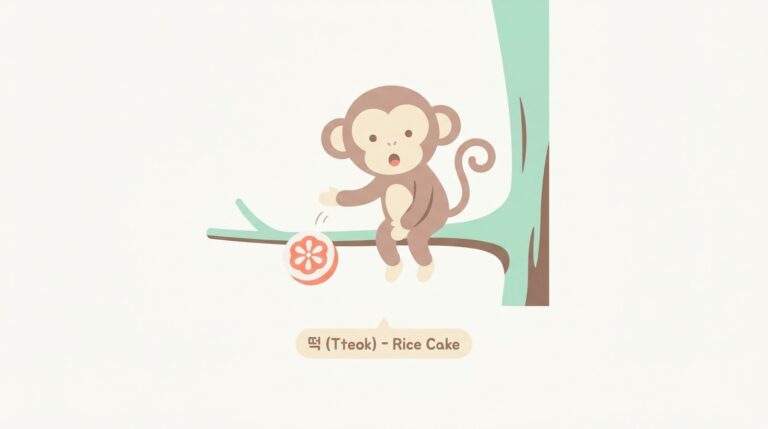
3. 원숭이도 나무에서 떨어진다 (Wonsung-ido namueseo tteoreojinda)
- Pronunciation: One-soong-ee-do nah-moo-eh-suh ttol-uh-jin-dah
- Meaning: “Even monkeys fall from trees” (Equivalent to “Even Homer sometimes nods” or “Even experts make mistakes”).
- K-Culture Moment: You’ll see this in sports commentary or behind-the-scenes K-pop dance practices when an idol dancer messes up a routine they’ve done a thousand times.
- Editor’s Insight: This is a warm, empathetic proverb. It is used to comfort someone who is highly skilled but made a silly, unexpected mistake. It gently humbles us while offering comfort.
- Situation Spectrum:
- Casual: ✅
- Semi-formal: ✅
- Formal: ⚠️ (Can sound a bit informal during official business apologies)
- 🤔 Think About It: This proverb uses a monkey as a metaphor for an expert. What animal or figure does your native language use to show that experts aren’t perfect?
Phase 3: Textbook Korean vs. Real Korean
Let’s see how a standard textbook phrase compares to the culturally rich, proverbs-infused real Korean used by native speakers.
Scenario A: Encouraging a friend who is scared to start a new job.
- 📖 Textbook Korean: “걱정하지 말고 먼저 시도해 보세요. 할 수 있어요.” (Don’t worry, just try it first. You can do it.)
- 🗣️ Real Korean: “야, 시작이 반이야! 일단 첫발만 내딛으면 다 해결돼.” (Hey, starting is half the battle! Once you take the first step, everything will work out.)
- 💡 Why it works: The real Korean version sounds less like a clinical therapist and more like a passionate, supportive best friend who uses cultural wisdom to boost confidence.
Scenario B: Reacting to a smart friend failing an easy test.
- 📖 Textbook Korean: “누구나 가끔 실수를 할 때가 있습니다.” (Everyone makes mistakes sometimes.)
- 🗣️ Real Korean: “괜찮아, 원숭이도 나무에서 떨어진다잖아. 다음 시험 잘 보면 돼!” (It’s okay, they say even monkeys fall from trees. Just do well on the next exam!)
- 💡 Why it works: Adding “~잖아” (you know…) at the end of the proverb makes it sound warm, conversational, and highly natural.
Phase 4: K-Culture Deep Dive & Non-Verbal Manners
4-1. Nunchi (눈치) & Body Language
When delivering these proverbs, your delivery is just as important as your pronunciation.
* When using “시작이 반이다” (Encouragement): Maintain warm eye contact, give a gentle fist pump (파이팅! – Fighting!), and nod slowly. It shows solid solidarity.
* When using “원숭이도 나무에서 떨어진다” (Comfort): Soften your voice, tilt your head slightly, and pat the person lightly on the shoulder or arm. Avoid a mocking tone, as this proverb is meant to heal, not tease.
4-2. The Cultural Undercurrent
Korean society is deeply rooted in communal bonding (정 – Jeong). While Western idioms often emphasize individual triumph (“Every man for himself”), Korean proverbs focus on shared human flaws and collective encouragement. Saying “원숭이도 나무에서 떨어진다” is a way of saying, “You are human, I am human, and we are in this together.”
Phase 5: Real-Life Roleplay Scenario
The Setup
Characters:
* 지민 (Jimin – NPC): Your warm-hearted Korean coworker who is incredibly skilled at design but just made a rare, massive formatting error on a client presentation.
* You (The Supportive Colleague): Trying to cheer Jimin up in the office breakroom.
The Dialogue
- 지민: (한숨을 쉬며 머리를 감싸 쥔다) 🎭 Sighs deeply and holds head in hands
“아… 진짜 말도 안 돼. 어떻게 이런 실수를 했지? 나 진짜 바보인가 봐…”
(Ah… this makes no sense. How could I make this kind of mistake? I must be an idiot…) -
You: (지민의 어깨를 토닥이며) 🎭 Patting Jimin’s shoulder
“지민 씨, 너무 자책하지 마세요. 원숭이도 나무에서 떨어진다고 하잖아요.”
(Jimin, don’t blame yourself too much. They say even monkeys fall from trees.) -
지민: (얼굴을 들며 쓸쓸하게 웃는다) 🎭 Looking up with a lonely smile
“그래도 매번 완벽하게 하려고 노력했는데… 이번 건은 수습하기 너무 힘들 것 같아요.”
(But still, I tried to make it perfect every time… this one seems too hard to fix.) -
You: (따뜻한 미소로) 🎭 With a warm smile
“아니에요. 우리 같이 하면 돼요. 시작이 반이다라는 말도 있잖아요. 지금 바로 수정 작업 시작해요!”
(No way. We can do it together. There’s also a saying that starting is half the battle. Let’s start the revision work right now!) -
지민: (감동받은 표정으로) 🎭 With a touched expression
“정말 고마워요. 그런데 수정할 분량이 너무 많아서 오늘 야근해야 할 것 같아요…”
(Thank you so much. But there is so much to edit, I think I’ll have to work overtime tonight…) -
You: (장난스럽게 윙크하며) 🎭 Winking playfully
“에이, 지민 씨 실력이면 이 정도 수정은 누워서 떡 먹기죠! 제가 커피 사 올 테니까 힘내요!”
(Ay, with your skills, this kind of editing is a piece of cake! I’ll go buy some coffee, so hang in there!) -
지민: (웃음을 터뜨리며) 🎭 Bursting into laughter
“하하, 진짜 힘이 나네요! 고마워요. 얼른 끝내고 같이 퇴근해요!”
(Haha, I really feel energized now! Thank you. Let’s finish this quickly and leave work together!) -
You: (엄지를 치켜세우며) 🎭 Giving a thumbs-up
“좋아요! 화이팅!”
(Sounds good! Fighting!)
🔀 Interactive Choice Point
How would you respond if Jimin says: “I don’t think I can ever face the client again…”?
- A. “그냥 회사를 그만두세요.” (Just quit the company.)
- B. “괜찮아요. 실패는 성공의 어머니잖아요! 우리 기운 내요!” (It’s okay. Failure is the mother of success! Let’s cheer up!)
- C. “에이, 별거 아니에요. 신경 쓰지 마세요.” (Ay, it’s nothing. Don’t worry about it.)
Feedback:
- A (Bad): Too extreme! You might scare your poor coworker away.
- B (Best): Fantastic! You introduced another beautiful proverb (실패는 성공의 어머니 – Silpaeneun seonggong-ui eomeoni) that is perfectly empathetic.
- C (Risk): While meant to comfort, dismissing their genuine worry as “nothing” can sometimes feel dismissive in Korean workplace culture.
Phase 6: 10-Second Emotion Shadowing Drill
Let’s practice speaking with soul. Read these lines out loud, paying attention to the emotion tags and the pause marks (/).
- [🥺 With deep empathy and comforting tone]
“괜찮아, / 원숭이도 / 나무에서 / 떨어진다잖아. / 너무 걱정 마.”
(Kwen-cha-na, / won-sung-ee-do / namu-eseo / ttol-uh-jin-da-ja-na. / Neomu geok-jeong-ma.) -
[🔥 Energetic, high-spirited, and highly encouraging]
“야! / 시작이 반이야! / 일단 질러봐!”
(Ya! / Shi-ja-gi / bahn-ee-ya! / Il-dan jil-luh-bwa! – Hey! Starting is half! Just go for it!) -
[😏 Playful, confident, with a smirk]
“이거요? / 에이, / 저한테는 / 누워서 떡 먹기죠!”
(Ee-goyo? / Ei, / jeo-han-te-neun / nuwon-seo tteok meok-gi-jyo! – This? Ay, for me, it’s a piece of cake!)
Phase 7: K-Culture Mini-Dictionary
- 수습하다 (Suseubhada) | To clean up/resolve a messy situation or mistake. Used constantly in office dramas when a crisis occurs.
- 야근 (Yageun) | Overtime work. A major part of Korean corporate culture, though slowly changing with modern work-life balance trends.
- 자책하다 (Jachaekhada) | To blame oneself. A crucial verb to show empathy when a friend is being too hard on themselves.
- 기운 내다 (Giun naeda) | To cheer up / gather energy. The literal translation is “to bring up one’s energy/spirit.”
Phase 8: Traveler’s Survival Kit
Survival Expressions TOP 3
- “속담 하나 배웠어요!” (Sokdam hana baewosseoyo!)
- Pro Tip: Tell this to your Korean friends before dropping a proverb. It builds anticipation!
- “말이 씨가 된다.” (Mari ssiga doenda.)
- Pro Tip: Means “Words become seeds.” Use this when someone is saying negative, pessimistic things to warn them playfully.
- “대박!” (Daebak!)
- Pro Tip: Use this after someone successfully executes something they claimed was “누워서 떡 먹기.”
Editor’s Travel Note
When traveling in Korea, observing locals is key to learning natural idioms. To navigate like a pro and find cozy local spots where older Koreans drop classic proverbs over stews, download the Naver Map App (available in English) rather than relying on Google Maps, which has limited functionality in South Korea.
Note: App interfaces and regional transit fares are subject to change. Please verify current details before traveling.
Phase 9: Go One Step Deeper (Reflection)
In Korea, proverbs are not just old sayings from dusty books; they are the oil that keeps social relationships running smoothly. Korean culture highly values 겸손 (Gyeomson – Humility) and 위로 (Wiro – Comfort). When you use a proverb like “원숭이도 나무에서 떨어진다,” you are actively choosing to preserve the other person’s 체면 (Chaemyon – social face) while maintaining harmony.
💬 Your Turn: Have you ever made a mistake while speaking Korean, only to have a native speaker comfort you? What did they say? Share your story in the comments below!
Phase 10: FAQ & Avoiding Misunderstandings
Q: Can I use “누워서 떡 먹기” to my boss at work?
A: It is best to avoid it in highly formal situations. If your boss asks if you can finish a report by tomorrow, saying “누워서 떡 먹기죠!” might make you sound slightly arrogant or overconfident. Instead, use a polite expression like “네, 문제없이 준비할 수 있습니다” (Yes, I can prepare it without any issues).
Q: What is the difference between 사자성어 (Sajaseong-eo) and 속담 (Sokdam)?
A: 사자성어 are historical four-character idioms derived from Classical Chinese (e.g., 이심전심 – telepathy/understanding without words). 속담 are native Korean folk proverbs that use everyday metaphors (like rice cakes, monkeys, or dogs) to share wisdom.
Q: How do I make these proverbs sound less like I am reciting a dictionary?
A: Always end them with conversational grammar endings like “~라잖아” (as they say…), “~라고 하잖아요” (they say that…), or “~인 셈이죠” (it’s basically like…).
🚨 Common Mistakes Alert!
- Mistake: Saying “원숭이가 나무에서 떨어집니다” during a serious, formal apology.
- Correct Action: Keep it conversational. This proverb is for lighthearted comfort, not formal damage control.
- Mistake: Mixing up the food in “누워서 떡 먹기” (e.g., saying 누워서 김밥 먹기).
- Correct Action: Keep the noun as 떡 (tteok). Idioms are fixed formulas!
- Mistake: Using “시작이 반이다” to dismiss someone’s long-term planning.
- Correct Action: Use it strictly to encourage someone who is stalling before starting.
Phase 11: Action Mission
- Bronze Mission: Read the three proverbs aloud 5 times using the Emotion Shadowing guide in Phase 6.
- Silver Mission: Write a 3-sentence diary entry in Korean about something you want to start doing (e.g., working out, reading) and use the proverb “시작이 반이다!”
- Gold Mission (K-Culture Mission): Watch your favorite K-Drama or a variety show this week. Keep your ears peeled for the word “속담” (proverb) or any mention of “떡” (rice cake) and “원숭이” (monkey) and write down the context!
Phase 12: Interactive Quiz Challenge
Test your intermediate wisdom! Choose the correct options below.
1. Which proverb is perfect for comforting a master chef who accidentally burnt a simple dish?
- A) 시작이 반이다
- B) 원숭이도 나무에서 떨어진다
- C) 누워서 떡 먹기
Reveal Answer & Explanation
Correct Answer: B
“원숭이도 나무에서 떨어진다” (Even monkeys fall from trees) is the ultimate proverb for comforting an expert who made an unexpected mistake.
2. Fill in the blank: “This Korean homework is so easy, it’s ________.”
- A) 서서 떡 먹기 (Eating rice cakes while standing)
- B) 누워서 밥 먹기 (Eating rice while lying down)
- C) 누워서 떡 먹기 (Eating rice cakes while lying down)
Reveal Answer & Explanation
Correct Answer: C
“누워서 떡 먹기” is the exact, fixed cultural phrase. Substitutes like “standing” or “rice” do not exist in this idiom!
3. True or False: “시작이 반이다” can be used to tell someone that they are already finished with their project.
- A) True
- B) False
Reveal Answer & Explanation
Correct Answer: B (False)
This proverb means “Starting is half [the battle].” It is used to encourage someone at the very beginning of a journey, not to claim they are completely finished.
See you in the next lesson! 다음에 또 만나요! Bye-bye! 👋







