

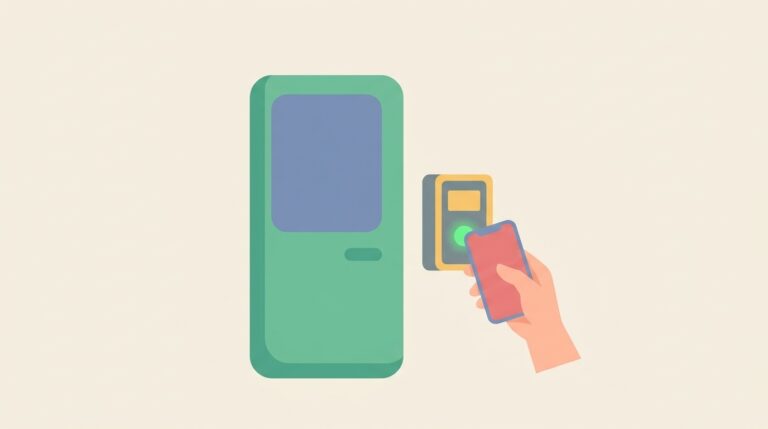
Master the Art of Tagging On and Off: Navigating Seoul’s City Buses Like a True Native (C1 Level)
Phase 1: Empathy (Welcome to the Rhythm of Seoul’s Commute)
안녕하세요! (Annyeonghaseyo! – Hello!) Your trusted Daily Hangul editor here.
Imagine this: You are standing in a packed Seoul city bus during the humid evening rush hour. The neon lights of Gangnam blur outside the window. As your stop approaches, you squeeze through the crowd toward the back exit. Suddenly, anxiety strikes. Everyone in front of you is swiftly tapping their cards against the terminal with a rhythmic beep—or a polite verbal alert from the machine. You hold your transit card, sweating slightly. Should you tap now? What if it charges you twice? What if the card reader screams “잔액이 부족합니다” (Janaegi bujokhamnida – Insufficient balance) in front of thirty silent, tired commuters?
If you have ever felt your heart skip a beat at the bus exit, you are not alone. Navigating the “tag-on, tag-off” (승하차 태그) system is a major pain point for advanced learners. While basic travel guides tell you how to swipe, they miss the subtle linguistic cues, the unspoken transit etiquette (눈치 – Nunchi), and the micro-interactions with bus drivers. Today, we are upgrading your transit game from a hesitant tourist to a fluent, effortless commuter.
Phase 2: Deep Dive into 3 Essential Transit Expressions
To master the bus commute, you need more than dictionary definitions. Let’s dissect the three most critical expressions you will hear or use.
1. 하실 때 카드를 대주세요 (Hasil ttae kadeureul daejuseyo)
- Pronunciation: Ha-sil ttae ka-deu-reul dae-ju-se-yo (Sounds like: “Ha-sheel-tteh kah-deu-reul deh-joo-seh-yo”)
- Meaning: “Please tap your card when you get off.”
- K-Culture Moment: This is the ubiquitous automated voice announcement that chimes right before the bus reaches your stop. In slice-of-life K-Dramas, this background announcement often plays right before a dramatic confession or a nostalgic window-staring scene.
- Editor’s Insight: The verb 대다 (daeda) literally means “to touch” or “to bring close to.” In modern tech-savvy Korea, it is the standard verb for NFC/RFID tapping. Note the honorific suffix -(으)실 (-eusil) embedded in 하실 때, showing high respect to the passengers.
- Situation Spectrum: Casual 🚫 | Semi-formal ✅ | Formal ✅
- 🤔 Think About It: Why does Korean use the verb “to touch/bring close” (대다) rather than “to scan/swipe”? It reflects a tactile, physical relationship with technology that minimizes friction.
2. 하차 태그 안 하면 추가 요금 나와요 (Hacha taegeu an hamyeon chuga yogeum nawayo)
- Pronunciation: Ha-cha tae-geu an ha-myeon chu-ga yo-geum na-wa-yo (Sounds like: “Ha-cha teh-geu ahn ha-myeon choo-gah yo-geum nah-wah-yo”)
- Meaning: “If you don’t tag off, you will get charged an extra fee (on your next ride).”
- K-Culture Moment: You will hear helpful elderly locals warmly warning confused foreigners with this exact phrase near tourist hotspots like Myeongdong or Insadong.
- Editor’s Insight: 하차 (hacha) is a Hanja-based (Sino-Korean) word meaning “alighting/getting off the vehicle” (下車). The phrase 추가 요금 (chuga yogeum – additional fare) is crucial because Korea’s distance-based transfer system (환승 할인) penalizes you on your next tap if you fail to tag off.
- Situation Spectrum: Casual ✅ (between friends: 하차 태그 안 하면 추가 요금 나와) | Semi-formal ✅ | Formal ⚠️
- 🤔 Think About It: How does this rule reflect Korea’s hyper-efficient, system-driven urban design? It rewards system compliance with massive transfer discounts.
3. 카드가 안 읽혀요 (Kadeuga an ilkhyeoyo)
- Pronunciation: Ka-deu-ga an il-khyeo-yo (Sounds like: “Kah-deu-gah ahn eel-kyuh-yo”)
- Meaning: “My card isn’t scanning/reading.”
- K-Culture Moment: A classic moment of panic when you are blocking a long line of impatient passengers waiting behind you at the rear door.
- Editor’s Insight: 읽히다 (ilkhida) is the passive form of 읽다 (ikda – to read). Instead of saying “The machine cannot read my card,” Koreans shift the agency to the card itself: “The card is not getting read.”
- Situation Spectrum: Casual ✅ | Semi-formal ✅ | Formal 🚫
- 🤔 Think About It: Using passive verbs in frustrating situations soft-pedals the blame, preventing direct confrontation with the driver or the machine itself.
Phase 3: Textbook Korean vs. Real-Life Korean
Let’s compare the stiff textbook phrases with what actually happens on the streets of Seoul.
Scenario A: Your card didn’t register properly at the front door.
- 📖 Textbook Korean: “교통카드가 단말기에 인식되지 않았습니다.” (Gyotongkadeuga danmalgie insikdoeji anatseumnida. – “The transportation card was not recognized by the terminal.”)
- 🗣️ Real-Life Korean: “카드를 다시 대주세요.” (Kadeureul dasi daejuseyo. – “Please tap your card again.”)
- 💡 Why the difference? Speed is everything (빨리빨리 – Ppalli-ppalli) in Korean transit. Drivers and automated systems skip clinical, multi-syllabic jargon in favor of short, action-oriented directives.
Scenario B: Asking the driver if you need to tag off when you aren’t transferring.
- 📖 Textbook Korean: “환승을 하지 않을 계획인데도 버스에서 내릴 때 카드를 찍어야 합니까?” (Hwanseungeul haji aneul gyehoegindedo beoseueseo naeril ttae kadeureul jjigeoya hamnika? – “Do I have to tap the card when getting off the bus even if I do not plan to transfer?”)
- 🗣️ Real-Life Korean: “환승 안 해도 내려갈 때 찍어야 돼요?” (Hwanseung an haedo naeryeogal ttae jjigeoya dwaeyo? – “Do I have to tap when going down even if I’m not transferring?”)
- 💡 Why the difference? Real-life Korean relies heavily on contractions and spatial verbs like 내려가다 (naeryeogada – to go down/exit the bus stairs) rather than formal nouns like 하차 (hacha).
Phase 4: K-Culture Deep Dive & Non-Verbal Manners
4-1. The Art of “Nunchi” (눈치) at the Exit Door
In Korea, boarding and exiting are synchronized ballets.
* The Stand-by Gesture: Do not wait until the bus completely stops to stand up and walk to the exit. To avoid delaying the schedule, stand up and walk to the back door while the bus is slowing down for your stop. Hold onto the handrails!
* The Card-Prep Pose: Have your card, phone, or smart device ready in your hand before you reach the sensor. Fumbling through your bag at the reader violates the collective speed code.
* Eye Contact: Keep your eyes on the reader screen. If it flashes green with a single beep, you are good. If it flashes red and says “다시 대주세요” (Dasi daejuseyo – Tap again), swiftly retry without blocking others.
4-2. Cultural Code: The “Hwanseung” (환승) Revolution
Korea’s transfer discount system (환승 할인) is a pride of Seoul’s public administration. By tagging off, you get free or heavily discounted transfers to up to four other buses or subway lines within 30 minutes (40 minutes from 9 PM to 7 AM). If you fail to tag off, you lose this discount and pay a maximum penalty fare on your next boarding. This is why even non-transferring locals almost always tag off out of habit!
Phase 5: Real-Life Roleplay Scenario
Setting: A crowded Green Bus (지선버스) navigating the winding slopes of Sinchon.
Characters:
* You (민우 – Min-woo): An advanced Korean learner trying to exit the bus.
* The Driver (기사님 – Gisanim): A seasoned, busy bus operator who speaks quickly but kindly.
[Scene: The bus approaches Sinchon Station. Min-woo stands at the rear exit.]

기사님: 이번 정류소는 신촌역입니다. 내리실 분은 준비해 주세요.
        (Ibeon jeongryusoneun Sinchonyeogimnida. Naerisil buneun junbihae juseyo.)
        "This stop is Sinchon Station. Please get ready to alight."

민우: (🎭 Holds phone near the reader, but a loud beep sounds with an error message)
      어? 기사님, 이거 카드가 안 읽혀요!
      (Eo? Gisanim, igeo kadeuga an ilkhyeoyo!)
      "Oh? Sir, my card isn't scanning!"

기사님: 휴대폰 케이스 두꺼워서 그래요. 케이스 빼고 다시 대봐요.
        (Hyudaepon keiseu dukkeoweoseo geuraeyo. Keiseu ppaego dasi daebwayo.)
        "It's because your phone case is too thick. Take off the case and try tapping again."

민우: (🎭 Hurriedly slides the phone out of the case and taps again)
      아, 이번엔 찍혔어요! 감사합니다.
      (Ah, iboneun jjikhyeoteoyo! Gamsahamnida.)
      "Ah, it scanned this time! Thank you."

기사님: 뒤에 사람 밀려 있으니까 얼른 내리세요! 조심히 가고!
        (Dwie saram millyeo isseunika eolleon naeriseyo! Josimi gago!)
        "People are backing up behind you, so exit quickly! Go safely!"
🔀 Interactive Choice Point
You realize your friend who got off right before you forgot to tag off because they were distracted. What do you say to them as they stand on the sidewalk?
- Choice A: “야! 너 하차 태그 안 하면 다음 승차 때 독박 써!” (Ya! Neo hacha taegeu an hamyeon daeum seungcha ttae dokbak sseo!)
- Choice B: “어머, 하차 태그를 안 하셨으니 다음번에 추가 요금이 부과될 것입니다.” (Eomeo, hacha taegeureul an haseoseuni daeumbeone chuga yogeumi bugwadoel geosimnida.)
- Choice C: “너 방금 카드 안 찍었어! 얼른 다시 타서 찍어!” (Neo banggeum kadeu an jjigeosseo! Eolleon dasi taseo jjigeo!)
Feedback on Your Choice:
- Choice A (Best / Natural Slang): ⭐⭐⭐⭐⭐ Perfect! 독박 쓰다 (dokbak sseuda) is a vivid slang meaning “to take all the blame/financial hit alone.” It fits perfectly with a close friend.
- Choice B (Too Formal / Robotic): ⭐⭐ Grammatically flawless, but sounds like a computer-generated warning message. Your friend might laugh at your sudden extreme politeness.
- Choice C (Risky): ⭐⭐⭐ Getting back on a bus that is about to close its doors is dangerous and might earn you a scolding from the driver.
Phase 6: 10-Second Emotional Shadowing Drill
Practice these with natural flow. Pay attention to the pauses (/) and emotional cues.
- [🥺 Anxious and Hurried]
기사님! / 카드가 / 계속 / 안 읽히는데 / 어떡해요?
(Gisanim! / Kadeuga / gyeseok / an ilkhineunde / eotteokhaeyo?)
“Sir! The card keeps failing to scan, what should I do?” -
[😊 Relieved and Politer]
아, / 이제 됐네요! / 하차 태그 / 잘 찍혔습니다. / 감사합니다!
(Ah, / ije dwaenneyo! / Hacha taegeu / jal jjikhyeoteumnida. / Gamsahamnida!)
“Ah, now it works! The exit tag went through well. Thank you!”
Phase 7: K-Culture Mini-Dictionary
- 하차 태그 (Hacha Tae-geu): Tagging/tapping off. Crucial for completing the distance-based fare calculation.
- 환승 할인 (Hwanseung Harin): Transfer discount. The life-saving system that makes Seoul’s transit incredibly affordable.
- 잔액 부족 (Janaek Bujok): Insufficient balance. The dreaded voice prompt that strikes fear into every commuter.
- 단말기 (Danmalgi): The physical terminal/card reader installed at the doors of buses and subways.
Phase 8: Survival Kit for Travelers
Survival Expressions TOP 3
- “찍혔나요?” (Jjikhyeonnayo? – “Did it scan/register?”)
- Pro Tip: Use this when the reader makes a weird sound and you aren’t sure if it went through.
- “카드가 두 장입니다.” (Kadeuga du jangimnida. – “There are two cards.”)
- Pro Tip: The reader says this when your wallet has multiple cards. Isolate one card and tap again.
- “내려요!” (Naeryeoyo! – “Getting off!”)
- Pro Tip: Shouted toward the driver if they mistakenly close the back doors before you can exit.
Editor’s Travel Note
Always download the Naver Map App before traveling. It tells you real-time bus arrivals and exactly how many stops are left. Disclaimer: Bus fare rules and transfer windows are subject to municipal changes; always check the latest Seoul Metro notices for up-to-date fees.
Phase 9: “Going Deeper” (Reflections on Korean Collectivism)
Korea’s transit system runs on implicit social contracts. The speed, the silent coordination at the exit doors, and the expectation of having your card ready are extensions of 빨리빨리 (Ppalli-ppalli) culture and collective consideration. Delaying a bus by not being prepared is seen as breaking this shared social harmony.
💬 Your Turn: Have you ever experienced a “card error” panic in Korea or your home country? How did you handle it? Let us know in the comments below!
Phase 10: FAQ & Common Mistakes (FAQ Schema)
Q: Do I absolutely have to tag off if I am not transferring to another bus?
A: While you won’t lose a transfer discount immediately if you are going straight to your final destination, it is highly recommended to always tag off. Some routes charge a distance-based penalty on your next journey if you miss a tag-off.
Q: What should I do if the reader says “이미 처리되었습니다” (Already processed)?
A: This means you already successfully tagged. Trying to tap again might trigger a double-charge error or register as a new ride. Walk on through!
Q: Can I use one T-Money card for two people when getting off?
A: No. While “multi-passenger boarding” (다인승) is allowed when boarding (if you tell the driver beforehand), you cannot use it for transfers or tag-offs this way. Each passenger must have their own card for individual transfer discounts.
🚨 Common Mistakes Warning Board
- Mistake 1: Tapping your whole wallet containing three different credit cards. (Error: “카드를 한 장만 대주세요” – Please tap only one card).
- Correct Action: Take the specific transit card out or use your mobile phone’s active transit card.
- Mistake 2: Standing up only after the bus makes a full stop.
- Correct Action: Safely move to the door as the bus is gently decelerating, keeping a tight grip on handrails.
Phase 11: Action Mission & Engagement
- 🥉 Bronze Mission: Practice saying “카드가 안 읽혀요” three times in front of the mirror with an authentic flustered expression.
- 🥈 Silver Mission: On your next Seoul trip, take a photo of the bus card reader showing the green checkmark and share it with the hashtag #DailyHangulTransit.
- 🥇 Gold Mission: Successfully help a fellow traveler struggling with a “잔액 부족” (Insufficient balance) error by directing them to the nearest convenience store to top up!
Phase 12: Interactive Quiz Challenge
Test your real-world Korean transit knowledge!
1. What does “하차 태그” mean?
- A) Boarding the bus
- B) Transferring lines
- C) Tagging off upon exiting
2. True or False: You can get a transfer discount even if you don’t tag off, as long as it’s within 30 minutes.
🔍 Click here to reveal Answers & Explanations!
- Correct Answer: C
- Explanation: 하차 (hacha) means alighting/exiting. Tagging off is essential for fare calculation.
- Correct Answer: False
- Explanation: You must tag off to register your departure time and location, otherwise the system cannot calculate your transfer window.







