

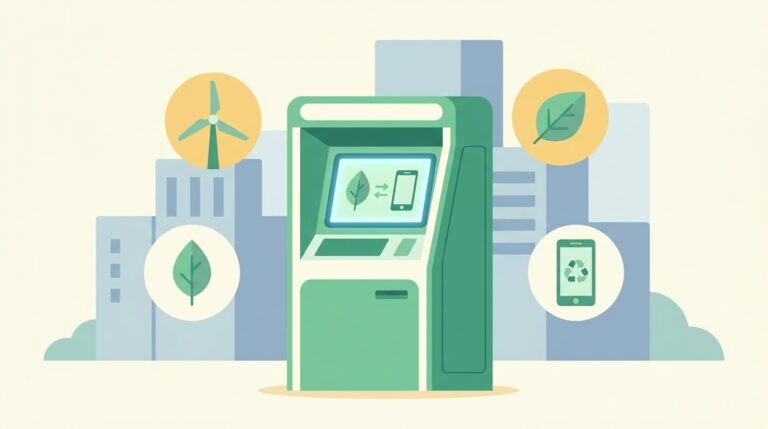
Master Digital Thrift: Navigating Korea’s Mintit (민팃) and the Art of Smart Eco-Trading (C2 Level)
Phase 1: Empathy (스토리 몰입형 오프닝)
안녕하세요! Your premium cultural navigator from “매일한글 (Daily Hangul)” is back!
Imagine this: You’ve finally upgraded to the sleekest new Samsung Galaxy or iPhone. Your old device is gathering dust in a drawer. You want to get some cash back, but the thought of dealing with sketchy anonymous buyers on Karrot Market (당근마켓) in Korean makes your palms sweat. Then, you spot a glowing green ATM-like kiosk at a local E-mart or digital plaza. It’s called Mintit (민팃). It promises to analyze your phone, wipe your data securely, and deposit cash into your Korean bank account within three minutes. Sounds like a breeze, right?
But as a C2-level learner, you aren’t just looking for a simple “how-to.” You want to negotiate, understand the complex terms of ecological compensation, and seamlessly integrate into Korea’s cutting-edge green consumerism. Our composite research shows that even advanced speakers trip over specialized digital terms like 잔상 (burn-in) or 보상 판매 (trade-in compensation). Today, we will master the highly sophisticated linguistic nuances of Korea’s digital recycling culture so you can trade like a true local.
Phase 2: Deep-Dive into 3 Essential Expressions
1. 보상 판매 (Bosang Panmae)
- Pronunciation: Bo-sang Pan-mae (Sounds like “Bo-sahng Pahn-meh”)
- Meaning: Trade-in sale / Trade-in compensation scheme
- K-Culture Moment: You will hear this constantly during major flagship smartphone launches. Tech vloggers on YouTube will analyze whether “이번 사전예약 때 보상 판매 혜택이 쏠쏠한가?” (Is the trade-in compensation benefit generous during this pre-order phase?).
- Editor’s Insight: 보상 implies compensation or reparation. In the digital context, it isn’t just a discount; it’s a structural incentive where the brand “compensates” you for returning your old resource to foster circular economy loops.
- Situation Spectrum: Casual (⚠️) / Semi-formal (✅) / Formal (✅)
- 🤔 Think About It: How does your native language frame “trade-ins”? Is it focused purely on “discounting/trading” (transaction-oriented), or does it carry the nuance of “compensation/restitution” (보상) as seen in Korea?
2. 기기 단품 (Gigi Danpum)
- Pronunciation: Gi-gi Dan-pum (Sounds like “Gee-gee Dahn-poom”)
- Meaning: Device-only (without accessories or the original retail box)
- K-Culture Moment: When using automated kiosks like Mintit, you are selling just the physical phone chassis. The screen will prompt you: “케이스와 필름을 제거한 기기 단품만 넣어주세요” (Please insert only the device-only with cases and protective films removed).
- Editor’s Insight: 단품 (single item/standalone unit) is a crucial keyword. Misinterpreting this can cause the automated sensory cameras of the AI evaluator to misdiagnose your device grade, leading to a lower valuation.
- Situation Spectrum: Casual (🚫) / Semi-formal (✅) / Formal (✅)
- 🤔 Think About It: In highly automated consumer cultures, precise vocabulary acts as the interface between human intent and machine execution. How comfortable are you utilizing precise Sino-Korean classifications in daily transactions?
3. 잔상 (Jansang)
- Pronunciation: Jan-sang (Sounds like “Jahn-sahng”)
- Meaning: Screen burn-in / Ghost image (literally “residual image”)
- K-Culture Moment: This is the ultimate dealbreaker in Korean secondhand phone markets. Buyers will ask, “액정에 잔상이나 백화 현상 있나요?” (Are there any screen burn-ins or white spots on the display?).
- Editor’s Insight: 잔상 originally refers to a psychological afterimage. In digital displays (especially OLED), it refers to permanent pixel degradation. Recognizing and negotiating this term protects you from being lowballed during transactions.
- Situation Spectrum: Casual (✅) / Semi-formal (✅) / Formal (✅)
- 🤔 Think About It: In Korean, technical terms often cross over into everyday psychological descriptions (e.g., “그의 목소리가 내 마음에 잔상으로 남았다” – His voice lingered like an afterimage in my heart). How does your language bridge technical and poetic expressions?
Phase 3: Textbook Korean vs. Real-World Korean
Situation 1: Inquiring about phone trade-in value
- 📖 Textbook Korean: “이 중고 스마트폰의 가격은 얼마입니까?” (How much is the price of this used smartphone?)
- 🗣️ 진짜 Korean: “이 기기 민팃 돌리면 등급 얼마나 나올까요? 잔상 때문에 D등급으로 후려치기 당할까 봐 걱정되네요.” (If I run this device through Mintit, what grade do you think it’ll get? I’m worried it’ll get severely lowballed to a ‘D’ grade because of screen burn-in.)
- 💡 Why the Difference? Real tech-savvy Koreans bypass generic terms. 민팃 돌리다 (to run/process through Mintit) is used as an active verb. 후려치기 (slashing/lowballing prices drastically) is a colorful colloquialism essential for negotiations.
Situation 2: Expressing ecological motivation
- 📖 Textbook Korean: “저는 환경을 보호하기 위해 기기를 재활용합니다.” (I recycle devices to protect the environment.)
- 🗣️ 진짜 Korean: “그냥 서랍에 썩히느니, 민팃으로 친환경 기부도 하고 민팃 고(Go) 보상금까지 챙기는 게 이득이죠.” (Instead of letting it rot in a drawer, it’s a win-win to make an eco-friendly donation via Mintit and pocket the ‘Mintit Go’ bonus payment.)
- 💡 Why the Difference? 서랍에 썩히다 (letting something rot in a drawer) is a common idiomatic hyperbole for unused tech. It highlights the transition from passive hoarding to proactive eco-consumerism.
Phase 4: K-Culture Deep-Dive & Non-Verbal Manners
4-1. The Tech-Etiquette of K-Transactions
When using automated kiosks in busy areas like E-mart or Samsung Store:
* The Quick Prep Gesture: Ensure you have completely cleaned your screen and removed all stickers before approaching the kiosk queue. Keeping people waiting behind you while you struggle with a stubborn sticker is considered bad digital etiquette (민폐).
* Data Wiping Verification: Always confirm the 공장 초기화 (factory reset) screen visually. At a Mintit kiosk, show a reassured nod when the screen displays the certification of safe data deletion (usually powered by secure software like Blancco).
4-2. Cultural Code: ESG and “Value Consumption” (가치소비)
Modern Korea is obsessed with 가치소비 (Value Consumption/Conscious Consumerism). It is no longer just about saving pennies; it is a status symbol to show that you care about carbon neutrality. Pop stars and tech influencers regularly document their “Mintit challenges” as part of their environmental lifestyle videos, shifting the perception of selling old phones from a sign of financial struggle to an act of sophisticated eco-conscious citizenship.
Phase 5: Real-World Roleplay Scenario
Characters:
- 지민 (Jimin): A savvy local friend who knows all the digital hacks.
- 유진 (Yujin – You): An advanced foreign resident looking to upgrade sustainably.
- 지민: 유진아, 새 폰으로 바꿨다며? 기존에 쓰던 폰은 어떻게 처분하려고? (🎭 Looking curiously at Yujin’s new phone)
- 유진: 서랍 속에 방치하느니 그냥 보상 판매를 알아보거나 직접 팔까 봐. 근데 개인 거래는 기기 사기당할까 봐 좀 쫄리네. (🎭 Gesturing with hands as if anxious)
- 지민: 야, 요즘 누가 번거롭게 개인 거래 하냐? 이마트나 민팃 기계 가서 민팃 돌리면 3분 만에 계좌로 바로 쏴 주는데! (🎭 Pointing enthusiastically to a nearby digital kiosk)
- 유진: 아, 그 녹색 ATM 같은 거? 근데 내 구형 폰, 테두리에 찍힘도 있고 액정에 미세하게 잔상이 있어서 제값 못 받을 것 같아. (🎭 Frowning while inspecting the screen of the old phone)
- 지민: 걱정 마. 어차피 AI가 카메라로 외관 상태 분석하고 내부 칩셋까지 다 진단하거든. 외관 흠집 있어도 기기 단품 조건으로 정직하게 등급 매겨줘. (🎭 Patting Yujin’s shoulder reassuringly)
- 유진: 다행이네. 혹시 개인 정보 유출 문제 같은 건 안전하겠지? 공장 초기화는 해뒀는데 영 찜찜해서 말이야. (🎭 Looking slightly concerned about cyber security)
- 지민: 대기업 특허 기술로 데이터를 이중 삼중으로 완전 삭제하니까 안심해도 돼. 삭제 완료되면 카카오톡으로 인증서까지 보내주거든. (🎭 Showing a thumbs up)
- 유진: 그렇구나! 그럼 당장 집 근처 민팃 위치 검색해서 구형 폰 들고 가봐야겠다. 자원 재활용도 하고 용돈도 벌고 일석이조네! (🎭 Smiling broadly, clenching fists in excitement)
🔀 Choose Your Next Move (Interactive Decision):
Scenario: You have placed your phone inside the Mintit kiosk. The AI system scans your screen and detects a minor cosmetic scratch, grading it lower than you expected. How do you respond to the kiosk interface prompts?
- A) Accept the grading immediately because you prioritize fast cash and recycling over value optimization.
- Feedback (Best for speed): You get paid in 3 minutes! While you lost a bit of value, you successfully recycled resources and bypassed any human negotiation hassle.
- B) Cancel the transaction, take the phone back, and search for a DIY polish kit online to fix the scratch before re-submitting.
- Feedback (Bad for efficiency): High effort! Standard DIY polishes rarely fix OLED glass micro-scratches and might damage the oleophobic coating, leading to an even lower grade next time.
- C) Cancel the transaction, clean the screen thoroughly with an alcohol swab to remove micro-dust (which AI often mistakes for scratches), and run it through the kiosk one more time.
- Feedback (Risk/Value Winner): Highly recommended! Many seasoned Korean users do a “second run” (재시도) after meticulous cleaning, often jumping from a C-grade to a B-grade just by removing dust.
Phase 6: 10-Second Emotional Shadowing Drill
Practice the subtle art of sounding highly natural, capturing the stress of digital transactions and the joy of eco-rewards.
- [🥺 Disappointed and anxious over a low valuation]:
- “아… / 액정에 잔상이 좀 있어서 / D등급 나올까 봐 / 진짜 걱정되네…”
- A… / aek-jeong-e jan-sang-i jom it-seo-seo / D-deung-geup na-ol-kka bwa / jin-jja geok-jeong-doe-ne…
- [😊 Triumphant and eco-conscious]:
- “민팃으로 / 기기 단품 깔끔하게 팔고 / 계좌로 입금까지 받으니까 / 완전 이득인데?”
- Min-tit-eu-ro / gi-gi dan-pum kkal-kkeum-ha-ge pal-go / gye-jwa-ro ip-geum-kka-ji bad-eu-ni-kka / wan-jeon i-deuk-in-de?
Phase 7: K-Culture Mini-Dictionary
- 반납 (Bannap) | Return / Surrender: Sending back a leased or subsidized item to a carrier or automated kiosk.
- 공장 초기화 (Gongjang Chogihwa) | Factory Reset: Erasing all customized settings and personal files to restore the device back to its original factory state.
- 액정 파손 (Aekjeong Pason) | Screen Crack/Damage: A major physical structural damage category that heavily downgrades trade-in values.
- 기부하기 (Gibuhagi) | To Donate: Mintit offers an option to donate your phone’s evaluated cash value directly to partner environmental NGOs with a tax deduction receipt.
Phase 8: Survivor Kit for Travelers & Expats
Survival Expressions TOP 3:
- “민팃 기계 어디 있어요?” (Min-tit gi-gye eo-di it-seo-yo?) – Where is the Mintit kiosk?
- Pro Tip: Usually found near customer service desks or main exits inside E-marts, Lotte Marts, or Samsung Digital Plazas.
- “본인 인증 어떻게 해요?” (Bo-nin in-jeung eo-di-seo hae-yo?) – How do I complete identity verification?
- Pro Tip: You will need a Korean phone number under your legal name to receive the verification text message or KakaoTalk notification.
- “계좌 번호 입력 오류 났어요.” (Gye-jwa beon-ho im-ryeok o-ryu nat-seo-yo?) – There was an error entering my bank account number.
- Pro Tip: Your bank account holder’s name must exactly match the name registered on your mobile phone identity verification.
Editor’s Travel Note:
To locate nearest kiosks instantly, download the Naver Map app and search for “민팃 ATM” (Mintit ATM). Be sure to have your KakaoTalk app active and verified, as Mintit sends crucial bank deposit links directly via Kakao notifications. (Note: Kiosk operating hours generally correspond to the host retail store’s hours; retail chains often close on the 2nd and 4th Sundays of each month.)
Phase 9: “Going Deeper” (한 발 더 깊이)
Korea’s rapid technological adoption rate is balanced by a profound collective consciousness regarding resource limitations. Living in a small, resource-scarce peninsula, Koreans have historically practiced 아나바다 (A-na-ba-da: 아껴 쓰고, 나눠 쓰고, 받아 쓰고, 다시 쓰자 – Save, Share, Exchange, Reuse). Today’s digital kiosks like Mintit are simply the 21st-century, high-tech reincarnation of this traditional communal frugality. By participating, you are engaging in an ancient Korean societal value dressed in sleek modern aluminum.
💬 Your Turn:
“What do you usually do with your old smartphones? Do you keep them as backups, or do you have automated digital recycling kiosks like Mintit in your country? Let’s talk in the comments below!”
Phase 10: FAQ & Avoiding Misunderstandings
Q: Can foreigners without a domestic Korean phone number use Mintit?
A: Unfortunately, it is highly challenging. The Mintit kiosk requires SMS or KakaoTalk 본인 인증 (identity verification) linked to your Korean resident card/alien registration card. If you are a short-term tourist, you may need a trusted Korean friend to assist with the authentication step.
Q: Can I sell multiple devices at once?
A: Yes, you can trade in multiple phones, but the kiosk processes only one physical device per transaction flow to ensure accurate diagnostic tracking.
Q: What happens if I regret my sale after leaving the kiosk?
A: Once you agree to the terms and the physical device is dropped inside the secure storage bin of the kiosk, the transaction is irreversible because the automated system initiates safe data wiping processes immediately.
🚨 Common Mistakes Alert:
- Mistake 1: Leaving your SIM card (유심칩) inside the phone. Always eject it before trading, or you risk losing your active mobile line.
- Mistake 2: Ignoring persistent dirt on the front camera lens. The AI might flag it as a screen scratch (기스). Wipe it meticulously.
- Mistake 3: Not matching the name of your bank account with your identification. The deposit system will reject the transfer if the names do not match perfectly.
Phase 11: Action Missions
- Bronze Medal: Go to your nearest E-mart, find a Mintit kiosk, and read the interface screen options in Korean without switching to the English menu.
- Silver Medal: Take a selfie with a digital recycling kiosk and post it on your socials with the hashtag
#민팃and#가치소비to show your commitment to Korean eco-habits. - Gold Medal: Successfully complete a trade-in of an old device, or assist a foreign friend in doing so, explaining the concepts of 잔상 and 기기 단품 fluently in Korean.
Phase 12: Interactive Quiz Challenge
Q1. What does “기기 단품” mean when preparing to sell your phone?
- A) The original box with all chargers and cables included.
- B) A set of two broken phones sold for parts.
- C) The standalone phone unit itself, stripped of cases, screen protectors, and accessories.
Q2. True or False: If a phone display has permanent pixel burn-in, it is called “백화” (Baek-hwa).
- True
- False
🔍 Click here to reveal the Answers & Explanations!
- A1: Correct Answer is C. 단품 means a single standalone product. You must peel off cases and films so the AI camera can analyze the raw glass surface.
- A2: Correct Answer is False. Permanent pixel burn-in or ghost images are called 잔상 (Jansang). 백화 (Baek-hwa) refers to display whiteout/white screen spots.







