

키치하다? Exploring K-Kitsch: The Aesthetics of ‘B-Grade’ Cool in Korea
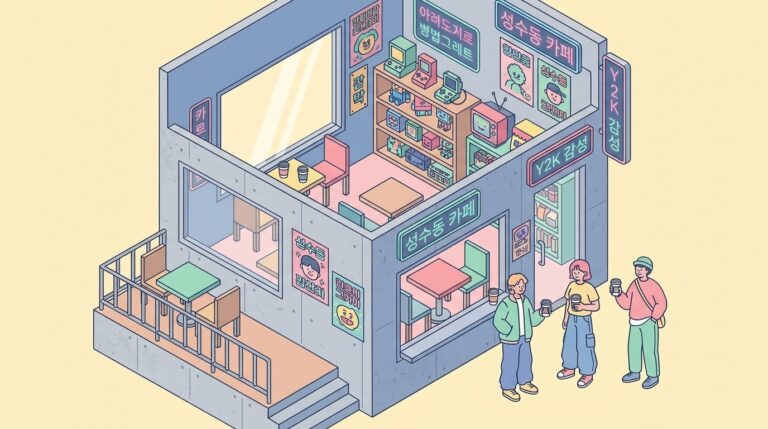
안녕하세요! It’s your friendly neighborhood Korean editor from 매일한글 (Daily Hangul)! 👋 Have you ever walked into a trendy cafe in Seongsu-dong, or scrolled through your favorite K-Pop idol’s concept photos, and felt a strange, intoxicating rush of neon colors, retro plastic toys, and intentionally “tacky” fonts?
In the West, you might call this “camp” or “kitsch.” In Korea, we call this 키치(Kitsch) 문화. But as a C2-level learner, you aren’t just looking to say “This looks cool.” You want to discuss why this subversion of high art has captured the Korean cultural zeitgeist, and how it challenges conventional aesthetics. Today, we’re diving deep into the sophisticated linguistic tools you need to critique, appreciate, and discuss the consumption of kitsch in contemporary Korea.
Phase 2: Key Expressions for Aesthetic Critique
To discuss art theory and cultural trends at a C2 level, you need vocabulary that goes beyond “예뻐요” (It’s pretty). Here are three powerhouse expressions to elevate your artistic discourse.
1. 키치한 감성을 소비하다 (Kichihan gamseong-eul sobihada)
- Pronunciation: Kee-chee-han gam-seong-eul so-bee-ha-da (Sounds like “key-chee” + “calm-sung” with a soft ‘g’ + “so-bee-ha-da”)
- Meaning: To consume kitsch sensibilities/aesthetics.
- K-Culture Moment: Think of NewJeans’ retro Y2K packaging or Red Velvet’s eerie, pastel-hued music videos. They aren’t just selling music; they are inviting fans to consume a highly curated kitsch sensibility.
- Editor’s Insight: In Korean, ‘소비하다’ (to consume) doesn’t just mean spending money. It refers to the psychological act of adopting, enjoying, and identifying with a specific subcultural vibe.
- Situation Spectrum: Casual ⚠️ | Semi-formal ✅ | Formal ✅
- 🤔 Think About It: Why does modern society find comfort in consuming the nostalgic, sometimes deliberate imperfections of kitsch rather than pristine, high-end minimalism?
2. 하위문화의 반란 (Hawi-munhwa-ui ballan)
- Pronunciation: Ha-wee moon-hwa-phee bal-lan (Sounds like “ha-we” + “moon-hwa” + “bahl-lahn”)
- Meaning: The rebellion/mutiny of subculture.
- K-Culture Moment: The rise of B-급 문화 (B-grade culture) in Korea, where indie webtoons, trot music, and regional mascots outshine high-brow gallery arts.
- Editor’s Insight: This is a brilliant phrase to use when discussing how street art or “low-brow” kitsch enters mainstream academic discourse. It suggests a powerful shift in cultural hegemony.
- Situation Spectrum: Casual 🚫 | Semi-formal ✅ | Formal ✅
- 🤔 Think About It: How does the mainstream commercialization of subcultures eventually dilute their original “rebellious” value?
3. 경계를 허물다 (Gyeonggye-leul heomulda)
- Pronunciation: Gyeong-gye-reul huh-mool-da (Sounds like “gyung-gyae” + “her-mool-dah”)
- Meaning: To dissolve boundaries / To break down barriers.
- K-Culture Moment: High-end fashion brands collaborating with classic Korean convenience store aesthetics (like Jinro Toad kitsch merchandise).
- Editor’s Insight: ‘허물다’ means to demolish a wall. When applied to abstract concepts like art genres, it beautifully describes the synthesis of high art and low kitsch.
- Situation Spectrum: Casual ⚠️ | Semi-formal ✅ | Formal ✅
- 🤔 Think About It: When the boundary between fine art and commercial kitsch is demolished, what becomes the new metric for artistic value?
Phase 3: Textbook Korean vs. Real Street-Sleek Korean
Let’s look at how native Korean art critics and trendsetters actually talk compared to rigid dictionary definitions.
Situation 1: Describing a deliberately tacky but cool design
- 📖 Textbook: “이 디자인은 대중적이고 고전적인 복고풍 조형미를 가지고 있습니다.” (This design possesses a popular, classic retro plastic beauty.)
- 🗣️ 진짜 한국어: “이거 완전 ‘B급 감성’ 제대로 살렸는데요? 오히려 힙해요!” (This completely nailed that ‘B-grade vibe’. It’s actually so hip!)
- 💡 Why the difference? While textbooks focus on formal nouns, young Koreans use the prefix ‘B급’ (B-grade) to denote cool, unpretentious kitsch, transforming a potential insult into the ultimate compliment.
Situation 2: Debating if kitsch is “real” art
- 📖 Textbook: “예술적 가치가 낮은 상업적 미술품입니다.” (It is commercial art of low artistic value.)
- 🗣️ 진짜 한국어: “대중의 취향 저격을 했으니, 이것도 하나의 예술적 장르로 인정해야 하지 않을까요?” (Since it perfectly targeted the public’s taste, shouldn’t we recognize this as an artistic genre in its own right?)
- 💡 Why the difference? Modern aesthetic discourse in Korea values ‘취향 저격’ (sniping one’s taste/perfectly hitting preferences) as a legitimate form of cultural connection, bypassing traditional, elitist criteria.
Phase 4: K-Culture Deep Dive & Non-Verbal Nuance
4-1. The Art of the “Chin Stroke” and “Half-Smile”
When discussing kitsch in Korea, your physical delivery matters. Kitsch is inherently ironic.
* The Gesture: When looking at an exhibition of, say, giant inflatable plastic pigs in a museum, do not look confused. Tilt your head slightly, rest your index finger on your chin (the classic “thoughtful intellectual” pose), and give a subtle 반소(half-smile).
* The Tone: Keep your tone casual but intellectually grounded. It shows you “get” the joke of the kitsch art and aren’t taking high art too seriously.
4-2. The Rise of “B-급 감성” (B-Grade Vibe) in K-Pop
Kitsch in Korea is closely tied to nostalgia for the late 90s and early 2000s (Y2K). K-Pop groups use deliberately low-fi green screens, cheap plastic props, and comic-book-style typography to construct their visual identity. By doing so, they evoke a cozy, unpolished warmth that pristine CGI simply cannot replicate. It’s an aesthetic rebellion against perfectionism.
Phase 5: Real-Life Roleplay Scenario
Setting: A contemporary art gallery in Samcheong-dong exhibiting “K-Kitsch and Daily Consumption.”
Characters:
* 수현 (Suhyeon): A local independent art curator who loves experimental pop art.
* You (C2 Academic Traveler): An art connoisseur exploring Seoul’s subcultural landscape.
- 수현: 어서 오세요! 이번 전시는 한국의 90년대 문방구 감성을 현대적으로 재해석한 작품들로 구성되어 있어요.
- You: 아, 정말 흥미롭네요. 단순한 복고풍이라기보다는 하위문화의 반란처럼 느껴져요.
- 수현: 🎭 (눈빛이 반짝이며) 정확히 보셨어요! 보통 문방구 장난감은 예술로 다뤄지지 않잖아요. 그런데 이렇게 갤러리에 걸리니 묘한 아우라가 생기죠?
- You: 맞아요. 고급 예술과 대중 예술의 경계를 허무는 시도가 아주 돋보입니다.
- 수현: 어떤 분들은 이게 상업주의적이고 가볍다고 비판하기도 하거든요. 손님 생각은 어떠세요?
- You: 저는 대중이 이러한 키치한 감성을 소비하는 것 자체가 하나의 현대적 예술 현상이라고 봐요.
- 수현: 🎭 (감탄하며 고개를 끄덕인다) 와, 통찰력이 대단하시네요. 혹시 예술을 전공하셨나요?
- You: 전공은 아니지만, 한국의 ‘B급 감성’이 가진 에너지를 아주 흥미롭게 지켜보고 있어요.
🔀 Interactive Decision Point
How would you respond to Suhyeon’s compliment to deepen the conversation?
- Choice A (The Expert): “예술은 박물관에만 갇혀 있으면 안 된다고 생각해요. 대중과 소통해야죠.”
- Choice B (The Humble Critic): “아니에요, 그냥 제 개인적인 취향일 뿐이에요. 부끄럽네요.”
- Choice C (The Philosopher): “감사합니다. 혹시 이 작가가 한국 사회의 과도한 물질주의를 키치로 비판하려는 의도도 있었을까요?”
💡 Feedback Matrix
- Best (Choice C): Excellent! This steers the conversation into deep, C2-level socio-cultural analysis, showing you understand the deeper layers of kitsch.
- Risk (Choice B): Politely Korean, but it kills the intellectual momentum of the conversation.
- Bad (Choice A): A bit cliché. It state the obvious without showcasing your advanced vocabulary.
Phase 6: 10-Second Emotion Shadowing Drill
Practice speaking with the rhythmic cadence of a seasoned Korean cultural critic. Pause at the slashes (/).
- Sentence: “키치 문화는 / 단순히 유치한 것이 아니라, / 엄숙한 예술계의 경계를 / 유쾌하게 허무는 장치입니다.”
- Pronunciation Guide: Kichihan munwhaneun / dansunhee yuchihan geosi anira / eomsukhan yesulgye-ui gyeonggye-leul / yukwaehage heomuneun jangchi-imnida.
- Emotion Milestone:
[😎 Confidently and intellectually intellectual, with a warm, conversational cadence] - Translation: “Kitsch culture is not merely childish; it is a device that delightfully dismantles the boundaries of the solemn art world.”
Phase 7: K-Culture Mini Dictionary
- B급 감성 (B-geup gamseong) | B-Grade Aesthetic | Deliberately unpolished, slightly tacky, yet highly relatable and charismatic content.
- 뉴트로 (New-tro) | New Retro | Modernized retro style popular among Korean Gen Z and Millennials.
- 취향 존중 (Chwihyang jonjung) | Respecting Personal Taste | Often abbreviated as ‘취존’ (Chwi-jon). A crucial modern Korean social rule of respecting diverse aesthetic choices.
- 일코 (Il-ko) | Cosplaying a Normal Person | Hiding one’s intense subcultural fandom/obsessions (like collecting kitsch toys) in professional settings.
Phase 8: The Traveler’s Survival Kit
Survival Phrases
- “이거 요즘 SNS에서 핫한 인스타 감성인가요?”
- Is this that ‘Insta-vibe’ hot on social media these days?
- Pro Tip: Use ‘인스타 감성’ when visiting aesthetically kitschy cafes in Seongsu-dong.
- “실례지만 이 전시 도록은 어디서 살 수 있나요?”
- Excuse me, where can I purchase this exhibition catalog?
- Pro Tip: C2 learners buy the ‘도록’ (catalog) to read long-form essays by Korean curators.
- “혹시 이 굿즈, 한정판이에요?”
- By any chance, is this merchandise limited edition?
- Pro Tip: Kitsch is highly collectible. ‘굿즈’ (goods/merchandise) is a must-know word.
🗺️ Editor’s Travel Note:
To experience authentic Korean retro-kitsch, navigate your way using 네이버 지도 앱 (Naver Map App) to the retro streets of Euljiro (often called ‘Hipjiro’). Note: Operating hours of indie shops and exhibitions change frequently, so check Naver Map reviews before visiting.
Phase 9: ” 한 발 더 깊이 ” (Going Deeper)
In Korea, kitsch is more than just cheap art. It is a coping mechanism for a hyper-competitive society. Korea’s rapid economic growth (The Miracle on the Han River) created a highly polished, performance-driven culture. ‘B-급 감성’ (B-grade vibe) and kitsch offer a psychological exit. By embracing the messy, the unfinished, and the funny, Koreans find a safe space to breathe away from the pressure of perfection.
💬 Your Turn: What is one piece of ‘kitsch’ culture from your country that has now become highly valued or mainstream? Let us know in the comments below!
Phase 10: FAQ & Common Mistakes
Q: Is calling something ‘키치하다’ offensive to a Korean artist?
A: Not at all! In modern Korean art scenes, ‘키치하다’ means their work is vibrant, trendy, and successfully challenges boring norms. It is highly complimentary.
Q: What is the difference between ‘촌스럽다’ and ‘키치하다’?
A: ‘촌스럽다’ (Chon-seureop-da) means something is genuinely out of style or rustic in an uncool way. ‘키치하다’ implies a deliberate, stylish tackiness designed with high artistic intent.
Q: Can I use ‘B급 감성’ in a formal business meeting?
A: Yes, especially in marketing, design, and media industries. It is an industry-standard term for raw, viral, and highly engaging consumer content.






