

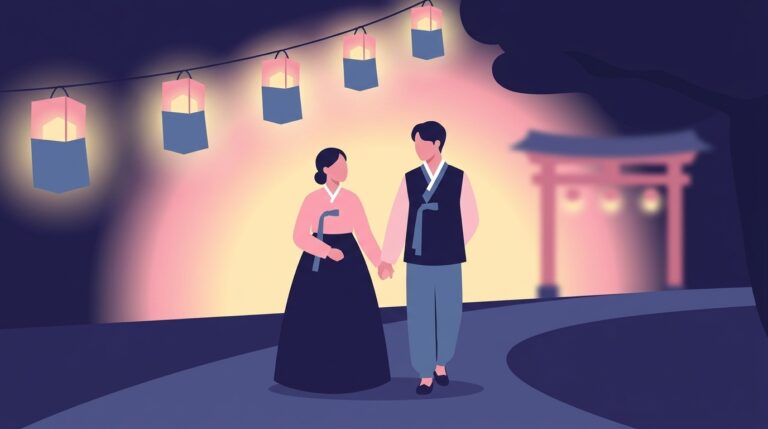
Reviving the Spark: C2 Guide to Navigating Relationship Ruts in Korea
Phase 1: Empathy (스토리 몰입형 오프닝)
안녕하세요! Your friendly neighborhood language and culture navigator from Daily Hangul (매일한글) is back!
We’ve all been there. You’ve been dating for a while, the initial fireworks have settled into a comfortable hum, but suddenly… that hum feels more like a monotonous buzz. You find yourselves eating at the same BBQ joint, watching Netflix in silence, and going through the motions. In Korea, this emotional plateau or rut is universally known as 권태기 (gwontaegi—the relationship plateau/weariness stage).
When a relationship hits this phase, ordinary dates won’t cut it. To break the cycle, you need more than just “dinner and a movie.” You need to suggest a paradigm shift in your routine—without making your partner feel defensive or anxious that a breakup is imminent.
This guide is designed for C2-level learners who want to master the art of emotional renegotiation in Korean. We’re going deep into nuanced psychological phrasing, cultural context, and the subtle art of “coaxing” your partner back into excitement. Let’s learn how to turn “We need to talk” into “Let’s escape reality together this weekend!”
Phase 2: Deep Dive into Three Key Expressions (핵심 표현 3선 심층 분석)
1. 우리 요즘 너무 늘어지는 것 같아. 분위기 전환 좀 할까? (Hangeul)
- Pronunciation: uri yo-jeum neo-mu neul-eo-ji-neun geot gat-a. bun-wi-gi jeon-hwan jom hal-kka? (Sounds like: “oo-ri yo-jum nuh-moo nuhl-uh-ji-nun gut gat-ah. boon-wee-gi juhn-hwan jom hal-kka?”)
- Meaning: “I feel like we’ve been a bit sluggish/uninspired lately. Shall we switch up the vibe?”
- K-Culture Moment: This is the exact phrase used in realistic romance dramas like Our Beloved Summer (그 해 우리는) when the main couple realizes they’ve fallen into a cozy but dangerously stagnant routine.
- Editor’s Insight: The verb 늘어지다 literally means to sag, droop, or stretch out. When applied to a relationship, it brilliantly captures that lazy, unmotivated vibe where you love each other but lack energy. Using 분위기 전환 (vibe/atmosphere shift) instead of saying “our relationship is boring” softens the blow and focuses on the external environment rather than personal shortcomings.
- Situation Spectrum: Casual ✅ | Semi-formal ⚠️ | Formal 🚫
- 🤔 Think About It: In Korean culture, indirectness is often a sign of care. How does framing a relationship rut as a “sluggish atmosphere” protect your partner’s feelings compared to directly saying “You don’t make me excited anymore”?
2. 맨날 가던 데 말고, 완전히 이색적인 데로 도망치자. (Hangeul)
- Pronunciation: maen-nal ga-deon de mal-go, wan-jeon-hi i-saek-jeok-in de-ro do-mang-chi-ja. (Sounds like: “mahn-nal gah-dun deh mal-goh, wan-juhn-hee ee-saek-juck-in deh-roh doh-mang-chee-jah.”)
- Meaning: “Instead of our usual spots, let’s escape to somewhere completely exotic/unusual.”
- K-Culture Moment: Think of those K-Drama montages where a couple suddenly leaves Seoul on a spontaneous trip to a hidden glamping site in Gapyeong or an immersive media art exhibition in Gangneung.
- Editor’s Insight: 이색적 (exotic/unusual/novel) is the ultimate keyword for fighting gwontaegi. By pairing it with 도망치다 (to escape/run away), you frame the date not as an obligation, but as a thrilling, almost rebellious caper against the boredom of daily life.
- Situation Spectrum: Casual ✅ | Semi-formal ⚠️ | Formal 🚫
- 🤔 Think About It: Koreans love thematic dates (perfume making, retro escape rooms, surfing trips). Why do you think highly structured “activities” are favored over unstructured hangouts when overcoming a relationship rut?
3. 우리 처음 만났을 때 설렜던 기분 다시 느껴보고 싶어. (Hangeul)
- Pronunciation: uri cheo-eum man-nas-seul ttae seol-let-deon gi-bun da-si neu-kyeo-bo-go sip-eo. (Sounds like: “oo-ri chuh-um man-nat-sul tthah sul-let-dun gee-boon dah-see nuh-kyuh-boh-goh seep-uh.”)
- Meaning: “I want to feel that fluttering excitement we had when we first met.”
- K-Culture Moment: Classic line from melodrama protagonists seeking to rekindle a fading flame. It evokes nostalgia and reminds both parties of their romantic peak.
- Editor’s Insight: 설레다 (to flutter/be thrilled) is the holy grail of Korean romance vocabulary. To say you want to feel that seol-lem again is an honest, vulnerable confession of love, rather than a complaint. It signals: “I still want you, I just miss the magic.”
- Situation Spectrum: Casual ✅ | Semi-formal ✅ | Formal 🚫
- 🤔 Think About It: How does invoking the past (처음 만났을 때) act as a psychological buffer when addressing current emotional dissatisfaction?
Phase 3: Textbook Korean vs. Real-World Korean (교과서 한국어 vs 진짜 한국어)
Scenario 1: Proposing a change of pace
- 📖 Textbook: “데이트 코스를 바꾸는 것이 좋겠습니다.” (It would be good to change the date course.)
- 🗣️ 진짜 한국어: “우리 맨날 똑같은 루틴이잖아. 이번 주엔 좀 색다른 것 좀 해보자!” (We’re in the exact same routine every day. Let’s do something totally different/novel this weekend!)
- 💡 Why it’s different: The textbook version sounds like a project manager optimizing a travel itinerary. The real-world version uses 루틴 (routine) and 색다른 (novel/unusual) to express a shared desire for fresh excitement.
Scenario 2: Suggesting an active, immersive date
- 📖 Textbook: “새로운 활동적인 데이트를 합시다.” (Let us do a new active date.)
- 🗣️ 진짜 한국어: “우리 몸 좀 쓰면서 땀 흘리는 액티비티 하러 갈까? 클라이밍이나 서핑 같은 거!” (Shall we go do some body-moving, sweat-dripping activities? Like climbing or surfing?)
- 💡 Why it’s different: To break a mental rut, physical movement is key. The phrase 몸 좀 쓰다 (literally “to use one’s body a bit”) is a highly natural colloquialism for doing active sports or physical labor together.
Phase 4: K-Culture Deep Dive & Non-Verbal Manners
4-1. Nunchi & Gestures for Re-igniting Romance
When a couple is in a rut, physical touch (스킨십) often plummets. To break this non-verbally during your “fresh date”:
* The ‘Accidental’ Brush: While doing an active date (like inline skating or pottery making), naturally guide your partner’s hands. It bypasses the awkwardness of structured affection.
* The Soft Side-Eye (눈빛): Don’t stare intensely; instead, catch them off guard looking at them with a soft smile. When they ask “왜?” (Why?), answer with a simple “그냥 좋아서” (Just because I like it).
4-2. Cultural Code: The Rise of “Concept Dates” (컨셉 데이트)
In Korea, dating is highly commercialized and trends shift rapidly. When couples hit a wall, they don’t just go to a nice restaurant. They book 원데이 클래스 (one-day classes) like making matching silver rings, blending customized perfumes that represent each other, or renting 1920s retro school uniforms at Gyeongbokgung. This “roleplay” element allows couples to step out of their tired daily personas and see each other in a brand-new light.
Phase 5: Real-Life Roleplay Scenario
Background & Characters
- Ji-ho (지호): Feels the heavy weight of work stress and has let the relationship slide into a boring pattern of home-dates.
- Min-ah (민아): Wants to save the relationship and proposes a highly unconventional “retro theme park” date in Yongin to shake things up.
[Scene: A quiet cafe on a Tuesday evening. The tension is slightly heavy and comfortable but distant.]

지호: (한숨을 쉬며 피곤한 듯이) 아, 이번 주말도 그냥 집에서 쉬면서 넷플릭스나 볼까?
      (Sighs tiredly: Ah, should we just rest at home this weekend and watch Netflix?)

민아: (지호의 손을 지그시 잡으며) 지호야, 우리 요즘 너무 집돌이 집순이 모드였잖아. 좀 늘어지는 것 같아.
      (Gently holding Ji-ho's hand: Ji-ho, we've been in total homebody mode lately. I feel like we're dragging a bit.)

지호: (머리를 긁적이며) 그렇긴 한데... 나가면 사람도 많고 기 빨려서.
      (Scratching his head: True... but if we go out, there are so many people and it drains my energy.)

민아: (생긋 웃으며 애교 있게) 그래서 내가 특별한 코스 짜놨지! 우리 이번엔 맨날 가던 데 말고, 한국 민속촌 야간 개장 가자.
      (Smiling brightly and playfully: That's why I planned a special course! Instead of our usual spots, let’s go to the Korean Folk Village night opening.)

지호: (눈이 휘둥그레지며) 민속촌? 갑자기 웬 민속촌이야?
      (Eyes widening: Folk Village? Why the Folk Village all of a sudden?)

민아: (장난기 어린 눈빛으로) 거기서 조선시대 한복 빌려 입고, 야간 공포 체험 할 수 있대. 나 너한테 엄청 매달릴 준비 되어 있거든?
      (With a mischievous look: We can rent Joseon Dynasty hanbok and do the night horror experience there. I'm totally prepared to cling onto you out of fear, you know?)

지호: (피식 웃음이 터지며) 뭐야, 진짜 골 때리네. 한복이라니... 근데 좀 재밌겠다.
      (Bursting into a chuckle: What is this, hilarious. Hanbok... but actually, that sounds kinda fun.)

민아: (쐐기를 박듯) 그치? 우리 처음 만났을 때처럼 심장 좀 뛰게 해보자고! 나만 믿고 따라와.
      (Driving it home: Right? Let’s make our hearts beat fast like when we first met! Just trust me and follow my lead.)
🔀 Interactive Choice Point
How should Ji-ho respond to Min-ah’s proposal to maximize the romantic comeback?
- A) “나 진짜 피곤한데… 꼭 이번 주에 가야 돼? 다음 주에 가면 안 될까?”
- Feedback: Bad. This completely deflates Min-ah’s vulnerable attempt to save the relationship. Delaying suggests lack of effort.
- B) “그래, 네가 그렇게 가고 싶어 하니까 귀찮아도 가줄게.”
- Feedback: Risk. Expressing reluctance (귀찮아도 – even if it’s annoying) ruins the mood. It sounds like an obligation rather than shared excitement.
- C) “대박, 한복 입은 네 모습 오랜만에 보겠네. 진짜 설렌다. 당장 예약해!”
- Feedback: Best! Acknowledging her look (한복 입은 모습) and expressing genuine excitement (진짜 설렌다) validates her effort and immediately breaks the icy barrier.
Phase 6: 10-Second Emotion Shadowing Drill
To master the flow of emotional renegotiation, practice these sentences with the exact intonation markers (/ for pauses, and emotional cues for tone).
-
[🥺 Gently complaining, soft voice]
“우리 / 요즘 / 너무 늘어지는 것 같아. / 분위기 전환 좀 할까?”
(oo-ri / yo-jeum / neo-mu neul-eo-ji-neun geot gat-a. / bun-wi-gi jeon-hwan jom hal-kka?) -
[🔥 Excited, whispering a secret plan]
“맨날 가던 데 말고! / 우리 완전히 / 이색적인 데로 / 도망치자!”
(maen-nal ga-deon de mal-go! / uri wan-jeon-hi / i-saek-jeok-in de-ro / do-mang-chi-ja!)
Phase 7: K-Culture Mini Dictionary
- 늘어지다 (neul-eo-ji-da): To sag, droop, or lose vital energy. In relationships, it refers to entering a state of uninspired laziness.
- 분위기 전환 (bun-wi-gi jeon-hwan): A shift of scenery or vibe. Often used when attempting to break a bad mood or monotonous routine.
- 이색 데이트 (i-saek de-i-teu): A
Frequently Asked Questions (FAQ)
Q: What does "우리 요즘 너무 늘어지는 것 같아. 분위기 전환 좀 할까? (Hangeul)" mean in Korean and how do you pronounce it?
A: In Korean, "우리 요즘 너무 늘어지는 것 같아. 분위기 전환 좀 할까? (Hangeul)" is pronounced [uri yo-jeum neo-mu neul-eo-ji-neun geot gat-a. bun-wi-gi jeon-hwan jom hal-kka? (Sounds like: "oo-ri yo-jum nuh-moo nuhl-uh-ji-nun gut gat-ah. boon-wee-gi juhn-hwan jom hal-kka?"] and means: "I feel like we’ve been a bit sluggish/uninspired lately. Shall we switch up the vibe?"
Q: What does "맨날 가던 데 말고, 완전히 이색적인 데로 도망치자. (Hangeul)" mean in Korean and how do you pronounce it?
A: In Korean, "맨날 가던 데 말고, 완전히 이색적인 데로 도망치자. (Hangeul)" is pronounced [maen-nal ga-deon de mal-go, wan-jeon-hi i-saek-jeok-in de-ro do-mang-chi-ja. (Sounds like: "mahn-nal gah-dun deh mal-goh, wan-juhn-hee ee-saek-juck-in deh-roh doh-mang-chee-jah."] and means: "Instead of our usual spots, let’s escape to somewhere completely exotic/unusual."
Q: What does "우리 처음 만났을 때 설렜던 기분 다시 느껴보고 싶어. (Hangeul)" mean in Korean and how do you pronounce it?
A: In Korean, "우리 처음 만났을 때 설렜던 기분 다시 느껴보고 싶어. (Hangeul)" is pronounced [uri cheo-eum man-nas-seul ttae seol-let-deon gi-bun da-si neu-kyeo-bo-go sip-eo. (Sounds like: "oo-ri chuh-um man-nat-sul tthah sul-let-dun gee-boon dah-see nuh-kyuh-boh-goh seep-uh."] and means: "I want to feel that fluttering excitement we had when we first met."






