

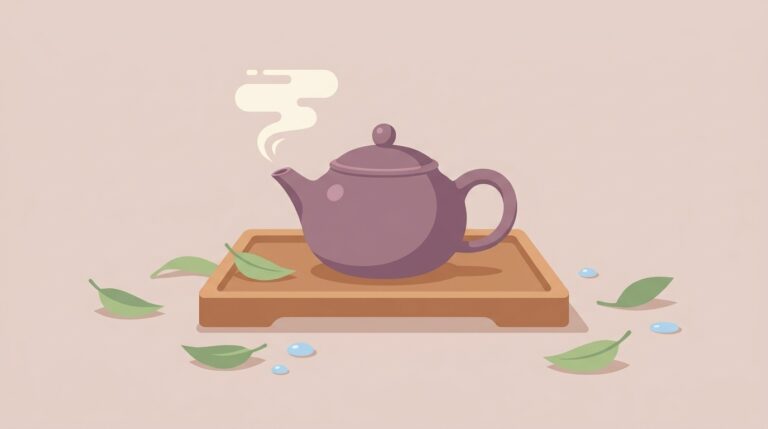
Master the Art of Brewing & Breathing: How to Season a Clay Teapot (자사호 양호하기) Like a Korean Tea Master
Phase 1: Empathy (스토리 몰입형 오프닝)
안녕하세요! Daily Hangul‘s Chief Editor and your trusty K-Culture Navigator here.
Imagine this: You are sitting in a serene, sunlit hanok (한옥 – traditional Korean house) in Bukchon Hanok Village. The gentle wind chimes are ringing, and before you lies an exquisite, tiny purple clay teapot—a jasaho (자사호). You want to impress your Korean friends or a local tea master by showing that you don’t just ‘drink’ tea, but you actually cultivate the teapot itself. This meditative process of nurturing and seasoning a clay teapot is called 양호 (yang-ho, 養壺).
However, speaking about the sensory details, the temperature of the water, and the slow flow of energy (gi – 기) in sophisticated Korean can feel incredibly daunting. Many advanced (C1) learners struggle to find the right balance between poetic, mindful language and precise technical brewing terms. Today, we are diving deep into the elegant vocabulary of Korean tea meditation so you can confidently guide anyone through the soulful ritual of seasoning a jasaho.
Phase 2: Core Expressions Deep Dive (핵심 표현 3선 심층 분석)
1. 자사호를 양호하다 (jasaho-reul yangho-hada)
- Pronunciation: jah-sah-ho-reul yahng-ho-hah-dah (Rhymes with “ah” in “father”)
- Meaning: To season/nurture a purple clay teapot.
- K-Culture Moment: You will hear this in high-end Korean tea salons (다실 – dasil) in Insadong or during quiet healing scenes in K-dramas where characters retreat to temple stays to clear their minds.
- Editor’s Insight: Yangho (양호) literally translates to “nourishing the pot.” It is not just washing it; it is a long-term relationship where the clay absorbs the tea oils over decades, developing a glossy sheen (gwang – 광).
- Situation Spectrum: Casual (⚠️ – too formal for casual beer chat) | Semi-formal (✅) | Formal (✅)
- 🤔 Think About It: How does the concept of “nurturing” an inanimate object like a teapot reflect the Korean philosophical view of living in harmony with nature?
2. 찻물이 배어들다 (chan-mul-i bae-eo-deul-da)
- Pronunciation: chahn-mool-ee bae-uh-deul-dah (Soft ‘bae’ like “bed” without the ‘d’)
- Meaning: For the tea infusion to seep/permeate deep into the clay pores.
- K-Culture Moment: Used by tea artisans when explaining why you should only brew one type of tea (like aged Pu’er tea – 보이숙차) in a single clay pot.
- Editor’s Insight: Bae-eodeulda (배어들다) is a beautiful, evocative verb used when emotions, smells, or liquids slowly soak into something until they become inseparable.
- Situation Spectrum: Casual (✅) | Semi-formal (✅) | Formal (✅)
- 🤔 Think About It: Can you think of a word in English that captures this slow, permanent infusion of character or flavor?
3. 화기(火氣)를 빼다 (hwagi-reul ppae-da)
- Pronunciation: hwah-ghee-reul ppae-dah (Double ‘pp’ is a tensed, crisp ‘p’ sound)
- Meaning: To extract the harsh, fiery elements (from a newly fired clay pot).
- K-Culture Moment: Mentioned during traditional Korean pottery workshops and tea-firing ceremonies to describe making the clay gentle and receptive.
- Editor’s Insight: In traditional Eastern medicine and tea philosophy, hwagi (화기) refers to excess heat or aggressive energy. “Removing the fire” makes both the pot and the tea drinker calm and balanced.
- Situation Spectrum: Casual (⚠️) | Semi-formal (✅) | Formal (✅)
- 🤔 Think About It: How does cooling down a teapot relate to managing one’s own emotional hwagi (anger/stress) in daily life?
Phase 3: Textbook Korean vs. Real-Life Korean
Situation 1: Describing the gloss of a well-seasoned teapot
- 📖 Textbook: 자사호 표면이 아주 반짝거립니다. (The surface of the clay teapot is very shiny.)
- 🗣️ Real-Life: 자사호에 은은한 찻물 광(光)이 잘 올라왔네요. (The gentle, deep tea-luster has surfaced beautifully on the clay pot.)
- 💡 Why the Difference? Native tea enthusiasts prefer the term gwang (광/luster) combined with ol-ah-oda (올라오다/to rise up) to describe a natural, sophisticated sheen rather than a superficial “sparkle” (banjjak).
Situation 2: Asking someone to pour hot water over the pot
- 📖 Textbook: 뜨거운 물을 주전자 위에 부으세요. (Pour hot water on top of the kettle.)
- 🗣️ Real-Life: 자사호 외벽에 뜨거운 물을 골고루 끼얹어 주세요. (Please evenly splash/pour hot water over the outer walls of the clay pot.)
- 💡 Why the Difference? Kkieon-da (끼얹다) suggests a deliberate, splashing motion used in tea purification rituals to heat the pot evenly from the outside.
Phase 4: K-Culture Deep Dive & Non-Verbal Etiquette
4-1. Nunchi & Gesture (눈치와 제스처)
When handling someone else’s jasaho, never grab it by the lid alone. Always use your right hand to hold the handle, while gently placing the index finger of your left hand on the lid’s button (honyu – 호뉴) to secure it. This gesture communicates deep respect, caution, and mindfulness. It shows you value the host’s long years of yangho.
4-2. Cultural Code: The Zen of Puer Tea in Korea
While Pu’er tea (boicha – 보이차) originates from Yunnan, China, Korea has developed a highly meditative culture around it. In busy districts like Gangnam or Mapo, young professionals increasingly use boicha meditation clubs to unplug from high-speed digital lives. “Yangho” is the ultimate slow-life hobby in fast-paced Korea.
Phase 5: Real-Life Roleplay Scenario
The Setting
You are visiting a beautiful, quiet tea room in Samcheong-dong run by Master Min-woo (민우), a renowned tea cultivator. He is testing your readiness to assist in seasoning a legendary 20-year-old clay pot.
- 민우: 어서 오세요. 오늘 함께 길들여볼 자사호입니다. 세월의 흔적이 느껴지시나요?
(Welcome. This is the clay pot we will be taming/cultivating today. Can you feel the traces of time?) - Learner: 네, 정말 기품이 넘쳐요. 이 자사호는 주로 어떤 차로 양호하셨나요?
(Yes, it truly overflows with elegance. What kind of tea did you mainly use to nurture this pot?) - 민우: 안목이 높으시네요! 주로 노보이차(Old Pu’er)를 우려내며 찻물이 배어들게 했습니다.
(You have high standards! I mostly brewed aged Pu’er to let the tea liquor seep in.) - Learner: 🎭 (경건하게 뚜껑을 어루만지며) 그래서인지 은은한 찻물 광이 정말 아름답게 빛나네요.
((Reverently caressing the lid) Perhaps that’s why the subtle tea-glow shines so beautifully.) - 민우: 맞습니다. 이제 첫 물을 부어 화기를 빼는 과정부터 도와주시겠어요?
(Exactly. Would you now help me with the process of pouring the first water to draw out the harsh fire?) - Learner: 기꺼이요. 외벽에 뜨거운 물을 골고루 끼얹으면 될까요?
(With pleasure. Should I evenly splash hot water over the outer walls?) - 민우: 네, 아주 완벽합니다. 차분하게 차의 숨결을 느껴보세요.
(Yes, absolutely perfect. Calmly feel the breath of the tea.) - Learner: 차를 우리고 닦아주는 이 모든 과정이 마치 마음 수행 같네요.
(This entire process of brewing and wiping the tea feels just like mind cultivation.)
🔀 Interactive Choice Point
How do you respond when Min-woo asks you to dry the pot with a special tea cloth (dapo – 다포)?
- Option A: “빨리 마르도록 세게 닦을게요!” (I’ll wipe it hard so it dries quickly!)
- Option B: “찻물이 마르기 전에 마른 다포로 부드럽게 쓰다듬듯이 닦아줄게요.” (I will wipe it gently, like caressing it with a dry tea cloth before the tea liquid dries.)
- Option C: “그냥 자연 건조하면 안 되나요?” (Can’t we just let it air dry?)
Feedback & Consequences:
- Option A (Bad): ❌ Min-woo looks shocked! Wiping too hard can scratch the delicate surface and disrupt the natural luster. Relax your hands!
- Option B (Best): Perfect! Gentle, loving strokes with a dry cloth distribute the hot tea oils evenly, creating that perfect mirror-like finish over time. Min-woo is deeply impressed!
- Option C (Risk): ⚠️ Air drying leaves water spots and dulls the sheen. It works, but you lose the meditative connection of touching the clay.
Phase 6: 10-Second Emotion Shadowing Drill
Practice speaking with the calm, breathing rhythm of a tea master. The slashes / represent natural pauses.
[🧘 우아하고 차분하게 - Elegant and Calm]
자사호의 / 숨구멍 속으로 / 찻물이 / 은은하게 / 배어듭니다.
(jah-sah-ho-ui / soom-goo-mung sok-eu-ro / chahn-mool-ee / eun-eun-hah-gae / bae-uh-deup-nee-dah.)-
[😊 감탄하며 기쁘게 - Admiring and Delighted]
우와, / 찻물 광이 / 반질반질하게 / 정말 잘 올라왔네요!
(oo-wah, / chahn-mool gwang-ee / bahn-jhil-bahn-jhil-hah-gae / jung-mahl jahl ol-ah-wah-nae-yo!)
Phase 7: K-Culture Mini-Dictionary
- 다도 (Dado | 茶道): Tea Ceremony / The Way of Tea. Literally, the “path” or “way” of tea, emphasizing spiritual growth over physical drinking.
- 개완 (Gaewan): Lidded brewing bowl. Highly popular alongside the jasaho for tasting delicate green or white teas.
- 찻자락 (Chat-jarak): The atmosphere or “setting” of a tea table. Often used to describe a beautifully curated tea space.
- 다우 (Da-u | 茶友): Tea Friend. A soulmate with whom you share deep conversations over warm tea.
Phase 8: Traveler’s Survival Kit
Survival Expressions TOP 3
- “이 자사호는 양호한 지 얼마나 되었나요?”
- How long has this clay pot been seasoned? (Use this at premium tea shops to show your expertise!)
- “차 도구 추천해 주실 수 있어요?”
- Can you recommend some tea utensils/tools?
- “조용히 명상하기 좋은 다실을 찾고 있어요.”
- I am looking for a quiet tea room suitable for meditation.
Editor’s Travel Note:
To find hidden, authentic tea sanctuaries in Seoul, download the Naver Map App. Instead of searching for general “cafes,” type in “전통 다원” (Traditional Tea Garden) or “찻집” (Tea House) to discover tranquil spots tucked away in the alleyways of Insadong and Seongbuk-dong.
Phase 9: “One Step Deeper” (한 발 더 깊이)
In Korean tea culture, we use the word 기다림 (Gidarim – Waiting/Patience) more than any other word. Seasoning a jasaho cannot be rushed with chemicals or heat guns. It takes years of daily brewing, pouring, and wiping. In our modern society, where everything is delivered in minutes, yangho serves as an intentional rebellion against speed. It teaches us that the most beautiful things in life—like deep friendships and linguistic fluency—require time to truly seep in.
💬 Your Turn: Have you ever owned an object that got better and more beautiful the more you used it? Leave a comment below! Let’s chat!
Phase 10: FAQ & Avoiding Misunderstandings
Q: 자사호를 세제로 씻어도 되나요?
A: 절대 안 됩니다! (Absolutely not!) Because the clay of a jasaho is highly porous, using dish soap will cause the chemical soap to 배어들다 (seep) into the pot. Your next cup of Pu’er tea will taste like lemon lavender soap! Only wash with clean, boiling water.
Q: 하나의 자사호에 여러 종류의 차를 우려도 되나요?
A: One pot, one tea type is the golden rule. If you brew green tea, black tea, and Pu’er tea in the same pot, the flavor profiles clash, ruining the seasoned character (gwang) of the teapot.
Q: 새 자사호를 사자마자 바로 차를 우려 마셔도 되나요?
A: No, you must remove the harsh “fiery” production residues first. This process is called 길들이기 (gildryeogi – breaking in) or removing the 화기 (hwagi). Boil the pot gently in clean water with tea leaves for about 30 minutes before first use.
🚨 Common Mistakes Alert!
- Mistake: Scrubbing the pot with a rough green sponge.
- Correct Action: Only wipe with a soft microfiber dapo (tea cloth) or cotton pad.
- Mistake: Leaving wet tea leaves inside overnight to “speed up” seasoning.
- Correct Action: This causes mold. Always empty the pot and let it dry completely with the lid off.
Phase 11: Action Mission & Engagement
- 🥉 Bronze Mission: Find a picture of a jasaho online and practice saying: “이 자사호는 은은한 광이 나네요.”
- 🥈 Silver Mission: Share a photo of your favorite mug or teapot on Instagram, tag
@DailyHangul, and use the hashtag#자사호양호or#마음수행. - 🥇 Gold Mission: Visit a local Korean tea house or virtual community and ask the host: “혹시 이 찻잔도 오래 쓰면서 길들이신 건가요?” (Did you also tame/season this tea cup by using it for a long time?)
Phase 12: Interactive Quiz Challenge
Test your tea mastery!
Q1. Which word refers to the meditative process of nurturing and seasoning a clay teapot?
- A) 양보 (Yang-bo)
- B) 양호 (Yang-ho)
- C) 양화 (Yang-hwa)
🔍 See Answer & Explanation
Correct Answer: B) 양호 (Yang-ho)
Explanation: Yang-ho (養壺) means to cultivate/nurture a teapot. Yang-bo means yielding/conceding, and Yang-hwa means cultivating flowers!
Q2. Complete the sentence: “자사호에 은은한 찻물이 _________.”
- A) 도망갑니다 (runs away)
- B) 터집니다 (bursts)
- C) 배어듭니다 (seeps in)
🔍 See Answer & Explanation
Correct Answer: C) 배어듭니다 (seeps in)
Explanation: We use bae-eodeulda to describe the beautiful way tea flavors naturally permeate the clay over time.






