

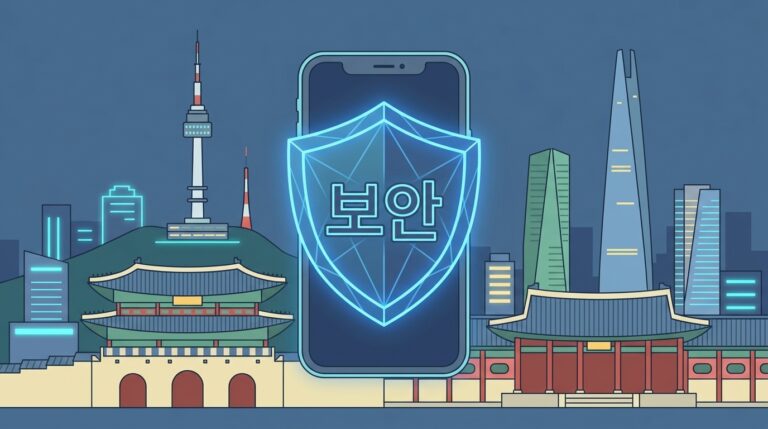
C1 Korean Masterclass: Navigating Voice Phishing & Cybercrime in South Korea
Phase 1: Empathy (스토리 몰입형 오프닝)
안녕하세요! Daily Hangul (매일한글)‘s Senior Editor and your trusted culture navigator here.
Imagine this: You are relaxing at a cozy cafe in Hongdae, sipping your Dalgona latte, when your phone vibrates. An official-sounding voice claims to be from the Seoul Central District Prosecutors’ Office (서울중앙지검), stating your bank account has been compromised in a massive money-laundering scheme. Your heart races. You are a C1 learner, but suddenly, the rapid-fire legal jargon and high-pressure tactics leave you frozen.
This isn’t just a hypothetical thriller plot; it is a highly sophisticated cyber threat known as Voice Phishing (보이스피싱). In Korea’s hyper-digitalized society, cybercrime has evolved into an intricate art form. Many advanced learners tell me, “I can discuss politics and literature, but when a scammer called me, I couldn’t find the right words to protect myself without sounding helpless.”
Today, we are going to arm you with the sharpest linguistic shields and psychological insights. By mastering these C1-level judicial and cybercrime expressions, you won’t just protect your hard-earned money—you will also deeply understand how Korean society, media, and law enforcement tackle these modern-day pirates. Let’s dive in!
Phase 2: Core Expressions Deep Dive (핵심 표현 3선 심층 분석)
1. 연루되다 (Yeon-ru-doe-da)
- Pronunciation: Yuhn-roo-doe-da (Sounds like “yawn” + “ru” as in rude + “doe-da”)
- Meaning: To be implicated / embroiled / entangled in a crime or scandal.
- K-Culture Moment: You will hear this constantly in legal K-dramas like Stranger (비밀의 숲) or Law School (로스쿨) when an innocent protagonist is falsely accused of being part of a corporate slush fund or cybercrime ring.
- Editor’s Insight: Unlike simply “being involved” (관련되다), 연루되다 heavily implies that you have been dragged into a shady, illegal, or highly problematic situation against your will or through suspicious circumstances.
- Situation Spectrum: Casual 🚫 | Semi-formal ⚠️ | Formal ✅
- 🤔 Think About It: How does your native language distinguish between neutral involvement and criminal implication? In Korea, maintaining a clean reputation is paramount, which is why being 연루되다 carries such a heavy social stigma.
2. 피싱 사기범을 유도하다 (Phishing sa-gi-beom-eul yu-do-ha-da)
- Pronunciation: Pee-shing sah-gee-buhm-eul yoo-doh-hah-dah
- Meaning: To lead/bait a voice phishing scammer (often to buy time or trap them).
- K-Culture Moment: In the action-comedy film Citizen of a Kind (시민덕희), an ordinary citizen actively baits and tracks down the voice phishing kingpin who scammed her.
- Editor’s Insight: 유도하다 means to induce or guide. When paired with 사기범 (scammer), it means you are playing along with their script to gather evidence, trace their location, or wait for the police to arrive.
- Situation Spectrum: Casual ✅ | Semi-formal ✅ | Formal ✅
- 🤔 Think About It: Baiting a criminal requires incredible psychological composure. Why do you think Korean cyber-safety campaigns advise against 유도하다 for amateurs, recommending immediate disconnection instead?
3. 신속하게 지급정지를 신청하다 (Sinsok-hage ji-geup-jeong-ji-reul sin-cheong-ha-da)
- Pronunciation: Sheen-sok-hah-ge jee-geup-jung-jee-reul sheen-chuhng-hah-dah
- Meaning: To promptly request/apply for a suspension of payment/account freeze.
- K-Culture Moment: This is the golden rule broadcasted on every Korean bank ATM screen and public safety announcement. It is the immediate emergency protocol when money has been accidentally transferred to a fraudulent account.
- Editor’s Insight: 지급정지 (suspension of payment/payout block) is your ultimate shield. In Korea’s fast-paced banking ecosystem, doing this within the first 10 minutes of a scam can literally save your entire life savings.
- Situation Spectrum: Casual ⚠️ | Semi-formal ✅ | Formal ✅
- 🤔 Think About It: Korea’s digital banking is incredibly fast, meaning money disappears in seconds, but it also means security measures like 지급정지 can be enacted instantly via an app or phone call.
Phase 3: Textbook Korean vs. Real-World Korean (교과서 한국어 vs 진짜 한국어)
Let’s bridge the gap between classroom theory and real street smarts.
Situation 1: Suspecting a fraudulent phone call
- 📖 Textbook Korean: “이 전화는 사기 전화인 것 같습니다.” (It seems this phone call is a fraudulent call.)
- 🗣️ 진짜 한국어: “이거 보이스피싱 같은데, 당장 끊겠습니다.” (This smells like voice phishing, I’m hanging up right now.)
- 💡 왜 다를까?: Scammers try to overwhelm you with authoritative legal jargon. Using a sharp, direct colloquial phrase like “이거 보이스피싱 같은데” cuts through their script immediately and shows you are not an easy target.
Situation 2: Explaining how someone got scammed
- 📖 Textbook Korean: “그는 인터넷 사기를 당해 돈을 잃었습니다.” (He lost money by suffering internet fraud.)
- 🗣️ 진짜 한국어: “그 사람 피싱 사이트에 낚여서 완전히 털렸대요.” (I heard he got hooked by a phishing site and got completely cleaned out.)
- 💡 왜 다를까?: In real-world Korean, 낚이다 (to be fished/hooked) is the go-to slang for being scammed or tricked, and 털리다 (to be robbed/looted/cleaned out) vividly describes having one’s data or money stolen.
Phase 4: K-Culture Deep Dive & Non-Verbal Etiquette
4-1. Nunchi (눈치) & Phone Etiquette under Pressure
When dealing with suspected cybercriminals or reporting to Korean authorities, your non-verbal cues matter:
* The Tone of Skepticism: If you receive a suspicious call, do not use polite, soft rising intonations (e.g., “네~?”). Keep your voice flat, lower your pitch, and speak with absolute 단호함 (decisiveness).
* Handling Bureaucracy: When speaking to the police or bank clerks, use clear, precise chronological order. Do not panic-ramble. State the transaction time, the bank name, and the exact amount first.
4-2. The “K-Cyber Defense” Culture
Korea is one of the most wired nations on earth, making it both a prime target and a global pioneer in cyber-defense. You will notice that Korean banks enforce a “Delayed Transfer Service” (지연이체서비스) and a “3-minute delay rule” on ATMs for cash withdrawals over a certain amount to prevent voice phishing. This societal focus on speed vs. security is a unique cultural tension you can observe daily at any local bank branch.
Phase 5: Real-World Roleplay Scenario (실전 롤플레이 시나리오)
Setting: You receive a call from an unknown number claiming to be Detective Kim from the Seoul Metropolitan Police Agency.
Characters:
- 형사 김명민 (Detective Kim): Authoritative, fast-talking, trying to pressure you.
- 나 (You – C1 Learner): Calm, analytical, and highly articulate.
- 김 형사: 아, 안녕하십니까. 서울경찰청 사이버수사대 김명민 형사입니다. 귀하의 명의로 대포통장이 개설되어 범죄에 연루되었습니다.
(Ah, hello. This is Detective Kim Myung-min from the Seoul Metropolitan Police Agency’s Cyber Crime Unit. A mule account has been opened under your name, and you have been implicated in a crime.) - 나: (당황하지 않고 침착하게) 네, 전화를 주셨군요. 제가 범죄에 연루되었다니 무슨 말씀이신지 정확히 설명해 주시겠습니까?
(Calmly without panicking: Yes, I see you called. Could you explain exactly what you mean by me being implicated in a crime?) - 김 형사: 현재 공범으로 의심받고 계시기 때문에, 자산 보호를 위해 저희가 보내드리는 보안 링크를 클릭해서 본인 인증을 하셔야 합니다.
(Since you are currently suspected as an accomplice, to protect your assets, you must click the secure link we send you to verify your identity.) - 나: (단호하게) 경찰서에서는 절대 문자나 메신저로 링크를 보내서 본인 인증을 요구하지 않는 것으로 알고 있습니다.
(Decisively: I am well aware that the police department never sends links via text or messenger to demand identity verification.) - 김 형사: (말을 더듬으며) 아, 이건 특별 수사 절차라 그렇습니다. 협조 안 하시면 즉시 출국금지 조치가 내려집니다!
(Stuttering: Ah, this is because of a special investigation procedure. If you don’t cooperate, an immediate departure ban will be issued!) - 나: (피싱임을 확신하고) 더 이상 얘기할 필요가 없겠군요. 담당 형사님의 관직과 성함을 다시 말씀해 주시면, 제가 직접 경찰청 대표번호로 전화해서 확인하겠습니다.
(Sure that this is phishing: There is no need to talk further. If you state your official rank and name again, I will call the main police hotline myself to verify.) - 김 형사: (화내며) 이보세요! 지금 공무집행방해로 가중 처벌받고 싶으십니까?
(Angrily: Look here! Do you want to be severely punished for obstruction of justice right now?) - 나: (전화를 끊으며) 공식 문서를 우편으로 보내십시오. 그럼 이만 끊겠습니다.
(Hanging up: Send the official documents by mail. Goodbye.)
🔀 Interactive Choice Points (선택 분기점)
What would you do if they send a text message containing a suspicious PDF file claiming to be a “Warrant” (영장)?
- A) “일단 클릭해서 내 이름을 검색해 본다.” (Click it first to search for my name.)
- 🔴 Bad (위험): Clicking any link or file instantly installs spyware (악성 앱) on your phone, giving scammers full control of your banking apps and camera.
- B) “문자를 무시하고 즉시 경찰민원콜센터 112나 인터넷진흥원 118로 신고한다.” (Ignore the text and immediately report to the police hotline 112 or KISA 118.)
- 🟢 Best (최상): Excellent choice! This completely neutralizes the threat and alerts security agencies to block the fraudulent number.
- C) “사기범에게 답장으로 심한 욕설을 보낸다.” (Send heavy curse words back to the scammer.)
- ⚠️ Risk (주의): Very satisfying, but highly risky. This confirms to the scammers that your number is active and monitored, which can lead to targeted retaliatory spam or worse cyberattacks.
Phase 6: 10-Second Emotion Shadowing Drill (10초 감정 섀도잉 드릴)
Practice saying these high-stress phrases with the correct emotional weight and pausing (/).
- [😡 Firm and Stern / 단호하고 차갑게]
- “더 이상 / 속지 않으니까 / 당장 / 전화를 끊으세요.”
- Deo i-sang / sok-ji an-heu-ni-kka / dang-jang / jeon-hwa-reul kkeun-heu-se-yo.
- (I won’t be fooled anymore / so hang up / this phone call / right now.)
- [🚨 Urgent and Sharp / 급박하고 날카롭게]
- “사기 계좌로 / 입금했으니 / 신속하게 / 지급정지 / 처리해 주세요!”
- Sagi gye-jwa-ro / ip-geum-haet-seu-ni / sinsok-hage / jigeup-jeongji / cheori-hae ju-se-yo!
- (I transferred money to a scam account / so please promptly / process / the suspension of payment!)
Phase 7: K-Culture Mini-Dictionary (핵심 키워드 4개)
- 대포통장 (Daepo-tongjang) | Mule Account / Shell Account
- An illegally opened or rented bank account used by criminal syndicates to launder stolen money. Never lend your Korean bank account to anyone, as doing so makes you criminally liable.
- 악성 앱 (Akseong App) | Malicious Application / Spyware
- Trojans disguised as official banking or courier tracking apps. Once installed, they can redirect your outgoing calls to 112 straight to the scammer’s call center.
- 스미싱 (Smishing) | SMS Phishing
- Text message scams usually disguised as fake courier delivery alerts (택배 분실), mobile wedding invitations (모바일 청첩장), or traffic fine notifications.
- 금전적 피해 (Geumjeonjeok Pihae) | Financial Damage
- The official terminology used in police reports and news broadcasts when discussing the total monetary loss suffered by victims.
Phase 8: Survival Kit for Travelers & Expats
Survival Expressions TOP 3
- “이거 스팸인가요?” (Igeo seu-paem-in-ga-yo? / Is this spam?) – Pro Tip: Use this when showing a weird text to a Korean friend or receptionist.
- “계좌를 송금 취소하고 싶어요.” (Gye-jwa-reul song-geum chwi-so-hago si-peo-yo. / I want to cancel my bank transfer.) – Pro Tip: Say this immediately to your bank teller if you suspect a transaction was a mistake.
- “경찰에 신고해 주세요.” (Gyeong-chal-e sin-go-hae ju-se-yo. / Please report this to the police.) – Pro Tip: Direct, clear, and universally understood.
📌 Editor’s Travel Note:
To secure your smartphone in Korea, download the V3 Mobile Plus App or use Phishing Eyes App (피싱아이즈). These apps are heavily endorsed by local financial authorities and automatically scan your device for spyware and block phishing attempts in real-time.
Phase 9: “Going Deeper” (한 발 더 깊이)
In many Western cultures, personal autonomy and privacy are highly guarded, leading individuals to handle suspicious situations independently. However, in South Korea, the fight against cybercrime is highly communal and cooperative.
From apartment complex elevators blasting warning broadcasts to major banks coordinating with convenience stores to prevent elder-targeted gift card scams, the entire nation acts as a collective shield. This reflects the deep-rooted Korean value of 공동체 의식 (Community Consciousness)—where an individual’s vulnerability is seen as a collective responsibility to protect.
💬 Your Turn: Have you ever received a suspicious text or phone call while in Korea or studying Korean? How did you respond? Let’s chat in the comments below!
Phase 10: FAQ & Avoiding Misunderstandings (FAQ Schema)
Q: What should I do if I accidentally clicked a link in a suspicious text?
A: Immediately turn off your Wi-Fi and mobile data (put your phone in Airplane Mode). Run an anti-virus scan using a trusted Korean security app, and back up your essential data. If possible, factory reset your phone before accessing any banking applications.
Q: Can the Korean police actually freeze my bank account without a warrant?
A: Yes. Under the Special Act on Prevention of Loss caused by Telecommunications Fraud, Korean financial institutions can immediately initiate a temporary 지급정지 (suspension of payment) on any account suspected of cybercrime upon a victim’s report, even before a formal court warrant is issued.
Q: Will the police contact me via KakaoTalk or Telegram?
A: Absolutely not. Korean government agencies, including the Police (경찰), Prosecution (검찰), and Financial Supervisory Service (금감원), will never contact you via KakaoTalk, Telegram, or any personal messaging app to conduct an investigation or demand money transfers.
🚨 Common Mistakes Warning Board
- Mistake 1: Believing a caller just because they know your Resident Registration Number (외국인등록번호/주민번호).
- Correct Action: In Korea, major data breaches have leaked millions of numbers. Knowing your personal ID does not prove their official identity.
- Mistake 2: Transferring money to a “safe government vault” for temporary custody during an investigation.
- Correct Action: Government bodies do not hold personal funds. Anyone asking you to move money is 100% a scammer.
- Mistake 3: Calling back the phone number written in a suspicious SMS to complain.
- Correct Action: Never call the number in the SMS. Use official portal sites to find the verified customer service number of the organization.
Phase 11: Action Mission & Participation
- Bronze Mission 🥉: Save the Korean emergency numbers 112 (Police), 1332 (Financial Supervisory Service), and 118 (KISA Cyber Terror Response) under your phone contacts right now.
- Silver Mission 🥈: Share this guide with an expat friend living in Korea to help keep them safe from evolving cyber threats.
- Gold Mission 🥇: Go to your Korean banking app and search for “지연이체서비스” (Delayed Transfer Service) to activate an extra layer of protection for your funds.
🎮 K-Culture Mission: Watch the Korean movie On the Line (보이스). Keep an ear out for how many times they say the words 피싱, 대포통장, and 수사대!
Phase 12: Interactive Quiz Challenge
1. Situational Judgment
If someone claiming to be a courier driver calls and asks you to download an “.apk” file to track your lost package, you should:
* A) Download it quickly so you don’t lose your package.
* B) Hang up, block the number, and check the official delivery app/website directly.
* C) Text them back demanding to know where your package is.
Reveal Answer & Explanation
- Correct Answer: B
- Explanation: Downloading any
.apkfile directly from a SMS/messenger link is the classic pathway for installing spyware. Always use verified delivery apps or official portals to track parcels.
2. Fill in the Blank
“보이스피싱 사기를 당했다면 가장 먼저 은행에 연락해서 [지급○○]를 신청해야 합니다.”
* Hint: It means “Suspension of Payment”.
Reveal Answer & Explanation
- Correct Answer: 정지 (지급정지)
- Explanation: 지급정지 (Ji-geup-jeong-ji) freezes the recipient’s account immediately, stopping scammers from withdrawing the stolen funds.
3. True or False
Q: Korean police officers sometimes ask you to buy cultural gift cards (문화상품권) to pay for processing fees.
* True / False?
Reveal Answer & Explanation
- Correct Answer: False
- Explanation: No Korean governmental agency or official court will ever request payment or processing fees via gift cards, prepaid cards, or cryptocurrency.






