

Finding Your Seoul Tribe: The Surprising Social Role of Korean Churches & Cathedrals
안녕하세요! I’m your chief editor at Daily Hangul, your personal guide to navigating the beautiful, intricate, and often hidden layers of Korean life.
If you’ve spent any time walking through the streets of Seoul at night, you’ve probably noticed something striking: a sea of glowing red neon crosses illuminating the skyline. In Korea, churches (교회 – gyo-hoe) and cathedrals (성당 – seong-dang) are everywhere. But here is the real insider secret: these are not just places of worship. For millions of Koreans, they serve as the ultimate neighborhood hubs, social safety nets, and community centers.
Many of our intermediate (B2) learners tell us: “I want to make real Korean friends, but it feels so hard to break into existing social circles!” If you’ve felt this way, understanding the community culture of Korean religious spaces is your golden ticket. Let’s dive deep into how these communities work and how you can speak like a true local while navigating them.
Phase 2: Deep Dive into 3 Key Expressions
To truly understand or participate in these communities, you need to master the vocabulary that Koreans actually use when gathering. Here are three crucial expressions.
1. 구역 예배 (Gu-yeok Ye-bae) / 소그룹 모임 (So-geu-rup Mo-im)
- Pronunciation: goo-yeock yea-bae / so-gheu-rup mo-im (Think of “goo” as in gooey, “yeock” as in yuck; “so” as in soft, “mo-im” as in moving without the ‘v’)
- Meaning: District Worship / Small Group Meeting
- K-Culture Moment: In classic slice-of-life K-Dramas, you will often see neighborhood aunties (아줌마) gathering at a neighbor’s house to share food, pray, and—let’s be honest—share the latest neighborhood updates. This is the modern evolution of the gu-yeok system.
- Editor’s Insight: While “예배” means worship, a gu-yeok or so-gheurup is where the magic of 정 (Jeong – deep emotional attachment) happens. It’s where neighbors become family, share home-cooked meals, and help each other with daily life chores.
- Situation Spectrum: Casual (⚠️ – too religious for daily casual gossip), Semi-formal (✅), Formal (✅)
- 🤔 Think About It: Does your culture have a neighborhood-based gathering system that combines spiritual life with practical daily support?
2. 봉사활동 (Bong-sa-hwal-dong)
- Pronunciation: bong-sah-hwal-dong (Think of “bong” like a temple bell, “sah” like sahara, “hwal” like swallow, and “dong” like east)
- Meaning: Volunteer Work / Community Service
- K-Culture Moment: You’ll often see church youth groups in dramas heading to rural areas to help farmers, clean local parks, or cook for the elderly.
- Editor’s Insight: In Korea, volunteering through a church or cathedral is a major social activity. It is highly respected and is seen as the ultimate way to show you have 공동체 의식 (gong-dong-che ui-sik – community mindset).
- Situation Spectrum: Casual (✅), Semi-formal (✅), Formal (✅)
- 🤔 Think About It: Why do you think joint physical labor (like making winter Kimchi together) builds faster friendships than just chatting over coffee?
3. 친교 시간 (Chin-gyo Si-gan)
- Pronunciation: cheen-gyo shee-gan (“cheen” like your chin, “gyo” like school in Korean, “shee-gan” like she-gone)
- Meaning: Fellowship/Socializing Hour
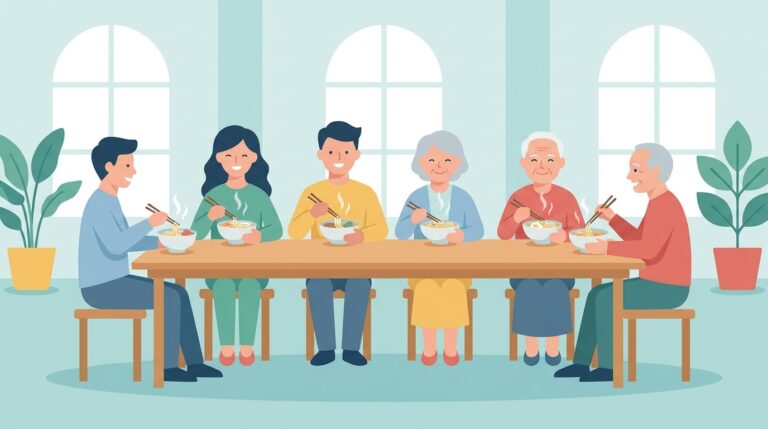
- K-Culture Moment: The service ends, and suddenly everyone rushes to the basement hall. What’s happening? It’s chin-gyo si-gan, where free noodle soup (잔치국수) or rice cakes are served, and people exchange business cards, introduce their children, or catch up on life.
- Editor’s Insight: Skipping chin-gyo si-gan is like leaving a Korean birthday party before the cake is cut. This is where the real networking happens.
- Situation Spectrum: Casual (✅), Semi-formal (✅), Formal (✅)
- 🤔 Think About It: How does sharing a simple meal change the dynamic of a formal religious gathering for you?
Phase 3: Textbook Korean vs. Real Korean
Let’s look at how textbooks teach you to connect, versus how Koreans actually talk in these community spaces.
Situation 1: Expressing your desire to join a community group
- 📖 Textbook: “저는 이 교회 커뮤니티에 가입하고 싶습니다.” (Jeoneun i gyo-hoe keo-myu-ni-ti-e ga-ip-ha-go sip-seum-ni-da.)
- Translation: “I want to sign up for this church community.”
- 🗣️ Real Korean: “혹시 청년부나 소그룹 모임에 참여해 볼 수 있을까요?” (Hok-si cheong-nyeon-bu-na so-geu-rup mo-im-e cham-yeo-hae bol su is-seul-kka-yo?)
- Translation: “By any chance, could I try participating in the youth group or small group meetings?”
- 💡 Why it matters: Textbooks use “가입” (to sign up/register), which sounds like you are joining a gym or a website. Real Koreans use “참여하다” (to participate/join in) and specify the group, like 청년부 (youth group, typically for young adults aged 20–35).
Situation 2: Praising the food at fellowship lunch
- 📖 Textbook: “음식이 아주 맛있습니다.” (Eum-si-gi a-ju ma-sit-seum-ni-da.)
- Translation: “The food is very delicious.”
- 🗣️ Real Korean: “와, 진짜 정이 넘치네요! 잘 먹겠습니다.” (Wa, jin-jja jeong-i neom-chi-ne-yo! Jal meok-get-seum-ni-da.)
- Translation: “Wow, this place is truly overflowing with warmth (Jeong)! I will eat well.”
- 💡 Why it matters: Simply saying the food is good is polite. But acknowledging the 정 (Jeong) of the volunteers who cooked the meal shows a deep, empathetic understanding of Korean cultural values.
Phase 4: K-Culture Deep Dive & Non-verbal Manners
4-1. Nunchi (눈치) & Gestures in the Community Hall
When you enter a Korean church or cathedral community hall, your 눈치 (Nunchi – situational quick-wittedness) is your best friend.
1. The Two-Handed Hand-off (두 손 사용): When elder church members hand you a bulletin, tea, or food, always receive it with both hands.
2. Bowing Depth: A polite 45-degree bow to the pastors, priests, or elders (어르신) when entering or leaving the room is non-negotiable.
3. Tongsungido (통성기도) Comfort: If you attend a Protestant church, don’t be shocked if the pastor asks everyone to pray out loud together. This collective, emotional vocal prayer can sound like a roar at first, but it is a deeply bonding experience for locals.
4-2. The Cultural Savior: Free Classes and Support
Historically, churches and cathedrals in Korea were sanctuaries during difficult times. Today, they continue this legacy by offering incredibly practical resources for foreign residents. Many churches host 무료 한국어 교실 (free Korean language classes), medical clinics, and even help expats navigate visa issues. It is a space where social hierarchies soften, and help is given freely.
Phase 5: Real-life Roleplay Scenario
Setting: The bustling fellowship hall of a neighborhood church in Mapo, Seoul, right after Sunday service.
Characters:
* Sujin (수진): A warm, proactive Korean youth group leader (29).
* Alex (알렉스): An intermediate Korean learner eager to connect with locals (B2).
수진: "알렉스 씨! 오늘 예배 끝나고 국수 드시러 가실래요? 오늘 친교실에서 국수 만드는 날이에요!"
      (Alex! Would you like to have some noodles after the service? Today is noodle day in the fellowship hall!)

알렉스: "[수줍게 웃으며] 아, 정말요? 네, 가고 싶어요! 그런데 제가 한국어가 아직 서툴러서 조금 긴장돼요."
        ([Smiling shyly] Oh, really? Yes, I'd love to go! But my Korean is still a bit clumsy, so I'm a bit nervous.)

수진: "[손사래를 치며] 에이, 걱정 마세요! 우리 청년부 사람들은 외국인 친구들을 정말 환영해요."
      ([Waving hands dismissively] Hey, don't worry! Our youth group members really welcome foreign friends.)

알렉스: "[안심하며] 다행이네요. 혹시 청년부에서 하는 봉사활동도 제가 참여할 수 있을까요?"
        ([Relieved] That's a relief. By the way, could I also participate in the volunteer activities done by the youth group?)

수진: "[눈을 반짝이며] 그럼요! 다음 주에 독거노인분들을 위한 반찬 배달 봉사가 있어요."
      ([Eyes shining] Of course! Next week, we have a side-dish delivery volunteering for elderly living alone.)

알렉스: "와, 정말 뜻깊은 활동이네요. 저 꼭 신청하고 싶어요!"
        (Wow, that's a really meaningful activity. I definitely want to sign up!)

수진: "[알렉스의 어깨를 가볍게 토닥이며] 고마워요, 알렉스 씨. 덕분에 우리 구역 모임이 더 밝아지겠어요!"
      ([Lightly patting Alex's shoulder] Thank you, Alex. Thanks to you, our small group meeting will be even brighter!)

알렉스: "[두 손을 모으며] 제가 더 감사하죠. 한국 교회 커뮤니티의 '정'을 직접 느껴보고 싶었어요."
        ([Putting hands together] I am more grateful. I really wanted to experience the 'Jeong' of the Korean church community firsthand.)
🔀 Interactive Choice Point
What should Alex do next to build the strongest connection?
- Option A: “저도 테이블 정리하는 것 도울게요!” (I’ll help clean up the tables too!)
- Feedback (Best): Fantastic! Taking initiative to help clean up the chin-gyo-sil instantly wins the hearts of Korean elders and peers alike. It shows you aren’t just there for free food.
- Option B: “피곤해서 국수만 먹고 가볼게요.” (I’m tired, so I’ll just eat noodles and go.)
- Feedback (Risk): Perfectly understandable if you are socially drained, but you might miss the golden window where people sit down with coffee after the meal.
- Option C: “여기 사람들 연락처 다 알 수 있을까요?” (Can I get everyone’s contact numbers?)
- Feedback (Bad): Too direct and overwhelming. Let relationships build naturally; ask for social media handles (like Instagram) rather than a list of phone numbers.
Phase 6: 10-Second Emotion Shadowing Drill
Let’s practice speaking with real Korean emotion! Watch the slashes (/) for natural pauses.
- Asking to join with cautious excitement:
혹시 / 청년부 모임에 / 참여할 수 있을까요?- [🥺 Soft, polite, and hopeful tone]
- Expressing awe at the community’s warmth:
우와, / 진짜 정이 / 넘치네요!- [😊 Wide-eyed, warm, and highly appreciative tone]
Phase 7: K-Culture Mini Dictionary
- 청년부 (Cheong-nyeon-bu) | Youth/Young Adult Ministry
- The social heartbeat of Korean churches, usually for single adults aged 20 to late 30s. They host retreats, sports days, and study groups.
- 구역 식구 (Gu-yeok Sik-gu) | Cell Group Family
- “식구” literally means “mouths to feed” (family). Calling group members sik-gu highlights the deep familial bond.
- 봉사 (Bong-sa) | Service / Volunteering
- From cleaning the church to global medical missions, this is how Korean believers practice their faith practically.
- 친교실 (Chin-gyo-sil) | Fellowship Hall
- The basement or side hall where food is shared and informal social networking happens.
Phase 8: Traveler’s Survival Kit
Survival Expressions for Visiting historical Korean Cathedrals/Churches
- “화장실이 어디에 있나요?” (Hwa-jang-si-ri eo-di-e in-na-yo?)
- Pro Tip: If you are exploring Seoul and need a clean restroom, local cathedrals or churches are safe, publicly accessible places to ask.
- “여기에 앉아도 될까요?” (Yeo-gi-e an-ja-do doel-kka-yo?)
- Pro Tip: Always ask before sitting down during fellowship hour, as some tables are pre-reserved for elderly volunteers.
- “처음 왔는데, 어디로 가야 하나요?” (Cheo-eum wan-neun-de, eo-di-ro ga-ya ha-na-yo?)
- Pro Tip: Look for church guides wearing sashes or badges near the entrance. They are trained to be exceptionally welcoming!
🗺️ Editor’s Travel Note: When visiting iconic sites like the stunning Myeongdong Cathedral (명동성당), make sure to download the 네이버 지도 앱 다운로드 (Naver Map App) to find local historic spots and check nearby opening hours. Note: Information about open-access areas can change during special liturgical seasons.
Phase 9: ” 한 발 더 깊이 ” (One Step Deeper)
In Western societies, religion is often viewed as a deeply individual choice and relationship with the divine. However, in Korea, the community aspect often precedes or matches the spiritual one. The use of kinship terms like 형제님 (Brother) and 자매님 (Sister) is not just religious jargon; it reflects a societal yearning for collective safety and belonging in a fast-paced, high-pressure society.
💬 Your Turn: How does this compare to your home country? Are religious spaces there also used as massive social networking hubs? Tell us in the comments below!
Phase 10: FAQ & Avoiding Misunderstandings
Q: I am not religious. Can I still attend a church or cathedral fellowship event in Korea?
A: Absolutely! Many foreigners and locals attend church events simply for the community, Korean language practice, or cultural exchange. As long as you respect their customs and space, you are welcome.
Q: Do I need to give money (offering/헌금) if I visit?
A: No, giving an offering is completely voluntary. If a collection basket is passed around during a service, you can simply pass it to the next person with a polite nod.
Q: Can I just walk into the fellowship hall for free food?
A: While Koreans are incredibly generous, it is polite to at least attend the latter portion of the service or speak with a greeter first before heading straight to the dining hall.
🚨 Common Mistakes Warning Board
- Mistake 1: Using casual Banmal (반말) with elder churchgoers.
- Correct Action: Always use honorifics (존댓말), even if the environment feels casual.
- Mistake 2: Dressing too casually.
- Correct Action: Avoid gym clothes, slippers, or overly revealing shirts. Smart-casual is the standard.
- Mistake 3: Refusing food offered by elders aggressively.
- Correct Action: If you are full, don’t just say “No.” Say, “배가 부르지만 조금만 맛볼게요” (I’m full, but I will try just a little bit) to honor their effort.
Phase 11: Action Mission & Engagement
- 🥉 Bronze Mission: Practice bowing at a 45-degree angle in the mirror while saying:
"안녕하세요, 처음 뵙겠습니다."(Hello, nice to meet you for the first time). - 🥈 Silver Mission: Share this post on your social media and tag a friend you want to visit Myeongdong Cathedral with!
- 🥇 Gold Mission: Look up an English-friendly youth group or a church-based language class in Seoul, and send them a polite inquiry email using the phrases learned today.
-
🎮 K-Culture Mission: The next time you watch a slice-of-life K-Drama, look closely for scenes set in a church or cathedral. Note down: are they praying, or are they eating together?
Phase 12: Interactive Quiz Challenge
Test your knowledge of Korean religious community culture!
Q1. Which term refers to the intimate neighborhood cell groups where members share meals and life updates?
Answer: 구역 예배 (Gu-yeok Ye-bae) / 소그룹 모임 (So-geu-rup Mo-im).
Explanation: This system translates religious assembly into localized, daily neighborhood support networks.
Q2. True or False: Asking to join the “청년부” (Cheong-nyeon-bu) is only for teenagers.
Answer: False!
Explanation: In Korea, the “청년부” (Youth/Young Adult group) generally spans from college students up to single adults in their mid-to-late 30s.
Q3. What is the polite way to receive a church leaflet or tea from an elder?
Answer: Receive it using both hands (두 손) while giving a slight bow.
Explanation: Using two hands is a cornerstone of Korean etiquette showing deep respect to the giver.







