

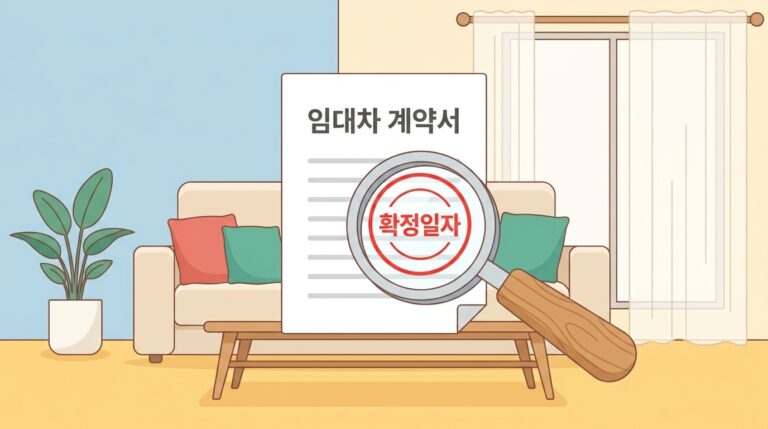
Signing Your First Korean Lease? Don’t Get Lost in Translation!
안녕하세요! 매일한글 (Daily Hangul)의 수석 에디터이자, 여러분의 든든한 한국 생활 가이드입니다!
Have you ever watched K-dramas like Because This Is My First Life (이번 생은 처음이라) or Run On (런 온) and noticed the characters agonizing over finding an apartment? In Korea, renting a place isn’t just about paying monthly rent; it involves navigating complex systems like Jeonse (전세 – key money deposit) and Wolse (월세 – monthly rent), and decoding legal jargon that even native Koreans find intimidating.
As a C1-level learner, you are ready to move beyond basic conversation and handle real-life legal scenarios. Today, we are going to dive deep into the essential Korean expressions, cultural nuances, and hidden traps of 임대차 계약서 작성 (drafting a lease agreement). By the end of this guide, you will feel confident standing your ground at any Korean real estate agency (부동산).
Phase 2: 3 Key Expressions Deep Dive
To protect your deposit and sign with absolute confidence, you must master these three C1-level legal expressions.
1. 특약 사항에 기재해 주세요 (Teug-yag sahange gijaehae juseyo)
- Pronunciation: took-yak sah-ang-eh gee-jae-hae joo-seh-yo (Sound analogy: “took” like taking a book, “yak” like the animal. “sah-ang” sounds like ‘saw-ahng’ said quickly).
- Meaning: “Please write this down in the special covenants (special terms).”
- K-Culture Moment: In K-dramas, this is the climatic moment when the smart protagonist prevents a future dispute by ensuring specific clauses—like pet policy or wallpaper repairs—are written down in black and white before handing over the money.
- Editor’s Insight: In Korean lease contracts, verbal promises hold very little weight. If the landlord promises, “I will fix the boiler before you move in,” you must say this magic phrase. “특약” (special covenants) is your legal shield.
- Situation Spectrum:
- Casual: 🚫 (Never use casual language when discussing legal contracts!)
- Semi-formal: ⚠️ 특약에 좀 적어주실래요? (teug-yag-e jom jeog-eo-jusil-laeyo?)
- Formal: ✅ 특약 사항에 기재해 주세요.
- 🤔 Think About It: How does your home country handle verbal agreements compared to written special clauses? Why do you think Korean society places such a massive legal emphasis on the written “special covenants”?
2. 등기부등본 깨끗해요? (Deung-gibu-deungbon kkaekkeuthaeyo?)
- Pronunciation: deung-ghee-boo-deung-bon kkae-kkeut-hae-yo? (Sound analogy: “deung” is pronounced like ‘dung’ but with an ‘uh’ sound. “kkae-kkeut” is like the ‘ke’ in kettle, repeated sharply).
- Meaning: “Is the Real Estate Registry clean?” (meaning: free of heavy collateral or mortgage debt).
- K-Culture Moment: When a savvy character is looking at a suspiciously cheap penthouse in Seoul, their friend will narrow their eyes and ask this exact question to check if the building is about to go into foreclosure.
- Editor’s Insight: While the literal meaning of “깨끗하다” is “clean,” in the context of real estate, it means the owner doesn’t have excessive loans (융자) secured against the property. Asking this shows the realtor that you are an informed tenant who cannot be easily fooled.
- Situation Spectrum:
- Casual: ⚠️ 여기 등기부 깨끗해? (Only with very close friends assisting you)
- Semi-formal: ✅ 등기부등본 깨끗해요?
- Formal: ✅ 등기부등본상에 융자나 제약 자산이 없는지 확인해 주세요.
- 🤔 Think About It: “Cleanliness” in English refers to physical hygiene, but in Korean, it extends to financial security and legal status. What does this tell us about the Korean language’s metaphorical use of purity?
3. 확정일자 꼭 받아야 돼요 (Hwak-jeong-il-ja kkok bada-ya dwaeyo)
- Pronunciation: hwak-jeong-il-ja kkok bah-dah-yah dwae-yo (Sound analogy: “hwak” sounds like ‘whack’ without the ‘w’ airiness. “kkok” is a tight, tense ‘k’ sound like the end of ‘kick’).
- Meaning: “I must get the fixed date (on the contract).”
- K-Culture Moment: This is the ultimate survival tip older siblings or parents passionately shout at younger characters moving out for the first time in slice-of-life dramas.
- Editor’s Insight: A “확정일자” (fixed date stamp) is a legal stamp given by the community center (주민센터) that officially registers the date of your lease. If the building goes to auction due to the landlord’s debt, this stamp establishes your priority right to get your deposit back. It is non-negotiable!
- Situation Spectrum:
- Casual: ⚠️ 확정일자 꼭 받아라. (Giving advice to a younger friend)
- Semi-formal: ✅ 확정일자 꼭 받아야 돼요.
- Formal: ✅ 잔금을 치른 즉시 확정일자를 받아야 합니다.
- 🤔 Think About It: In Korea, the safety of your deposit relies heavily on your proactive administrative actions (like registering your move and getting the stamp). How does this compare to the rental protection laws in your country?
Phase 3: Textbook Korean vs. Real Korean
| Situation | 📖 Textbook Korean | 🗣️ Real Korean |
|---|---|---|
| Asking to add a clause about repairing things | 임대차 계약서에 보수 조항을 추가해 주십시오. (Please add a maintenance clause to the lease contract.) | 도배랑 장판은 집주인분이 새로 해주시는 걸로 특약에 넣어주세요. (Please put it in the special clauses that the landlord will replace the wallpaper and flooring.) |
| 💡 Why the difference? | Textbook Korean uses heavy, clinical Sino-Korean words (보수 조항, 추가). Real Koreans specify the exact items (wallpaper, flooring) and refer to the landlord politely as “집주인분” (house owner + honorific) to maintain a soft but firm tone. | |
| Asking if there are any loans on the house | 본 부동산에 채무나 저당권이 설정되어 있습니까? (Is there any debt or mortgage established on this property?) | 혹시 이 집 융자 얼마나 껴 있어요? (By any chance, how much loan is caught/attached to this house?) |
| 💡 Why the difference? | Legal terms like “채무” (debt) or “저당권” (mortgage) sound overly dramatic and combative in face-to-face negotiations. Using the colloquial verb “껴 있다” (to be squeezed in / attached) keeps the conversation smooth while getting the exact financial details. |
Phase 4: K-Culture Deep Dive & Non-verbal Manners
4-1. Nunchi (눈치) & Gestures: The Art of Silent Negotiation
When you sit down at the low table in a certified real estate agency (공인중개사사무소), your body language speaks volumes.
* The Double-Check Nod: When the realtor prints out the Real Estate Registry (등기부등본), do not just glance at it. Run your index finger down the section labeled “갑구” (Owner details) and “을구” (Debt/Mortgage details) while giving slow, deliberate nods. This non-verbal gesture signaling high Nunchi (social sensing) warns the realtor that you know exactly what to look for.
* Eye Contact during “Teug-yag” (Special Clauses): When asking for a special clause, maintain soft but unwavering eye contact. Smiling too much can make you look naive, while looking too stern might cause the landlord to back out. A calm, respectful, yet firm posture is key.
4-2. The Cultural Phenomenon: Jeonse (전세) and the “Registry” obsession
Korea has a unique rental system called Jeonse (전세), where you give a massive lump-sum deposit (often 60–80% of the property value) to the landlord for two years, pay no monthly rent, and get the entire deposit back when you move. Because of the sheer amount of money involved, checking the “Cleanliness” of the registry is a national obsession.
In recent years, the fear of
Frequently Asked Questions (FAQ)
Q: What does "특약 사항에 기재해 주세요 (Teug-yag sahange gijaehae juseyo)" mean in Korean and how do you pronounce it?
A: In Korean, "특약 사항에 기재해 주세요 (Teug-yag sahange gijaehae juseyo)" is pronounced [took-yak sah-ang-eh gee-jae-hae joo-seh-yo (Sound analogy: "took" like taking a book, "yak" like the animal. "sah-ang" sounds like 'saw-ahng' said quickly] and means: "Please write this down in the special covenants (special terms)."
Q: What does "등기부등본 깨끗해요? (Deung-gibu-deungbon kkaekkeuthaeyo?)" mean in Korean and how do you pronounce it?
A: In Korean, "등기부등본 깨끗해요? (Deung-gibu-deungbon kkaekkeuthaeyo?)" is pronounced [deung-ghee-boo-deung-bon kkae-kkeut-hae-yo? (Sound analogy: "deung" is pronounced like 'dung' but with an 'uh' sound. "kkae-kkeut" is like the 'ke' in kettle, repeated sharply] and means: "Is the Real Estate Registry clean?" (meaning: free of heavy collateral or mortgage debt).
Q: What does "확정일자 꼭 받아야 돼요 (Hwak-jeong-il-ja kkok bada-ya dwaeyo)" mean in Korean and how do you pronounce it?
A: In Korean, "확정일자 꼭 받아야 돼요 (Hwak-jeong-il-ja kkok bada-ya dwaeyo)" is pronounced [hwak-jeong-il-ja kkok bah-dah-yah dwae-yo (Sound analogy: "hwak" sounds like 'whack' without the 'w' airiness. "kkok" is a tight, tense 'k' sound like the end of 'kick'] and means: "I must get the fixed date (on the contract)."







