

Speak Like the Nation’s Favorite Grandchild: Mastering Intergenerational Korean
Phase 1: Empathy (Welcome & The Warmest Connection)
안녕하세요! (An-nyeong-ha-se-yo!) Your favorite Korean best friend and Daily Hangul editor is back!
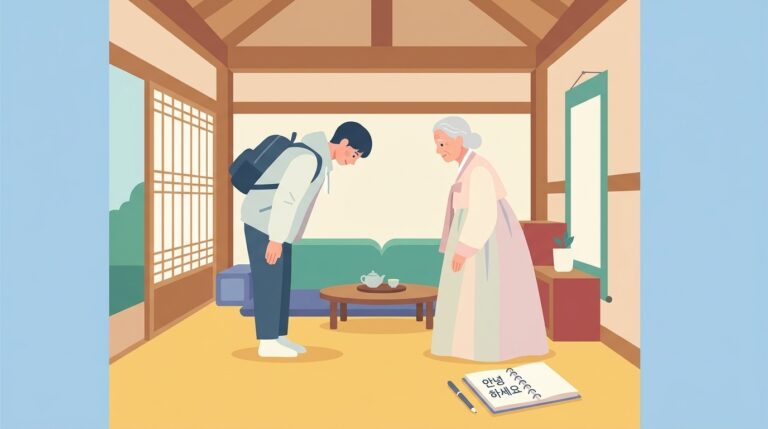
Picture this: You are sitting in a cozy, sunlit living room of a traditional Hanok in Hanok Village. An elderly Korean grandmother (할머니 – Halmeoni) places a steaming cup of barley tea in front of you. You want to show her your deep respect, but your mind goes blank. You know the standard textbook honorifics, but they feel so cold, clinical, and mechanical. You don’t want to sound like a news anchor; you want to sound like a warm, loving, and cultured grandchild.
Bridging the generational gap in a foreign language is one of the ultimate milestones of reaching C1 proficiency. In Korea, where language reflects the very fabric of social hierarchy and relational intimacy, speaking to elders with the right blend of high-level honorifics (존댓말 – Jondaetmal) and emotional warmth is an art form. Today, we are going to unlock the secret linguistic codes that will make Korean elders instantly open their hearts to you. This guide is built on real-world feedback from C1 learners who successfully transitioned from “polite foreigners” to “the nation’s favorite grandchildren.”
Phase 2: Deep Dive into 3 Premium Expressions
1. 만수무강하십시오 (Man-su-mu-gang-ha-sip-si-o)
- Pronunciation: [mahn-soo-moo-gahng-hah-ship-she-oh] (Sounds like: Mahn-soo-moo-gahng-hah-ship-she-oh)
- Meaning: “May you live a long and healthy life without any illness.”
- K-Culture Moment: You will hear this phrase echoed during Seollal (Lunar New Year) or Chuseok (Harvest Festival) family gatherings in K-dramas like Reply 1988, where children bow deeply (세배 – Sebae) to their grandparents.
- Editor’s Insight: This is the peak of traditional honorifics. While it sounds incredibly grand, using it on significant occasions (like a 70th or 80th birthday party, or when saying goodbye after a long visit) shows that you deeply respect Korean cultural traditions. It is a powerful linguistic gift.
- Situation Spectrum: Casual (🚫) | Semi-formal (⚠️) | Formal (✅)
- 🤔 Think About It: In many Western cultures, wishing someone “long life” directly can sometimes feel a bit awkward or overly dramatic. Why do you think Korean culture places such high linguistic value on explicitly wishing for an elder’s longevity during formal greetings?
2. 예전에 비하면 정말 세상이 많이 좋아졌지요 (Ye-jeon-e bi-ha-myeon jeong-mal sesang-i man-i jo-a-jyeot-ji-yo)
- Pronunciation: [yeh-jeon-eh bee-hah-myeon jeong-mahl seh-sahng-ee mahn-ee joh-ah-jyeot-jee-yo]
- Meaning: “Compared to the old days, the world has indeed become a much better place, hasn’t it?”
- K-Culture Moment: Think of historical healing dramas like Our Blues, where the older characters reminisce about their hard days working the fields or diving in the cold Jeju sea.
- Editor’s Insight: This is the ultimate “empathy bridge.” Korean elders lived through rapid, dramatic modernization. By validating their past struggles with this phrase, you show that you understand and appreciate the sacrifices their generation made to build modern Korea.
- Situation Spectrum: Casual (⚠️ – only with close elder relatives) | Semi-formal (✅) | Formal (✅)
- 🤔 Think About It: How does your native language express validation for the historical struggles of older generations without sounding patronizing?
3. 말씀 많이 들었습니다 (Mal-sseum man-i deu-reot-seum-ni-da)
- Pronunciation: [mahl-sseum mahn-ee deu-reot-sseum-nee-dah]
- Meaning: “I have heard so many wonderful things about you.”
- K-Culture Moment: The tense yet polite moment in romance K-dramas when the protagonist is finally introduced to their partner’s imposing grandmother or grandfather.
- Editor’s Insight: This is the gold standard for first meetings. Instead of just saying “Nice to meet you,” this phrase humbles you and elevates the elder, signaling that they are highly spoken of and respected in their family circle.
- Situation Spectrum: Casual (🚫) | Semi-formal (✅) | Formal (✅)
- 🤔 Think About It: Why is it culturally significant in Korea to acknowledge that you’ve “heard a lot about” an elder before you’ve even had a proper conversation?
Phase 3: Textbook Korean vs. Real Native Korean
When you reach C1, the goal is to shed the rigid “textbook” skin and wear the natural, flowing robes of native pragmatics. Let’s look at how we can elevate basic polite sentences into deeply resonant, warm native Korean.
Scenario 1: Asking about an elder’s well-being
- 📖 Textbook Korean: 건강하십니까? (Geon-gang-ha-sim-ni-ka? / Are you healthy?)
- 🗣️ Real Native Korean: 그동안 별고 없으셨는지요? (Geu-dong-an byeol-go eop-seu-syeon-neun-ji-yo? / I trust you have been peaceful and well without any trouble?)
- 💡 Why the difference? Asking “건강하십니까?” directly can sound almost like a medical inquiry or a rigid military check. On the other hand, “별고 없으셨는지요” uses the beautiful, poetic noun “별고” (unusual/troublesome event) to gently inquire about their peace, showcasing a highly refined command of the language.
Scenario 2: Showing agreement during an elder’s long story
- 📖 Textbook Korean: 네, 맞습니다. (Ne, mat-seum-ni-da. / Yes, that is correct.)
- 🗣️ Real Native Korean: 아, 정말 그러셨겠어요. 말씀만 들어도 참 대단하십니다. (Ah, jeong-mal geu-reo-syeot-get-eo-yo. Mal-sseum-man deu-reo-do cham dae-dan-ha-sim-ni-da. / Oh, you must have really felt that way. Just hearing your words makes me realize how truly amazing you are.)
- 💡 Why the difference? A simple “네, 맞습니다” can feel dismissive, as if you are just trying to end the conversation. Active, expansive, and empathetic validation is highly valued by Korean elders. This phrase turns a simple agreement into a warm emotional hug.
Phase 4: K-Culture Deep Dive & Non-Verbal Manners
4-1. The Choreography of Respect: Nunchi & Gestures
To truly bridge the generational gap, your body language must match your C1 linguistic skills.
1. The Bowing Angle: When greeting an elder, a deep 30-to-45-degree bend from the waist is standard. Keep your hands neatly folded in front of your lower abdomen (공수 – Gongsu posture).
2. The Two-Hand Rule: Never hand anything to or receive anything from an elder with one hand. Always use both hands. If one hand is busy, support your right forearm or wrist with your left hand as you hand over the item.
3. The Eye-Contact Sweet Spot: Do not stare directly into an elder’s eyes for too long, as it can be perceived as challenging or defiant. Instead, maintain soft, respectful eye contact, occasionally looking down slightly when they are speaking deeply.
4-2. The Cultural Undercurrent: Hyo (효 – Filial Piety)
In K-dramas like My Mister, we see the deep, silent reverence the characters hold for their elderly family members. Korean society is deeply rooted in Neo-Confucian ideals where elder care and respect (효 – Hyo) are not just moral options but social pillars. When you, as a foreign speaker, show a deep understanding of this code, the emotional payoff is massive. Elders will treat you not as an outsider, but as family.
Phase 5: Live Roleplay Scenario
The Setup
- Background: You are visiting your close Korean friend Min-ho’s grandmother (할머니 – Halmeoni) at her traditional house in Jeonju. She has prepared a massive table of traditional dishes for you.
- Characters:
- You (C1 Learner): Respectful, warm, and eager to connect.
- 할머니 (Halmeoni): A loving grandmother with a thick, warm Jeolla-do dialect, proud of her cooking but curious about this foreign guest.
할머니: 아이고, 먼 길 오느라 고생 많았네! 얼른 앉아서 이것 좀 먹어봐요. 입에 맞을지 모르겠네.
(Aigo, meon gil o-neu-ra go-saeng man-anne! Eol-leun an-ja-seo i-geot jom meog-eo-bwa-yo. Ib-e mat-eul-ji mo-reu-get-ne.)
[Translation: Oh dear, you went through so much trouble traveling such a long way! Sit down quickly and try some of this. I hope it suits your palate.]

You: 🎭 [Hands politely resting on knees, bowing slightly with a bright smile]
     할머니, 저희 보시느라 음식 준비까지 하시고 고생 많으셨지요? 말씀 많이 들었습니다.
     (Hal-meo-ni, jeo-hui bo-si-neu-ra eum-sik jun-bi-kka-ji ha-si-go go-saeng man-eu-syeot-ji-yo? Mal-sseum man-i deu-reot-seum-ni-da.)
     [Translation: Grandmother, you must have gone through so much trouble preparing all this food just to see us. I have heard so many wonderful things about you.]

할머니: 🎭 [Smiling widely, waving her hand in embarrassment]
     아이고, 들을 말이 뭐가 있어! 그냥 늙은이 밥상이지. 그래도 맛있게 먹어주니 고맙네.
     (Aigo, deu-reul mal-i mwo-ga is-seo! Geu-nyang neulg-eun-i bap-sang-i-ji. Geu-rae-do mas-it-ge meog-eo-ju-ni go-map-ne.)
     [Translation: Oh my, what is there to hear about! It's just an old person's dinner table. But thank you for eating it so happily.]

You: 🎭 [Taking a bite of the food, widening your eyes in genuine delight]
     할머니, 정말 깊은 맛이 나요! 예전에 비하면 정말 세상이 많이 좋아졌지만, 역시 이런 전통 손맛은 아무나 낼 수 없나 봅니다.
     (Hal-meo-ni, jeong-mal gip-eun mat-i na-yo! Ye-jeon-e bi-ha-myeon jeong-mal sesang-i man-i jo-a-jyeot-ji-man, yeok-si i-reon jeon-tong son-mat-eun a-mu-na nael su eop-na bom-ni-da.)
     [Translation: Grandmother, the flavor is so deep! Although the world has become much better compared to the old days, indeed, not just anyone can recreate this traditional hand-made touch.]

할머니: 🎭 [Pleased, placing a piece of meat on your bowl with her chopsticks]
     어이구, 말도 어찌 이리 이쁘게 할까! 많이 먹어, 우리 강아지.
     (Eo-i-gu, mal-do eo-zzi i-ri i-ppeu-ge hal-kka! Man-i meog-eo, u-ri gang-a-ji.)
     [Translation: Goodness, how can you speak so beautifully! Eat a lot, my puppy (sweetheart).]
🔀 Choose Your Path
At this moment, Halmeoni sighs gently and says: “늙으면 다 짐이야, 할 줄 아는 것도 없고…” (When you get old, you just become a burden, there’s nothing I can do…)
How do you respond to show the ultimate C1 empathy?
- Option A: “아니에요, 할머니는 아주 젊어 보이세요!” (No, grandma, you look so young!)
- Option B: “무슨 말씀이세요, 할머니가 계셔주시는 것만으로도 저희에게는 큰 힘이 됩니다.” (What do you mean, grandmother? Just you being here with us gives us so much strength.)
- Option C: “네, 나이가 들면 확실히 몸이 많이 힘들어지죠.” (Yes, as you age, your body definitely gets much weaker.)
💡 Feedback Matrix
- Option A (Risk): While meant as a compliment, simply saying “you look young” can sometimes feel like a superficial dismissal of her genuine, vulnerable feelings about aging.
- Option B (Best): 🌟 Perfect! This response beautifully validates her existence and dignity within the family unit, showing deep emotional intelligence and highly advanced cultural pragmatic competence.
- Option C (Bad): Too direct and clinical. Agreeing with an elder’s self-deprecating comment about aging is a major cultural faux pas that can bring down the warm atmosphere instantly.
Phase 6: 10-Second Emotion Shadowing Drill
To master the natural rhythm of respectful Korean, practice these sentences. Focus on the pauses (/) and the emotional guidance provided in the bracket.
[🥺 Sincerely and warmly, with a slight nod]
할머니, / 늘 건강하게 / 저희 곁에 / 있어 주세요.
(Hal-meo-ni, / neul geon-gang-ha-ge / jeo-hui gyeot-e / is-seo ju-se-yo.)
(Grandmother, / please always / stay healthy / by our side.)-
[😊 Brightly and appreciatively, with two hands on your chest]
이런 귀한 말씀을 / 들을 수 있어서 / 정말 영광입니다.
(I-reon gwi-han mal-sseum-eul / deu-reul su is-seo-seo / jeong-mal yeong-gwang-im-ni-da.)
(To be able to hear / such precious words of wisdom / is truly an honor.)
Phase 7: K-Culture Mini Dictionary
- 꼰대 (Kkondae) | A slang term used to describe an older person who constantly lectures younger people with a patronizing attitude. (e.g., “우리 부장님은 진짜 꼰대야.” / Our general manager is such a Kkondae.)
- 라떼는 말이야 (Latte is horse) | A humorous, sarcastic pun on the phrase “나 때는 말이야” (Back in my day). It mocks the way elders often start their long, boastful stories about their past hardships.
- 내리사랑 (Naerisarang) | “Descending love.” The beautiful cultural concept that love naturally flows downward from grandparents/parents to children, rather than upward.
- 효도 (Hyodo) | Filial piety. The cultural duty of caring for, respecting, and making one’s parents and grandparents proud through one’s actions and words.
Phase 8: The Traveler’s Survival Kit
Survival Expressions for Interacting with Elders
- 새해 복 많이 받으세요 (Sae-hae bok man-i bat-eu-se-yo)
- Meaning: “Please receive a lot of good fortune in the New Year.”
- Pro Tip: The ultimate greeting if you meet Korean elders around January or February.
- 진지 잡수셨습니까? (Jin-ji jap-su-syeot-seum-ni-ka?)
- Meaning: “Have you partaken of your honorable meal?”
- Pro Tip: The ultra-respectful version of “밥 먹었어?” (Did you eat?). Using the word “진지” (jin-ji) instead of “밥” (bap) will instantly make any Korean elder drop their jaw in admiration of your Korean skills.
- 어르신 (Eo-reu-sin)
- Meaning: “Honored Elder.”
- Pro Tip: Never call an elderly stranger “할머니” (grandma) or “할아버지” (grandpa) unless you have established a personal connection. Start with “어르신” to show maximum public respect.
🗺️ Editor’s Travel Note
When traveling outside of Seoul to traditional hubs like Gyeongju or Jeonju, you can use the Naver Map App to find quiet, local traditional tea houses (전통찻집 – Jeontong-chatjip). These spots are often run by elderly hosts who love chatting with travelers. Greeting them with “어르신, 반갑습니다” (Honored elder, nice to meet you) will turn a simple tea order into a lifelong memory of cultural connection.
Phase 9:
Frequently Asked Questions (FAQ)
Q: What does "만수무강하십시오 (Man-su-mu-gang-ha-sip-si-o)" mean in Korean and how do you pronounce it?
A: In Korean, "만수무강하십시오 (Man-su-mu-gang-ha-sip-si-o)" is pronounced [mahn-soo-moo-gahng-hah-ship-she-oh] and means: "May you live a long and healthy life without any illness."
Q: What does "예전에 비하면 정말 세상이 많이 좋아졌지요 (Ye-jeon-e bi-ha-myeon jeong-mal sesang-i man-i jo-a-jyeot-ji-yo)" mean in Korean and how do you pronounce it?
A: In Korean, "예전에 비하면 정말 세상이 많이 좋아졌지요 (Ye-jeon-e bi-ha-myeon jeong-mal sesang-i man-i jo-a-jyeot-ji-yo)" is pronounced [yeh-jeon-eh bee-hah-myeon jeong-mahl seh-sahng-ee mahn-ee joh-ah-jyeot-jee-yo] and means: "Compared to the old days, the world has indeed become a much better place, hasn't it?"
Q: What does "말씀 많이 들었습니다 (Mal-sseum man-i deu-reot-seum-ni-da)" mean in Korean and how do you pronounce it?
A: In Korean, "말씀 많이 들었습니다 (Mal-sseum man-i deu-reot-seum-ni-da)" is pronounced [mahl-sseum mahn-ee deu-reot-sseum-nee-dah] and means: "I have heard so many wonderful things about you."







