

The Pepero Day Dilemma: Sweet Tradition or Commercial Gimmick?
Phase 1: Empathy (공감)
안녕하세요! (Annyeonghaseyo!) It’s your favorite Daily Hangul Editor, your 10-year local cultural navigator.
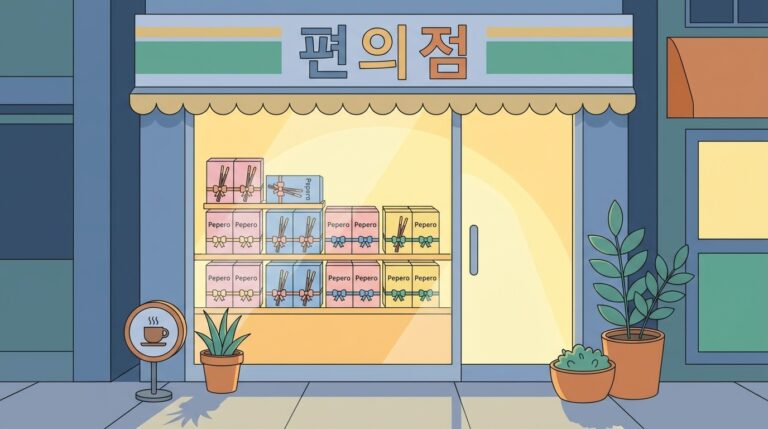
Imagine this: It’s November 10th. You walk into a convenience store in Seoul to buy a quick drink, but you are instantly blocked by a massive, sparkling castle of chocolate-covered cookie sticks. Giant cardboard boxes, ribbons, teddy bears, and flashy banners scream “11/11 Pepero Day!”
You see high schoolers giggling as they buy DIY chocolate kits, while office workers sigh heavily, loading boxes of Pepero into plastic bags like they’re preparing for a corporate duty.
If you’ve ever stood there thinking, “Wait, do I actually have to buy this? Am I falling for a giant marketing trap? But if I don’t buy it, will my Korean friends feel left out?”—you have experienced the classic Korean “Pepero Day Dilemma” (빼빼로데이의 상술 논란).
Today, we are moving beyond textbook vocabulary. We will equip you with natural, B2-level conversational tools to discuss the commercialization of anniversaries like a true local, while dissecting the delicate cultural balance between corporate marketing (상술) and heartfelt sincerity (정성). Let’s dive in!
Phase 2: Three Core Expressions Deep Dive (핵심 표현)
1. 상술에 놀아나다 (sangsul-e noranada)
- Pronunciation: [sang-sul-e no-ra-na-da] (Sounds like: sahng-sool-eh noh-rah-nah-dah)
- Meaning: To fall for commercial gimmicks / to be manipulated by marketing tactics.
- K-Culture Moment: This is the ultimate cynical phrase used in dramas when someone buys an incredibly overpriced holiday package. In K-Dramas, you’ll often hear a sensible character scolding their love-struck friend: “야, 그거 다 대기업 상술에 놀아나는 거야!” (Hey, you’re totally falling for big corporate gimmicks!)
- Editor’s Insight: 상술 (sangsul) literally means “business tactics/tricks” (often with a negative, manipulative nuance). 놀아나다 (noranada) means to be toyed with. Combining them shows a very high, natural level of social awareness in Korean.
- Situation Spectrum: Casual ✅ | Semi-formal ⚠️ | Formal 🚫
- 🤔 Think About It: Does your native culture have a holiday where you feel you are “playing to the tune” of commercial corporations? How do you express this feeling?
2. 챙기다 (chaenggida)
- Pronunciation: [chaeng-gi-da] (Sounds like: chaeng-ghee-dah)
- Meaning: Literal: To take care of / pack. | Contextual: To make sure to celebrate/observe an anniversary or milestone.
- K-Culture Moment: Used constantly in daily life when discussing birthdays, anniversaries, or special days. If a couple breaks up in a drama, they might complain: “너는 기념일 하나 제대로 안 챙겨 주잖아!” (You don’t even properly celebrate a single anniversary for me!)
- Editor’s Insight: Instead of the formal verb 기념하다 (to commemorate), native Koreans almost exclusively use 챙기다 for personal celebrations. It implies active effort and caring for the other person’s feelings.
- Situation Spectrum: Casual ✅ | Semi-formal ✅ | Formal ✅
- 🤔 Think About It: Why is the act of “챙기다” so heavily tied to maintaining good relationships in Korean society?
3. 정성 (jeongseong)
- Pronunciation: [jeong-seong] (Sounds like: jung-sung)
- Meaning: Sincerity, devotion, or heartfelt effort.
- K-Culture Moment: Think of a mother waking up at 5:00 AM to pack a multi-tiered lunchbox (도시락) for her child’s school trip. That extra effort is called 정성.
- Editor’s Insight: This word is the ultimate antidote to 상술. If a gift is cheap but handmade (like a hand-written letter or home-baked Pepero), Koreans will praise the 정성 behind it. It’s not about the price tag; it’s about the soul poured into it.
- Situation Spectrum: Casual ✅ | Semi-formal ✅ | Formal ✅
- 🤔 Think About It: Can “정성” truly exist in a highly commercialized holiday, or does the commercialization wash it away?
Phase 3: Textbook Korean vs. Real Korean (교과서 vs. 진짜 한국어)
Scenario 1: Discussing corporate marketing holidays
- 📖 Textbook Korean: “11월 11일은 과자 회사의 마케팅 행사입니다.”
(November 11th is a snack company’s marketing event.) - 🗣️ 진짜 한국어: “이거 완전 대기업 상술이잖아. 알면서도 그냥 속아주는 거지.”
(This is totally a big corporate gimmick. We buy it knowing we’re getting fooled.) - 💡 Why the difference? Textbook Korean sounds like a dry Wikipedia page. Real Koreans use 속아주다 (to pretend to be fooled / let oneself be fooled) to show they know they are being targeted by marketing but choose to participate for fun anyway.
Scenario 2: Deciding whether to buy gifts for colleagues
- 📖 Textbook Korean: “동료들에게 빼빼로를 선물할 것입니다.”
(I will present Pepero to my colleagues.) - 🗣️ 진짜 한국어: “안 주자니 서운하고, 주자니 돈 아깝고… 딱 눈치싸움이지 뭐.”
(If I don’t give it, they’ll feel left out; if I do, it’s a waste of money… It’s a classic mind game.) - 💡 Why the difference? It captures the social anxiety of 눈치싸움 (nunchi-ssaum / tension of reading the room). Koreans use the structure -자니 -고, -자니 -다 to express dilemma.
Phase 4: K-Culture Deep Dive & Non-verbal Manners (문화 코드 & 매너)
4-1. The “Tsundere” Toss (오다 주웠다)
When giving Pepero in a Korean social setting, your body language dictates your intentions. If you hand a massive, heart-shaped basket with both hands and make intense eye contact, you might send an accidental romantic signal!
To keep it casual, friendly, and avoid looking like you fell too hard for the “상술,” try the “Tsundere style” (츤데레). Toss a single box onto your friend or colleague’s desk with one hand, look slightly away, and say:
“오다 주웠다.” (oda juwotda – “I picked this up on my way here.”)
This classic, playful gesture proves you care (정성/챙기다) without making a big, awkward deal out of it.
4-2. The Rise of the DIY “Rebellion”
Because luxury boxed Peperos in department stores can reach up to 50,000 KRW ($40 USD), many young Koreans actively protest corporate greed by buying raw chocolate and blank biscuits from local baking shops. They make 수제 빼빼로 (handmade Pepero) at home. Even if the sticks look messy and crooked, the recipient will appreciate the immense 정성 far more than an expensive, store-bought box.
Phase 5: Real-Life Roleplay Scenario (실전 롤플레이)
Setting: Outside a brightly lit GS25 convenience store in Hongdae.
Characters:
* 지수 (Ji-su): A practical, no-nonsense Korean university student who hates waste.
* 알렉스 (Alex): A curious foreign exchange student (B2 level) trying to survive his first November in Korea.
지수: 알렉스, 편의점 앞에 저 쌓여있는 빼빼로 상자들 좀 봐. 진짜 장난 아니다, 그렇지?
      (Alex, look at those Pepero boxes piled up in front of the convenience store. Truly insane, right?)

알렉스: 🎭 (눈이 휘둥그레지며) 와... 진짜 화려하네요. 지수 씨는 내일 친구들 주려고 벌써 몇 개 사 두셨어요?
      (🎭 (Eyes widening) Wow... so flashy. Ji-su, did you already buy a few to give to friends tomorrow?)

지수: 🎭 (절레절레 흔들며) 에이, 내가 왜? 난 저런 대기업 상술에 절대 안 놀아나.
      (🎭 (Shaking head) Ey, why would I? I absolutely don't fall for that kind of corporate gimmick.)

알렉스: 상술이요? 하지만 다들 챙기는 분위기잖아요. 안 사면 좀 서운하지 않을까요?
      (Commercial gimmick? But everyone seems to be celebrating it. Won't people feel left out if we don't buy?)

지수: 🎭 (피식 웃으며) 뭐, 기분만 내고 싶은 사람들은 작은 거 하나 사겠지. 근데 저런 비싼 바구니는 진짜 돈 낭비야.
      (🎭 (Smirking) Well, people who just want to get in the mood might buy a small one. But those expensive baskets are a total waste of money.)

알렉스: 아, 그렇구나! 그럼 저도 그냥 비싼 거 말고 작은 걸로 가성비 있게 챙겨야겠어요.
      (Ah, I see! Then instead of the expensive ones, I should just cost-effectively prepare some small ones.)

지수: 🎭 (엄지척하며) 맞아, 그게 현명해! 아예 정성을 보여주고 싶으면 그냥 집에서 수제로 직접 만들어 보든가!
      (🎭 (Thumbs up) Exactly, that's smart! If you want to show real sincerity, you could even make handmade ones at home!)

알렉스: 오, 수제 빼빼로요? 그건 생각지도 못했네요. 지수 씨가 만드는 거 도와줄래요?
      (Oh, handmade Pepero? I hadn't even thought of that. Will you help me make them, Ji-su?)
🔀 Choose Your Next Move! (인터랙티브 선택지)
- Option A: “그래요, 내일 마트 가서 초콜릿 재료 같이 사요!”
- Feedback (BEST): Perfect! You took Ji-su’s suggestion and immediately turned it into a fun, collaborative plan to show real 정성.
- Option B: “대기업 제품이 제일 맛있으니까 그냥 제일 큰 바구니 살래요.”
- Feedback (BAD): Uh-oh! You completely ignored Ji-su’s warnings about 상술 (commercialism) and went straight for the corporate trap. It might look flashy, but it lacks personality.
- Option C: “상술이라니, 그냥 아무것도 안 챙길래요.”
- Feedback (RISK): While practical, skipping it completely might make you look a bit cold in a Korean social environment where small gestures of sharing matter.
Phase 6: 10-Second Shadowing Drill (섀도잉 연습)
Practice speaking with natural cadence, pauses (/), and emotional tones!
- [😏 Expressing playful cynicism]
- “이거 다 / 대기업 상술인 거 / 알면서도 / 그냥 속아주는 거지 뭐.”
- [i-geo da / dae-gi-eop sang-sul-in geo / al-myeon-seo-do / geu-nyang sok-a-ju-neun geo-ji mwo]
- [🥺 Feeling social peer-pressure]
- “남들 다 / 챙기는데 / 나만 안 하면 / 솔직히 좀 / 눈치 보이잖아.”
- [nam-deul da / chaeng-gi-neun-de / na-man an ha-myeon / sol-jik-hi jom / nun-chi bo-i-ja-na]
Phase 7: K-Culture Mini Dictionary (미니 사전)
- 상술 (Sangsul) | Commercial trick / Gimmick
- Usage: Used when complaining about commercial holidays like Valentine’s Day, White Day, or Pepero Day.
- 가성비 (Gaseongbi) | Cost-effectiveness
- Usage: Short for 가격 대비 성능비. Crucial when deciding which gifts to buy without breaking the bank.
- 수제 (Suje) | Handmade / DIY
- Usage: Used for craft beers, handmade burgers, and DIY gifts (e.g., 수제 쿠키).
- 눈치싸움 (Nunchissaum) | Reading-the-room warfare
- Usage: The silent struggle of trying to match everyone else’s actions so you don’t stand out too much or too little.
Phase 8: Traveler’s Survival Kit (여행자 생존 키트)
Survival Expressions TOP 3
- “이거 2+1 행사하는 거예요?” (Is this a 2+1 promotional event?) – Great for convenience store runs!
- “부담스럽지 않게 작은 걸로 준비했어요.” (I prepared something small so you wouldn’t feel pressured.)
- “직접 만든 건 아니지만, 제 성의예요!” (I didn’t make it myself, but it’s a small token of my appreciation!)
🗺️ Editor’s Travel Note
If you want to skip convenience store markups and find high-quality, budget-friendly baking ingredients in Seoul, don’t just search on Google. Download the 네이버 지도 앱 (Naver Map App) and search for “방산시장” (Bangsan Market) near Euljiro-4ga. It’s the ultimate paradise for DIY baking, packaging, and chocolate molding at wholesale prices!
(Note: Local shop hours and stock may vary based on seasonal demands.)
Phase 9: “One Step Deeper” (생각하는 질문)
Korea’s collective culture is built on the concept of “우리” (We/Us). While Western individualism might encourage skipping a holiday you dislike, Korean social dynamics make it difficult to completely ignore a day when everyone else is sharing. Is Pepero Day a corporate trick exploiting social pressure, or is it a beautiful excuse to express gratitude to people we otherwise take for granted?
💬 Your Turn: What do you think? Is it purely 상술 (a commercial trick), or is there real 정성 (sincerity) left in these celebrations? Leave your thoughts in the comments below!
Phase 10: FAQ & Common Mistakes (자주 묻는 질문)
Q: Do I have to buy Peperos for my boss or coworkers?
A: Absolutely not mandatory! However, if your team has a close-knit culture, buying a cheap “2+1” bundle from a convenience store and putting a box on everyone’s desk is a great, low-cost way to build good rapport (인맥). Don’t buy expensive baskets; that actually makes people feel burdened!
Q: What is the difference between Pepero Day and Valentine’s Day in Korea?
A: Valentine’s Day (Feb 14) and White Day (Mar 14) are strictly romantic. Pepero Day (Nov 11) is much more casual and universal—you can give them to your teachers, friends, coworkers, and family members.
Q: Can I use the word “상술” directly to someone who gave me a gift?
A: Never! Telling someone “이거 상술이야” right after they hand you a box of Pepero is incredibly rude. It dismisses their effort and kindness. Keep that word for general discussions about companies and marketing, not for personal gifts.
🚨 Common Mistakes Board
- Mistake 1: Buying a massive 50,000 KRW basket for a casual acquaintance. (It creates social burden!)
- Mistake 2: Saying “상술에 놀아나지 마세요” (Don’t be fooled by gimmicks) to a senior coworker who bought snacks for the team.
- Correct Action: Say, “와, 바쁘신 와중에 이렇게 챙겨주셔서 감사합니다!” (Wow, thank you for taking care of us despite your busy schedule!)
Phase 11: Action Mission (실천 미션)
- 🥉 Bronze Mission: Go to a convenience store, find a “2+1” event label, and say “이거 행사 상품이에요?” to the cashier.
- 🥈 Silver Mission: Share a picture of a Pepero box on your social media and caption it: “상술인 거 알지만, 기분은 내야지!” (I know it’s a gimmick, but gotta get in the mood!)
- 🥇 Gold Mission: Make a simple DIY snack or write a small post-it note expressing your 정성 to a Korean colleague or friend this week.
🎬 K-Culture Mission: Search on YouTube for “수제 빼빼로 브이로그” (Handmade Pepero Vlog) to see how young Koreans prepare for this day behind the scenes!
Phase 12: Interactive Quiz Challenge (퀴즈 챌린지)
Test your knowledge of B2-level anniversary vocabulary!
1. Which word refers to “the heartfelt sincerity/effort” put into a gift?
- A) 상술
- B) 정성
- C) 기념일
2. Fill in the blank: “남들 다 챙기는데 나만 안 하면 좀
보이지.”
* A) 눈치
* B) 가성비
* C) 대기업
👉 Click to reveal Answers & Explanations!
- Answer: B) 정성. (정성 represents devotion and sincerity, which is the perfect counter-concept to corporate commercialism!)
- Answer: A) 눈치. (The full phrase is “눈치 보이지,” meaning “I feel self-conscious/worried about what others think.”)







