

Elevate Your Instant Noodle Game: The Art, Slang, and Science of Perfect Korean Ramyun
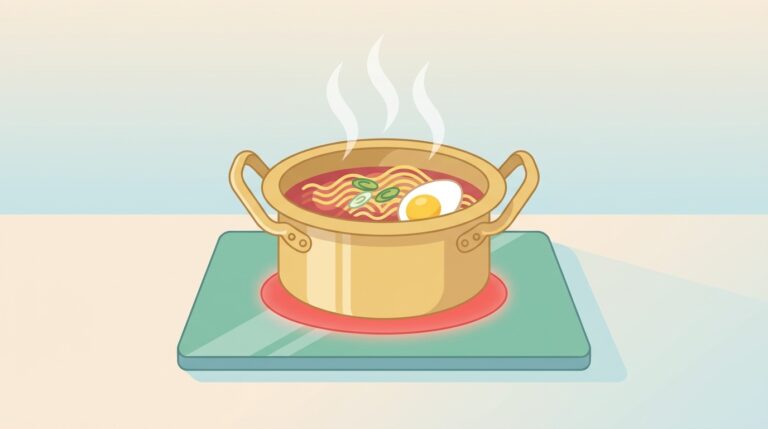
안녕하세요! I’m your senior editor at Daily Hangul. If you’ve spent any time watching K-Dramas, you’ve probably witnessed a scene that made your mouth water: a character, exhausted after a long day, huddled over a small, dented yellow aluminum pot (냄비), slurping down steaming, crimson noodles with pure, unadulterated ecstasy.
But here is a hard truth that many culinary travelers discover: boiling Korean 라면 (ramyun) is not merely a matter of following the instructions on the back of the package. It is a highly debated, deeply cultural, and scientifically precise ritual. Treating Korean ramyun like standard Italian pasta—such as draining the water completely or overboiling the noodles to a mushy oblivion—is considered a culinary tragedy in Seoul.
Today, we are going to dive deep into the advanced lexicon, hidden social codes, and absolute culinary hacks of the Korean ramyun universe. By the end of this guide, you won’t just know how to cook ramyun like a map-certified Seoulite; you will be able to discuss the viscoelasticity of your noodles and debate recipe theories using authentic, high-level Korean slang that will instantly earn you the respect of any native foodie.
Phase 2: Deep Dive into 3 Core Culinary Expressions
To talk about ramyun like an absolute connoisseur, you must master the precise vocabulary that defines the sensory experience of noodle preparation and consumption.
1. 꼬들꼬들하다 (Kkodeul-kkodeul-hada)
- Pronunciation: [Kko-deul-kko-deul-ha-da] / Sound-alike guide: Think of ‘coo-dul’ repeated with a sharp, tense double ‘k’ sound at the beginning.
- Meaning: Superlatively chewy; perfectly al dente noodles that retain a firm, springy core.
- K-Culture Moment: This is the holy grail of ramyun textures. In K-Dramas, you will often see a seasoned cook lifting the noodles high into the air with chopsticks while boiling. This technique—exposing the hot noodles to the cold air—is called ‘온도 충격’ (temperature shock), designed specifically to achieve a 꼬들꼬들한 texture.
- Editor’s Insight: This isn’t just a physical state; it’s a personality trait. In Korea, ramyun lovers are divided into two passionate camps: the 꼬들파 (team firm/chewy) and the 퍼진파 (team soft/overcooked). If you want to sound like a true insider, always declare your allegiance to the 꼬들파.
- Situation Spectrum:
- Casual (Friends): ✅ (Absolutely essential when cooking together)
- Semi-formal (Coworkers): ✅ (Great icebreaker during casual team lunches)
- Formal (Bosses/Elders): ⚠️ (Slightly sensory and casual, but perfectly acceptable when discussing food preferences)
- 🤔 Think About It: Why does Korean culture value textural contrasts like 꼬들꼬들 or 쫀득쫀득 (chewy) so much more intensely than many Western culinary traditions? How does your native language describe the perfect noodle texture?
2. 면치기 (Myeon-chigi)
- Pronunciation: [Myeon-chi-gi] / Sound-alike guide: ‘Myeon’ (as in neon) + ‘chigi’ (like cheeky, but with a softer ‘ch’).
- Meaning: The physical art of slurping noodles continuously without biting or breaking them mid-air.
- K-Culture Moment: Made famous by Korean ‘Mukbang’ (eating broadcasts) and food variety shows. A true 면치기 master can inhale an entire chopstick-load of noodles in one rhythmic, resonant slurp, generating a distinct sound that symbolizes deliciousness.
- Editor’s Insight: While Western etiquette advises eating quietly, in a casual Korean ramyun setting, 면치기 is a compliment to the chef. It indicates that the noodles are at their peak temperature and texture. However, don’t overdo it in highly formal settings!
- Situation Spectrum:
- Casual (Friends): ✅ (An expected, fun performance of appreciation)
- Semi-formal (Coworkers): ⚠️ (Keep the volume moderate; read the room)
- Formal (Bosses/Elders): 🚫 (Can be viewed as slightly unrefined or messy by older generations)
- 🤔 Think About It: This expression contains the verb root 치다 (to hit/strike). Why do you think Koreans use the verb ‘to strike’ to describe the act of slurping noodles? What does this say about the dynamic, physical nature of Korean dining?
3. 찬밥을 말다 (Chan-babeul malda)
- Pronunciation: [Chan-ba-beul mal-da] / Sound-alike guide: ‘Chan’ (cold) + ‘bap’ (rice with a soft ‘p’) + ‘eul’ (object marker) + ‘malda’ (to roll/submerge).
- Meaning: To submerge cold, leftover rice into hot, remaining ramyun broth.
- K-Culture Moment: This is the ultimate grand finale of any ramyun session. When the noodles are gone, leaving a bowl of rich, spicy soup, a Korean will inevitably reach for the fridge to find 찬밥 (cold rice).
- Editor’s Insight: There is actual science here! Warm, freshly cooked rice is already saturated with water, meaning it won’t absorb the broth. Cold, slightly dried-out rice, however, acts like a sponge, soaking up the spicy, savory ramyun broth to create a perfect second meal. Never use hot rice!
- Situation Spectrum:
- Casual (Friends): ✅ (An absolute ‘national rule’ or 국룰)
- Semi-formal (Coworkers): ✅ (Highly appreciated at team convenience store runs)
- Formal (Bosses/Elders): ⚠️ (Slightly informal culinary behavior, but universally understood)
- 🤔 Think About It: 말다 is a unique verb used for putting rice into soup (국에 밥을 말다). Think about how this differs from simply mixing (비비다). Why does Korean cuisine have separate verbs for these precise culinary actions?
Phase 3: Textbook Korean vs. Real Korean
When you study from standard textbooks, the vocabulary is often sanitized and overly polite. Let’s look at how real Koreans actually express their ramyun cravings and culinary preferences in the wild.
Situation 1: Describing the spicy, soul-warming soup
- 📖 Textbook Korean: “라면 국물이 아주 매워요.” (The ramyun soup is very spicy.)
- 🗣️ Real Korean: “와, 국물이 진짜 칼칼하고 얼큰하다!” (Wow, the broth is seriously sharp, throat-clearing, and deeply comforting!)
- 💡 Why the difference? 매워요 (spicy) is too simple. Real Koreans distinguish between 칼칼하다 (a clean, sharp spiciness that hits the back of the throat, often from chili flakes) and 얼큰하다 (a deep, complex, satisfying heat that makes you sweat and feel instantly refreshed/cured of a hangover).
Situation 2: Demanding the perfect cooking method
- 📖 Textbook Korean: “라면을 끓일 때 물을 적당히 넣으세요.” (Put an appropriate amount of water when boiling ramyun.)
- 🗣️ Real Korean: “라면은 물 조절이 생명이야. 계란 탁 파 송송 알지?” (Ramyun is all about the water level. Crack an egg, chop some green onions, got it?)
- 💡 Why the difference? Koreans treat ramyun with casual urgency. The phrase ~이/가 생명이다 (literally, ‘…is life’) means it is the absolute make-or-break factor. The rhythmic phrase 계란 탁 파 송송 (egg crack, green onion chop-chop) is a poetic, onomatopoeic summary of the perfect classic toppings.
Phase 4: K-Culture Deep Dive & Non-Verbal Manners
4-1. The Art of the Pot Lid (냄비 뚜껑)
If you are eating ramyun directly from a gold-colored nickel-silver pot (양은냄비), you will notice Koreans rarely transfer the noodles to a bowl. Instead, they use the pot lid (냄비 뚜껑) as a makeshift plate!
The Non-Verbal Protocol:
1. Flip the pot lid upside down.
2. Place a small nest of piping hot noodles onto the inner surface of the lid.
3. Let it cool slightly on the lid for 5 seconds before slurping.
This behavior is highly practical (less dishes to wash, cools the noodles faster) and signals to your dining partners that you are an experienced, down-to-earth person who knows how to enjoy food without unnecessary pretense.
4-2. The Romantic Subtext of Ramyun
In K-Dramas, you have undoubtedly heard the phrase: “라면 먹고 갈래?” (Do you want to eat ramyun before you leave?)
Originally popularized by the 2001 classic film One Fine Spring Day (봄날은 간다), this phrase has evolved into the Korean equivalent of “Netflix and chill.” It is a playful, indirect invitation of romantic interest. If someone invites you into their home late at night under the guise of cooking ramyun, be aware of the cultural subtext! If you accept, make sure you know how to cook a mean 꼬들한 ramyun to impress them.
Phase 5: Late-Night Han River Convenience Store Roleplay
Setting: It is 11:30 PM. The breeze off the Han River (한강) is slightly cool. You and your close Korean friend, Ji-hun (지훈), are standing in front of an automated ramyun-cooking machine at a GS25 convenience store. Neon lights reflect off the water.
- Ji-hun (지훈): (기지개를 켜며) 아, 역시 한강 바람 쐬니까 시원하다! 근데 살짝 출출하지 않냐?
- You: (동의하며) 맞아, 딱 라면 타이밍이네. 한강라면은 못 참지!
- Ji-hun: (웃으며) 오, 역시 한국 생활 적응 완료했네! 자, 네 최애 라면은 뭐야? 신라면? 아니면 진라면 매운맛?
- You: (진지한 표정으로) 당연히 진라면 매운맛이지. 그리고 물 조절이 생명이니까 기계 시간 정확히 맞춰야 해.
- Ji-hun: (감탄하며) 올~ 라면 좀 끓일 줄 아는데? 그럼 계란은 언제 넣을 거야?
- You: (단호하게) 면이 반쯤 익었을 때 계란 탁! 그리고 노른자는 안 터뜨리고 그대로 두는 게 국룰이야.
- Ji-hun: (박수를 치며) 대박! 너 진짜 ‘꼬들파’구나? 나랑 식성 완전 똑같다.
- You: (미소를 지으며) 당근이지! 얼른 끓여서 저기 평상에 자리 잡자. 김치도 샀어?
- Ji-hun: (김치 봉지를 흔들며) 당연하지. 편의점 볶음김치 필수잖아. 자, 기계 시작 버튼 눌러봐!
- You: (기계를 작동시키며) 와, 냄새 대박이다. 벌써 침 고여. 이거 완전 칼칼하겠다!
- Ji-hun: (나무젓가락을 쪼개며) 준비 완료! 오늘 제대로 ‘면치기’ 보여준다.
- You: (웃으며) 기대할게. 다 먹고 국물에 말아 먹을 찬밥도 미리 사두는 센스, 알지?
🔀 Decision Point: How do you handle the hot ramyun pot?
Now that the ramyun is perfectly cooked, Ji-hun reaches to grab the hot paper container. You want to show him your cultural savvy. What do you do?
- A) Grab a nearby plastic bag and wrap it around the bottom.
- Editor’s Feedback: Not ideal. Plastic bags can melt or stick to the boiling container, creating a toxic mess. Highly unrecommended.
- B) Hold it by the very top rim with your fingertips and walk quickly.
- Editor’s Feedback: Excellent Choice! The paper containers used in Han River cooking machines have a reinforced top lip that remains relatively cool. Holding it here with a quick, agile step is the ultimate local technique.
- C) Wait 15 minutes for the broth to cool down completely before moving.
- Editor’s Feedback: A culinary sin! If you wait 15 minutes, your noodles will become completely bloated (불어터지다), losing their 꼬들꼬들 charm. Never let the noodles wait!
Phase 6: 10-Second Emotional Shadowing Drill
Let’s practice speaking with the exact emotional cadence, pauses, and expressions of a native Korean.
- [😤 Determined and energetic – Declaring the ultimate food law]
“라면의 완성은/ 결국/ 찬밥을 말아 먹는 거야!/ 이건 국룰이지!”
(Ra-myeon-ui wan-seong-eun / gyeol-guk / chan-ba-beul ma-ra meok-neun geo-ya! / I-geon gung-rul-i-ji!)
Translation: “The ultimate completion of ramyun is, after all, mixing in cold rice! This is the unspoken law!” -
[😊 Salivating with pure excitement – Sensing the spicy aroma]
“우와,/ 냄새 대박이다!/ 진짜 칼칼하고/ 얼큰하겠는데?”
(U-wa, / naem-sae dae-bak-i-da! / Jin-ja kal-kal-ha-go / eol-keun-ha-get-neun-de?)
Translation: “Wow, the smell is incredible! It’s going to be seriously sharp and comforting!”
Phase 7: K-Culture Mini Dictionary
+-------------------------------------------------------------------------+
| 1. 한강라면 (Hangang-ramyun)                                            |
| - Meaning: Instant ramyun cooked at Han River parks using automated    |
|   paper-container boiling induction machines.                           |
| - Context: A cultural lifestyle staple representing youth, late-night    |
|   freedom, and beautiful Seoul river views.                             |
+-------------------------------------------------------------------------+
| 2. 국룰 (Gung-rul)                                                      |
| - Meaning: "National Rule" / Unspoken, universally agreed-upon social   |
|   or culinary laws (e.g., adding cold rice to ramyun broth).            |
| - Context: Used constantly in casual debates regarding food, gaming,    |
|   and daily life habits.                                                |
+-------------------------------------------------------------------------+
| 3. 해장 (Haejang)                                                       |
| - Meaning: The practice of eating warm, spicy, or hearty food to cure  |
|   a hangover from the previous night's drinking session.                |
| - Context: Ramyun is the most accessible and popular '해장음식'         |
|   (hangover food) in Korea.                                             |
+-------------------------------------------------------------------------+
| 4. 꿀조합 (Kkul-johap)                                                  |
| - Meaning: "Honey Combination" / An exceptionally delicious ingredient  |
|   pairing (e.g., combining different instant noodle brands).            |
| - Context: Crucial for the 'Modisumer' (Modify + Consumer) trend in     |
|   Korea, such as the famous 'Chapaguri' from the movie Parasite.        |
+-------------------------------------------------------------------------+
Phase 8: Traveler’s Survival Kit
Survival Expressions for Ramyun Explorers
-
“혹시 찬밥 남은 거 있어요?”
- Pronunciation: [Hok-si chan-bap nam-eun geo is-seo-yo?]
- Nuance: “By any chance, do you have any leftover cold rice?” (Perfect when eating ramyun at a friend’s house or a local guesthouse).
- “여기에 계란 추가할 수 있나요?”
- Pronunciation: [Yeo-gi-e gye-ran chu-ga-hal su in-na-yo?]
- Nuance: “Can I add an egg to this?” (Use this at small retro diners, or 분식집, that cook ramyun for you).
- “덜 익혀서 꼬들하게 해주세요.”
- Pronunciation: [Deol ik-hyeo-seo kko-deul-ha-ge hae-ju-se-yo.]
- Nuance: “Please undercook it slightly so it stays nice and chewy.” (The ultimate pro-order for picky 꼬들파 noodle lovers).
📌 Editor’s Travel Note
- The Golden Navigation Tip: To find the most iconic Han River convenience stores equipped with automated ramyun cookers, do not rely on standard global map apps, which often lack precise detail in South Korea. Instead, search for “Yeouido Hangang Park” or “Banpo Hangang Park” directly on the Naver Map Application.
- Payment Hack: Most Han River ramyun machines require you to purchase the paper bowl and ramyun packet inside the store first. You will receive a barcode on the bowl—scan this barcode at the outdoor machine to activate the water and heat induction automatically!
Phase 9: Deep Reflection — “한 발 더 깊이”
Instant ramyun was initially introduced to South Korea in 1963 as a cheap, fast solution to post-war food shortages. However, over the decades, it has evolved from a simple survival food into a vibrant canvas of self-expression.
In modern Korean society, characterized by the fast-paced 빨리빨리 (hurry, hurry) lifestyle, cooking ramyun is perhaps the only culinary space where everyone becomes an active creator. Koreans do not merely consume pre-packaged food; they actively modify it, creating custom 꿀조합 (honey combinations) like pairing spicy seafood ramyun with creamy cheese, or infusing local ingredients like bean sprouts (콩나물) for an elevated hangover cure. This transition highlights a unique cultural trait: even within mass production, there is a deep-seated human desire to personalize, optimize, and share culinary joy with others.
💬 Your Turn: How does your culture view instant or quick-prep foods? Do you have a similar “unspoken rule” or secret ingredient hack in your hometown? Let us know in the comments below!
Phase 10: FAQ & Common Mistakes
Q: Should I put the soup powder (수프) or the noodles in the boiling water first?
A: It depends, but scientifically, powder first! Putting the soup powder in first increases the boiling point of the water slightly due to boiling-point elevation. This allows the water to reach a higher temperature, which cooks the noodles faster and locks in the springy 꼬들한 texture.
Q: Is it considered rude to drink the ramyun soup directly from the bowl?
A: No, absolutely not! Lifting the bowl with both hands and drinking the broth is a sign of ultimate satisfaction in Korea. Just make sure not to make loud choking or coughing sounds.
Q: Why do Koreans use cold rice instead of hot, freshly cooked rice?
A: Scientific absorption. Warm rice has already swollen with moisture, so it cannot absorb the spicy soup. Cold rice, having lost some surface moisture, behaves like a dry sponge, drawing the rich flavors of the soup directly into each grain.
🚨 Common Mistakes Warning Board
- Draining the water completely from soup ramyun: Unlike stir-fried noodles (like Buldak or Jajangmyeon), classic Korean ramyun requires the broth to balance the spices. Don’t drain it!
- Stirring the raw egg vigorously immediately after cracking: This breaks the egg yolk into tiny pieces, clouding the broth and neutralizing the sharp, spicy flavor. If you want a clean broth, crack the egg and let it poach naturally.
- Covering the pot completely after adding the noodles: This traps too much steam, making the noodles soggy. Leave the lid off and lift the noodles into the air to keep them bouncy.
Phase 11: Action Missions
- 🥉 Bronze (At-Home Challenge): Cook your next packet of Korean ramyun. Practice lifting the noodles into the air three times to achieve the perfect 꼬들꼬들한 texture. Record the sound of your first successful 면치기!
- 🥈 Silver (Network Challenge): Take a picture of your custom ramyun creation (with green onions, egg, or cheese). Post it on your social media with the caption: “오늘 라면은 완전히 꼬들꼬들하게 성공! #매일한글 #라면꿀조합”
- 🥇 Gold (Real-World Challenge): Visit a local Korean mart or convenience store. Buy a packet of ramyun and a microwaveable cup of cold rice (햇반). Cook them, submerge the cold rice at the end, and enjoy the authentic 찬밥을 말다 experience!
🎮 K-Culture Mission: Watch the movie Parasite or any K-Drama dining scene. Spot the exact moment they eat noodles, and analyze whether they are Team 꼬들파 (chewy) or Team 퍼진파 (soft) based on the noodle’s appearance!
Phase 12: Interactive Quiz Challenge
1. Situation Analysis
You are eating ramyun with a Korean friend. Which action shows high cultural awareness and dining etiquette?
– A) Immediately draining all the spicy soup into the sink before eating.
– B) Flipping the hot aluminum pot lid upside down to use as a cooling plate for your noodles.
– C) Biting the noodles repeatedly and dropping them back into the pot.
Reveal Answer & Explanation
Correct Answer: B
Using the pot lid (냄비 뚜껑) as a plate is a classic, practical Korean tradition that instantly shows you know the authentic local culture. Draining the soup (A) ruins soup-based ramyun, and biting noodles back into the communal pot (C) is considered unhygienic.
2. Fill in the Blank
“라면을 맛있게 끓이려면 찬밥을
____ 야 해. 뜨거운 밥은 국물을 흡수하지 못하거든.”
– A) 비벼야
– B) 말아야
– C) 볶아야
Reveal Answer & Explanation
Correct Answer: B (말아야)
The correct verb combination is 밥을 말다 (to submerge rice in soup). 비비다 means to mix/rub (like Bibimbap), and 볶다 means to stir-fry.
3. True or False
True or False: In Korea, doing ‘면치기’ (slurping noodles loudly) is always considered extremely rude in every single dining setting.
Reveal Answer & Explanation
Correct Answer: False
While high-class formal dining or business dinners with conservative elders require quiet eating, in casual settings, food variety shows, and convenience store hangouts, 면치기 is celebrated as a sign of enjoyment and appreciation of perfect noodle texture.







