

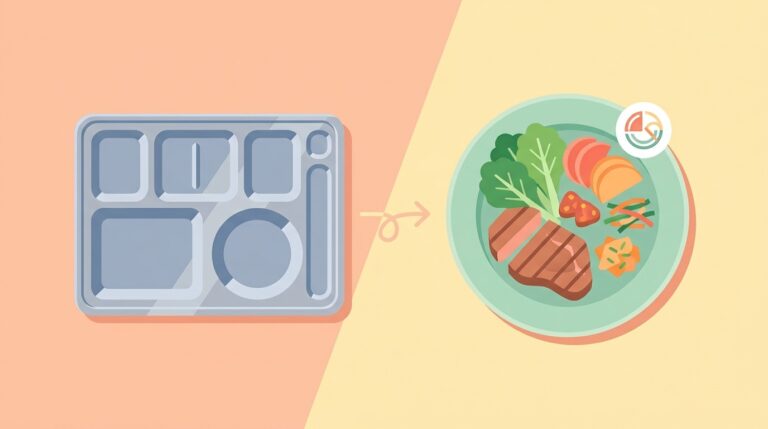
Behind the Trays: Understanding South Korea’s Military Meal Controversies and the Shift to Private Catering
안녕하세요! Welcome back to another deep-dive edition of Daily Hangul (매일한글). I’m your head editor and resident cultural navigator. Over the years of tutoring advanced students, I’ve noticed that while many can dissect K-dramas like D.P. or Descendants of the Sun (태양의 후예) frame-by-frame, they often miss the real-world socio-political undercurrents that drive these stories.
Today, we are tackling a topic that resides at the intersection of national defense, human rights, and Korea’s absolute obsession with food (식문화): the substandard military meals controversy (군 급식 부실 논란) and the revolutionary transition to private catering services (민간 위탁 급식 도입) in the armed forces. For any C2-level Korean learner, mastering this discourse is your ticket to understanding the modern Korean male psyche, generational shifts, and the evolving corporate-military landscape.
Phase 1: The Plate of Discontent — Why Food Rules the Barracks
Imagine this: You’re watching a gritty military drama, expecting the tension to stem entirely from intense training or hierarchical bullying (가혹행위). Suddenly, the camera pans to a plastic partitioned tray containing a single scoop of white rice, a soggy piece of radish, and a single slice of processed ham. This isn’t just cinematic exaggeration; in 2021, this exact image went viral on social media, uploaded anonymously by conscripted soldiers.
In South Korea, where mandatory military service (병역 의무) is a rite of passage for almost all young men, the quality of care provided to soldiers is a highly sensitive topic. For decades, the tacit national agreement was: “We sacrifice two years of our youth, and the state provides basic dignity.” When the “substandard meal scandal” (부실 급식 파동) broke out, it wasn’t viewed merely as bad catering; it was treated as a fundamental breach of that social contract.
By learning how to speak articulately about this topic, you transition from someone who just speaks Korean to someone who truly comprehends the collective trauma, pride, and corporate-led modernization of modern South Korea.
Phase 2: Core Expressions Deep-Dive
To discuss this topic like a seasoned political analyst or a regular at a Seoul university debate club, you need to master these three pivotal concepts.
1. 부실 급식 (Busil Geupsik)
- Pronunciation: [bu-sil geup-sik] / Sound-alike: “boo-shil geup-sheek” (rhyming with “sleek”)
- Meaning: Substandard, deficient, or poorly provided institutional meals.
- K-Culture Moment: This term dominated prime-time news headlines during the pandemic. Angry parents mobilized online, demanding to know why their sons were being fed worse than prison inmates.
- Editor’s Insight: The word “부실” (deficient/flimsy) is incredibly versatile. You’ll hear about “부실 공사” (shoddy construction) or “부실 기업” (insolvent company). When attached to “급식” (institutional catering), it conveys a profound sense of institutional neglect.
- Situation Spectrum:
- Friends & Casual settings: ✅
- Workplace/Business: ✅
- Formal Writing/Debates: ✅
- 🤔 Think About It: “부실” implies a failure of responsibility. Why does Korean society react so much more explosively to meals being “부실” compared to other logistical shortcomings? How does the concept of “정” (jeong/affection through food) play into this collective outrage?
2. 짬밥 (Jjambap)
- Pronunciation: [jjam-bap] / Sound-alike: “jjam-bahp” (ensure you tense the double “jj” sound)
- Meaning: Literally, military rations (slang); figuratively, one’s level of experience, seniority, or tenure in an organization.
- K-Culture Moment: You’ll often hear veterans or senior corporate employees say, “내가 여기서 먹은 짬밥이 몇 년인데!” (Do you know how much jjambap I’ve eaten here? / Do you know how much seniority I have here?)
- Editor’s Insight: Historically derived from “잔반” (jan-ban, leftovers/food waste), this slang morphed into the word for military food. Over time, because military seniority is measured by the number of days you’ve eaten barracks food, it became the ultimate synonym for seasoned experience. Use this with peers to instantly sound like a local.
- Situation Spectrum:
- Friends & Casual settings: ✅
- Workplace/Business (with close peers): ⚠️
- Boardroom/Formal settings: 🚫 (too casual/slangy)
- 🤔 Think About It: How does the linguistic evolution of “leftover food” turning into a badge of structural honor reflect Korea’s hierarchical and collective organizational culture?
3. 민간 위탁 (Mingan Witak)
- Pronunciation: [min-gan wi-tak] / Sound-alike: “meen-gahn wee-tahk”
- Meaning: Private outsourcing; outsourcing public or military services to private corporations.
- K-Culture Moment: In current affairs panels, experts debate the merits of “급식 민간 위탁” (outsourcing military catering), highlighting how food conglomerates like CJ Freshway, Ourhome, and Samsung Welstory are transforming military barracks into gourmet-level cafeterias.
- Editor’s Insight: This is a high-level administrative term. Utilizing “민간 위탁” in your speech signals that you understand public policy and corporate-government cooperation structures.
- Situation Spectrum:
- Friends & Casual settings: ⚠️ (sounds a bit too academic unless discussing current events)
- Workplace/Business: ✅
- Formal Writing/Debates: ✅
- 🤔 Think About It: While outsourcing improves quality, some conservative commentators worry about emergency logistics during active wartime. How does a nation balance capitalist efficiency with absolute military readiness?
Phase 3: Textbook Korean vs. Real Korean Showcase
Let’s look at how to describe these scenarios without sounding like a static dictionary.
Scenario 1: Describing awful food quality at a university or company cafeteria
- 📖 Textbook Korean: “이 구내식당의 음식은 품질이 다소 미흡합니다.” (The food in this cafeteria is somewhat insufficient in quality.)
- 🗣️ Real Korean: “여기 식단 진짜 부실하지 않아요? 돈 내고 먹기 아까운 수준이에요.” (Isn’t the menu here seriously substandard? It’s practically a waste of money.)
- 💡 Why it’s different: “품질이 미흡하다” sounds like an official corporate audit report. Real humans express frustration using “부실하다” and connect it directly to value for money (“돈 아깝다”).
Scenario 2: Highlighting someone’s extensive professional experience
- 📖 Textbook Korean: “그분은 이 분야에서 오랫동안 근무하여 경력이 매우 많으십니다.” (That person has worked in this field for a long time and has a lot of experience.)
- 🗣️ Real Korean: “김 부장님은 이 바닥 짬밥이 워낙 두터우셔서 대처 능력이 장난 아니세요.” (Manager Kim’s industry “jjambap” is so thick, his crisis management skills are absolutely no joke.)
- 💡 Why it’s different: “이 바닥” (this ground/this industry) coupled with “짬밥이 두텁다” (having thick/heavy experience) shows an incredibly sophisticated, natural command of corporate-social vernacular.
Phase 4: Cultural Deep-Dive & Non-Verbal Nuances
4-1. Nunchi (눈치) and Table Etiquette in the Military
In Korean military culture, the communal dining space is a microscopic model of society. Historically, the speed at which you ate was dictated by your rank. Conscripts (이병/일병) had to maintain rigid posture, gaze slightly down at their metallic tray (식판), and eat at lightning speed so as not to keep their seniors waiting.
Even in civilian life, when eating with those who have more “jjambap” than you, pay attention to their pace. Initiating or finishing a meal significantly ahead of your superiors is often viewed as a lack of “nunchi.”
4-2. The “MZ Generation” Soldier and Corporate Catering
Historically, the Korean army operated on the philosophy of “군대니까 참아야지” (It’s the military, so you just have to endure it). However, the modern generation of conscripts—often called the “MZ Generation”—has grown up in an affluent, digitized South Korea. Armed with smartphones (which they are now allowed to use after daily duties), they began photographing and sharing institutional flaws globally.
This digital pressure forced the Ministry of National Defense to implement “민간 위탁” (private catering). Today, in outsourced barracks, soldiers enjoy self-serve salad bars, customized noodle stations, and high-quality protein menus. It is a fascinating hybrid of Korea’s compulsory conscription system and its ultra-competitive corporate food services.
Phase 5: The Interactive Roleplay Scenario
Setting: A bustling Korean BBQ restaurant in Mapo, Seoul. You (an advanced C2 speaker) are dining with Ji-hoon (지훈), a 23-year-old university student recently discharged from his service, and Min-woo (민우), a 36-year-old corporate manager who served his military duty over a decade ago.
Cast:
* You (C2 Korean Learner): An observant, culturally fluent expat.
* Ji-hoon (지훈): Discharged 6 months ago; representing the modern, smartphone-using soldier generation.
* Min-woo (민우): Served in the late 2000s; nostalgic but shocked by modern military updates.
- 민우: (고기를 구우며) 요즘 군대 얘기 들어보면 진짜 격세지감이야. 우리 때는 식판에 똥국에다가 퍽퍽한 고기 한 점 나오면 감지덕지했는데.
(Min-woo: (Grilling meat) Hearing about the military these days makes me feel a generational gap. In my days, if we got “ddong-guk” [military cabbage paste soup] and a single piece of dry meat on our tray, we were deeply grateful.) - 지훈: (한숨을 쉬며) 에이, 형님. 저희 때도 군 급식 부실 논란 터지기 전까지는 장난 아니었어요. SNS에 사진 올라온 거 못 보셨어요?
(Ji-hoon: (Sighing) Oh, come on, Hyung. Until the substandard meal controversy broke out in our time, it was terrible too. Didn’t you see the photos uploaded on SNS?) - You: 저도 그 뉴스 봤어요! 그 조그만 플라스틱 식판에 김치랑 햄 한 조각만 덜렁 있던 사진 맞죠? 진짜 충격적이었어요.
(You: I saw that news too! Was it that photo with just kimchi and a single piece of ham sitting miserably on a small plastic tray? It was truly shocking.) - 민우: 맞아, 그거 국가적인 망신이었지. 신성한 국방의 의무를 다하는 애들한테 밥을 그따위로 주다니.
(Min-woo: Right, that was a national embarrassment. Feeding kids who are fulfilling their sacred duty of national defense in such a crappy way.) - 지훈: 그래도 그 논란 이후로 부대 분위기가 엄청 바뀌긴 했어요. 저희 대대는 아예 대기업 식품업체에서 민간 위탁으로 급식을 바꿨거든요.
(Ji-hoon: Still, after that controversy, the atmosphere in the units changed drastically. Our battalion completely switched its catering to private outsourcing managed by a major food conglomerate.) - You: 민간 위탁이요? 군대 급식을 대기업이 맡아서 하면 확실히 퀄리티가 달라지나요?
(You: Private outsourcing? Does the quality definitely change when a major conglomerate takes over military catering?) - 지훈: 장난 아닙니다! 매주 금요일에는 특식으로 뼈없는 갈비찜이 나오고, 샐러드바도 무제한이었어요. 진짜 취사병들이 고생해서 만들던 거랑은 차원이 달라요.
(Ji-hoon: It’s no joke! Every Friday, we got boneless braised short ribs as a special meal, and the salad bar was unlimited. It’s on a completely different level compared to when the military kitchen police had to struggle through making it.) - 민우: 와… 요즘 군대는 진짜 ‘군캉스’ 소리 들을 만하네. 우리 때는 상상도 못 할 일이다.
(Min-woo: Wow… no wonder people call the modern military “Gunkangseu” [military vacation] these days. Unimaginable in our times.) - You: [Your Choice Point – Select your response below]
🔀 Decision Point: How do you respond to maintain a deep, culturally conscious conversation?
- Option A: “군캉스라는 말은 고생하는 군인들에게 좀 너무한 표현 아닌가요? 아무리 밥이 잘 나와도 자유를 제한당하잖아요.”
(Isn’t “Gunkangseu” a bit too harsh of a term for soldiers who are suffering? No matter how good the food is, their freedom is still restricted.)- Analysis (Best Choice): Excellent C2-level empathy. Calling the military “군캉스” (military + vacance) is a highly controversial, politically charged slang term. By gently pointing out that confinement is still a sacrifice, you show profound social sensitivity and empathy toward Ji-hoon.
- Option B: “맞아요. 밥도 대기업이 해주고 월급도 많이 오르니까 요즘 군대는 정말 편해진 것 같아요.”
(Agreed. Since conglomerates make the food and salaries have risen, the modern military indeed seems to have become very comfortable.)- Analysis (Risky Choice): While factually true that pay has risen, saying the military has become “easy” (편해졌다) might accidentally offend Ji-hoon, who still sacrificed his youth under conscription. Use caution when dismissing active-duty hardships.
- Option C: “군대 급식 단가가 원래 얼마였나요? 국가 예산이 낭비되는 건 아닐까요?”
(What was the original cost per meal for military rations? Isn’t state budget being wasted?)- Analysis (Formal/Dry Choice): Too academic for a casual K-BBQ setting. It halts the emotional and nostalgic flow of the conversation.
Phase 6: 10-Second Emotional Shadowing Drill
Let’s inject authentic emotional tone into your pronunciation. Pay attention to the pauses (/) and the emotional cues.
- [😤 Indignant and Frustrated — channeling the outrage over poor meals]
“나라를 지키러 간 애들한테 / 어떻게 이런 부실 급식을 / 줄 수가 있어요?”
(Na-ra-reul ji-ki-reo gan ae-deul-han-te / eo-tteo-ke i-reon bu-sil geup-si-geul / jul su-ga is-seo-yo?)- “How can they feed such deficient meals / to the young men / who went to protect the nation?”
- [😋 Proud and Slightly Bragging — showing off professional experience]
“제가 이 분야에서 / 먹은 짬밥이 몇 년인데, / 그 정도는 눈감고도 하죠!”
(Je-ga i bun-ya-e-seo / meo-geun jjam-ba-bi myeon nyeon-in-de, / geu jeong-do-neun nun-gam-go-do ha-jyo!)- “Do you know how many years / of ‘jjambap’ I’ve eaten in this field? / I can do that much with my eyes closed!”
Phase 7: K-Culture Mini-Dictionary
| Word (Korean/Romanization) | English Equivalent | Contextual & Cultural Usage |
|---|---|---|
| 식판 (Sikpan) | Metallic partitioned food tray | The ultimate symbol of institutional life (schools, prisons, military). |
| 취사병 (Chwisabyeong) | Kitchen police / Military cook | Conscripts assigned to cook. Often overworked, they became the focal point of sympathy during the food crisis. |
| PX (Pee-Ex) | Post Exchange / Military store | The military supermarket. Before private catering, soldiers bought “냉동식품” (frozen food) here to survive bad cafeteria meals. |
| 군캉스 (Gunkangseu) | “Military vacation” | A derogatory slang portmanteau of “군대” (military) and “바캉스” (vacance), used by critics to diminish the hardship of modern soldiers. |
Phase 8: Traveler’s Survival Kit
Even if you aren’t joining the South Korean military, institutional eating and public catering concepts will follow you on your travels, especially if you visit massive corporate offices, modern hospitals, or university campuses.
Survival Vocab TOP 3:
- “구내식당 어디 있어요?” (Where is the cafeteria?)
- Pro Tip: Great for budget travelers who want to experience high-quality, cheap buffet-style meals in government buildings or large corporate towers (like Seoul City Hall).
- “외부인 식사 가능한가요?” (Is dining open to external visitors/the public?)
- Pro Tip: Some corporate or university cafeterias require staff badges; always check with this polite phrase.
- “식권 어디서 사요?” (Where can I buy food vouchers?)
- Pro Tip: Most institutional cafeterias operate via self-service kiosks where you must purchase a paper ticket (“식권”).
📌 Editor’s Travel Note: When searching for authentic, affordable local eats in major cities like Seoul or Busan, use the Naver Map App and search for “한식 뷔페” (Korean Food Buffet) or “기사식당” (Taxi Driver Diners). These spots represent the civilian, highly-upgraded version of the classic military “sikpan” dining experience!
Phase 9: Going Deeper — “한 발 더 깊이”
At its core, the transformation of Korean military food is a window into the nation’s shifting values. Historically, South Korea was a collective-oriented society, forged in the hardships of the post-Korean War reconstruction. Pain and poor conditions were idealized as a “necessary test of character.”
But the rise of the digital-native generation has challenged this paradigm. Today’s Koreans prioritize individual rights, mental well-being, and basic human dignity as non-negotiable standards. The plate of food served in a cold military barracks is no longer seen as just fuel; it is viewed as a measure of how much a wealthy democracy truly respects its citizens.
💬 Your Turn: Does your home country have mandatory military service, or an institutional dining culture? How does the public react to the treatment and welfare of those in service? Let us know your thoughts in the comments below!
Phase 10: FAQ & Mitigating Misunderstandings
Q: Is the term “짬밥” (Jjambap) offensive?
A: No, but it is highly informal. It is not offensive, but using it with someone significantly older than you, or in a formal business pitch, can make you sound unpolished. Use it with peers or junior colleagues to show a relaxed, insider vibe.
Q: Are all South Korean military bases outsourced to private catering now?
A: No, it depends on the unit. While major training centers and rear battalions have widely adopted “민간 위탁” (private catering), remote border outposts (GOP/GP) still rely on active-duty “취사병” due to security and tactical logistics.
Q: Can women use military slang like “짬밥”?
A: Yes, absolutely! While military slang originated with men, it has integrated completely into corporate and colloquial Korean. Women in corporate offices use “짬밥” frequently to discuss their tenure or industry experience.
🚨 Common Mistakes Warning Panel:
- Mistake 1: Using “부실하다” to describe a person who is simply skinny.
- Correction: “부실하다” refers to physical weakness/shoddiness of structures or nourishment. For a slender person, use “날씬하다” or “마르다”.
- Mistake 2: Assuming “급식” only refers to school lunch.
- Correction: While widely used for school meals, “급식” refers to any mass institutional food distribution, including military, corporate, and hospital catering.
Phase 11: Your Action Missions
- 🥉 Bronze (The Mirror Challenge): Practice saying the Phase 6 Shadowing Drills in front of a mirror, matching the precise emotional markers.
- 🥈 Silver (The Social Challenge): Find a Korean news article about “군 급식 민간 위탁” (Military private catering) on Naver or YouTube, and write a one-sentence comment in advanced Korean expressing your opinion.
- 🥇 Gold (The Local Challenge): The next time you speak with a Korean male friend who has served, ask him: “지훈 씨는 군대 계실 때 짬밥 맛있었나요? 아니면 부실 급식 세대였나요?” Watch their eyes light up with surprise at your C2 phrasing!
Phase 12: Interactive Quiz Challenge
Test your grasp of today’s advanced cultural lesson!
Q1: Which of the following is the most natural way to politely highlight a colleague’s vast experience in a business setting?
Answer: “김 부장님은 이 분야의 경력이 매우 깊으십니다.” (Using “짬밥” is natural for casual talk, but in highly formal business reports or executive presentations, sticking to refined vocabulary like “경력이 깊으십니다” is safer and more elegant.)
Q2: Fill in the blank: “이번 프로젝트의 실패는 철저한 사전 조사 없이 진행된 (_______) 계획 때문입니다.”
Answer: 부실한 (busil-han). This translates to “The failure of this project is due to a substandard/deficient plan carried out without thorough prior research.”
Q3: True or False: “Gunkangseu” (군캉스) is a friendly term of endearment that soldiers love to hear.
Answer: False. It is a highly sensitive and derogatory slang term used by some to criticize modern soldiers, claiming they have it “too easy.” Avoid using it directly to a serving soldier unless you are prepared for a very intense political debate!







