

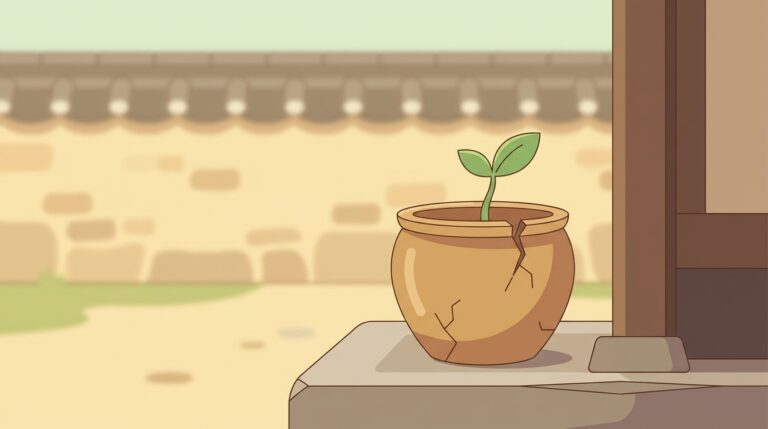
Finding Your Inner ‘Dandan함’: How to Talk About Trauma, Healing, and Resilience in Korean
안녕하세요! (Annyeonghaseyo!) I’m your Lead Editor at Daily Hangul. Over years of guiding advanced learners, I’ve realized that language acquisition reaches its peak not when you can order food flawlessly, but when you can share the heavy, vulnerable corners of your soul.
We have all been there. You are watching a poignant K-Drama like My Mister (나의 아저씨) or It’s Okay to Not Be Okay (사이코지만 괜찮아), witnessing a character hitting absolute rock bottom. You want to describe that exquisite, painful process of recovering, but textbook phrases like “정신을 차리다” (to regain consciousness/sanity) feel clinically cold.
Today, we are diving deep into the psychology of trauma recovery and emotional resilience (회복 탄력성). We will move past superficial cheerleading and look at how Koreans conceptualize healing—not as a sudden cure, but as an organic, communal process of becoming structurally ‘solid.’ Ready to enrich your interpersonal vocabulary? Let’s begin.
Phase 2: Three Crucial Expressions of Deep Resilience
1. 털어버리다 (Teoreobeorida)
- Pronunciation: [Teo-reo-beo-ri-da] / Sound-alike: Imagine saying “tur-up” with a very soft ‘r’, followed by “buh-ree-dah”.
- Meaning: Literal: To completely dust off. / Real-world Nuance: To actively cast away lingering trauma, negative thoughts, or past emotional baggage.
- K-Culture Moment: This is the iconic moment in a drama where the protagonist, after a painful breakup or betrayal, cleans their desk, cuts their hair, or takes a long walk, choosing to deliberately release the pain.
- Editor’s Insight: The auxiliary verb ‘-버리다’ implies completing an action thoroughly to get rid of a burden. It carries a sense of psychological agency—you are not just forgetting; you are actively sweeping the ashes away.
- Situation Spectrum:
- Casual (Friends): ✅
- Semi-formal (Colleagues): ✅
- Formal (Elders/Boss): ⚠️ (Use the polite form: 털어버리세요, but handle with care as advising elders to “dust it off” can sound overly casual.)
- 🤔 Think About It: Why does Korean use the spatial concept of “dusting off” (털다) for internal mental distress? How does this compare to the English concept of “letting go”?
2. 훌훌 털고 일어나다 (Hul-hul Teol-go Ireonada)
- Pronunciation: [Hul-hul teol-go i-reo-na-da] / Sound-alike: “Hool-hool” (mimicking the light, airy motion of fluttering wings) + “teol-go” (dusting off and) + “ee-ruh-nah-dah” (to stand up).
- Meaning: Literal: To dust oneself off lightly and stand up. / Real-world Nuance: To bounce back gracefully from a crushing defeat or psychological trauma.
- K-Culture Moment: Often heard in sports dramas or startup stories (like Itaewon Class) when a mentor encourages a young protagonist who has just lost everything.
- Editor’s Insight: The mimetic word “훌훌” adds an exquisite layer of elegance. It describes discarding worries without leaving any sticky residue behind. It is the ultimate verbal representation of resilience.
- Situation Spectrum:
- Casual (Friends): ✅
- Semi-formal (Colleagues): ✅
- Formal (Elders/Boss): ✅ (e.g., “훌훌 털고 일어나시길 바랍니다.” – I hope you shake this off and stand tall again.)
- 🤔 Think About It: In many Western cultures, rising after a fall focuses on individual muscle and grit (“grit your teeth”). In Korean, “훌훌” emphasizes a light, unburdened spirit. Which approach resonates more with your mental philosophy?
3. 마음이 단단해지다 (Ma-eum-i Dandanhaejida)
- Pronunciation: [Ma-eum-i dan-dan-hae-ji-da] / Sound-alike: “Mah-eum” (mind/heart) + “ee” + “dan-dan” (mimics a solid, firmly packed stone) + “hae-jee-dah” (to become).
- Meaning: Literal: For one’s heart to become solid/firm. / Real-world Nuance: To grow emotionally stronger and less fragile after experiencing hardship.
- K-Culture Moment: In K-Pop fandoms, when an idol group endures an unfair hiatus or cyberbullying and returns with a powerful, mature album, fans write: “그동안 마음이 더 단단해진 것 같아” (They seem to have grown much more resilient during that time).
- Editor’s Insight: “단단하다” is different from “딱딱하다” (hard/rigid like a cold stone). “단단하다” implies high density, structural integrity, and resilience—like steel tempered in fire. It represents a beautiful psychological transformation where trauma is converted into wisdom.
- Situation Spectrum:
- Casual (Friends): ✅
- Semi-formal (Colleagues): ✅
- Formal (Elders/Boss): ✅
- 🤔 Think About It: We often view vulnerability as soft. But in Korean, a healed mind is “단단하다” (firm). Does becoming firm mean losing empathy, or does it mean protecting your empathy? How do you perceive this balance?
Phase 3: Textbook Korean vs. Real-World Korean
When confronting deep sorrow or comforting a friend, textbook phrases can sound incredibly robotic or unsympathetic. Let’s look at the contrast.
Cheering up a friend who faced a massive setback
- 📖 Textbook Korean: “낙담하지 마세요. 극복할 수 있습니다.” (Do not be discouraged. You can overcome it.)
- 🗣️ Real-World Korean: “많이 힘들었지? 훌훌 털어버리고 다시 시작하자. 내가 있잖아.”
- 💡 Why the difference? The textbook version sounds like a slogan on an office wall. Real conversational Korean leverages intimacy (내가 있잖아 – “I’m right here with you”) and kinetic metaphors like “훌훌 털어버리다” to provide visceral comfort.
Describing how personal trauma changed your personality
- 📖 Textbook Korean: “저는 과거의 시련으로 인해 회복 탄력성이 향상되었습니다.” (My resilience has improved due to past trials.)
- 🗣️ Real-World Korean: “힘든 일을 겪으면서 마음이 많이 단단해졌어요.”
- 💡 Why the difference? While “회복 탄력성” (resilience) is a valid psychological term, using it in a casual dinner conversation sounds like reading a medical thesis. Real-world Koreans prefer organic, sensory-based transformations like “마음이 단단해졌다.”
Phase 4: K-Culture Deep Dive & Non-Verbal Manners
4-1. Nunchi (눈치) and Non-Verbal Comfort
In Korean culture, words are only half the canvas. When someone is processing trauma, excessive questioning is viewed as intrusive.
* The Silent Anchor: Instead of demanding an explanation, sit slightly adjacent to the person (not staring directly into their eyes, which can feel confrontational).
* The Gentle Pat (토닥토닥): A light, slow pat on the shoulder or upper back—mimicking the onomatopoeia “토닥토닥”—says more than a thousand words.
* Serving Comfort: Silently pouring warm barley tea or slides a small sweet snack toward them is a high-level display of “Jeong” (정 – affectionate bonding).
4-2. The Cultural Underpinnings: Han (한) and Jeong (정)
Korea’s history of surviving geopolitical crises has embedded a collective trauma known as Han (한)—a deep, unresolved sorrow. Yet, the antidote to Han has always been Jeong (정)—relational warmth. Resilience in Korea is rarely an individual project. You do not just “pull yourself up by your bootstraps”; you heal because your community refuses to let go of your hand.
Phase 5: Interactive Roleplay Scenario
Setting: A quiet, cozy Hanok tavern (traditional bar) in Insadong during a gentle summer rain. Warm yellow lights hang low over dark wood tables.
Characters:
* You: Coping with the sudden, painful closure of your dream creative project.
* Min-jun (민준): Your empathetic Korean friend who possesses a calm, reassuring demeanor.
1. 민준: (따뜻하게 차를 따라주며) 얼굴이 많이 수척해졌어요. 요즘 잠은 잘 자요?
   [Min-jun: (Pouring warm tea warmly) You look quite worn out. Have you been sleeping well lately?]

2. You: (한숨을 쉬며) 사실... 오랫동안 준비했던 프로젝트가 완전히 취소됐어요. 마음이 무너지네요.
   [You: (Sighing) Actually... the project I prepared for so long got completely canceled. My heart is collapsing.]

3. 민준: (잔을 내려놓고 진지한 눈빛으로) 아... 정말 고생 많았는데... 그 허탈함은 말로 다 못 하겠네요.
   [Min-jun: (Setting down the cup, with a serious gaze) Ah... you worked so hard... that emptiness must be beyond words.]

4. You: 내가 부족해서 그런가 싶고, 자꾸 자책하게 돼요.
   [You: I keep blaming myself, wondering if it's because I wasn't good enough.]

5. 민준: (고개를 저으며) 절대 그렇게 생각하지 마요. 그건 씨 잘못이 아니에요.
   [Min-jun: (Shaking his head) Never think that way. That was absolutely not your fault.]

6. You: 다시 시작할 엄두가 안 나요. 일어설 힘이 없는 느낌이에요.
   [You: I can't even imagine starting over. I feel like I have no strength left to stand.]

7. 민준: (어깨를 토닥이며) 지금은 억지로 힘내지 않아도 돼요. 실컷 아파하고 슬퍼해요.
   [Min-jun: (Patting your shoulder gently) You don't have to force yourself to be strong right now. Just let yourself hurt and grieve.]

8. You: 민준 씨는 이런 슬픔을 어떻게 버텨냈어요?
   [You: Min-jun, how did you survive this kind of sorrow?]

9. 민준: 저도 시간의 힘을 믿었어요. 그리고 마음이 단단해질 때까지 주변 사람들에게 기대기도 했고요.
   [Min-jun: I trusted the power of time. And I leaned on people around me until my mind became firm again.]

10. You: (눈물을 닦으며) 고마워요. 슬픔을 훌훌 털고 일어날 날이 오겠죠?
    [You: (Wiping tears) Thank you. The day to shake off this sorrow and rise will come, right?]

11. 민준: (미소를 지으며) 그럼요. 우리 같이 털어버려요. 오늘 밤은 푹 자고 내일 다시 봐요.
    [Min-jun: (Smiling) Of course. Let's dust it off together. Get some deep sleep tonight, and I'll see you tomorrow.]
🔀 Decision Point: How do you react to Min-jun’s final comfort?
- Choice A: “맞아요, 저는 강하니까 괜찮습니다!” (Yes, I am strong, so I am fine!)
- Choice B: “따뜻한 말 한마디가 정말 큰 위로가 되네요. 고마워요.”
- Choice C: “신경 써주지 마세요. 혼자 있고 싶어요.” (Don’t pay attention to me. I want to be alone.)
💡 Decision Analysis:
- Best Choice: Choice B. Expressing deep, soft gratitude for the empathy perfectly matches the high-level interpersonal tone of C1 Korean. It builds mutual “Jeong” and acknowledges their presence.
- Risk Choice: Choice A. While optimistic, it shuts down the vulnerability prematurely. It sounds like you are wearing a mask of strength, which blocks authentic connection.
- Bad Choice: Choice C. In Western contexts, this can be understood as setting boundaries. In Korean interpersonal relationships, rejecting comfort this bluntly can deeply hurt your friend and sound dismissive of their care.
Phase 6: 10-Second Emotional Shadowing Drill
Master the physical rhythm of Korean empathy. Focus on the pauses (indicated by /) and lean into the emotional prompts.
- [🥺 Empathic and Soft]
힘들었지? / 혼자 앓지 말고 / 나한테 기대.
[Him-deu-reot-ji? / Hon-ja al-ji mal-go / Na-han-te gi-dae.]
(It was tough, right? Don’t suffer alone; lean on me.) -
[😤 Determined and Resilient]
과거는 / 훌훌 털어버리고 / 마음을 단단히 먹자!
[Gwa-geo-neun / hul-hul teo-reo-beo-ri-go / mae-u-meul dan-dan-hi meok-ja!]
(Let’s shake off the past completely and steel our resolve!)
Phase 7: K-Culture Mini-Dictionary
| Word (Korean + Romanization) | Translation | Real-world Contextual Usage |
|---|---|---|
| 회복 탄력성 (Hoebok Tanryeokseong) | Resilience | Used in professional, psychological, and self-help book contexts to describe adaptability. |
| 토닥토닥 (Todak-todak) | Patting-patting | An onomatopoeia describing gently patting someone’s back. Often used as a verb: “토닥여 주다”. |
| 마음이 허하다 (Maeumi Heohada) | Emotional emptiness | The visceral feeling of a cold, empty void in your chest after experiencing a sudden loss or trauma. |
| 마음을 다잡다 (Maeumeul Dajapda) | To steady one’s mind | Gathering your scattered thoughts and emotions to regain focus and composure after a shock. |
Phase 8: Traveler’s Survival Kit (For Emotional Burnout)
Sometimes, traveling itself brings emotional exhaustion. Keep these phrases in your pocket.
- Survival Card 1: “조용히 생각할 시간이 필요해요.” (I need some quiet time to think.)
- Survival Card 2: “위로해 주셔서 정말 감사합니다.” (Thank you so much for comforting me.)
- Survival Card 3: “머리가 좀 복잡해서 혼자 걷고 올게요.” (My head is a bit messy, so I will go for a walk alone.)
📌 Editor’s Travel Note: If you are feeling emotionally overwhelmed while traveling in Seoul, visit the Jingwansa Temple (진관사) tucked away in Bukhansan Mountain, or find a serene traditional teahouse in Insadong using the Naver Map App Download Page to navigate safely without getting lost. Taking a slow, silent tea break is highly therapeutic.
Phase 9: Deep Reflection — One Step Deeper
In English, we say we “recover” or “heal” from trauma. In Korean, the linguistic shift focuses on physical integration: “마음이 단단해지다” (the heart becomes solid) or “뼈저리게 느끼다” (feeling something to the very marrow of one’s bones). Healing is not treated as a process of erasing a scar; rather, it is the process of integrating the scar into a stronger, more resilient foundation. This reflects a philosophical acceptance of life’s painful tides—you do not run away from the pain; you let it temper you.
💬 Your Turn: How does your native language describe the process of emotional healing? Do you ‘shake it off,’ ‘mend a broken heart,’ or something else entirely? Tell us in the comments! Let’s share our cultural perspectives.
Phase 10: FAQ & Avoiding Misconceptions (Schema-Optimized)
Q: Can I use “털어버리다” when talking to my boss about a project mistake?
A: Depends. You should only use it to describe your own emotional attitude (e.g., “실패를 털어버리고 다시 시작하겠습니다” – I will shake off the failure and start fresh). Never tell your boss to “털어버리세요” as it might sound like you are telling them to casually ignore a critical issue.
Q: What is the difference between “마음을 굳게 먹다” and “마음이 단단해지다”?
A: “마음을 굳게 먹다” means to make up your mind with heavy determination before taking on a challenge (active resolve). “마음이 단단해지다” is the post-trauma result of growing emotionally stronger through trials (passive growth).







