

안녕하세요! 매일한글(Daily Hangul) 에디터입니다.
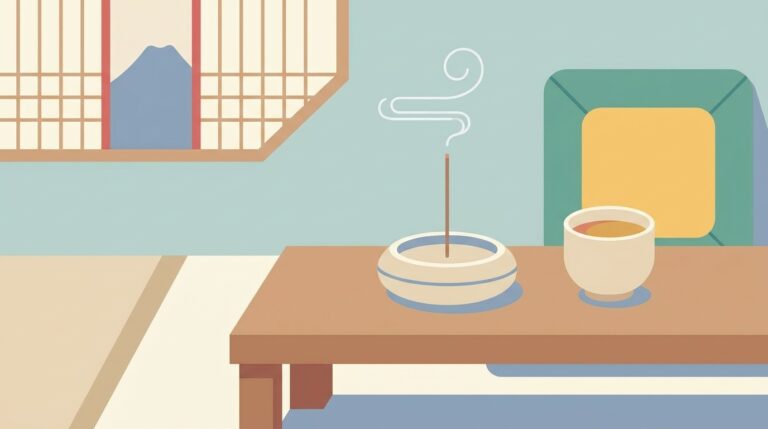
Have you ever watched a K-vlog or a K-Pop idol’s room tour? You might have noticed a recurring scene: the lights are dimmed, a lo-fi beat is playing, and the idol carefully lights a slender stick, watching the smoke curl into the air while sipping tea. They might say, “Ah, this is so healing.”
But wait—if you ask older Koreans about burning incense, they might immediately think of solemn ancestral memorial rites (제사, Jesa) or Buddhist temples. How did hyang (incense) go from a sacred, traditional ritual to the ultimate Gen Z symbol of “hip” and “healing” in places like Seongsu-dong and Bukchon Hanok Village?
If you’re at an advanced (C1) level in Korean, you already know the basics like “냄새가 좋아요 (It smells good).” But to truly navigate Korea’s booming mindfulness, tea ceremony, and incense culture, you need a more sophisticated vocabulary. You need the words that capture the vibe. Let’s dive into the sensory world of Korean tea and meditation!
Phase 2: Core Expressions Deep Dive
1. 향을 피우다 (To burn incense)
- Pronunciation: [hyang-eul piuda]
- Sound-alike guide: ‘hyang’ rhymes with ‘twang’, and ‘pi-u-da’ sounds like ‘pee-ooh-dah’.
- Meaning: Literally “to make incense bloom/smoke.” Real nuance: To light incense (for meditation, scent, or ambiance).
- K-Culture Moment: You walk into a trendy prop shop (소품샵) in Mangwon-dong. The air is thick with a woody scent. Your Korean friend breathes in deeply and says, “아, 여기 인센스 피웠나 봐 (Ah, looks like they burned incense here).”
- Editor’s Insight: Notice we use the verb ‘피우다’ (to make something bloom or smoke), not ‘태우다’ (to burn/destroy). ‘태우다’ implies burning something to ashes (like garbage or firewood). ‘피우다’ is used for things that produce a lingering effect, like flowers (꽃을 피우다), smoke, or incense. It carries a poetic, deliberate nuance.
- Situation Spectrum:
- 친구 사이 (Casual): ✅
- 직장 동료 (Semi-formal): ✅
- 직장 상사·어른 (Formal): ✅ (Appropriate in all situations)
- 🤔 Think About It: Why does Korean use the same verb for “a flower blooming” and “lighting incense” (피우다)? What does this reveal about how Koreans perceive the spreading of a scent?
2. 은은하다 (To be subtle, delicate, lingering)
- Pronunciation: [euneunhada]
- Sound-alike guide: ‘으 (eu)’ sounds like the disgusted sound you make when stepping in gum. Make your lips wide and flat. Eun-eun-ha-da.
- Meaning: Literally “subtle or faint.” Real nuance: A sophisticated, non-overpowering, gentle quality (used for scents, moonlight, flavors, or even smiles).
- K-Culture Moment: At a traditional tea house (다과점) in Insadong, the master pours you a cup of fermented tea. Instead of saying “It tastes nice,” you take a sip and compliment the tea: “향이 참 은은하네요 (The scent is so delicate/subtle).” The tea master will instantly respect you.
- Editor’s Insight: This is a quintessential C1 vocabulary word. Beginners say “냄새가 안 강해요 (The smell isn’t strong).” Advanced speakers say “은은해요.” It’s the ultimate compliment for tea, perfume, or incense in Korea, where overpowering scents are often considered impolite.
- Situation Spectrum:
- 친구 사이 (Casual): ✅
- 직장 동료 (Semi-formal): ✅
- 직장 상사·어른 (Formal): ✅ (Highly praised in formal settings)
- 🤔 Think About It: In many Western cultures, strong, lasting perfumes are favored. In Korea, “은은한 향” (subtle scent) is the gold standard. How does this connect to the Korean culture of Nunchi and not inconveniencing others in shared spaces?
3. 마음이 차분해지다 (To feel one’s mind calm down)
- Pronunciation: [ma-eumi chabunhaejida]
- Sound-alike guide: mah-eum-ee cha-boon-heh-jee-dah.
- Meaning: Literally “the mind becomes calm/settled.” Real nuance: Experiencing a state of tranquility, grounding, or mindfulness.
- K-Culture Moment: You’re on a Temple Stay (템플스테이) in the mountains. After a session of 108 bows, the monk strikes the singing bowl. You sit in the quiet pavilion, breathing in the mountain air and the sandalwood incense. This is the exact phrase you use to describe that feeling.
- Editor’s Insight: Beginners often use “편안해요 (I am comfortable/relaxed).” But “차분해지다” specifically means your chaotic, racing thoughts are settling down like dust falling to the floor. It’s the perfect word for meditation (명상).
- Situation Spectrum:
- 친구 사이 (Casual): ✅
- 직장 동료 (Semi-formal): ✅
- 직장 상사·어른 (Formal): ✅
- 🤔 Think About It: Does your native language have different words for physical relaxation versus mental grounding?
Phase 3: Textbook vs. Real Korean
Let’s upgrade your textbook phrases to sound like a sophisticated Seoul local.
[Describing the smell of a cafe or room]
* 📖 Textbook Korean: 이 방은 좋은 냄새가 나요. (This room has a good smell.)
* 🗣️ Real Korean: 여기 우디 향이 은은하게 나네요. (There’s a subtle woody scent here.)
* 💡 Why the difference?: The word “냄새 (naemsae)” is neutral-to-negative (like “odor” or “smell”). “향 (hyang)” is strictly positive (fragrance/scent). Using English loanwords like ‘우디 (woody)’, ‘플로럴 (floral)’, or ‘시트러스 (citrus)’ combined with ‘향’ is very common among Korean Millennials and Gen Z.
[Saying you want to relax]
* 📖 Textbook Korean: 조용히 쉬고 싶어요. (I want to rest quietly.)
* 🗣️ Real Korean: 인센스 피워놓고 향멍 때리고 싶어. (I just want to light some incense and zone out looking at the smoke.)
* 💡 Why the difference?: The slang suffix “~멍 (-mung)” comes from “멍하다 (to space out).” We have 불멍 (staring at a fire), 물멍 (staring at water), and now 향멍 (staring at incense smoke). It reflects modern Korea’s desperate need for mental unplugging.
Phase 4: Cultural Context — K-Culture Deep Dive
4-1. The Non-Verbal Nuance: The Art of Silence
When participating in a Korean tea ceremony (다도, Dado) or a meditation session, silence is heavily valued. Korean culture often finds comfort in “여백의 미” (the beauty of empty space). You don’t need to fill every moment with conversation. Just nodding, closing your eyes slightly, and taking a deep breath conveys more appreciation than a hundred words.
4-2. The “Temple Scent” (절간 냄새) Trend
If you follow K-Beauty or K-Lifestyle trends, you’ll notice a massive boom in products described as having a “절간 냄새” (Jeolgan naemsae – Buddhist temple scent). It refers to deep earthy, sandalwood, and patchouli notes. While older generations associate this smell strictly with monks and remote mountains, the 2030 generation in Korea considers it the ultimate “hip” scent. Brands like Nonfiction or Tamburins have popularized this earthy, grounding aroma, proving how traditional Korean elements are being fiercely rebranded by the youth.
Phase 5: Real-Life Roleplay Scenario
Setting: A rainy Saturday afternoon. You and your trendy Korean coworker, Ji-eun, have escaped the hustle of Gangnam and are visiting a modern Hanok tea and incense gallery in Seochon. Soft gayageum music is playing. Hundreds of artisanal incense sticks are displayed.
Characters:
* YOU: An expat living in Seoul, looking for something to relieve work stress.
* Ji-eun (29): Your coworker, knows all the hidden hot spots in Seoul.
Dialogue:
Ji-eun: 와, 들어오자마자 향이 너무 좋다. 마음이 확 차분해지지 않아요?
(Wa, deureoojamaja hyang-i neomu jota. Ma-eumi hwak chabunhaejiji anayo?)
(Wow, the scent is so good as soon as we walk in. Doesn’t your mind feel instantly calmed?)
YOU: 네, 진짜요. 바깥은 비 오는데 여긴 완전 다른 세상 같네요.
(Ne, jinjayo. Bakkat-eun bi oneunde yeogin wanjeon dareun sesang gatneyo.)
(Yes, seriously. It’s raining outside, but it feels like a whole different world in here.)
Ji-eun: OO씨는 평소에 집에서 인센스 자주 피워요?
(OO-ssineun pyeongso-e jibeseo inseonse jaju piwoyo?)
(Do you usually burn incense at home, OO?)
YOU: 가끔요. 근데 너무 강한 향은 머리가 아파서요.
(Gakkeumyo. Geunde neomu ganghan hyang-eun meoriga apaseoyo.)
(Sometimes. But scents that are too strong give me a headache.)
Ji-eun: 아, 그럼 이쪽 코너 볼래요? 여기 백단향(sandalwood)이 되게 유명해요.
(A, geureom ijjok koneo bollaeyo? Yeogi baekdanhyang-i doege yumyeonghaeyo.)
(Ah, then do you want to look at this corner? The sandalwood here is really famous.)
(🎭 Stage Direction: A staff member approaches carefully)
Staff: 찾으시는 향 있으신가요?
(Chajeusineun hyang isseusingayo?)
(Is there a specific scent you are looking for?)
🔀 Your Turn! How do you reply to the staff?
* A) “안 매운 냄새 주세요.” (Give me a non-spicy smell.)
* B) “은은하고 차분해지는 향으로 추천해 주시겠어요?” (Could you recommend a scent that is subtle and calming?)
* C) “제사 지낼 때 쓰는 거 주세요.” (Give me the one used for ancestral rites.)✅ Best Choice: B. This is the perfect C1-level response. It uses sophisticated vocabulary (은은하다, 차분해지다) and polite request forms (추천해 주시겠어요?).
⚠️ Choice A Analysis: We don’t use ‘맵다’ (spicy) for smells in Korean. You’d say ‘자극적이다’ (stimulating/harsh).
🚫 Choice C Analysis: Oh no! While traditional incense is used for Jesa, saying this in a trendy boutique will make things very awkward. You’re basically asking for funeral supplies!
Staff: 아, 그러시면 이 ‘새벽 안개’ 향을 시향해 보시겠어요? 아주 은은합니다.
(A, geureosimeyeon i ‘saebyeok angae’ hyang-eul sihyanghae bosigesseoyo? Aju euneunhamnida.)
(Ah, in that case, would you like to test this ‘Dawn Mist’ scent? It’s very subtle.)
YOU: 아, 좋네요! 이걸로 할게요.
(A, jonneyo! Igeollo halgeyo.)
(Ah, it’s nice! I’ll take this one.)
Phase 6: 10-Second Shadowing Drill
Master the intonation and pauses. Speak out loud!
😌 이 은은한 향을 / 맡으니까 / 마음이 참 / 차분해지네요.
(i euneunhan hyang-eul / mateunikka / ma-eumi cham / chabunhaejineyo.)
Breathing in this subtle scent, my mind feels so calm.
- Intonation Guide: Start softly. Put a slight emphasis and elongation on 참 (cham) to show genuine feeling. Let your voice drop slightly at the end (지네요) to reflect the “calming” meaning.
Phase 7: K-Culture Mini Dictionary
1. 향멍 (Hyang-mung)
* Romanization: hyang-meong
* English: Spacing out while watching incense smoke.
* Context: A modern slang combining ‘향’ (incense) and ‘멍하다’ (to space out). A popular stress-relief activity for Korean office workers.
2. 다도 (Dado)
* Romanization: dado
* English: Tea ceremony (The Way of Tea).
* Context: The traditional art of preparing and drinking tea. In Korea, it emphasizes naturalness, simplicity, and mental discipline rather than strict, rigid rules.
3. 시향하다 (Sihyang-hada)
* Romanization: sihyang-hada
* English: To test a scent/fragrance.
* Context: An essential verb when visiting perfume shops, incense boutiques, or department stores.
4. 제사 (Jesa)
* Romanization: jesa
* English: Ancestral memorial rite.
* Context: The traditional Confucian ceremony honoring deceased ancestors. Lighting traditional incense (선향) is a key part of this ritual to invite the ancestral spirits.
Phase 8: Traveler’s Survival Kit (Boutique & Cafe Edition)
Visiting a tea house or a scent boutique in Seoul? Keep these cards handy!
🆘 Survival Expression #1: Testing Scents
* 🇰🇷 “이거 시향해 봐도 될까요?” (igeo sihyanghae bwado doelkkayo?)
* 🗣️ English: Can I test this scent?
* 📍 Where to use: Nonfiction, Tamburins, local prop shops, incense galleries.
* 💡 Pro Tip: Don’t just grab a stick and put it to your nose. Ask this first. Often, they will light it for you or fan the scent toward you.🆘 Survival Expression #2: Describing Preference
* 🇰🇷 “절간 냄새나는 우디 향 있나요?” (jeolgan naemsaenaneun udi hyang innayo?)
* 🗣️ English: Do you have a woody scent that smells like a Buddhist temple?
* 📍 Where to use: Finding trendy, earthy perfumes or incense.🆘 Survival Expression #3: Ventilation Warning
* 🇰🇷 “피우고 나서 꼭 환기하세요.” (piugo naseo kkok hwangihaseyo.)
* 🗣️ English: Make sure to ventilate after burning it.
* 📍 Where to use: You’ll hear shop owners tell you this. It’s a standard safety instruction in Korea when buying incense!
📌 Editor’s Travel Note:
Many traditional tea houses in Bukchon or Insadong require you to take off your shoes. Wear clean socks! Also, strong personal perfumes are frowned upon in traditional tea houses, as they ruin the delicate aroma of the tea.
Phase 9: Critical Thinking Corner — “One Step Deeper”
Language & Power (Tradition vs. Modernity in Vocabulary)
🧠 Think Deeper:
Have you noticed that Koreans use two different words for incense? When referring to traditional, ancestral incense or mosquito coils, they use the native/Sino-Korean word “향 (hyang).” But when referring to trendy, expensive, lifestyle wellness products from boutique brands, they almost exclusively use the English loanword “인센스 스틱 (inseonse seutik).”This linguistic split is fascinating. The English loanword detaches the object from its traditional, slightly somber “funeral/Jesa” connotations and repackages it as a modern, Western-influenced wellness commodity. Language evolves not just to describe new things, but to rebrand old things for a new generation.
💬 Your Turn: Does your culture use English (or another foreign language) loanwords to make something sound more “modern” or “premium”? Share in the comments!
Phase 10: FAQ & Avoiding Mistakes
- Q: Can I use “냄새 (naemsae)” to compliment someone’s perfume or room?
- A: NO! Please avoid this. While “좋은 냄새 (good smell)” is grammatically fine, “냄새” inherently leans toward bad odors (body odor, garbage). Always use “향 (hyang)” for perfumes, coffee, tea, and incense. Say “향이 참 좋아요.”
- Q: Is it a good idea to gift incense sticks to my Korean boyfriend’s parents?
- A: MAYBE, BUT BE CAREFUL. Gen Z parents might love modern “incense.” But for older, traditional parents, incense is strictly tied to Jesa (rituals for the dead). Gifting it might cause extreme cultural confusion. Stick to premium tea or fruit baskets for elders!
- Q: Do I have to drink tea with two hands?
- A: YES. In a formal Dado (tea ceremony) setting, or when an elder pours for you, always receive and hold the cup with both hands.
❌ Common Mistake: Saying “향을 태워요 (I burn incense).”
✅ Do This Instead: Say “향을 피워요 (I bloom/light incense).” Remember the poetic nuance!
Phase 11: Summary & Action Items
- One-Liner Summary: To navigate Korea’s hip mindfulness culture, replace the word 냄새 with 은은한 향, and remember to 피우다 (bloom) your incense, not burn it!
-
Action Missions:
- 🥉 Bronze (Solo): Repeat the shadowing sentence out loud 3 times while closing your eyes. Imagine you are in a Hanok.
- 🥈 Silver (Online): Go to YouTube, search “향멍” or “인센스 추천” (Incense recommendations), and read the Korean comments. Spot the words 우리는 배웠던 (은은하다, 차분해지다)!
- 🥇 Gold (Real Life): Next time you visit a Korean cafe, tea house, or boutique, compliment them by saying: “여기 향이 참 은은하고 좋네요!”
- K-Culture Mission: Watch an episode of a Korean reality show like I Live Alone (나 혼자 산다). Look out for the scene where a celebrity wakes up, stretches, and immediately lights an incense stick. It’s a staple scene!
Phase 12: Interactive Challenge — Quiz Time!
1. [Situational Judgment] You are at a trendy boutique in Seongsu-dong. You want to smell a sandalwood candle before buying it. What do you say?
* A) 이거 냄새 맡아도 돼요? (igeo naemsae matado dwaeyo?)
* B) 이거 시향해 봐도 될까요? (igeo sihyanghae bwado doelkkayo?)
* C) 이거 코에 넣어봐도 돼요? (igeo koe neo-eobwado dwaeyo?)
2. [Fill in the Blank] “비 오는 날에는 집에서 ( ) 때리는 게 최고예요.” (On rainy days, zoning out looking at incense smoke at home is the best.)
* A) 불멍 (bul-meong)
* B) 물멍 (mul-meong)
* C) 향멍 (hyang-meong)
3. [True or False – K-Culture Edition] “It is perfectly safe and culturally appreciated to gift traditional incense (선향) to Korean grandparents as a housewarming gift.”
* True / False
Click to see answers!
1. B (While A is understandable, it sounds a bit childish. B is the sophisticated C1 expression. C means ‘Can I put this in my nose?’, which will get you kicked out!)
2. C (향멍 is the specific term for zoning out to incense.)
3. False (Traditional incense is associated with funerals and Jesa (ancestral rites). It is considered a taboo gift for elders unless requested!)
Frequently Asked Questions (FAQ)
Q: What does "향을 피우다 (To burn incense)" mean in Korean and how do you pronounce it?
A: In Korean, "향을 피우다 (To burn incense)" is pronounced [hyang-eul piuda] and means: a key conversational Korean expression covered in this lesson.
Q: What does "은은하다 (To be subtle, delicate, lingering)" mean in Korean and how do you pronounce it?
A: In Korean, "은은하다 (To be subtle, delicate, lingering)" is pronounced [euneunhada] and means: a key conversational Korean expression covered in this lesson.
Q: What does "마음이 차분해지다 (To feel one's mind calm down)" mean in Korean and how do you pronounce it?
A: In Korean, "마음이 차분해지다 (To feel one's mind calm down)" is pronounced [ma-eumi chabunhaejida] and means: a key conversational Korean expression covered in this lesson.







