

Phase 1: Empathy (Immersive Opening)
Hello! I am the Lead Editor of Daily Hangul.
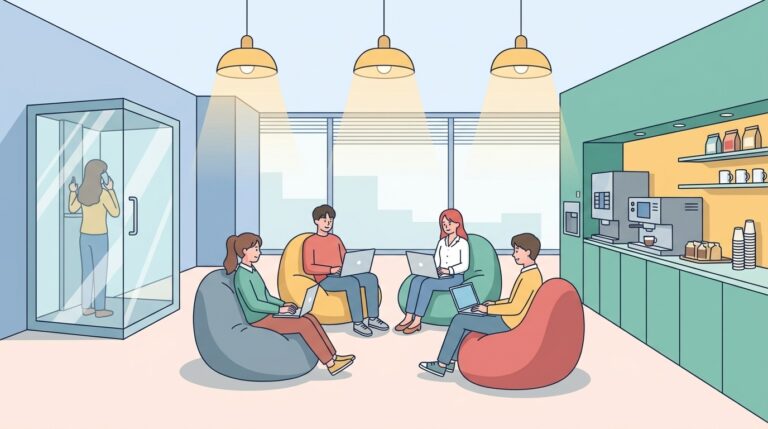
Imagine you are watching a modern K-Drama like Start-Up or Search: WWW. The protagonists confidently stride into a sleek, sunlit office in Pangyo (Korea’s Silicon Valley). There are no stuffy cubicles, no rigid rows of desks—just standing desks, colorful beanbag chairs, and futuristic glass meeting pods. It looks like the ultimate egalitarian paradise, completely free from the traditional Korean corporate hierarchy.
But wait… is it really?
If you have ever stepped into a Korean smart office (스마트 오피스), you might have felt a sudden wave of panic. With the jayul jwaseokje (자율 좌석제 – hot-desking/unassigned seating) system, you can sit anywhere you want! So, why is nobody sitting in the comfortable corner seats? Why is the junior staff meticulously checking an app before claiming a desk?
In this unit, we are going to explore the advanced vocabulary and the hidden cultural nuances—the unspoken Nunchi (눈치)—of configuring and navigating a Korean smart office space. Knowing these phrases won’t just help you find a desk; it will earn you the ultimate insider respect from your Korean colleagues.
Everything here is based on the real, sweaty-palm experiences of advanced learners who survived the K-Corporate jungle!
Phase 2: In-Depth Analysis of Core Expressions
1. 오늘 자리 어디로 잡으셨어요?
- Pronunciation: oneul jari eodiro jabeuseoyeyo? [Sounds like: o-neul ja-ri eo-di-ro ja-beu-syeos-eo-yo?]
- Meaning: (Literal) Where did you catch your seat today? / (Real nuance) Which desk did you book/claim today?
- K-Culture Moment: In a hot-desking environment, this is the new “Good morning.” You ask this while holding your iced Americano, trying to figure out if your favorite coworker is sitting nearby, or making sure you aren’t accidentally sitting right next to the team director.
- Editor’s Insight: The verb 잡다 (to catch/grab) is constantly used in Korean business settings for securing spaces or times. It sounds much more natural and proactive than the formal 예약하다 (to reserve).
- Situation Spectrum:
- Casual (Coworkers): ✅ (Without the honorific ‘시’: 오늘 자리 어디 잡았어요?)
- Semi-formal (Colleagues): ✅
- Formal (Boss/Elders): ⚠️ (Use cautiously. Bosses usually have their ‘unspoken’ fixed spots.)
- 🤔 Think About It: Why does Korean use the active verb 잡다 (grab/catch) for a seat, rather than simply asking where someone is sitting? Does this reflect the competitive nature of securing a good spot in densely populated Seoul?
2. 회의실 좀 잡아줄래요?
- Pronunciation: hoeuisil jom jabajullaeyo? [Sounds like: hwe-ee-shil jom ja-ba-jul-lae-yo?]
- Meaning: (Literal) Can you catch a meeting room for me? / (Real nuance) Could you book a meeting room?
- K-Culture Moment: When a sudden brainstorming session is needed, or your boss gets that serious look on their face and says this. In K-Dramas, this is usually the line right before a dramatic, high-tension project discussion in a soundproof glass room.
- Editor’s Insight: Notice the use of 좀 (a little/please) and ~아/어 주다 (to do something for someone). Even in modern smart offices, Koreans soften their requests. It is never just “Book a room.” It is “Would you grant me the favor of grabbing a room?”
- Situation Spectrum:
- Casual: ✅ (회의실 좀 잡아줘)
- Semi-formal: ✅
- Formal: 🚫 (You wouldn’t ask your boss to book a room for you!)
- 🤔 Think About It: Even in a flat-hierarchy smart office, requests are heavily padded with softening words like 좀. How does your native language handle polite requests in a fast-paced work environment?
3. 집중 근무석에서 마저 할게요.
- Pronunciation: jipjung geunmuseogeseo majeo halgeyo. [Sounds like: jip-joong geun-moo-seog-e-seo ma-jeo hal-ge-yo.]
- Meaning: (Literal) I will do the rest at the focus work seat. / (Real nuance) I’m going to move to the focus zone to finish this up.
- K-Culture Moment: Open offices are great for collaboration, but terrible for deadlines. When a Korean colleague says this, it is a polite signal: “Do not disturb me, I am going into monk mode to finish this report before 6 PM.”
- Editor’s Insight: 마저 하다 means “to finish up the remaining part.” It is an incredibly native-sounding phrase for C1 learners. It shows you are managing your workflow autonomously—a key trait valued in smart work cultures.
- Situation Spectrum:
- Casual: ✅
- Semi-formal: ✅
- Formal: ✅ (Perfectly professional to tell your manager you need focus time.)
- 🤔 Think About It: Smart offices introduced open collaboration, but also necessitated isolated “focus zones.” Is this a paradox of modern work culture?
Phase 3: Textbook vs. Real Korean
[Booking a Space]
* 📖 Textbook Korean: 회의실을 예약했습니다. (I reserved the meeting room.)
* 🗣️ Real Korean: 회의실 잡아뒀어요. (I grabbed/secured the room.)
* 💡 Why is it different?: Efficiency! In a fast-paced startup or tech company, 예약하다 sounds too rigid, like you are calling a hotel. 잡아두다 implies quick action via a company app.
[Taking a Break]
* 📖 Textbook Korean: 휴게실에서 쉬고 있습니다. (I am resting in the lounge.)
* 🗣️ Real Korean: 탕비실에 잠깐 가 있어요. (I’m briefly in the pantry.)
* 💡 Why is it different?: Historically, 탕비실 (pantry) was a tiny room to wash cups. Now, smart offices have luxury cafes, but Koreans nostalgically still call it 탕비실. It’s the ultimate spot for office gossip!
[Moving to a Quiet Spot]
* 📖 Textbook Korean: 조용한 곳으로 갑시다. (Let’s go to a quiet place.)
* 🗣️ Real Korean: 폰부스로 들어갈까요? (Shall we go into the phone booth?)
* 💡 Why is it different?: The influx of English tech-industry terms. “Phone booth” or “pod” has been directly adopted into the Korean smart work vocabulary.
Bottom Note: As C1 learners, replacing formal Sino-Korean words (예약) with native action verbs (잡다) will instantly make you sound like a local professional.
Phase 4: Cultural Context — K-Culture Deep Dive
4-1. Non-Verbal Elements: The Art of Smart Office Nunchi
Just because there are no assigned seats doesn’t mean there are no rules. In a Korean smart office, Nunchi (눈치 – the subtle art of reading the room) is more crucial than ever.
If you are the first to arrive, do you take the window seat with the best view? Technically, yes. Culturally? If you know the Team Leader prefers that spot to oversee the floor, taking it might create an awkward tension. Also, when suggesting moving to a “Focus Zone,” never make eye contact that suggests “because you all are too loud.” Just pick up your laptop and politely smile.
4-2. The K-Drama Connection: The Illusion of the Open Plan
If you watch dramas like Misaeng (Incomplete Life), you see the old-school Korean corporate world: rigid cubicles, gray walls, and a boss who literally watches over your monitor. Contrast that with Start-Up, where characters brainstorm on colorful sofas.
However, what the dramas rarely show is the linguistic gap. Even if characters are sitting on beanbags in a Google-esque office, they are still strictly using honorifics (존댓말) and observing hierarchy. The physical space has flattened, but the Korean language maintains the vertical respect system. You can wear a hoodie to work, but you still bow to the director.
Phase 5: Real-Life Roleplay Scenario
Setting: 9:00 AM, Monday morning. The sleek, plant-filled smart office of a tech company in Pangyo. The open floor is buzzing, and all the prime window seats are already occupied. You are holding your laptop and a cup of coffee, looking for a spot.
Characters:
– YOU: A foreign manager who has been working at this company for 6 months. You have a crucial project due today.
– Jimin (지민): A friendly 28-year-old Korean colleague from your marketing team.
Dialogue:
Jimin: OO 매니저님, 좋은 아침이에요! 오늘 출근 좀 늦으셨네요?
(OO maenijeonim, joeun achimieyo! oneul chulgeun jom neujeusyeonneyo?)
[Good morning, Manager OO! You came in a bit late today?]
YOU: 네, 비가 와서 차가 좀 막혔어요. 지민 씨는 일찍 오셨나 봐요.
(Ne, biga waseo chaga jom makhyeosseoyo. Jimin ssineun iljjik osyeonna bwayo.)
[Yes, the traffic was bad because of the rain. It seems you arrived early, Jimin.]
Jimin: 저는 8시 반에 와서 창가 자리 잡았죠! 매니저님, 오늘 자리 어디로 잡으셨어요?
(Jeoneun yeodeolsi bane waseo changga jari jabajjo! Maenijeonim, oneul jari eodiro jabeuseoyeyo?)
[I got here at 8:30 and grabbed a window seat! Manager, where did you book your seat today?]
YOU: 아직요. 앱 보니까 중앙 테이블밖에 안 남았네요.
(Ajigyo. Aep bonikka jungang teibeulbakke an namanneyo.)
[Not yet. Looking at the app, only the center tables are left.]
Jimin: 아, 거기 엄청 시끄러운데. 오늘 기획안 마감 아니세요?
(A, geogi eomcheong sikkeureounde. Oneul gihoegan magam aniseyo?)
[Ah, it’s super noisy there. Isn’t your proposal due today?]
YOU: 맞아요. 그래서 오후에는 자리를 좀 옮겨야 할 것 같아요.
(Majayo. Geuraeseo ohueneun jarireul jom olmgyeoya hal geot gatayo.)
[Right. So I think I’ll need to move my seat in the afternoon.]
Jimin: 그럼 일찍 점심 먹고 빈자리 날 때 바로 옮기시죠. 아, 기획안 관련해서 잠깐 얘기 좀 할 수 있을까요?
(Geureom iljjik jeomsim meokgo binjari nal ttae baro olmgisijo. A, gihoegan gwallyeonhaeseo jamkkan yaegi jom hal su isseulkkayo?)
[Then let’s have an early lunch and you can move as soon as a seat opens up. Oh, could we talk briefly about the proposal?]
🔀 Your Turn! How should you reply to suggest a space?
– A) “시끄러우니까 폰부스로 들어갈까요?” (It’s noisy, so shall we go into the phone booth?)
– B) “저기 라운지 가서 커피 마시면서 얘기해요.” (Let’s go over to the lounge and talk over coffee.)
– C) “회의실 예약해 주세요.” (Please reserve a meeting room.)
✅ Best Choice: B — Reason: For a brief, casual chat with a peer, the open lounge (라운지) is perfect in a smart office. It shows you are comfortable with the collaborative culture.
⚠️ Choice A Analysis: Phone booths are usually meant for 1-person calls or highly confidential matters, not general casual chats. It might feel too cramped.
⚠️ Choice C Analysis: Too formal, and commanding a peer to “reserve a room” using direct textbook language sounds a bit rude in Korean.
Jimin: 좋아요. 제가 커피 쏠게요, 라운지로 오세요!
(Joayo. Jaega keopi ssolgeyo, raunjiro oseyo!)
[Sounds good. I’ll treat you to coffee, come to the lounge!]
YOU: 오, 감사합니다! 이따 뵐게요.
(O, gamsahamnida! Itta boelgeyo.)
[Oh, thank you! See you in a bit.]
(🎭 Stage Direction: Jimin heads to the espresso machine while you finally tap your phone to claim a desk.)
Phase 6: 10-Second Shadowing Drill
Let’s practice the rhythm of a professional Korean office worker. Pay attention to the pauses (/) and the intonation!
😊 Polite & Professional:
오늘 / 자리는 / 어디로 잡으셨어요?
(o-neul / ja-ri-neun / eo-di-ro ja-beu-syeos-eo-yo?)
😤 Determined (Monk Mode):
저는 / 오후에 / 집중 근무석에서 / 마저 할게요.
(jeo-neun / o-hu-e / jip-jung geun-mu-seo-ge-seo / ma-jeo hal-ge-yo.)
Phase 7: K-Culture Mini Dictionary
1. 자율 좌석제
* Romanization: jayul jwaseokje
* English: Hot-desking / Unassigned seating
* Context: The hallmark of a Korean smart office. Employees use an app to book their desks daily to promote inter-departmental collaboration.
2. 탕비실
* Romanization: tangbisil
* English: Office pantry / Breakroom
* Context: Originally meaning “a room to boil water,” it now refers to the well-stocked office snack bar and cafe area. The ultimate hub for office socializing.
3. 거점 오피스
* Romanization: geojeom opiseu
* English: Satellite office
* Context: Post-pandemic, major Korean conglomerates built mini “smart offices” across Seoul and Gyeonggi-do so employees don’t have to commute 2 hours to headquarters.
4. 눈치
* Romanization: nunchi
* English: Reading the room / Social sense
* Context: Essential in an open office. It is the invisible radar that tells you when it’s okay to chat, or when the boss is stressed and you should type quietly.
Phase 8: Traveler Survival Kit (Digital Nomad Edition)
What if you are a digital nomad or traveler working from one of Seoul’s famous mega-cafes or a coworking space? You’ll need these to configure your own “smart office” on the go!
🆘 Survival Phrase #1
– 🇰🇷 “콘센트 있는 자리 있나요?” (konsenteu inneun jari innayo?)
– 🗣️ English Sound-alike: [kon-sen-teu een-neun ja-ri een-na-yo?]
– 📍 Where to use: Cafes, libraries.
– 💡 Pro Tip: Koreans call electrical outlets “콘센트” (concentric plug), a Konglish term! Don’t say “outlet,” they might point you to a shopping mall.🆘 Survival Phrase #2
– 🇰🇷 “와이파이 비밀번호가 뭐예요?” (waipai bimilbeonhoga mwoyeyo?)
– 🗣️ English Sound-alike: [wa-ee-pa-ee bee-meel-beon-ho-ga mwo-ye-yo?]
– 📍 Where to use: Everywhere in Korea.
– 💡 Pro Tip: Check the bottom of your cafe receipt first. Passwords are almost always printed there!📌 Editor’s Travel Note
Leaving your laptop on the table while you go to the restroom? In Korea, this is completely normal! Korea’s cafe culture operates on high trust. People might steal your umbrella on a rainy day, but your $2,000 MacBook is safe.
Phase 9: Critical Thinking Corner — “One Step Deeper”
🧠 Think Deeper: Language & Power in the Open Office
Over the last decade, Korean corporations have spent millions removing physical walls and adopting smart office layouts to foster a “horizontal” (egalitarian) culture. However, a fascinating friction remains: the Korean language is inherently “vertical.”
Can sitting on a beanbag chair truly flatten a hierarchy when you must still use complex honorifics (높임말) to address the person sitting next to you? Many Korean companies are now trying to force linguistic changes—like calling everyone by their English name (e.g., “Hi, David”) or using the suffix “~님” (~nim) instead of job titles. It highlights a profound struggle: attempting to change a deep-rooted cultural mindset by simply changing the furniture.
💬 Your Turn: Have you ever worked in an open-plan office? Do you think physical space changes how people communicate, or does culture always win? Share your thoughts below!
Phase 10: FAQ & Avoiding Misunderstandings
Q: If there are no assigned seats, can I just sit in the CEO’s favorite spot if it’s empty?
A: Technically Yes, Culturally NO! In Korean smart offices, senior executives often have an unspoken “fixed” spot, usually a corner with their back to a wall. Claiming it is a major Nunchi fail.
Q: Can I tell a senior colleague, “회의실 좀 잡아주세요” (Please grab a meeting room)?
A: NO. You should offer to do it yourself: “제가 회의실 잡을까요?” (Shall I book the meeting room?).
Q: Is it rude to wear AirPods at my desk in a Korean office?
A: It depends. In traditional companies, it’s frowned upon. In Pangyo tech startups or “focus zones,” it’s the universal sign for “Do not disturb” and is totally fine.
❌ Common Mistake #1: Calling the breakroom a “휴게실” (Hyugesil) when talking to young tech workers.
✅ Do this instead: Use “라운지” (Lounge) or “탕비실” (Pantry) depending on the vibe of the room.
Phase 11: Summary & Action Items
One-Liner Summary: Navigating a Korean smart office requires mastering active verbs like 잡다 (to grab/book) and reading the invisible Nunchi of unassigned seating!
Action Mission 3 Steps:
– 🥉 Bronze (Solo): Say “오늘 자리 어디로 잡으셨어요?” out loud 3 times while looking in the mirror, pretending to hold an iced coffee.
– 🥈 Silver (Online): Drop a comment on our Daily Hangul forum using the phrase: “저는 오늘 라운지에 자리 잡았어요!” (I grabbed a seat in the lounge today!).
– 🥇 Gold (Real World): If you are in a Korean coworking space or a study cafe, try asking the staff, “콘센트 있는 자리 있나요?”
K-Culture Mission:
Next time you watch a modern K-Drama (like Start-Up or Yumi’s Cells), pause when they show the office. Count how many people are sitting in “Focus Zones” versus the open area. Can you spot who the boss is just by their seat location?
Phase 12: Quiz — Interactive Challenge
1. Situational Judgment:
You need to finish a report without any interruptions. What is the most natural thing to tell your Korean colleague?
– A) “저 혼자 있을게요.” (I will be alone.)
– B) “집중 근무석에서 마저 할게요.” (I’ll finish this up in the focus zone.)
– C) “제 자리로 오지 마세요.” (Don’t come to my seat.)
2. Fill in the Blank:
When you want to casually suggest getting a coffee in the office breakroom, you say:
“우리 ( ) 가서 커피 한잔 할까요?”
– A) 탕비실
– B) 화장실
– C) 사장실
3. True or False – K-Culture Edition:
In a Korean smart office with “hot-desking” (자율 좌석제), it is perfectly fine and encouraged to sit right next to the Team Director to show your enthusiasm. (T/F)
Check Answers!
1. B (A sounds antisocial, and C is rude!)
2. A (B is the restroom, C is the CEO’s office—definitely don’t invite them there!)
3. False (The Team Director’s vicinity is often treated as an invisible quiet zone. It requires high Nunchi!)
Frequently Asked Questions (FAQ)
Q: What does "오늘 자리 어디로 잡으셨어요?" mean in Korean and how do you pronounce it?
A: In Korean, "오늘 자리 어디로 잡으셨어요?" is pronounced [oneul jari eodiro jabeuseoyeyo? [Sounds like: o-neul ja-ri eo-di-ro ja-beu-syeos-eo-yo?] and means: (Literal) Where did you catch your seat today? / (Real nuance) Which desk did you book/claim today?
Q: What does "회의실 좀 잡아줄래요?" mean in Korean and how do you pronounce it?
A: In Korean, "회의실 좀 잡아줄래요?" is pronounced [hoeuisil jom jabajullaeyo? [Sounds like: hwe-ee-shil jom ja-ba-jul-lae-yo?] and means: (Literal) Can you catch a meeting room for me? / (Real nuance) Could you book a meeting room?
Q: What does "집중 근무석에서 마저 할게요." mean in Korean and how do you pronounce it?
A: In Korean, "집중 근무석에서 마저 할게요." is pronounced [jipjung geunmuseogeseo majeo halgeyo. [Sounds like: jip-joong geun-moo-seog-e-seo ma-jeo hal-ge-yo.] and means: (Literal) I will do the rest at the focus work seat. / (Real nuance) I'm going to move to the focus zone to finish this up.







