

Phase 1: Empathy & K-Culture Cold Open
Hello! I am your Daily Hangul editor.
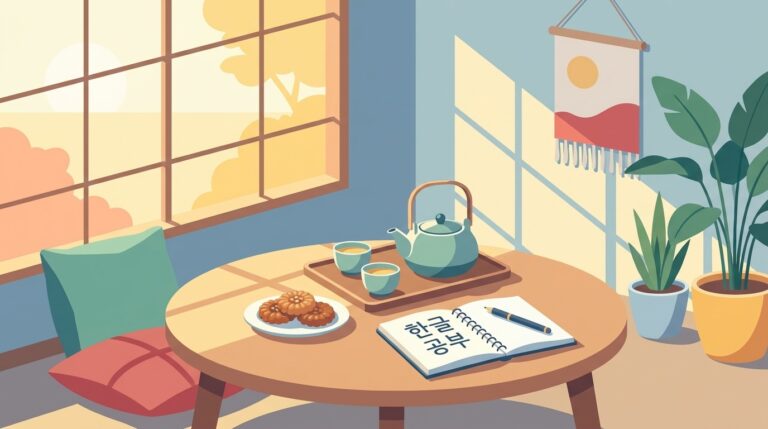
Picture this: You are watching your favorite K-Drama. The main character just had an incredibly stressful day at work. They finally get back to their small apartment in Seoul. But instead of grabbing a beer or collapsing on the bed, what do they do? They turn on a warm, dim light, put on an indie acoustic playlist, and meticulously brew a cup of loose-leaf tea or craft a perfectly layered matcha latte. The camera pans over a beautiful, small corner of their room filled with aesthetic mugs and coasters.
This isn’t just a random hobby; this is the Homkape (Home Cafe) culture.
In Korea, cafe culture is massive, but bringing that aesthetic experience into one’s own living space has become a defining lifestyle trend for young Koreans. It’s about healing, aesthetics, and creating a personal sanctuary. If you only learn standard textbook vocabulary like “I drink tea” (저는 차를 마십니다), you miss the entire emotional and cultural vibe of this experience.
Today, we are going to dive deep into the vocabulary and cultural nuances of the Korean Home Cafe and Tea Culture. By the end of this guide, you won’t just know how to talk about tea—you will sound like a true Seoul local inviting a friend over for a cozy afternoon.
Note: This guide is crafted from real questions and experiences of my intermediate (B2) students who wanted to talk naturally about their weekend hobbies with Korean friends.
Phase 2: Core Expressions Deep Dive
Here are the top 3 expressions you absolutely need to know to talk about Home Cafes in Korea.
1. 홈카페 (Home Cafe)
- Pronunciation: [Hom-kape] -> Hom sounds like “home” but shorter, kape sounds like “kah-peh” (not cafe with an ‘f’).
- Meaning: Literal: Home cafe / Real nuance: A beautifully curated corner in one’s home dedicated to making coffee or tea, focusing on aesthetics and relaxation.
- K-Culture Moment: If you follow any Korean lifestyle vloggers on YouTube, you will see a “Homkape Routine” video. It usually involves ASMR sounds of ice clinking, pouring tea, and soft sunlight. When a friend posts a picture of their homemade latte in a vintage glass, you comment, “Wow, totally a homkape!”
- Editor’s Insight: We don’t just use this as a noun. We use it as a vibe. It implies effort, beauty, and taking time for oneself.
- Situation Spectrum:
- Casual with friends: ✅
- Co-workers (Small talk): ✅
- Formal/Elders: ⚠️ (Elders might just prefer “drinking tea at home” rather than the trendy term)
- 🤔 Think About It: Why did Koreans combine the English words “Home” and “Cafe” to create a new cultural concept? What does this tell us about the importance of cafes in Korean society?
2. 차 한잔할래요? (Would you like a cup of tea?)
- Pronunciation: [Cha hanjan-hallaeyo?] -> Cha sounds like the “cha” in “cha-cha”, hanjan sounds like “han-jahn”.
- Meaning: Literal: Shall we do one cup of tea? / Real nuance: Let’s take a break and chat. / Do you want to come over and hang out?
- K-Culture Moment: In K-Dramas, when a character wants to have a serious, heartfelt conversation, or wants to comfort someone, they say, “차 한잔할래요?” It’s a soft, non-intimidating way to open a dialogue.
- Editor’s Insight: The word 한잔 (one cup) is magical in Korean. Whether it’s alcohol (술 한잔) or tea (차 한잔), it rarely means literally just one cup. It means “Let’s spend time together.”
- Situation Spectrum:
- Casual with friends: ✅ (Use: 차 한잔할래?)
- Co-workers: ✅
- Formal/Elders: ⚠️ (Use: 차 한잔 하시겠어요?)
- 🤔 Think About It: In many cultures, offering food or drink is a way to show care. How does offering a warm cup of tea differ in nuance from offering a coffee or a beer in your culture?
3. 소확행 (Small but Certain Happiness)
- Pronunciation: [So-hwak-haeng] -> So (so), hwak (hwahk), haeng (hang).
- Meaning: Literal: Small, certain, happiness / Real nuance: Finding joy in the little, everyday things, like brewing a perfect cup of tea at home.
- K-Culture Moment: This is a lifestyle buzzword. When an idol posts a selfie drinking a warm cup of chamomile tea after a long concert, the caption might be “My 소확행.”
- Editor’s Insight: This word perfectly captures the spirit of the Home Cafe. You can’t buy a mansion, but you can buy a beautiful teapot and enjoy 30 minutes of peace. That is 소확행.
- Situation Spectrum:
- Casual with friends: ✅
- Co-workers: ✅
- Formal/Elders: ⚠️ (It’s a modern slang/abbreviation, so older generations might not use it naturally)
- 🤔 Think About It: Does your language have a specific word for “finding joy in small things”?
Phase 3: Textbook vs. Real Korean
Let’s see how standard textbook phrases compare to what you will actually hear when visiting a Korean friend’s Home Cafe.
Inviting someone over for tea
* 📖 Textbook Korean: 우리 집에 와서 차를 마시세요. (Come to my house and drink tea.)
* 🗣️ Real Korean: 주말에 우리 집으로 넘어올래? 홈카페 오픈할게! (Wanna come over to my place this weekend? I’ll open my home cafe!)
* 💡 Why is it different?: “넘어오다” (to cross over) is a very natural, casual way to say “come over.” Saying “I’ll open my home cafe” is a cute, trendy way to promise good drinks and vibes.
Complimenting the tea setup
* 📖 Textbook Korean: 찻잔이 매우 아름답습니다. (The teacup is very beautiful.)
* 🗣️ Real Korean: 와, 분위기 미쳤다! 여기 완전 인스타 감성인데요? (Wow, the vibe is crazy! This totally has Instagram sensibility, doesn’t it?)
* 💡 Why is it different?: Young Koreans heavily use the word “감성” (sensibility/vibe). If something looks aesthetic enough for social media, it’s “인스타 감성” (Insta-vibe).
Expressing relaxation
* 📖 Textbook Korean: 저는 지금 기분이 편안합니다. (I feel comfortable right now.)
* 🗣️ Real Korean: 아, 진짜 힐링된다. (Ah, I’m truly getting healed.)
* 💡 Why is it different?: Koreans use the English word “Healing” (힐링) constantly to describe relaxing activities that cure their daily stress.
Bottom Note: For B2 learners, using words like “감성” and “힐링” correctly will make you sound incredibly fluent and culturally aware!
Phase 4: Cultural Context — K-Culture Deep Dive
4-1. Non-verbal Elements & Nunchi in Tea Culture
When invited to a Korean Home Cafe, the non-verbal cues are just as important as the language.
* The Art of 다과상 (Dagwasang): In Korea, tea is rarely served alone. There will always be small snacks (다과 – Dagwa) like macarons, cookies, or traditional Yakgwa (약과). Nunchi Tip: Do not eat all the snacks immediately! Sip your tea, eat a little, and focus on the conversation.
* Two Hands: Even in a casual setting, when your friend hands you a hot cup of tea, it’s polite to receive it with two hands, or at least touch your right arm with your left hand as you take it. It shows appreciation for their effort.
4-2. K-Drama & K-Lifestyle Connection
- The “Safe Space” Trope: Think of K-Dramas like Hometown Cha-Cha-Cha or Crash Course in Romance. The moments where characters truly open up to each other rarely happen in loud restaurants. They happen over a quiet cup of tea at home. The Home Cafe represents a “Safe Space” free from societal pressure.
- Critical Perspective: While social media makes Home Cafes look effortless and perfect, the reality is that many young Koreans live in very small studio apartments (원룸 – One-rooms). Creating a “Home Cafe” is often a creative coping mechanism to make a small, rented space feel luxurious and personal.
Phase 5: Real-Life Roleplay Scenario
Setting: Saturday afternoon, 3 PM. You are visiting the apartment of your Korean friend, Ji-eun. Soft jazz is playing from a Bluetooth speaker. Sunlight is hitting a small wooden table perfectly set with two beautiful vintage teacups, a glass teapot, and traditional Korean sweets (Yakgwa).
Characters:
* YOU: An expat living in Seoul, trying to practice natural Korean.
* Ji-eun (29): Your close Korean friend. She loves interior design, aesthetics, and relaxing weekends.
Dialogue:
Ji-eun: 어서 와! 밖에 춥지? 얼른 앉아.
(Eoseo wa! Bakke chupji? Eolleun anja.)
[Welcome! Is it cold outside? Hurry and sit down.]
YOU: 고마워! 우와… 지은아, 여기 완전 카페 같다. 분위기 대박이야!
(Gomawo! Uwa… Ji-eun-a, yeogi wanjeon kape gatda. Bunwigi daebagiya!)
[Thanks! Wow… Ji-eun, this place is totally like a cafe. The vibe is amazing!]
Ji-eun: 헤헤, 내가 요즘 홈카페에 푹 빠졌잖아. 어떤 차 마실래? 캐모마일이랑 얼그레이 있어.
(Hehe, naega yojeum homkape-e puk ppajyeotjana. Eotteon cha masillae? Kaemomail-irang eolgeurei isseo.)
[Hehe, you know I’ve been super into home cafes lately. What kind of tea do you want? I have chamomile and earl grey.]
YOU: 음, 나는 따뜻한 캐모마일 마실게.
(Eum, naneun ttatteuthan kaemomail masilge.)
[Hmm, I’ll have warm chamomile.]
Ji-eun: 오케이! 조금만 기다려. (She carefully pours the hot water and brings out a plate of desserts).
(Okei! Jogeumman gidaryeo.)
[Okay! Wait just a bit.]
Ji-eun: 자, 여기. 약과도 같이 먹어봐. 요즘 이거 구하기 엄청 힘들어!
(Ja, yeogi. Yakgwado gachi meogeobwa. Yojeum igeo guhagi eomcheong himdeureo!)
[Here you go. Try the yakgwa with it. It’s super hard to get these days!]
🔀 Your Turn! How should you react to her beautiful setup and rare snacks?
- A) “감사합니다. 차를 마시겠습니다.” (Formal and stiff)
- B) “진짜 예쁘다! 사진 한 장만 찍어도 돼? 완전 인스타 감성인데?” (Natural, complimenting the aesthetic)
- C) “이거 얼마 줬어? 비싸 보여.” (Too blunt/direct about money)
✅ Best Choice: B — Koreans put a lot of effort into the visuals of a Home Cafe. Asking to take a picture is the highest form of compliment! It acknowledges her effort.
⚠️ Choice A Analysis: You are close friends (same age/casual speech). Using formal textbook Korean here creates a sudden emotional distance.
YOU: 진짜 예쁘다! 사진 한 장만 찍어도 돼? 완전 인스타 감성인데?
(Jinjja yeppeuda! Sajin han jangman jjigeodo dwae? Wanjeon inseuta gamseonginde?)
[It’s so pretty! Can I take a picture? It’s totally Insta-vibe!]
Ji-eun: 당연하지! 예쁘게 찍어줘.
(Dangyeonhaji! Yeppeuge jjigeojwo.)
[Of course! Take a pretty picture.]
YOU: (Takes a sip) 와… 향 진짜 좋다. 이번 주 내내 스트레스받았는데, 힐링되는 기분이야.
(Wa… hyang jinjja jota. Ibeon ju naenae seuteureseu-badanneunde, hilling-doeneun gibuniya.)
[Wow… the aroma is really good. I was stressed all week, but I feel like I’m healing.]
Ji-eun: 그치? 이게 바로 소확행이지. 천천히 마셔.
(Geuchi? Ige baro sohwakhaeng-iji. Cheoncheonhi masyeo.)
[Right? This is true ‘small but certain happiness’. Drink slowly.]
Phase 6: 10-Second Shadowing Drill
Practice this sentence to sound like a native when complimenting someone’s space!
😊 밝고 감탄하며 (Brightly and amazed):
우와, / 여기 / 완전 / 인스타 감성인데요? / 너무 예뻐요!jeon / inseuta gamseong-indeyo? / neomu yeppeoyo!)
(Uwa, / yeogi / wan
Intonation Tip: Stretch out the “완 (wan)” in 완전 (totally) to show genuine amazement. Raise your pitch slightly at the end of “감성인데요?”
Phase 7: K-Culture Mini Dictionary
Here are 4 essential K-Culture keywords related to our Home Cafe theme:
1. 다과 (Dagwa)
* Romanization: dagwa
* English: Tea and refreshments / Tea snacks
* Context: The snacks served with tea. Traditionally it meant things like rice cakes or yakgwa, but today it includes macarons, scones, and cakes. Serving tea without “dagwa” is considered a bit empty.
2. 소품샵 (Sopumsyap)
* Romanization: sopumsyap
* English: Prop shop / Lifestyle boutique
* Context: Small, aesthetic shops in trendy areas like Yeonnam-dong or Seongsu-dong that sell cute mugs, coasters, posters, and candles. This is where Koreans buy items to decorate their Home Cafes.
3. 얼죽아 (Eoljuga)
* Romanization: eol-juk-a
* English: Iced Americano even if I freeze to death
* Context: An abbreviation of “얼어 죽어도 아이스 (아메리카노)”. It shows the Korean obsession with iced drinks, regardless of the weather. Yes, this applies to iced tea too!
4. 홈카페족 (Homkape-jok)
* Romanization: homkape-jok
* English: The Home Cafe tribe
* Context: People who invest seriously in their home cafe setups. They buy expensive espresso machines, matcha whisks, and vintage glassware.
Phase 8: Traveler Survival Kit
Even if you are making a Home Cafe, you need to buy the supplies! Here is your survival kit for shopping for tea and cafe items in Korea.
🆘 Survival Expression #1: Asking about caffeine
* 🇰🇷 “이거 카페인 없는 차예요?” (Igeo kapein eomneun chayeyo?)
* 🗣️ English: Is this tea caffeine-free?
* 📍 Where to use: Tea shops (like Osulloc), Cafes, Supermarkets.
* 💡 Pro Tip: You can also use the English loanword “디카페인” (decaf), but “카페인 없는” (without caffeine) is very clear.🆘 Survival Expression #2: Buying aesthetics
* 🇰🇷 “이 찻잔 새 상품으로 주실 수 있나요?” (I chatjan sae sangpumeuro jusil su innayo?)
* 🗣️ English: Can you give me a new one of this teacup?
* 📍 Where to use: 소품샵 (Prop shops), Department stores.
* 💡 Pro Tip: Display items might have scratches. Always ask for a “새 상품” (new product) from the back!📌 Editor’s Travel Note
* Where to buy tea tools: Try “Dongdaemun Shopping Complex” for cheap fabric coasters, or trendy areas like Seongsu-dong for unique ceramics.
* Gift Culture: Buying premium Korean tea (like Jeju green tea from Osulloc) is considered an excellent and respectful gift for both young people and elders.
Phase 9: Critical Thinking Corner — “A Step Deeper”
🧠 Think Deeper: Space & Identity (공간과 정체성)
Why are young Koreans so obsessed with creating the perfect Home Cafe? In Seoul, real estate is incredibly expensive. Many young adults in their 20s and 30s live in small, single-room apartments. Since they cannot easily own a large house, they invest their resources into controlling and beautifying the small space they do have. A Home Cafe is not just about drinking tea; it is a psychological defense mechanism. It is a way to declare, “This space is mine, and my life has quality,” despite the harsh economic realities outside their door.
💬 Your Turn: Does your culture have a similar trend where people create small sanctuaries in their homes? How do young people in your country cope with housing stress? Share your thoughts in the comments!
Phase 10: FAQ & Avoiding Misunderstandings
Q: Can I use “분위기 미쳤다” (The vibe is crazy) with my boss?
* NO. “미쳤다” (crazy) is slang used strictly among friends. With a boss or an elder, you should say, “분위기가 정말 좋네요” (The atmosphere is really good).
Q: Do I have to serve traditional Korean tea at a Home Cafe?
* Maybe/Not necessarily. While traditional teas (like Omija or Yuja tea) are popular, Home Cafes are highly westernized. Matcha lattes, Earl Grey, and hand-drip coffee are just as common.
Q: Can I slurp my tea in Korea?
* NO. Unlike in Japan where slurping noodles or some teas can be a sign of enjoyment, making loud eating/drinking noises in Korea is generally considered bad manners. Sip quietly!
❌ Common Mistake: Confusing 차 (Tea) with 차 (Car).
* They are the same word! If you say “차를 샀어요” (I bought cha), people might think you bought a car.
* ✅ Do this: Context usually helps, but specify if needed. “마시는 차를 샀어요” (I bought tea to drink).
Phase 11: Summary & Action Items
✨ One-Liner Summary: The Korean Home Cafe (홈카페) is more than just drinking tea; it’s about aesthetics (감성), healing (힐링), and finding small happiness (소확행) in your own space.
🚀 Action Mission:
* 🥉 Bronze: Say “아, 진짜 힐링된다!” (Ah, I’m truly getting healed!) out loud the next time you sit down with a cup of tea.
* 🥈 Silver: Write a short comment on a Korean YouTuber’s Home Cafe vlog using today’s vocabulary: “분위기 완전 대박이에요!”
* 🥇 Gold: Invite a Korean friend over using the phrase: “우리 집에서 차 한잔할래? 홈카페 오픈할게!”
🎫 K-Culture Mission:
Search the hashtag #홈카페 on Instagram. Look at the top 5 pictures. Notice the lighting, the glass cups, and the mood. Try to recreate that vibe at home this weekend!
Phase 12: Quiz — Interactive Challenge
1. Situational Judgment: Your Korean co-worker (older than you) invites you to their house for tea. You look at their beautiful tea set. What is the most appropriate thing to say?
* A) 와, 분위기 미쳤다! 인스타 감성! (Wow, the vibe is crazy! Insta-vibe!)
* B) 홈카페가 정말 멋지네요. 힐링이 됩니다. (Your home cafe is really wonderful. It feels healing.)
* C) 차를 주셔서 감사합니다. 다과가 비싸 보이네요. (Thank you for the tea. The snacks look expensive.)
2. Fill in the Blank:
Finding joy in brewing your own tea at home rather than buying expensive things is a perfect example of ______________ (Small but certain happiness).
3. True or False – K-Culture Edition:
In Korea, it is polite to receive a hot cup of tea from someone using only your left hand to show trust. (T/F)
Click here to see the answers!
- Answer: B. Since it’s an older co-worker, you must use polite form (존댓말). Option A is too casual/slangy. Option C mentions money, which is rude.
- Answer: 소확행 (Sohwakhaeng)
- Answer: False. Always use two hands (or support your right arm with your left hand) to show respect!
Frequently Asked Questions (FAQ)
Q: What does "홈카페 (Home Cafe)" mean in Korean and how do you pronounce it?
A: In Korean, "홈카페 (Home Cafe)" is pronounced [Hom-kape] and means: Literal: Home cafe / Real nuance: A beautifully curated corner in one's home dedicated to making coffee or tea, focusing on aesthetics and relaxation.
Q: What does "차 한잔할래요? (Would you like a cup of tea?)" mean in Korean and how do you pronounce it?
A: In Korean, "차 한잔할래요? (Would you like a cup of tea?)" is pronounced [Cha hanjan-hallaeyo?] and means: Literal: Shall we do one cup of tea? / Real nuance: Let's take a break and chat. / Do you want to come over and hang out?
Q: What does "소확행 (Small but Certain Happiness)" mean in Korean and how do you pronounce it?
A: In Korean, "소확행 (Small but Certain Happiness)" is pronounced [So-hwak-haeng] and means: Literal: Small, certain, happiness / Real nuance: Finding joy in the little, everyday things, like brewing a perfect cup of tea at home.







