

Phase 1: Empathy & Context
Hello! I’m the lead editor of Daily Hangul.
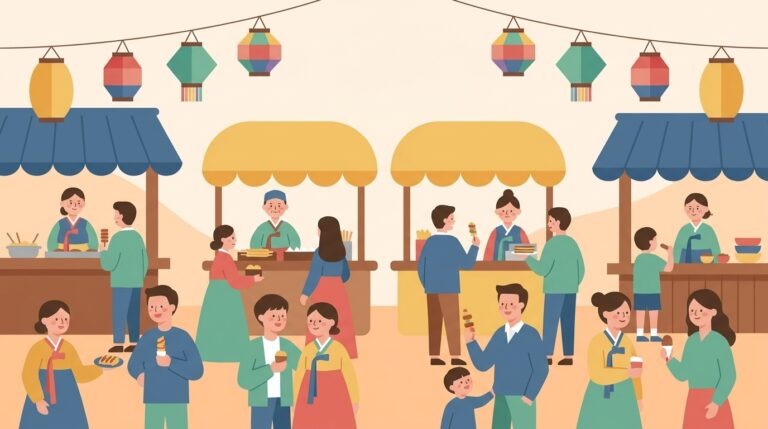
Have you ever watched a K-Drama like Hometown Cha-Cha-Cha or Welcome to Samdal-ri and marvelled at how a quiet, sleepy Korean village suddenly transforms into a vibrant hub full of life, food, and culture? Or maybe you’ve heard about how a single YouTube video by celebrity chef Baek Jong-won turned a dying traditional market into the hottest tourist destination in the country overnight.
Behind these magical K-Culture moments is a massive, fast-paced industry: Local Festival Planning and Tourism Revitalization. If you are an advanced (C1) Korean learner working in business, tourism, or simply a deep K-Culture enthusiast who loves traveling off the beaten path, textbook phrases like 사람이 많아요 (There are many people) just won’t cut it anymore.
Today, we are going to learn the authentic, high-level Korean expressions that real festival planners, local government officials, and savvy Korean travelers use. By the end of this guide, you won’t just be a tourist; you’ll sound like an insider who truly understands the pulse of Korean local tourism.
Let’s dive into the words that will make Koreans go, Wow, how do you know that?
Phase 2: Core Expressions Deep Dive
1. 지역 특색을 살리다
- Pronunciation: jiyeok teuksaegeul sallida [ji-yeok teuk-sae-geul sal-li-da]
- Meaning: Literal: To revive local characteristics. / Real nuance: To highlight or bring out the unique local flavor/identity.
- K-Culture Moment: Picture a boardroom meeting for the Boryeong Mud Festival. The planners aren’t just bringing in random K-Pop idols; they are brainstorming how to make the local mud the absolute star of the show. This phrase is the golden rule of Korean tourism right now.
- Editor’s Insight: The verb 살리다 (to save/revive) is used beautifully in Korean to mean making something pop or bringing out the best in something. It’s not just about saving a life; it’s about breathing life into an idea or a place.
- Situation Spectrum:
- Casual with friends: ✅ (e.g., This cafe really brought out the local vibe!)
- Coworkers (Semi-formal): ✅
- Seniors/Bosses (Formal): ✅ (Perfect for presentations!)
- 🤔 Think About It: Why is preserving 지역 특색 (local identity) becoming such a huge trend in a hyper-modernized country like Korea? Does your home country also emphasize local uniqueness in tourism?
2. 입소문을 타다
- Pronunciation: ipsomuneul tada [ip-so-mu-neul ta-da]
- Meaning: Literal: To ride the mouth-rumor. / Real nuance: To go viral through word of mouth.
- K-Culture Moment: You find a hidden gem of a restaurant in Jeju Island. Next month, you see a 2-hour waiting line outside. It didn’t run TV ads; it just rode the word of mouth on Instagram and Naver Blogs.
- Editor’s Insight: Koreans love the verb 타다 (to ride). You ride a bus, but you also ride a trend (유행을 타다) and ride word-of-mouth (입소문을 타다). It gives the feeling of catching a wave that is constantly moving forward.
- Situation Spectrum:
- Casual with friends: ✅
- Coworkers (Semi-formal): ✅
- Seniors/Bosses (Formal): ✅
- 🤔 Think About It: In Korea’s dense, highly connected society, 입소문 travels faster than almost anywhere else in the world. How does the speed of information change the way businesses operate here?
3. 바가지요금을 근절하다
- Pronunciation: bagajiyogeumeul geunjeolhada [ba-ga-ji-yo-geu-meul geun-jeol-ha-da]
- Meaning: Literal: To eradicate gourd-bowl pricing. / Real nuance: To completely root out rip-off pricing/tourist traps.
- K-Culture Moment: Every summer, Korean news channels report on local merchants overcharging tourists for a simple plate of pajeon (scallion pancake) at regional festivals. The government’s immediate response? Banners everywhere saying they will eradicate bagaji.
- Editor’s Insight: 바가지 (gourd bowl) comes from an old expression where someone was forced to buy a useless gourd for a high price. At the C1 level, pairing it with the formal verb 근절하다 (to eradicate/root out) instantly makes you sound like a policy expert or a news anchor.
- Situation Spectrum:
- Casual with friends: ⚠️ (A bit too formal. Friends just say 바가지 썼어 – I got ripped off).
- Coworkers (Semi-formal): ✅
- Seniors/Bosses (Formal): ✅
- 🤔 Think About It: Why do you think tourist traps happen globally, and why is Korean society currently so vocal and aggressively cracking down on it?
Phase 3: Textbook vs. Real Korean
[Describing a Crowded Festival]
* 📖 Textbook Korean: 사람이 아주 많아요. (There are very many people.)
* 🗣️ Real Korean: 완전 인산인해예요 / 발 디딜 틈이 없어요. (It’s a complete sea of people / There’s no room to even step.)
* 💡 Why the difference?: At an advanced level, using four-character idioms (사자성어) like 인산인해 (Mountain of people, sea of people) or vivid descriptive phrases shows true fluency.
[Praising a Unique Local Spot]
* 📖 Textbook Korean: 이 축제는 특별하고 재미있어요. (This festival is special and fun.)
* 🗣️ Real Korean: 로컬 감성 제대로 찢었어요. (It completely tore up the local vibe. = It absolutely nailed the authentic local vibe.)
* 💡 Why the difference?: 찢었다 (tore it) is a popular slang meaning killed it / nailed it. Mixing this with 감성 (vibe/aesthetic) is exactly how Korean Gen Z and Millennials review hot places on social media.
[Expressing Concern About High Prices]
* 📖 Textbook Korean: 가격이 너무 비싸요. (The price is too expensive.)
* 🗣️ Real Korean: 바가지가 너무 심해요. (The rip-off is too severe.)
* 💡 Why the difference?: Saying it’s just expensive implies it’s a luxury good; saying it’s 바가지 calls out the unfair, opportunistic pricing targeting tourists.
Phase 4: Cultural Context — K-Culture Deep Dive
4-1. The Non-Verbal Game: Nunchi in Tourism Planning
When discussing local festival planning, it’s never just about the tourists. You have to read the 눈치 (Nunchi) of the local merchants, the elderly residents who hate the noise, and the young tourists who want Instagrammable spots. If you use a phrase like 지역 상인들과의 상생 (coexistence with local merchants), make sure your tone is serious and respectful. Never treat the locals merely as props for a festival; they are the hosts.
4-2. K-Food Connection: The Power of Local Cuisine
In Korea, no festival or travel destination survives without exceptional K-Food. Whether it’s Jeju’s black pork or Jeonju’s bibimbap, food is the ultimate anchor for tourism. When planning or visiting, you’ll often hear about 먹거리 장터 (food markets). Recently, because of inflation and the 바가지 controversies, successful festivals are those that offer high-quality local food at reasonable, transparent prices. Koreans don’t just eat to get full; they eat to consume the 지역 특색 (local identity) itself.
Phase 5: Real-Life Roleplay Scenario
Setting: A Friday afternoon inside a local government office in a small coastal town. The town is famous for a K-Drama shooting location, but they need a sustainable festival to keep tourists coming. You are a foreign tourism consultant, sitting with your Korean colleague, Min-su.
Characters:
* YOU: An insightful expat who understands both global trends and local Korean culture.
* Min-su (35): A passionate but stressed local government official trying to make this year’s festival a hit.
Dialogue:
Min-su: 요즘 우리 지역에 관광객이 확 줄었어요. 뭔가 대책이 필요합니다.
(yojeum uri jiyeoge gwangwanggaegi hwak jureosseoyo. mwonga daechaegi pilyohamnida.)
[Tourists to our region have sharply decreased lately. We need some countermeasures.]
YOU: 맞아요. 작년처럼 뻔한 가수들만 부르는 행사로는 부족해요. 지역 특색을 살려야 합니다.
(majayo. jangnyeoncheoreom ppeonhan gasudeulman bureuneun haengsaroneun bujokaeyo. jiyeok teuksaegeul sallyeoya hamnida.)
[Right. Just inviting obvious singers like last year isn’t enough. We need to highlight our local characteristics.]
Min-su: 드라마 촬영지였던 그 항구를 메인 무대로 쓰는 건 어떨까요?
(deurama chwaryeongjiyeotdeon geu hanggureul mein mudaero sseuneun geon eotteolkkayo?)
[How about using that port, which was the drama filming location, as the main stage?]
YOU: 완전 좋아요! 포토존을 예쁘게 만들면 MZ세대 사이에서 금방 입소문을 탈 거예요.
(wanjeon joayo! potojoneul yeppeuge mandeulmyeon MZsedae saieseo geumbang ipsomuneul tal geoyeyo.)
[That’s totally great! If we make pretty photo zones, it will quickly go viral among the MZ generation.]
Min-su: 그런데 문제는 먹거리예요. 작년에 상인들 바가지요금 때문에 인터넷에서 난리가 났었잖아요.
(geureonde munjeneun meokgeoriyeyo. jangnyeone sangindeul bagajiyogeum ttaemune inteoneseiseo nanriga nasseotjanayo.)
[But the problem is the food. Last year, the internet went crazy because of the merchants’ rip-off pricing, remember?]
🔀 Your Turn! How should you respond as a savvy consultant?
* A) 아, 진짜요? 상인들이 나쁘네요. (Ah, really? The merchants are bad.)
* B) 이번에는 시청에서 가격 상한제를 도입해서 바가지를 확실히 근절해야 해요. (This time, the city hall needs to introduce a price ceiling and firmly eradicate the rip-offs.)
* C) 그냥 축제에서 음식을 팔지 마세요. (Just don’t sell food at the festival.)
✅ Best Choice: B — Reason: It addresses the problem with a professional, actionable C1-level solution using the exact terminology (근절하다).
⚠️ Choice A & C Analysis: A is too simplistic and emotional for a business setting. C is culturally impossible—you cannot have a Korean festival without food!
(🎭 Stage Direction: Min-su nods vigorously, looking impressed by your insight)
Min-su: 역시! 당장 상인회 회장님과 미팅을 잡아야겠네요.
(yeoksi! dangjang sanginhoe hoejangnimgwa mitingeul jabayagenneyo.)
[As expected! I need to set up a meeting with the head of the merchants’ association immediately.]
YOU: 네, 지역 상생이 가장 중요하니까요. 제가 같이 갈게요.
(ne, jiyeok sangsaengi gajang jung-yohanikkayo. jega gachi galgeyo.)
[Yes, because local coexistence is the most important thing. I’ll go with you.]
Phase 6: 10-Second Shadowing Drill
Read this aloud to practice your C1 flow and intonation. Follow the slashes for pauses!
😤 단호하고 프로페셔널하게 (Firm and professional):
성공적인 축제를 위해서는 / 바가지요금을 / 확실하게 / 근절해야 합니다!
(seong-gong-jeo-gin chuk-je-reul wi-hae-seo-neun / ba-ga-ji-yo-geu-meul / hwak-sil-ha-ge / geun-jeol-hae-ya ham-ni-da!)
[For a successful festival, we must firmly eradicate rip-off pricing!]
Phase 7: K-Culture Mini Dictionary
1. 핫플
* Romanization: hatpeul
* English: Hot place / Trendy spot
* Context: Short for Hot Place. The ultimate goal of any local festival planner is to turn their region into a 핫플.
2. 노잼도시
* Romanization: nojaemdosi
* English: No-fun city
* Context: A humorous, self-deprecating term for cities with supposedly nothing to do (historically Daejeon, though they’ve fought back with their famous bakery, Sungsimdang!). Festival planners work tirelessly to escape this title.
3. 바가지
* Romanization: bagaji
* English: Rip-off / Overcharging
* Context: Literally a gourd, but culturally the biggest enemy of Korean domestic tourism right now.
4. 지역 상생
* Romanization: jiyeok sangsaeng
* English: Local coexistence / Win-win for the region
* Context: A crucial buzzword in Korean corporate ESG and tourism. It means the festival must financially benefit the local grandmas and grandpas, not just big outside corporations.
Phase 8: Traveler’s Survival Kit
Even if you aren’t planning the festival, if you are visiting a bustling local event, you need these phrases to survive the crowds and fully enjoy the experience.
🆘 Survival Expression #1: Finding the Shuttle
* 🇰🇷 행사장 가는 셔틀버스는 어디서 타요?
* 🗣️ (haengsajang ganeun syeoteulbeoseuneun eodiseo tayo?)
* 📍 Where to use: Train stations, bus terminals near the festival.
* 💡 Pro Tip: Many regional festivals are far from the main KTX stations. Always ask for the 셔틀 (shuttle) instead of paying for an expensive taxi.
🆘 Survival Expression #2: Checking for Local Currency
* 🇰🇷 여기 지역 화폐 결제되나요?
* 🗣️ (yeogi jiyeok hwapye gyeoljedeonayo?)
* 📍 Where to use: Food stalls, local markets.
* 💡 Pro Tip: Korea has 지역 화폐 (local currency cards/apps like Zero Pay) that offer 5-10% discounts to encourage local spending. Ask if they accept it!
🆘 Survival Expression #3: Escaping the Crowd
* 🇰🇷 사람 너무 많다. 기빨려. 우리 조용한 데로 가자.
* 🗣️ (saram neomu manta. gippallyeo. uri joyonghan dero gaja.)
* 📍 Where to use: When you are exhausted by the 인산인해 (sea of people).
* 💡 Pro Tip: 기빨리다 means my energy is drained. It’s the perfect C1 slang to use when a festival is a bit too successful.
📌 Editor’s Travel Note
* Maps: Never use Google Maps in rural Korea! Always use KakaoMap or Naver Map for accurate bus routes to festival sites.
* Cash vs. Card: Korea is a cashless society, BUT small street food stalls at local festivals still highly prefer account transfers (계좌이체) or cash. Have some 10,000 won bills handy!
Phase 9: Critical Thinking — “One Step Deeper”
🧠 Think Deeper: Media vs Reality (미디어와 현실의 차이)
K-Dramas often portray rural Korean towns as idyllic, peaceful escapes where everyone knows each other and life is slow. However, the reality of Korean local regions (지방) is much harsher. They are facing severe population decline (지방 소멸) and aging.
This is why 지역 축제 (local festivals) aren’t just for fun—they are desperate survival strategies for these towns to boost their economies and attract young people. When you see a massive mud festival or a lantern festival, you are actually witnessing an intense, strategic effort to keep the region alive.
💬 Your Turn: Does your country have regions struggling with population decline? How do they use tourism or festivals to bring people back? Share your thoughts in the comments!
Phase 10: FAQ & Prevention of Misunderstandings
Q: Can I use the word 시골 (sigol – countryside) to describe a local festival location?
* A: Maybe, but be careful. While 시골 literally means countryside, using it to describe a developed regional city (like Busan, Jeonju, or Gangneung) can offend locals, as it sounds condescending. It is much safer and more professional to use 지방 (provinces/local region) or simply 지역 (region).
Q: Is it okay to complain about 바가지 (rip-offs) directly to the merchant?
* A: Not recommended. Confronting merchants directly can lead to heated arguments. Instead, politely decline to buy (아, 네~ 다음에 올게요 – Ah, yes~ I’ll come back later). If it’s a severe case at an official festival, report it to the 종합안내소 (General Information Center).
❌ Common Mistake: Using 살리다 (to revive) only for life-or-death situations.
✅ Do This: Use it for inanimate concepts! 분위기를 살리다 (Liven up the mood), 맛을 살리다 (Bring out the flavor), 특색을 살리다 (Highlight the characteristic). It makes your Korean instantly native-like.
Phase 11: Summary & Action Items
One-Liner Summary: To plan or enjoy a Korean festival like a pro, remember to highlight local traits (특색을 살리다), ride the viral wave (입소문을 타다), and avoid rip-offs (바가지요금).
Action Mission 3 Steps:
* 🥉 Bronze (Solo): Stand in front of a mirror and firmly declare: “바가지요금을 근절해야 합니다!” (Feel the power of the C1 vocabulary!)
* 🥈 Silver (Online): Look up a Korean festival on YouTube (e.g., 보령머드축제) and leave a comment: “지역 특색을 잘 살렸네요!”
* 🥇 Gold (Real-world): The next time you travel outside of Seoul, ask a local tourist info desk: “여기 제일 핫플이 어디예요?” (Where is the hottest spot here?)
🎁 K-Culture Mission:
Search Naver or Google Korea for “백종원 예산시장” (Baek Jong-won Yesan Market). Read a news headline or a blog post about it and see if you can spot the words 지역 상생, 입소문, or 핫플!
Phase 12: Quiz — Interactive Challenge
1. Situational Judgment:
You are proposing an idea to make your town’s traditional paper festival more popular. Which sentence is the most professional (C1 level) way to say it?
* A) 우리 축제 완전 찢어버리자! (Let’s completely tear up our festival!)
* B) 전통 한지의 지역 특색을 살려서 기획해 봅시다. (Let’s plan it by highlighting the local characteristics of traditional Hanji paper.)
* C) 바가지를 씌워서 돈을 많이 멉시다. (Let’s rip people off and make a lot of money.)
2. Fill in the Blank:
That cafe didn’t do any marketing, but it naturally _________ and now there’s a huge line.
* KOR: 그 카페는 마케팅도 안 했는데 자연스럽게 ( _________ ) 대기 줄이 엄청 길어요.
3. True or False – K-Culture Edition:
If a restaurant at a local Korean festival is heavily overcharging tourists, it is generally accepted as a normal part of festival culture and nobody complains. (T/F)
[Answers]
1. B (A is too much slang for a formal proposal. C is illegal and unethical!)
2. 입소문을 타서 (rode the word of mouth)
3. False! Koreans hate 바가지요금 (rip-off pricing) and will actively boycott and report festivals that allow it, making it a major issue for planners to eradicate.
Frequently Asked Questions (FAQ)
Q: What does "지역 특색을 살리다" mean in Korean and how do you pronounce it?
A: In Korean, "지역 특색을 살리다" is pronounced [jiyeok teuksaegeul sallida [ji-yeok teuk-sae-geul sal-li-da] and means: Literal: To revive local characteristics. / Real nuance: To highlight or bring out the unique local flavor/identity.
Q: What does "입소문을 타다" mean in Korean and how do you pronounce it?
A: In Korean, "입소문을 타다" is pronounced [ipsomuneul tada [ip-so-mu-neul ta-da] and means: Literal: To ride the mouth-rumor. / Real nuance: To go viral through word of mouth.
Q: What does "바가지요금을 근절하다" mean in Korean and how do you pronounce it?
A: In Korean, "바가지요금을 근절하다" is pronounced [bagajiyogeumeul geunjeolhada [ba-ga-ji-yo-geu-meul geun-jeol-ha-da] and means: Literal: To eradicate gourd-bowl pricing. / Real nuance: To completely root out rip-off pricing/tourist traps.







