

Hello! I’m your Daily Hangul Editor.
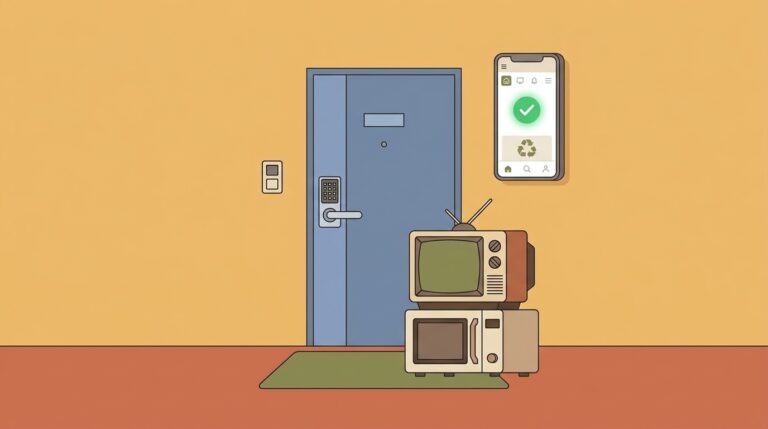
Imagine this: You are moving out of your cozy Seoul officetel. You’ve sorted your clothes, packed your bags, and now… you’re staring at a broken air fryer, a rice cooker that gave up the ghost months ago, and a massive floor fan.
In K-Dramas, moving scenes are usually romanticized—maybe a handsome neighbor helps carry a box. But in reality? It’s a stressful battle with Korea’s legendary recycling (분리수거) system. You might head to the convenience store to buy a disposal sticker (폐기물 스티커) for that broken fan, thinking it’s the only way.
But wait! Did you know Korea has a brilliant, completely free government service that comes to your door to pick up old electronics? It’s called the Free E-Waste Collection Service (폐가전 무상방문수거). Knowing how to navigate this not only saves you money but instantly elevates your status from “confused expat” to “savvy local.”
Today, we are diving into the exact, high-level C1 Korean expressions you need to book this service flawlessly. Let’s save the earth and your wallet!
Phase 2: Core Expressions Deep Dive
1. 폐가전 무상 수거 예약하려고요.
- Pronunciation: [Pye-gajeon musang sugeo yeyakharyeogoyo]
Sound Analogy: Think of ‘Pye’ like the ‘pe’ in “pest,” and ‘gajeon’ like “gah-john.” ‘Musang’ sounds like “moo-sang.” - Meaning:
- Literal: I intend to reserve free collection of waste home appliances.
- Real Nuance: I’d like to book a free e-waste pickup.
- K-Culture Moment: You’ll use this when calling the 1599-0903 hotline. It’s the ultimate adulting milestone in Korea. When your Korean friends hear you using words like “폐가전” (e-waste) instead of just “고장난 티비” (broken TV), they will look at you with deep respect.
- Editor’s Insight: The word ‘폐’ (pye) means waste or obsolete. ‘무상’ (musang) is a slightly formal, administrative word for ‘free’ (as opposed to the casual 공짜 – gongjja). Using these words makes you sound highly educated and aware of civic systems.
- Situation Spectrum:
- Casual with friends: ⚠️ (Too formal, just say “가전제품 버리려고”)
- Customer Service Hotline: ✅
- Formal/Administrative: ✅
- 🤔 Think About It: Why does Korean have so many different words for “free” (무료, 무상, 공짜)? How does using a Sino-Korean word like ‘무상’ change the perceived authority of the service?
2. 문 앞에 내놓으면 되나요?
- Pronunciation: [Mun ape naenoeumyeon doenayo?]
Sound Analogy: ‘Mun’ sounds like “moon,” ‘ape’ is “ah-peh,” ‘naenoeumyeon’ is “nae-no-oo-myun.” - Meaning:
- Literal: If I put it out in front of the door, does it become okay?
- Real Nuance: Should I just leave it outside my door?
- K-Culture Moment: This is the magic of Korea’s ‘Untact’ (비대면 – non-face-to-face) culture. Whether it’s food delivery or garbage collection, leaving things at the door is a profound symbol of high societal trust. Nobody is going to steal your broken microwave!
- Editor’s Insight: “내놓다” (to put out) is the specific verb used for taking out the trash or recycling in Korea. You don’t “throw” (버리다) an appliance in this context; you “place it out” for collection.
- Situation Spectrum:
- Casual with friends: ✅ (e.g., “쓰레기 내놓을게”)
- Customer Service: ✅
- Formal: ✅
- 🤔 Think About It: Does your home country have a similar culture of leaving things outside for pickup without worrying about theft? How does this reflect Korea’s security environment?
3. 소형 가전은 다섯 개 이상 모아야 수거 가능하대요.
- Pronunciation: [Sohyeong gajeoneun daseot-gae isang moaya sugeo ganeunghadaeyo.]
- Meaning:
- Literal: They say small home appliances must be gathered five or more to be possible for collection.
- Real Nuance: Small appliances can only be picked up if you have five or more.
- K-Culture Moment: You are warning a friend who wants to throw away just one hairdryer. You are officially the wise oracle of Korean household rules.
- Editor’s Insight: The grammar point “~대요” (I heard that / They say that) is crucial at the C1 level. It shows you’ve researched the rules and are relaying official information to someone else.
- Situation Spectrum:
- Casual with friends: ✅
- Co-workers: ✅
- Formal/Customer Service: 🚫 (They would be the ones telling you this rule!)
- 🤔 Think About It: Korea enforces strict rules (like the 5-item minimum for small goods) to maximize logistical efficiency. How does this reflect the ‘Pali-Pali’ (hurry up) and high-density lifestyle of Seoul?
Phase 3: Textbook vs. Real Korean
Let’s see how you actually speak when arranging this service compared to what a textbook might teach you.
[Situation 1: Asking if there is a fee]
* 📖 Textbook Korean: 이 가전제품을 버릴 때 돈을 내야 합니까? (Must I pay money when throwing away this appliance?)
* 🗣️ Real Korean: 이거 무상 수거 맞죠? / 폐기물 스티커 안 붙여도 되죠? (This is free collection, right? / I don’t need to put a waste sticker on it, right?)
* 💡 Why the difference?: Real adults speak in terms of the system. Mentioning the “waste sticker” (폐기물 스티커) proves you understand how Korean waste disposal usually works.
[Situation 2: Arranging the pickup location]
* 📖 Textbook Korean: 집 안에 들어오셔서 가져가 주십시오. (Please come inside the house and take it.)
* 🗣️ Real Korean: 제가 부재중일 수 있어서요, 현관문 앞에 내놓을게요. (I might be out, so I’ll leave it in front of the front door.)
* 💡 Why the difference?: Privacy and time efficiency are paramount. The concept of “부재중” (being away from home) combined with non-face-to-face pickup is the absolute norm for working professionals in Korea.
Bottom Note: At the C1 level, using Sino-Korean administrative vocabulary like 부재중 (away) and 배출 (disposal/putting out) will make communication with Korean services infinitely smoother.
Phase 4: Cultural Context — K-Culture Deep Dive
4-1. Non-verbal Elements & ‘Nunchi’
When you leave your appliance outside for collection, Korean Nunchi (social awareness) dictates how you place it. You shouldn’t block the narrow officetel hallway. You must tape the cords neatly so the collection worker doesn’t trip. If it’s raining and the pickup is outside, covering it with vinyl is a silent gesture of respect for the worker’s effort.
4-2. The “Untact” Moving Culture (K-Drama vs. Reality)
In K-Dramas like Because This Is My First Life or Reply 1988, moving out or throwing things away is often a communal event where neighbors gather, gossip, and share food.
Critical View: While charming, modern Seoul living is highly individualized. Today, throwing out a massive refrigerator happens almost invisibly. You tap an app, leave the fridge outside your door before going to work, and when you return, it’s gone like magic. No words spoken, no neighbors involved. The language has evolved to facilitate this “ghost-like” efficiency: expressions like 비대면 수거 (untact collection) and 지정 장소 배출 (disposal at a designated spot) are the real modern Korean vocabulary.
Phase 5: Real-Life Roleplay Scenario
Setting: A busy Tuesday morning. You are moving out of your apartment this weekend. You need to get rid of a massive old TV and a broken microwave. You call the local security guard (경비 아저씨) to clarify the rules before booking online.
Characters:
* YOU: An expat who has lived in Korea for 3 years, preparing for a big move. Highly capable but cautious about recycling rules.
* Mr. Kim (60s): The friendly but strict building security guard who patrols the recycling area.
Dialogue:
YOU: 경비 아저씨, 안녕하세요! 이번 주말에 이사 가는데요, 쓰레기 관련해서 여쭤볼 게 있어서요.
(gyeongbi ajeossi, annyeonghaseyo! ibeon jumare isa ganeundeyo, sseuregi gwallyeonhaeseo yeojjobeol ge isseoseoyo.)
[Hello, Mr. Security Guard! I’m moving out this weekend and have a question about the trash.]
Mr. Kim: 아, 이사 가요? 섭섭하네. 그래요, 뭐 버릴 거 많아요?
(A, isa gayo? seopseophane. geuraeyo, mwo beoril geo manayo?)
[Ah, you’re moving? That’s sad. Well, do you have a lot to throw away?]
YOU: 네, 오래된 티비랑 전자레인지를 버리려고요. 폐기물 스티커 사서 붙여야 하나요?
(Ne, oraedoen tibirang jeonjareinjireul beoriryeogoyo. pyegimul seutikeo saseo buchyeoya hanayo?)
[Yes, I’m going to throw away an old TV and a microwave. Do I need to buy and attach a waste sticker?]
Mr. Kim: 에이, 돈 아깝게 스티커를 왜 사요! 폐가전 무상 수거 예약하면 공짠데.
(Ei, don akkapge seutikeoreul wae sayo! pyegajeon musang sugeo yeyakhamyeon gongjjande.)
[Hey, why buy a sticker and waste money! If you book the free e-waste collection, it’s free.]
YOU: 아, 정말요? 그럼 예약하고 1층 분리수거장에 내놓으면 될까요?
(A, jeongmallyo? geureom yeyakhago il-cheung bullisugeojange naenoeumyeon doelkkayo?)
[Oh, really? Then should I book it and put it out at the recycling area on the first floor?]
Mr. Kim: 안 돼요, 안 돼! 통로 좁아서 거기 두면 사람들 다녀서 불편해요.
(An dwaeyo, an dwae! tongno jopaseo geogi dumyeon saramdeul danyeoseo bulpyeonhaeyo.)
[No, no! The pathway is narrow, so if you leave it there, it’s inconvenient for people walking by.]
🔀 Your Turn! How should you respond to find the right spot?
* A) 그럼 어디에 버려요? (Then where do I throw it?)
* B) 아, 죄송합니다! 그럼 수거 기사님 오실 때 제가 직접 드릴게요. (Oh, sorry! Then I will give it directly to the driver when he comes.)
* C) 아, 그렇군요. 그럼 지정된 배출 장소가 따로 있을까요? (Ah, I see. Then is there a separate designated disposal area?)✅ Best Choice: C — At the C1 level, using “지정된 배출 장소” (designated disposal area) is incredibly natural and polite in an apartment complex setting.
⚠️ Choice A Analysis: A bit too blunt and childlike.
⚠️ Choice B Analysis: You don’t need to hand it to them directly! That defeats the purpose of the convenient Korean system.
Mr. Kim: (Smiling) 네, 저기 지하 주차장 입구 옆에 공간 있죠? 예약한 날짜 전날 밤에 거기에 내놓으세요. 내가 봐줄게요.
(Ne, jeogi jiha juchajang ipgu yeope gongan itjyo? yeyakhan naljja jeonnal bame geogie naenoeuseyo. naega bwajulgeyo.)
[Yes, see the space next to the underground parking lot entrance? Put it out there the night before your booked date. I’ll keep an eye on it.]
YOU: 아, 다행이네요! 신경 써주셔서 정말 감사합니다.
(A, dahaengineyo! singyeong sseojusyeoseo jeongmal gamsahamnida.)
[Oh, what a relief! Thank you so much for caring.]
Phase 6: 10-Second Shadowing Drill
Practice this administrative yet polite tone. Focus on the pauses (/) to sound like a native Korean professional handling their life.
😊 안녕하세요, / 폐가전 무상 수거 / 예약하려고 하는데요.
(annyeonghaseyo, / pyegajeon musang sugeo / yeyakharyeogo haneundeyo.)
🤔 혹시 / 기사님 방문하실 때 / 제가 집에 꼭 있어야 하나요?
(hoksi / gisanim bangmunhasil ttae / jega jibe kkok isseoya hanayo?)
😊 아, / 문 앞에 내놓으면 되는군요! / 감사합니다~
(a, / mun ape naenoeumyeon doeneungunyo! / gamsahamnida~)
Phase 7: K-Culture Mini Dictionary
| 한국어 | Romanization | English | Cultural Context |
|---|---|---|---|
| 폐가전 | pyegajeon | E-waste / Old home appliances | Refers specifically to electronics. Furniture (가구) is NOT included and always requires a paid sticker. |
| 무상 방문 수거 | musang bangmun sugeo | Free door-to-door collection | A nationwide eco-friendly initiative in Korea to recycle heavy metals and prevent illegal dumping. |
| 배출 | baechul | Disposal / Putting out | Formal word used by security guards and city officials instead of “버리기” (throwing away). |
| 비대면 | bidaemyeon | Non-face-to-face / Untact | A massive cultural shift in Korea, deeply accelerated by tech, meaning you don’t interact with the service worker. |
| 경비 아저씨 | gyeongbi ajeossi | Security Guard | The gatekeepers of Korean apartment culture. Building a good relationship with them makes living in Korea 100x easier. |
Phase 8: Traveler Survival Kit (Long-term Stay Edition)
Even if you are studying abroad for just a semester or renting an Airbnb for a month, you must understand Korea’s strict waste rules to avoid heavy fines.
🆘 Survival Phrases for Waste Disposal
* 🇰🇷 “이거 종량제 봉투에 버려도 돼요?” (igeo jongnyangje bongtue beoryeodo dwaeyo?)
* 🗣️ Meaning: Can I throw this in the standard volume-rate garbage bag?
* 📍 Where to use: Asking a host or convenience store clerk before throwing away something ambiguous (like a small fan or an umbrella).
* 💡 Pro Tip: Never mix food waste, recycling, and general waste in Korea. Fines are steep, and CCTV is everywhere!📌 Editor’s Travel Note: Must-Have Apps
* If you have less than 5 small appliances and can’t use the free service, download the app 빼기 (Bbaegi). It’s the “Uber for oversized trash.” You take a photo of your item, pay the fee via the app, and get an instant digital sticker code to write on your waste. No need to visit the local office!
Phase 9: Critical Thinking — “A Step Deeper”
🧠 Think Deeper: Space, Community, and the Korean Recycling Miracle
Korea is renowned globally for its meticulous recycling and waste management systems. But why did a system like the Free E-Waste Collection emerge? It’s directly tied to Korea’s high-density urban living. In cities where 60% of people live in massive apartment complexes (아파트), space is a premium. You can’t just leave a broken refrigerator on a front lawn because… there are no front lawns. The government realized that to prevent people from illegally dumping heavy electronics in narrow alleyways, they had to make the correct disposal method not just cheap, but completely free and effortless. This service reflects a societal compromise: the state provides ultimate convenience, but the citizens must adhere strictly to the rules of community space.
💬 Your Turn: How is large e-waste handled in your country? Do people leave it on the curb, or do you have to drive it to a junkyard yourself? Share your cultural experience in the comments!
Phase 10: FAQ & Avoiding Misunderstandings
Q: “Can I use the free collection service for a broken chair or mattress?”
No! A very common mistake foreigners make is confusing “폐가전” (e-waste, electronics) with “대형 폐기물” (oversized waste, furniture). Furniture requires you to pay for a waste sticker from the local district office (구청) or convenience store.
Q: “Do I need to tip the collection workers who take my heavy refrigerator?”
No. There is absolutely no tipping culture in Korea. In fact, trying to hand them cash might make them uncomfortable, as they are part of a government-backed logistics service. A polite “수고하십니다” (Thank you for your hard work) or offering a cold can of coffee is the ultimate Korean way to show appreciation.
❌ Common Mistake #1: Throwing a hairdryer or an iron into the standard garbage bag (종량제 봉투).
✅ Do this instead: Small appliances contain batteries or metals that can cause fires. Group them up (5 or more) for the free collection, or drop them in the specific small-appliance collection bins usually found in community centers (주민센터).
Phase 11: Summary & Action Items
- One-Liner Summary: Book the “폐가전 무상 방문 수거” (Free E-Waste Collection) to legally and freely dispose of old electronics in Korea without the hassle of buying waste stickers!
-
Action Mission:
- 🥉 Bronze (Solo): Stand in your room, look at an appliance, and say, “폐가전 무상 수거 예약하려고요.”
- 🥈 Silver (Online): Look up the website
15990903.or.kr(Korea’s official e-waste site) and try navigating the first page in Korean. - 🥇 Gold (Real Life): Ask your Korean friend or colleague if they have ever used the 비대면 (non-face-to-face) collection service for their old appliances!
- K-Culture Mission:
Next time you walk past a Korean apartment complex or officetel on a Sunday evening, look at the recycling area (분리수거장). Notice how neatly items are placed and look for appliances waiting for their scheduled pickup! -
Engagement: Have you ever struggled with throwing something away in Korea? Tell me your funniest or most frustrating recycling story in the comments below!
Phase 12: Interactive Quiz
1. Situational Judgment: You want to get rid of a broken electric fan (선풍기) and a wooden desk (책상). What is the correct protocol in Korea?
* A) Leave both at the curb; someone will take them.
* B) Book the free e-waste collection for both items.
* C) Book the free collection for the fan, but buy a paid waste sticker for the desk.
2. Fill in the Blank:
“제가 내일 출근해야 해서요, 문 앞에 __________ 수거해 주실 수 있나요?”
(I have to go to work tomorrow, so can you collect it if I ________ in front of the door?)
* A) 버리면 (throw away)
* B) 내놓으면 (put it out)
* C) 숨기면 (hide it)
3. True or False – K-Culture Edition:
If a collection worker carries a heavy TV out of your house, you should tip them 10,000 won to show your gratitude. (T/F)
(Answers: 1. C – Only electronics are free! 2. B – 내놓다 is the natural verb. 3. False – No tipping in Korea, a canned coffee or “수고하십니다” is perfect!)
Frequently Asked Questions (FAQ)
Q: What does "폐가전 무상 수거 예약하려고요." mean in Korean and how do you pronounce it?
A: In Korean, "폐가전 무상 수거 예약하려고요." is pronounced [Pye-gajeon musang sugeo yeyakharyeogoyo] and means: Literal: I intend to reserve free collection of waste home appliances.
Q: What does "문 앞에 내놓으면 되나요?" mean in Korean and how do you pronounce it?
A: In Korean, "문 앞에 내놓으면 되나요?" is pronounced [Mun ape naenoeumyeon doenayo?] and means: Literal: If I put it out in front of the door, does it become okay?
Q: What does "소형 가전은 다섯 개 이상 모아야 수거 가능하대요." mean in Korean and how do you pronounce it?
A: In Korean, "소형 가전은 다섯 개 이상 모아야 수거 가능하대요." is pronounced [Sohyeong gajeoneun daseot-gae isang moaya sugeo ganeunghadaeyo.] and means: Literal: They say small home appliances must be gathered five or more to be possible for collection.






