

Phase 1: Empathy (Immersive Open)
Hello! Daily Hangul Editor here.
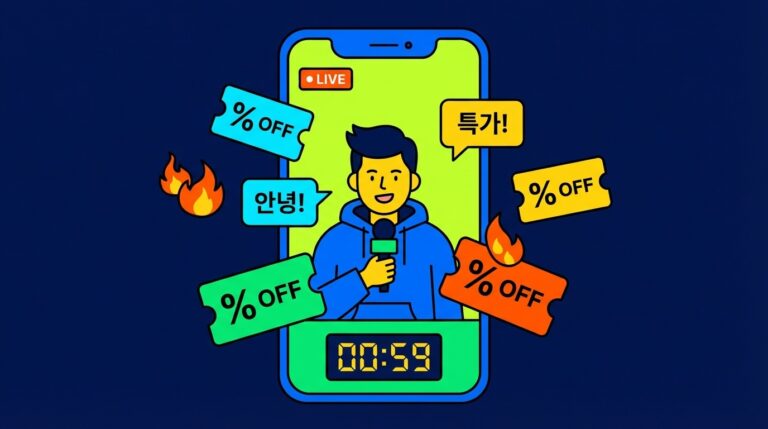
Imagine this: It’s 8:00 PM on a Friday. You’re watching a live broadcast on your smartphone—maybe Naver Shopping Live or Kakao Live. A charismatic host is aggressively waving a limited-edition K-Beauty serum at the camera. The chat is scrolling so fast it’s a blur. Suddenly, the host shouts, “여러분, 1분 뒤에 닫힙니다!” (Everyone, it closes in 1 minute!) and a chaotic countdown begins. You see words like “라방,” “광클,” and “품절각” flooding the screen.
Your translator app? Completely useless here.
By the time you figure out that “라방” means “Live Broadcast” and try to find the “Buy” button, the screen flashes Sold Out. If you’ve reached the C2 level in Korean, you already know how to ask for prices and negotiate. But the digital shopping battlefield in Korea operates on an entirely different linguistic frequency. It’s fueled by the infamous Pali-Pali (빨리빨리 – hurry hurry) culture and a deep-seated FOMO (Fear Of Missing Out).
If you don’t know this specific vocabulary, you won’t just miss out on a good deal; you’ll miss out on experiencing one of the most vibrant, fast-paced digital cultures in the world. Let’s upgrade your Korean from the textbook to the bleeding edge of the Seoul internet sphere!
Phase 2: Deep Dive into Core Expressions
1. 품절각 (Pumjeolgak)
- Pronunciation: [Pum-jeol-gak] + [‘Poom-juhl-gahk’ – emphasize the sharp ‘k’ at the end like a quick stop]
- Meaning: Literal: Angle of sold out. / Real nuance: “This is definitely going to sell out in seconds” or “Total sell-out vibes.”
- K-Culture Moment: You’re watching a K-Pop idol doing a surprise live stream to sell their official merchandise. The moment they hold up a photocard, the viewer count spikes by 100,000. Fans flood the chat with “아 이거 무조건 품절각이다ㅠㅠ” (Ah, this is totally going to sell outㅠㅠ).
- Editor’s Insight: The suffix ‘-각’ (angle) originally comes from calculating angles in billiards, but it evolved into high-level internet slang meaning “a highly likely outcome or situation.” It adds a predictive, almost fatalistic flavor to the word “sold out” (품절).
- Situation Spectrum:
- Casual: ✅
- Semi-formal (Colleagues): ⚠️ (Only with close work friends)
- Formal (Boss/Elders): 🚫
- 🤔 Think About It: Why do Koreans use a geometric term like ‘-각’ (angle) to predict the future? How does this reflect the gamification of everyday internet culture?
2. 광클 (Gwangkeul)
- Pronunciation: [Gwang-keul] + [‘Gwang-kuhl’ – the ‘eu’ sounds like the disgusted grunt you make when stepping in gum]
- Meaning: Literal: Crazy click. / Real nuance: Clicking frantically like a madman to secure a limited item.
- K-Culture Moment: It’s 7:59 PM. You are at a PC Bang (internet cafe) with two monitors open, waiting for the 8:00 PM time-sale for a half-price flight to Jeju Island. Your friend yells, “8시 정각에 광클해!” (Mad-click at exactly 8 o’clock!).
- Editor’s Insight: This portmanteau of 미칠 광 (Gwang – crazy) and 클릭 (Click) is the ultimate manifestation of Korea’s ultra-fast internet infrastructure meeting the Pali-Pali mindset. It’s an action verb driven by pure desperation and adrenaline.
- Situation Spectrum:
- Casual: ✅
- Semi-formal (Colleagues): ⚠️
- Formal (Boss/Elders): 🚫
- 🤔 Think About It: Has the sheer speed of Korea’s 5G and fiber-optic networks literally shaped the creation of new action verbs in the language?
3. 막차 타다 (Makcha tada)
- Pronunciation: [Mak-cha ta-da] + [‘Mahk-chah tah-dah’]
- Meaning: Literal: To ride the last train. / Real nuance: Catching a deal at the very last second before it disappears, or barely joining a trend.
- K-Culture Moment: The live commerce host announces, “Only 5 sets left!” You fumble with your fingerprint password, the screen loads, and… Payment Successful! You type in the chat: “휴, 막차 탔다!” (Phew, caught the last train!).
- Editor’s Insight: In Seoul, missing the last subway (막차) means an expensive taxi ride home. This anxiety has been beautifully metaphorized into consumer culture. Catching the “last train” means you successfully avoided missing out.
- Situation Spectrum:
- Casual: ✅
- Semi-formal (Colleagues): ✅
- Formal (Boss/Elders): ⚠️ (Context-dependent, but usually acceptable as an idiom)
- 🤔 Think About It: In your native language, what metaphors are used to describe “just barely making it”? Do they also stem from public transportation anxiety?
Phase 3: Textbook vs. Real Korean
[Informing a friend about a live broadcast deal]
* 📖 Textbook Korean: 지금 인터넷에서 생방송으로 물건을 싸게 팔고 있어요. (They are selling things cheaply on an internet live broadcast right now.)
* 🗣️ Real Korean: 야, 지금 완전 특가 라방 떴어! (Hey, a total super-deal live stream just popped up!)
* 💡 Why is it different?: Linguistic economy. Koreans love portmanteaus (라방 = 라이브 방송). The verb ‘뜨다’ (to float/rise) is used for pop-ups, news, and live streams, implying sudden appearance.
[Telling someone to hurry because it’s selling out]
* 📖 Textbook Korean: 곧 다 팔릴 것 같습니다. 빨리 사세요. (It seems it will all be sold out soon. Please buy quickly.)
* 🗣️ Real Korean: 야 이거 완전 품절각이야. 당장 광클해! (Hey, this is total sell-out vibes. Mad-click right now!)
* 💡 Why is it different?: Digital shopping is a competitive sport in Korea. Textbook language lacks the necessary adrenaline and urgency required for a flash sale.
Bottom Note: At the C2 level, understanding these expressions shows you don’t just speak Korean; you navigate Korean society. While you shouldn’t use “광클” in a corporate boardroom, using it with peers proves you are culturally integrated.
Phase 4: Cultural Context — K-Culture Deep Dive
4-1. Non-verbal Elements: The Art of ‘소통’ (Sotong)
During a ‘라방’ (Live Broadcast), the interaction isn’t just about clicking ‘buy’. It’s about “소통” (communication). Hosts actively read the chat. If you want a shoutout or an extra freebie (사은품), you must use aggressive, affectionate emojis and witty comments. Nunchi (눈치) plays a role here—if the chat is spamming ㅋㅋㅋ (laughing), you join in. If the host seems desperate, you type “헐 대박 당장 담아요” (Omg jackpot, adding to cart right now).
4-2. K-Culture Connection: Ticketing (티켓팅) & Idol Merch
The digital dexterity required to catch a live commerce deal is identical to the skills honed by K-Pop fans during concert “Ticketing” (티켓팅) or buying limited “Goods” (굿즈).
* The Trope: Just as you see fans in K-Dramas like Reply 1997 physically waiting in line for concert tickets, modern fans wait in digital queues.
* Critical Perspective: Idols often host their own live streams to sell merchandise directly to fans. This blurs the line between a casual, intimate “V-Live” chat and a calculated commercial transaction, monetizing the parasocial relationship.
Phase 5: Practical Role-play Scenario
Setting: Friday night, 7:55 PM. A trendy cafe in Yeonnam-dong. You and your Korean best friend, Ji-ae, have your smartphones propped up against your coffee cups. A famous K-Beauty brand is about to drop a 70% off flash sale on a Live Commerce app.
Characters:
– YOU: A C2-level Korean learner, determined not to pay full price for toner ever again.
– Ji-ae (28): Your trendy, shopping-savvy Korean friend who treats flash sales like the Olympics.
Dialogue:
Ji-ae: 야, 준비됐지? 5분 남았다. 손가락 풀고 있어.
(Ya, junbidwaetji? Obun namatda. Songarak pulgo isseo.)
[Hey, you ready? 5 minutes left. Warm up your fingers.]
YOU: 당연하지. 결제수단 다 등록해 놨고, 지문 인식도 닦아놨어.
(Dangyeonhaji. Gyeoljesudan da deungnokhae nwatgo, jimun insikdo dakkawanasseo.)
[Of course. I’ve registered all my payment methods and wiped my fingerprint sensor.]
Ji-ae: (화면을 보며) 헉, 벌써 접속자 수 5만 명 돌파했어. 이거 무조건 품절각인데?
(Heok, beolsseo jeopsokja su oman myeong dolpahaesseo. Igeo mujogeon pumjeolgak-inde?)
[Gasp, viewers already surpassed 50,000. This is absolutely going to sell out immediately.]
YOU: 진짜? 나 이번엔 꼭 사야 되는데. 저번에 막차 타려다가 실패했잖아.
(Jinjja? Na ibeonen kkok saya doeneunde. Jeobeone makcha taryeodaga silpaehaetjana.)
[Really? I absolutely have to buy it this time. Remember I failed trying to catch the last train last time?]
Ji-ae: 라방 켜지자마자 쇼호스트 말 듣지 말고 무조건 장바구니부터 담아. 알겠지?
(Rabang kyeojijamaja syohoseuteu mal deutji malgo mujogeon jangbagunibuteo dama. Algetji?)
[As soon as the live turns on, don’t even listen to the host, just add it to your cart unconditionally. Got it?]
(🎭 Stage Direction: The clock strikes 8:00 PM. The screen refreshes.)
Ji-ae: 떴다! 광클해!!!
(Tteotda! Gwangkeulhae!!!)
[It’s up! Mad-click!!!]
YOU: 아 잠깐만, 로딩 왜 이래? 하얀 화면만 나오는데?
(Ah jamkkanman, roding wae irae? Hayan hwamyeonman naoneunde?)
[Ah wait, why is it loading like this? I only see a white screen?]
Ji-ae: 서버 터졌다! 새로고침 하지 마! 그냥 기다려!
(Seobeo teojyeotda! Saerogochim haji ma! Geunyang gidaryeo!)
[The server crashed! Don’t refresh! Just wait!]
🔀 Your Turn! How do you respond to the crashing server?
– A) “아 짜증나. 그냥 포기할래. 정가 주고 살게.” (Ah, annoying. I’ll just give up and buy it at full price.)
– B) “존버가 답이다! 제발 열려라!” (Enduring is the answer! Please open!)
– C) “사장님 여기 서버 좀 고쳐주세요!” (Boss, please fix the server here!)✅ Best Choice: B — “존버” (Jon-beo: enduring fiercely) is the perfect native slang for waiting out a server crash. It shows elite C2 cultural fluency.
⚠️ Choice A Analysis: Giving up is not the Korean way during a flash sale! You will lose your friend’s respect.
> ❌ Choice C Analysis: You are at a cafe, not the IT department of the shopping company. The cafe owner cannot help you.
YOU: 존버가 답이다! 제발 열려라!
(Jonbeoga dapida! Jebal yeollyeora!)
[Enduring is the answer! Please open!]
Ji-ae: 나 결제 넘어갔어! …됐다! 성공!
(Na gyeolje neomeogasseo! …dwaetda! Seonggong!)
[My payment went through! …Done! Success!]
YOU: 나도 방금 결제 완료 떴어! 와, 우리 막차 제대로 탔네!
(Nado banggeum gyeolje wallyo tteotseo! Wa, uri makcha jedaero tanne!)
[Mine just showed payment complete too! Wow, we really caught the last train properly!]
Phase 6: 10-Second Shadowing Drill
Master the intonation and urgency. Read it aloud like your cart is about to expire!
😤 야! / 지금 완전 품절각이니까 / 딴짓하지 말고 / 광클해!!
(Ya! / jigeum wanjeon pumjeolgaginikka / ttanjithaji malgo / gwangkeulhae!!)
[Hey! / It’s total sell-out vibes right now so / don’t get distracted and / click like crazy!!]
Phase 7: K-Culture Mini Dictionary
| Korean | Romanization | English | Cultural Context |
|---|---|---|---|
| 라방 | rabang | Live Broadcast | Short for 라이브 방송. The cornerstone of modern K-eCommerce. |
| 득템 | deuktem | Getting a great item/deal | From ‘득’ (obtain) + ‘아이템’ (item). A victory cry for shoppers. |
| 광클 | gwangkeul | Mad clicking | Clicking as fast as humanly possible, essential for ticketing/sales. |
| 존버 | jonbeo | Enduring intensely | Slang for holding on tightly, often used in crypto, stocks, or server crashes. |
| 혜자스럽다 | hyejaseureopda | Great value for money | Derived from actress Kim Hye-ja, whose convenience store bento boxes were famously generous. |
Phase 8: Traveler’s Survival Kit
Even if you aren’t shopping online, this Pali-Pali flash-sale energy happens in physical pop-up stores in Seongsu-dong and Myeongdong too!
🆘 Survival Phrases for Physical Time Sales / Pop-ups
– 🇰🇷 “지금 라방 혜택이랑 매장 혜택이랑 같아요?”
(jigeum rabang hyetaegirang maejang hyetaegirang gatayo?)
(Are the benefits here the same as the live broadcast deals?)
– 🇰🇷 “이거 오늘 수량 얼마나 남았어요?”
(igeo oneul suryang eolmana namasseoyo?)
(How much stock is left for today?)
– 🇰🇷 “사은품 재고 소진됐나요?”
(saeunpum jaego sojindwaennayo?)
(Are the freebies out of stock?)📌 Editor’s Travel Note
– Digital Payments: To participate in Korean digital flash sales, you often need Kakao Pay or Naver Pay linked to an ARC (Alien Registration Card). If you are a tourist, you might have to rely on a Korean friend to do the “광클” for you and pay them in cash!
– Pop-up Queues: In places like The Hyundai Seoul, ‘Ticketing’ happens physically via tablet kiosks. You enter your phone number and wait for a KakaoTalk message to enter.
Phase 9: Critical Thinking Corner — “One Step Deeper”
Media vs Reality: The Gamification of Consumerism
🧠 Think Deeper:
Korean Live Commerce isn’t just a QVC-style sales pitch; it is heavily gamified. By using expressions like “광클” (mad-clicking) and creating high-stakes countdowns, platforms engineer an adrenaline rush akin to a video game or a sports match. The collective anxiety of “품절각” (imminent sell-out) turns solitary phone shopping into a communal frenzy. While it drives tremendous economic velocity and innovation, it also accelerates the hyper-consumerism and FOMO (Fear Of Missing Out) deeply rooted in modern Korean society.💬 Your Turn: Does your culture gamify shopping to this extent? What psychological triggers do sales platforms in your country use to make you buy instantly? Share in the comments!
Phase 10: FAQ & Avoiding Misunderstandings
Q: Can I type “존버” or “광클” in the live chat if the host is much older than me?
Yes! In the context of a live commerce chat room, the dynamic is extremely informal and internet-native. Even if the host is a senior celebrity, internet slang is welcomed as it boosts the energy (텐션) of the broadcast.
Q: What if I say “라방” when referring to the evening TV News?
Do not do this! “라방” is strictly for internet streaming (Instagram Live, YouTube, Shopping Live). Using it for KBS 9 PM News sounds incredibly awkward.
❌ Common Mistake #1: Translating “Sold out” as just “다 팔렸어요” during a fast-paced conversation. While grammatically perfect, it lacks the cultural flavor.
✅ Do This Instead: Say “아쉽다, 품절됐네” or “완전 품절각이었어” to sound like a true insider.
Phase 11: Summary & Action Items
- One-Liner Summary: To survive Korea’s digital shopping battlefield, you must master the high-speed slang of rabang, anticipate the pumjeolgak, and gwangkeul your way to victory!
-
Action Mission 3 Steps:
- 🥉 Bronze (Solo): Practice saying the 10-second shadowing drill until you can say it faster than a 10-second countdown.
- 🥈 Silver (Online): Go to YouTube, search “쇼핑 라이브 레전드” (Shopping Live Legends), and spot at least two slang words in the comments.
- 🥇 Gold (Real World): The next time you are with a Korean friend and a pop-up store or limited item is mentioned, casually say, “이거 빨리 안 가면 품절각인데?” (If we don’t go fast, it’s totally gonna sell out, right?)
- K-Culture Mission: Download the Naver or Kakao app, navigate to their “Shopping Live” tab tonight at 8 PM (KST), and just observe the chaotic speed of the chat. You don’t have to buy anything—just soak in the digital Pali-Pali culture!
Phase 12: Quiz — Interactive Challenge
1. Situational Judgment:
You are watching a Live Commerce stream for concert tickets. The screen freezes due to high traffic. What is the most culturally appropriate thing to type to your friend?
– A) 인터넷이 느리네요. (The internet is slow.)
– B) 서버 터졌다, 무조건 존버해! (The server crashed, just hold on intensely!)
– C) 내일 다시 올게요. (I will come back tomorrow.)
2. Fill in the Blank:
“빨리 안 사면 못 사! 지금 완전 ____ 이야!”
(If you don’t buy it fast, you won’t get it! It’s total [imminent sell-out] right now!)
3. True or False – K-Culture Edition:
“In Korea, missing the ‘last train’ (막차 타다) is only used when talking about the subway, never for shopping.”
(Answers: 1. B, 2. 품절각, 3. False)
Frequently Asked Questions (FAQ)
Q: What does "품절각 (Pumjeolgak)" mean in Korean and how do you pronounce it?
A: In Korean, "품절각 (Pumjeolgak)" is pronounced [Pum-jeol-gak] and means: Literal: Angle of sold out. / Real nuance: "This is definitely going to sell out in seconds" or "Total sell-out vibes."
Q: What does "광클 (Gwangkeul)" mean in Korean and how do you pronounce it?
A: In Korean, "광클 (Gwangkeul)" is pronounced [Gwang-keul] and means: Literal: Crazy click. / Real nuance: Clicking frantically like a madman to secure a limited item.
Q: What does "막차 타다 (Makcha tada)" mean in Korean and how do you pronounce it?
A: In Korean, "막차 타다 (Makcha tada)" is pronounced [Mak-cha ta-da] and means: Literal: To ride the last train. / Real nuance: Catching a deal at the very last second before it disappears, or barely joining a trend.







