

Phase 1: Empathy (Immersion Open)
Hello! I’m the Lead Editor of Daily Hangul, your premium Korean tutoring brand.
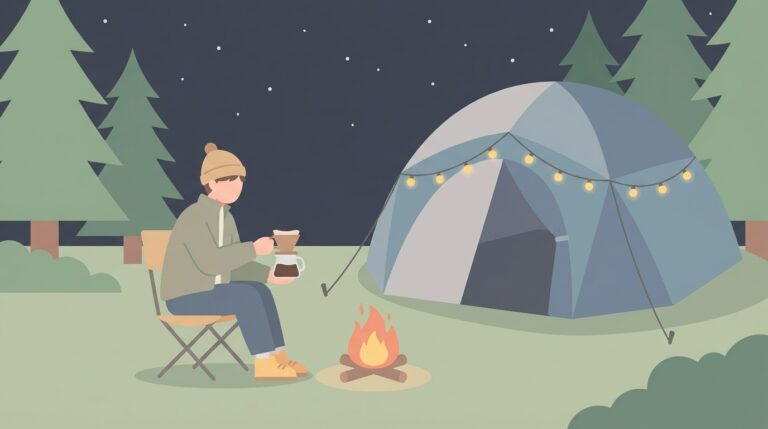
Picture this: You are at a beautiful campsite in Gapyeong, surrounded by pine trees, or maybe you’re just chilling by the Han River. Your Korean friend pulls out a sleek, ultra-lightweight camping chair that practically sets itself up. The fairy lights are twinkling, the samgyeopsal (pork belly) is sizzling on a pristine titanium grill.
You want to compliment their setup. You might want to say, “Nice tent! Did you buy it?”
But wait—in the world of K-Camping, just saying “I bought it” (샀어요, sasseoyo) doesn’t capture the true vibe. In Korea, where hobbies are taken very seriously, there’s a whole specific vocabulary for flexing your gear. If you don’t know these terms, you’re just a tourist. If you do, you instantly become an insider—a true K-Camper.
This guide is based on real questions from intermediate (B2) students who wanted to sound totally natural when talking about their hobbies. Let’s dive into the art of the “subtle Korean flex!”
Phase 2: Core Expression Deep Dive
1. 이번에 새로 장만했어요. (I got/invested in this new one recently.)
- Pronunciation: [ibeone saero jangmanhaesseoyo]
(Tip: ‘jang-man’ sounds like ‘John-man’ but with a softer ‘J’ and a flat ‘ah’ sound.)- Meaning: Literal = “I prepared/provided this newly this time.” / Real nuance = “I finally invested in this high-quality gear.”
- K-Culture Moment: In K-Dramas like Hospital Playlist, when a character sets up a ridiculous amount of high-end camping gear, they don’t just ‘buy’ it. They ‘jangman’ it. It implies you saved up, did your research, and bought something meaningful.
- Editor’s Insight: Use this when you want to subtly brag without sounding arrogant. It sounds much more mature and deliberate than simply saying 샀어요 (I bought it).
- Situation Spectrum:
- Casual (Friends): ✅
- Semi-formal (Co-workers): ✅
- Formal (Boss/Elders): ✅
- 🤔 Think About It: The word jangman (장만) was traditionally used for major life preparations, like preparing food for a huge feast or buying a house. Why do modern Koreans use such a heavy word for hobby gear? What does that say about how seriously they take their downtime?
2. 완전 감성 템이잖아요. (It’s totally an aesthetic item, you know.)
- Pronunciation: [wanjeon gamseong temijanayo]
(Tip: ‘gam’ like ‘gum’, ‘seong’ like ‘sung’.)- Meaning: Literal = “It’s a completely emotional item.” / Real nuance = “It totally fits the aesthetic/Instagram vibe.”
- K-Culture Moment: The biggest trend in Korean camping is ‘Gamseong Camping’ (감성 캠핑). It’s not about surviving in the wild; it’s about wooden tables, drip coffee, warm lighting, and looking effortlessly cozy.
- Editor’s Insight: The suffix
~잖아요(B2 Grammar) is crucial here. It means “come on, you know it too.” It builds instant rapport.- Situation Spectrum:
- Casual (Friends): ✅
- Semi-formal (Co-workers): ⚠️ (Good for close colleagues)
- Formal (Boss/Elders): 🚫 (Too trendy/slangy)
- 🤔 Think About It: Is “looking aesthetic” just as important as functionality in your home country’s camping culture?
3. 역시 캠핑은 장비빨이죠! (As expected, camping is all about the gear!)
- Pronunciation: [yeoksi kaempingeun jangbi-pparijyo!]
(Tip: ‘ppal’ uses a tense ‘p’ sound. Imagine the ‘p’ in ‘spa’, but say it with more force.)- Meaning: Literal = “Camping is the power of equipment!” / Real nuance = “Great gear makes the hobby!”
- K-Culture Moment: Koreans love the word 장비빨 (jangbi-ppal). Whether it’s golf, gaming, or cycling, Koreans tend to gear up like professionals before they even start.
- Editor’s Insight:
장비(Equipment) +빨(Slang suffix for ‘the power/effect of’). Using this phrase makes you sound incredibly fluent and culturally aware.- Situation Spectrum:
- Casual (Friends): ✅
- Semi-formal (Co-workers): ✅
- Formal (Boss/Elders): 🚫 (A bit too informal/slangy)
- 🤔 Think About It: Why do you think the suffix ‘-빨’ (power of) was created in Korean? (e.g., 화장빨 = power of makeup, 조명빨 = power of lighting).
Phase 3: Textbook vs Real Korean
[Situation 1: Splurging on expensive gear]
* 📖 Textbook: 저는 비싼 텐트를 샀습니다. (I bought an expensive tent.)
* 🗣️ Real Korean: 텐트 하나 큰맘 먹고 질렀어요. (I made a big decision and impulse-bought a tent.)
* 💡 Why the difference?: 지르다 (to scream/yell) evolved online to mean “impulse buying” or “splurging.” B2 learners must know 큰맘 먹고 (eating a big heart = making a big resolution).
[Situation 2: Showing jealousy over someone’s gear]
* 📖 Textbook: 이 의자는 아주 좋습니다. (This chair is very good.)
* 🗣️ Real Korean: 와, 이거 완전 탐나는데요? (Wow, I’m totally coveting this!)
* 💡 Why the difference?: 탐나다 is the perfect verb to express a polite, playful jealousy over someone’s belongings without sounding greedy.
Bottom Note: At the B2 level, focus on verbs that express feelings towards objects (탐나다, 지르다, 장만하다) rather than just physical actions (사다, 좋다).
Phase 4: Cultural Context — K-Culture Deep Dive
4-1. Non-Verbal Cues: The Humble Brag
When Koreans show off their gear, they rarely brag directly (“Look how rich I am!”). Instead, they employ Nunchi (눈치). They will set up the expensive tent, casually pat the fabric, sigh, and say, “Ah, this was so hard to find…” You are supposed to read the room and ask, “Wow, is that the new one?” It’s a delicate dance of modesty and pride!
4-2. K-Culture Connection: K-Variety & K-Food
If you watch Korean variety shows like Camping Club or House on Wheels, camping is 10% sleeping and 90% eating.
– The Gear & The Food: The gear you brag about usually revolves around food. The “Griddle” (그리들) for frying pork belly, the titanium cup for morning drip coffee, and the specialized pot for the midnight Ramyeon.
– Chabak (차박): Car camping has exploded. People deck out the trunk of their SUVs with fairy lights and blankets. If you say, “주말에 차박 다녀왔어요” (I went car-camping this weekend), you instantly sound trendy.
Phase 5: Real-Life Roleplay Scenario
Setting: Friday evening, 7 PM. A campground in Gapyeong. You are sitting outside an SUV decorated with fairy lights. Your Korean colleague, Min-su, just finished setting up a shiny new titanium fire pit.
Characters:
– YOU: An expat working in Seoul, excited for your first K-Camping experience.
– Min-su (32): Your friendly Korean coworker who is obsessed with camping gear.
Dialogue:
Min-su: 휴, 드디어 세팅 다 했네요. 어때요?
(Hyu, deudieo seting da haenneyo. Eottaeyo?)
[Phew, finally done setting up. What do you think?]
YOU: 와, 선배님! 텐트랑 화로가 다 새것 같네요?
(Wa, seonbaenim! Tenteurang hwaroga da saegeot gatneyo?)
[Wow, senior! The tent and fire pit all look brand new?]
Min-su: 아, 네. 이번에 가을맞이로 새로 장만했어요.
(A, ne. Ibeone gaeulmajiro saero jangmanhaesseoyo.)
[Ah, yes. I invested in them recently for the autumn season.]
(🎭 Stage Direction: Min-su casually wipes a nonexistent speck of dust off his expensive fire pit)
YOU: 이거 인터넷에서 본 것 같아요. 구하기 힘들다고 하던데.
(Igeo inteoneseseo bon geot gatayo. Guhagi himdeuldago hadeonde.)
[I think I saw this on the internet. I heard it’s hard to get.]
Min-su: 맞아요! 두 달 기다려서 받았어요. 완전 감성 템이잖아요.
(Majayo! Du dal gidaryeoseo badasseoyo. Wanjeon gamseong temijanayo.)
[Right! I waited two months to get it. It’s totally an aesthetic item, you know.]
YOU: 진짜 예쁘네요. 저도 하나 사고 싶어요.
(Jinjja yeppeuneyo. Jeodo hana sago sipeoyo.)
[It’s really pretty. I want to buy one too.]
Min-su: 에이, 캠핑 자주 안 하시면 비싼 거 필요 없어요. 근데… 역시 캠핑은 장비빨이죠! 하하.
(Ei, kaemping jaju an hasimyeon bissan geo pilyo eopseoyo. Geunde… yeoksi kaempingeun jangbi-pparijyo! Haha.)
[Ay, if you don’t camp often, you don’t need an expensive one. But… camping is all about the gear! Haha.]
🔀 Your Turn! How should you respond to Min-su’s flex?
– A) “얼마 주고 샀어요?” (How much did you pay for it?)
– B) “와~ 완전 탐나는데요? 오늘 불멍 제대로 하겠네요!” (Wow~ I totally covet it! We’ll have a proper ‘fire-gazing’ time tonight!)
– C) “저한테는 너무 비싸요.” (It’s too expensive for me.)✅ Best Choice: B — Reason: It uses intermediate vocabulary (탐나다, 불멍) and feeds his pride perfectly without being invasive.
⚠️ Choice A Analysis: While Koreans do talk about money more openly than some cultures, asking the exact price immediately after someone flexes their new hobby gear can break the “emotional (gamseong)” vibe. Wait until he offers the info!
Min-su: 그렇죠? 자, 이제 삼겹살 굽죠!
(Geureochyo? Ja, ije samgyeopsal gupjyo!)
[Right? Now, let’s grill the pork belly!]
Phase 6: 10-Second Shadowing Drill
Practice your intonation. The slashes (/) indicate where to pause naturally.
😊 와~ / 이거 / 완전 감성 템인데요? / 탐난다~
(Wa~ / igeo / wanjeon gamseong temindeyo? / tamnanda~)
Emotion: Bright, genuinely impressed, slightly playful.
😤 역시 / 취미는 / 장비빨이죠!
(Yeoksi / chwimineun / jangbi-pparijyo!)
Emotion: Confident, nodding in strong agreement.
Phase 7: K-Culture Mini Dictionary
| 한국어 | Romanization | English | Cultural Context |
|---|---|---|---|
| 차박 | chabak | Car camping | Sleeping in your car (SUV), highly popularized by K-Dramas and the pandemic. |
| 불멍 | bulmeong | Fire gazing | Staring blankly at a campfire. ‘Bul’ (fire) + ‘Meong’ (spacing out). The ultimate goal of K-Camping. |
| 큰맘 먹고 | keunmam meokgo | With a big resolution | Used before buying something expensive or doing something out of your comfort zone. |
| 지름신 | jireumsin | God of impulse buying | Slang. “지름신이 오셨다” (The impulse-buy god has arrived) means you couldn’t resist buying something. |
Phase 8: Traveler’s Survival Kit
You might not bring a full camping setup to Korea, but you will probably go to the Han River (Hangang) for a picnic, which has a huge gear-rental culture!
🆘 Survival Expressions for Han River Rentals
– 🇰🇷 “텐트 세트 하나 대여할게요.” (Tenteu sete hana daeyeohalgeyo) – “I’d like to rent one tent set.”
– 🇰🇷 “이거 몇 시까지 반납해야 돼요?” (Igeo myeot sikkaji bannaphaeya dwaeyo?) – “By what time do I need to return this?”
– 🇰🇷 “매트 하나 추가할 수 있나요?” (Maeteu hana chugahal su innayo?) – “Can I add one mat?”📌 Editor’s Travel Note:
Around Yeouido or Banpo Hangang Park, you’ll see dozens of rental shops. They rent out a wagon filled with a pop-up tent, picnic mat, table, and even moody fairy lights and a Bluetooth speaker! You usually need to leave your ID card (or passport) as a deposit.
Phase 9: Critical Thinking — “A Step Deeper”
🧠 Think Deeper: The “Flex” Culture in Korean Hobbies (Language & Society)
In Korea, diving into a hobby often means looking the part first. Look at the hikers on Seoul’s mountains—they wear high-end alpine gear just to hike a 2-hour trail. This “장비빨” (gear power) culture isn’t just about showing off wealth. In a highly collective society, having the right gear shows dedication and respect for the community you are joining. It says, “I am taking this seriously.” The language reflects this: you don’t just ‘buy’ a tent; you ‘Jangman’ (carefully prepare) it.
💬 Your Turn: Do people in your culture invest heavily in gear before starting a hobby, or do they prefer to start small and upgrade later? Let me know in the comments!
Phase 10: FAQ & Avoiding Common Mistakes
Q: Can I use “장비빨” with my boss or manager?
Maybe. If you are at a casual weekend gathering and your boss loves camping, saying “부장님, 역시 장비빨이네요!” with a smile is a great flatter. But in the office during a formal meeting? Absolutely not.
Q: Is it rude to ask how much their gear costs?
Koreans are generally more open about prices than Westerners. Asking “이거 꽤 비쌀 것 같은데요?” (This seems pretty expensive?) is fine. However, asking directly “이거 얼마예요?” (How much is this?) to a colleague might break the aesthetic mood. Let them brag first!
❌ Common Mistake:
Translating “I bought it” literally to “내 돈으로 샀어요” (I bought it with my money).
✅ Do this instead:
Use “내돈내산” (Nae-don-nae-san) if you want to use trendy slang. It’s an acronym for “My money, my purchase” often used by YouTubers to prove a product isn’t sponsored!
Phase 11: Summary & Action Items
💡 One-Liner Summary: To flex like a Korean, remember that you didn’t just buy it—you invested in it (장만했어요), it’s all about the aesthetic (감성 템), and hobbies are driven by the power of gear (장비빨)!
🚀 Action Missions:
– 🥉 Bronze (Solo): Look at your favorite hobby item (a camera, a book, a game console) and say out loud: “이번에 새로 장만했어요!”
– 🥈 Silver (Online): Post a picture of your hobby gear on your social media or a Korean language community and write: “역시 [Your Hobby]은/는 장비빨이죠!”
– 🥇 Gold (Real Life): Next time a Korean friend shows you something new they bought, react with: “와, 완전 탐나는데요?”
🏕️ K-Culture Mission: Search for “차박 감성 캠핑” (Chabak Gamseong Camping) on YouTube. Watch a Korean camping vlog for 5 minutes and spot the fairy lights and griddle cooking!
Phase 12: Interactive Challenge Quiz
1. Situational Judgment:
Your Korean friend shows up to a picnic with a $300 ultra-lightweight titanium chair. What is the most natural “K-Camper” reaction?
– A) “의자를 샀군요. 축하해요.” (You bought a chair. Congratulations.)
– B) “와, 의자 새로 장만하셨네요! 완전 감성 템이에요.”
– C) “얼마 주고 샀어요? 환불하세요.”
2. True or False – K-Culture Edition:
In Korean camping culture, “불멍” (Bulmeong) means quickly cooking meat over a huge fire.
– [ T / F ]
(Answers: 1. B – A sounds like a robot, C is insulting! / 2. False – Bulmeong means to space out and peacefully stare at the fire.)
Frequently Asked Questions (FAQ)
Q: What does "이번에 새로 장만했어요. (I got/invested in this new one recently.)" mean in Korean and how do you pronounce it?
A: In Korean, "이번에 새로 장만했어요. (I got/invested in this new one recently.)" is pronounced [ibeone saero jangmanhaesseoyo] and means: Literal = "I prepared/provided this newly this time." / Real nuance = "I finally invested in this high-quality gear."
Q: What does "완전 감성 템이잖아요. (It's totally an aesthetic item, you know.)" mean in Korean and how do you pronounce it?
A: In Korean, "완전 감성 템이잖아요. (It's totally an aesthetic item, you know.)" is pronounced [wanjeon gamseong temijanayo] and means: Literal = "It's a completely emotional item." / Real nuance = "It totally fits the aesthetic/Instagram vibe."
Q: What does "역시 캠핑은 장비빨이죠! (As expected, camping is all about the gear!)" mean in Korean and how do you pronounce it?
A: In Korean, "역시 캠핑은 장비빨이죠! (As expected, camping is all about the gear!)" is pronounced [yeoksi kaempingeun jangbi-pparijyo!] and means: Literal = "Camping is the power of equipment!" / Real nuance = "Great gear makes the hobby!"







