

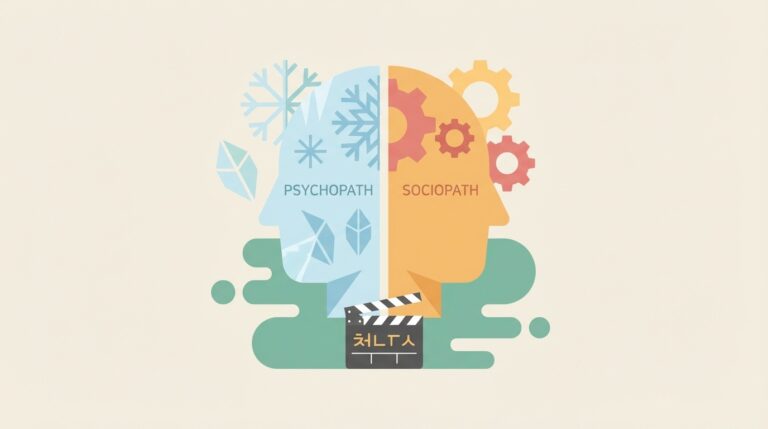
Phase 1: Welcome to the K-Thriller Mindset
Hello, C2 learners! I’m your Daily Hangul Editor.
Picture this: A dimly lit interrogation room. The brilliant profiler sits across from a suspect who looks entirely ordinary—maybe even charming. The profiler leans in, noting the suspect’s micro-expressions. The subtitle reads “He’s a psychopath.” But wait, in another drama, the ruthless, cold-hearted CEO who crushes his competitors is called a “sociopath.” Have you ever wondered how Koreans distinguish between these two deep psychological profiles in everyday conversations and media?
If you’re at the C2 level, you’re no longer just ordering lattes. You’re diving into deep societal issues, analyzing true crime podcasts (which are massive in Korea!), and debating the psychological depths of characters in masterpieces like Beyond Evil or Through the Darkness. Understanding the nuances of criminal psychology in Korean doesn’t just expand your academic vocabulary—it unlocks a whole new level of cultural fluency, allowing you to engage in profound discussions with native speakers.
This guide is crafted from real questions asked by advanced learners who wanted to talk about psychology, society, and K-thrillers like true locals.
Phase 2: Core Expressions Deep Dive
To discuss psychopathy and sociopathy accurately, you need high-level vocabulary. Let’s look at the top three expressions.
1. 공감 능력이 결여되다
- Pronunciation: [gonggam neungnyeogi gyeoryeodoeda] (gyuh-ryuh-dweh-da sounds like rolling the ‘r’ slightly while sighing)
- Meaning: (Literal) Empathy ability is absent. (Real nuance) To completely lack empathy/compassion.
- K-Culture Moment: In a psychological thriller, this is the exact clinical phrase the profiler uses to describe a psychopath who feels zero remorse after a crime.
- Editor’s Insight: While beginners use ‘없다’ (to not have), C2 learners should use ‘결여되다’ (to lack/be devoid of) for formal or analytical discussions.
- Situation Spectrum:
- Casual with friends: ⚠️ (A bit too academic; friends might just say “쟤 공감 능력 제로야” – They have zero empathy)
- Semi-formal/Debates: ✅
- Formal/Professional: ✅
- 🤔 Think About It: Korean separates ‘공감’ (cognitive/emotional empathy) from ‘동정’ (sympathy/pity). Why do you think modern Korean society emphasizes ‘공감 능력’ (the ability to empathize) as a crucial social skill, to the point where lacking it is seen as a severe pathology?
2. 철저하게 위장하다
- Pronunciation: [cheoljeohage wijanghada] (chul-juh-ha-geh wee-jang-ha-da)
- Meaning: (Literal) To thoroughly camouflage. (Real nuance) To meticulously mask one’s true nature to blend into society.
- K-Culture Moment: This perfectly describes the “Sociopath” trope in K-dramas—the friendly neighborhood doctor or the charming coworker who is secretly manipulating everyone behind the scenes.
- Editor’s Insight: Sociopaths are known for their social camouflage. ‘위장하다’ implies a deliberate, calculated effort to hide one’s identity, distinguishing the socially adaptive sociopath from the impulsive psychopath.
- Situation Spectrum:
- Casual with friends: ✅ (Often used playfully, e.g., “너 평소엔 천사인 척 철저하게 위장했구나?” – You thoroughly masked yourself as an angel usually?)
- Semi-formal: ✅
- Formal: ✅
- 🤔 Think About It: In a high-context culture like Korea, where maintaining harmony and ‘saving face’ is vital, how terrifying is the concept of someone who uses this cultural norm to ‘철저하게 위장하다’?
3. 선천적 vs 후천적
- Pronunciation: [seoncheonjeok vs hucheonjeok] (sun-chun-juk vs hoo-chun-juk)
- Meaning: Innate (born with) vs. Acquired (developed after birth/through environment).
- K-Culture Moment: The classic debate in any Korean crime show: Was the monster born (사이코패스 – 선천적), or was the monster created by society and trauma (소시오패스 – 후천적)?
- Editor’s Insight: This is the golden key to comparing the two terms. In Korean psychology discussions, psychopaths are categorized by their ‘선천적’ brain chemistry, while sociopaths are shaped by ‘후천적’ environmental factors.
- Situation Spectrum:
- Casual: ⚠️ (A bit heavy for light chatter)
- Semi-formal: ✅
- Formal/Academic: ✅
- 🤔 Think About It: Korean culture places a heavy emphasis on education and environment (후천적 노력이 중요하다 – acquired effort is important). How does this cultural belief affect how Koreans view crimes committed by sociopaths?
Phase 3: Textbook vs. Real Korean
How do Koreans actually talk about these personality traits in daily life vs. in textbooks?
[Describing a Manipulative Person]
* 📖 Textbook: 그는 반사회적 인격장애를 가지고 있습니다. (He has antisocial personality disorder.)
* 🗣️ Real Korean: 쟤 완전 쏘패(소시오패스) 아니야? 소름 돋아. (Isn’t he a total sociopath? Gives me goosebumps.)
* 💡 Why the difference?: Koreans love abbreviating words for efficiency. ‘쏘패’ (Sso-pae) for Sociopath and ‘싸패’ (Ssa-pae) for Psychopath are widely used in online communities and casual text chats to describe toxic people.
[Describing Lack of Emotion]
* 📖 Textbook: 타인의 고통에 무감각합니다. (They are insensitive to the pain of others.)
* 🗣️ Real Korean: 진짜 피도 눈물도 없어. / 완전 찔러도 피 한 방울 안 나올 사람이야. (Truly no blood or tears. / A person who wouldn’t bleed a drop even if you stabbed them.)
* 💡 Why the difference?: Korean idioms rely heavily on visceral, physical imagery (blood, tears) to express emotional states, making the language much more dramatic and evocative than clinical terms.
Bottom Note: At the C2 level, you should know clinical terms for debates, but using idioms like “피도 눈물도 없다” will make you sound incredibly fluent and culturally attuned.
Phase 4: Cultural Context — K-Culture Deep Dive
4-1. The Dark Side of Nunchi (눈치)
We often teach Nunchi as a positive trait—the emotional intelligence to read a room. But let’s apply this to criminal psychology. In Korean profiling analysis, a psychopath is often described as having absolute zero Nunchi (they cannot comprehend others’ emotions). However, a sociopath is terrifying precisely because they have 뛰어난 눈치 (excellent Nunchi). They read the room perfectly, not to empathize, but to manipulate. Understanding this dark application of Nunchi shows a profound grasp of Korean social dynamics.
4-2. The K-Drama “Sociopath” Trope
In recent years, the term “소시오패스” has been somewhat romanticized in K-Dramas (e.g., Itaewon Class). The media often portrays them as hyper-competent, brutally honest, and extremely successful individuals who just “don’t care about others’ feelings,” rather than clinical criminals.
- Critical View: Because of this media portrayal, it’s become quite common in Korean corporate culture to casually (and sometimes jokingly) call a strict, results-driven boss a “쏘패.” It reflects the intense, high-stress, performance-driven reality of modern Korean society, where hyper-rationality is sometimes mistaken for sociopathy.
Phase 5: Real-Life Roleplay Scenario
Setting: Friday night, 11 PM. You and your Korean friend, Min-su, just walked out of a late-night screening of a brutal Korean psychological thriller. You are now at a nearby Pojangmacha (tent bar), eating spicy udon and drinking soju. The vibe is chill, but the movie left a heavy impression.
Characters:
– YOU: A C2-level Korean learner, a fan of true crime and psychology.
– Min-su (30s): Your close Korean friend, a huge movie buff who loves analyzing plot twists.
Dialogue:
Min-su: 와, 오늘 영화 진짜 미쳤다. 그 범인 연기 본 적 있어? 눈빛이 완전 싸하더라.
(Wa, oneul yeonghwa jinjja micheotda. Geu beomin yeongi bon jeok isseo? Nunbichi wanjeon ssahadeora.)
[Wow, today’s movie was crazy. Did you see the culprit’s acting? His eyes were totally chilling.]
(🎭 Stage Direction: Min-su shivers playfully and pours you a shot of soju.)
YOU: 내 말이. 근데 그 범인, 사이코패스일까 아니면 소시오패스일까? 헷갈리네.
(Nae mari. Geunde geu beomin, saikopaeseuilkka animyeon sosiopaeseuilkka? Hetgalline.)
[Tell me about it. But do you think the culprit was a psychopath or a sociopath? I’m confused.]
Min-su: 내 생각엔 소시오패스 같아. 초반에 완전 착한 이웃인 척 철저하게 위장했잖아.
(Nae saenggagen sosiopaeseu gata. Chobane wanjeon chakhan iusin cheok cheoljeohage wijanghaetjana.)
[I think he’s a sociopath. He thoroughly disguised himself as a super nice neighbor in the beginning.]
YOU: 아, 듣고 보니 그러네. 감정을 조종하는 능력이 엄청나더라고.
(A, deutgo boni geureone. Gamjeongeul jojonghaneun neungnyeogi eomcheongnadeorago.)
[Ah, now that I hear it, you’re right. His ability to manipulate emotions was incredible.]
Min-su: 맞아. 사이코패스는 충동적인데, 걘 범행을 완전 치밀하게 계획했잖아. 우리 회사 김 팀장님처럼…
(Maja. Saikopaeseuneun chungdongjeoginde, gyaen beomhaengeul wanjeon chimilhage gyehoekhaetjana. Uri hoesa Kim timjangnimcheoreom…)
[Exactly. Psychopaths are impulsive, but he planned his crimes meticulously. Just like my boss, Team Leader Kim…]
(🎭 Stage Direction: Min-su takes a sip of soju and sighs deeply.)
YOU: 엥? 김 팀장님이 왜? 갑자기 장르가 스릴러에서 오피스물로 바뀌는데?
(Eng? Kim timjangnimi wae? Gapjagi jangreuga seurilleoeseo opiseumullo bakkwineunde?)
[Huh? Why Team Leader Kim? The genre suddenly changing from thriller to office drama?]
Min-su: 아니, 팀장님이 일은 진짜 잘하시는데, 부하 직원들 갈아 넣을 때 보면 공감 능력이 완전 결여되어 있거든. 진짜 쏘패 같아.
(Ani, timjangnimi ireun jinjja jalhasineunde, buha jigwondeul gara noeul ttae bomyeon gonggam neungnyeogi wanjeon gyeoryeodoeeo itgeodeun. Jinjja ssopae gata.)
[No, it’s just that he’s great at his job, but when he works his subordinates to the bone, he completely lacks empathy. He’s like a true sociopath.]
🔀 Your Turn! How should you respond to Min-su’s corporate venting?
– A) “그 팀장님은 반사회적 인격장애가 틀림없습니다.” (Too clinical and rigid for a pocha.)
– B) “헐, 피도 눈물도 없으시네. 민수 너 진짜 힘들겠다.” (Perfect empathetic response using an idiom.)
– C) “경찰에 신고해!” (Too literal, he’s just venting about his boss!)✅ Best Choice: B — Reason: In Korea, when a friend complains about a superior, the best response is active empathy (‘헐’, matching their energy) and validating their hardship. Using “피도 눈물도 없다” perfectly matches the ‘sociopath’ theme while keeping it colloquial.
YOU: (If you chose B) 헐, 피도 눈물도 없으시네. 민수 너 진짜 힘들겠다. 한 잔 마셔.
(Heol, pido nunmuldo eopseusine. Minsu neo jinjja himdeulgetda. Han jan masyeo.)
[Wow, no blood or tears. Min-su, you must be really having a hard time. Drink up.]
(🎭 Stage Direction: You clink glasses with him.)
Min-su: 크으, 역시 내 마음 알아주는 건 너밖에 없다! 짠!
(Keueu, yeoksi nae maeum arajuneun geon neobakke eopda! Jjan!)
[Kee-eu, as expected, you’re the only one who understands how I feel! Cheers!]
Phase 6: 10-Second Shadowing Drill
Master the intonation of a serious, analytical sentence. Pay attention to the pauses!
😤 그 범인은 / 타인의 고통에 대한 / 공감 능력이 / 완~~전히 결여되어 있어요.
(geu beomineun / taineui gotonge daehan / gonggam neungnyeogi / wan~~jeonhi gyeoryeodoeeo isseoyo.)
“That culprit completely lacks empathy for the suffering of others.”
Pro-tip: Drag out the “완~~” (completely) slightly to emphasize the absolute lack of emotion, keeping your tone steady and low, just like a profiler!
Phase 7: K-Culture Mini Dictionary
| Korean (Hangul) | Romanization | English | Context & Usage |
|---|---|---|---|
| 싸하다 | ssahada | Chilling / bad vibe | Used when you get a sudden cold, ominous feeling about a person or situation. “분위기 싸해졌다” (The mood turned icy). |
| 쏘패 / 싸패 | ssopae / ssapae | Sociopath / Psychopath | Internet slang/abbreviations. Used heavily in casual conversations or online comments regarding toxic behavior. |
| 가스라이팅 | gaseuraiting | Gaslighting | English loanword that became massively popular in Korea recently to describe emotional manipulation in dating or workplaces. |
| 갈아 넣다 | gara neota | To grind someone into something | Slang for exploiting someone’s labor (often used when sociopathic bosses overwork employees). |
| 소름 돋다 | soreum dotda | To get goosebumps | Used when you are genuinely terrified, creeped out, or sometimes extremely amazed by a plot twist. |
Phase 8: Traveler Survival Kit (Trust Your “촉”)
Even if you’re not profiling criminals, understanding human psychology is vital for travel safety. Koreans rely heavily on 촉 (Chok – gut feeling/intuition). If someone gives you a “싸한” (chilling) vibe while traveling, here are C2-level firm boundaries you should know.
🆘 Survival Expressions for Safety
– 🇰🇷 “더 이상 말씀하시면 경찰 부르겠습니다.” (deo isang malsseumhasimyeon gyeongchal bureugetseumnida.)
– 🗣️ Meaning: “If you keep talking, I will call the police.”
– 📍 Where to use: If a stranger is aggressively bothering you on the street or in a subway.
– 💡 Pro Tip: Korea is one of the safest countries with CCTV (씨씨티비) on almost every corner. If you feel threatened, firmly saying “CCTV 다 찍히고 있어요” (Everything is being recorded on CCTV) often stops predatory behavior immediately.📌 Editor’s Travel Note
– Safety Apps: Download the ‘112 긴급신고’ (112 Emergency Call) app.
– Cults/Solicitors: Be aware of people on the street asking “도를 아십니까?” (Do you know the Tao?) or complimenting your “인상이 좋으시네요” (You have a good impression). It’s a common tactic for cult recruitment. Just ignore them or firmly say “괜찮습니다” and walk away. Don’t let your empathy be manipulated!
Phase 9: Critical Thinking — “One Step Deeper”
🧠 Think Deeper: Media vs Reality (미디어와 현실의 괴리)
The casual use of terms like “소시오패스” (sociopath) or “가스라이팅” (gaslighting) in everyday Korean language reflects a fascinating shift. On one hand, it shows that modern Koreans are highly educated and deeply interested in psychology and mental health. On the other hand, it highlights how media can dilute clinical terms.
In K-dramas, a sociopath is often depicted as a sexy, hyper-intelligent CEO who eventually learns to love. In reality, antisocial personality disorder is a serious, destructive clinical condition. By labeling every harsh boss or selfish ex-boyfriend a “쏘패,” are we trivializing real psychological disorders, or are we simply finding modern vocabulary to cope with the immense stress of a highly competitive society?
💬 Your Turn: Does your culture casually use clinical psychological terms (like OCD, bipolar, or sociopath) to describe everyday behaviors? Do you think this is a helpful way to express frustration, or does it cause misunderstandings? Let’s debate in the comments!
Phase 10: FAQ & Avoiding Mistakes
Q: Can I playfully call my Korean friend a ‘싸이코’ (Psycho) like I do in English?
– No / Proceed with extreme caution. In Korean, “싸이코” has a much harsher, more negative connotation than in English. Unless you are extremely close best friends who constantly roast each other, it can severely damage the relationship. Instead, use “너 진짜 특이하다” (You’re really unique/quirky).
Q: Are these terms used in professional news?
– Yes. Korean news anchors and journalists will use the terms 사이코패스 and 소시오패스 directly (often adding ‘성향’ – tendency, e.g., 사이코패스 성향).
❌ Common Mistake #1: Trying to translate “sociopath” into pure, native Korean words.
✅ Do this instead: Just use the English loanwords (소시오패스 / 사이코패스). Attempting to explain it as “사회를 싫어하는 사람” (a person who hates society) will just confuse native speakers.
Phase 11: Summary & Action Items
- One-Liner Summary: Psychopaths are discussed as innate (선천적) and impulsive, while sociopaths are viewed as acquired (후천적) masters of camouflage (위장) who completely lack empathy (공감 능력이 결여되다).
-
Action Mission 3 Steps:
- 🥉 Bronze (Solo): Read the differences between 선천적 and 후천적 out loud 3 times, focusing on the pronunciation.
- 🥈 Silver (Online): Go to a YouTube trailer for a Korean thriller movie and leave a comment: “이 범인 완전 소시오패스 같아, 소름 돋아!”
- 🥇 Gold (Real Life): Discuss a true crime documentary with a Korean friend or language partner using the phrase “공감 능력이 결여되다.”
- K-Culture Mission: Watch an episode of a psychological K-drama like Strangers from Hell (타인은 지옥이다) or Mouse (마우스). Count how many times the words 싸해, 소시오패스, or 사이코패스 appear in the dialogue or Korean subtitles!
Phase 12: Interactive Quiz
1. Situational Judgment: You are watching a news report about a criminal who meticulously planned a white-collar crime for 5 years, acting like a model citizen the whole time. How would a Korean profiler most likely describe this behavior?
– A) 범행이 무척 충동적이네요.
– B) 철저하게 위장한 전형적인 소시오패스 성향입니다.
– C) 타인에게 공감을 너무 많이 했습니다.
2. Fill in the Blank (Slang Edition):
“우리 팀장님은 찔러도 피 한 방울 안 나올 분이야. 완전 ( _____ ) 같아.”
(Hint: The 2-syllable abbreviation for sociopath)
3. True or False:
“In Korean culture, telling a coworker they have ‘뛰어난 눈치’ (excellent Nunchi) is always an insult, implying they are a manipulator.”
(Answers below)
Click here to reveal answers!
Answers:
1. B. The key phrases are ‘철저하게 위장한’ (thoroughly disguised) and ‘소시오패스’ (sociopath), which fits the calculated, long-term planning behavior.
2. 쏘패 (Sso-pae). Using the abbreviation sounds incredibly natural for a complaining scenario.
3. False. Usually, ‘뛰어난 눈치’ is a huge compliment regarding social intelligence! It is only when analyzing criminal psychology that we view a sociopath’s ‘눈치’ as a dark tool for manipulation.
Frequently Asked Questions (FAQ)
Q: What does "공감 능력이 결여되다" mean in Korean and how do you pronounce it?
A: In Korean, "공감 능력이 결여되다" is pronounced [gonggam neungnyeogi gyeoryeodoeda] and means: (Literal) Empathy ability is absent. (Real nuance) To completely lack empathy/compassion.
Q: What does "철저하게 위장하다" mean in Korean and how do you pronounce it?
A: In Korean, "철저하게 위장하다" is pronounced [cheoljeohage wijanghada] and means: (Literal) To thoroughly camouflage. (Real nuance) To meticulously mask one's true nature to blend into society.
Q: What does "선천적 vs 후천적" mean in Korean and how do you pronounce it?
A: In Korean, "선천적 vs 후천적" is pronounced [seoncheonjeok vs hucheonjeok] and means: Innate (born with) vs. Acquired (developed after birth/through environment).







