

Phase 1: Empathy & Immersion (The ‘K-Vlog’ Crisis)
Hello there! I’m your Daily Hangul Editor, your local culture navigator and veteran tutor.
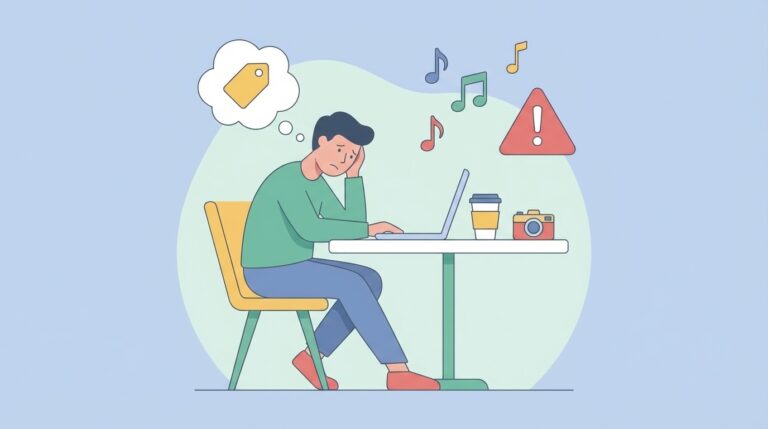
Imagine this: You are sitting in a ridiculously aesthetic cafe in Yeonnam-dong. The sunlight is hitting your iced Americano just right. You whip out your camera, capturing the perfect cinematic vlog shot. But wait… blasting from the cafe’s speakers is the latest K-Pop chart-topper. You think, “It adds a great vibe!” But the moment you upload it to YouTube, BAM. A red exclamation mark. Your video is blocked globally, or your hard-earned ad revenue goes straight to a massive entertainment company.
If you’re a C1-level Korean learner, you aren’t just ordering coffee anymore—you’re interacting with the culture, sharing it, and maybe even creating content about it. But the world of Korean creator jargon, especially regarding copyright (저작권), is vastly different from textbook vocabulary.
Today, we are going deep into the fast-paced, slang-heavy world of Korean YouTube creators. Knowing these terms won’t just save your vlog; it will make you sound like a true Korean digital native. Let’s dive in!
Phase 2: Core Expressions Deep Dive
1. 저작권에 걸리다 (To get hit by copyright)
- Pronunciation: [jeojakgwone geollida] (jeo-jak-gwon-e / geol-li-da)
- Meaning: Literal: To be caught in copyright. / Real nuance: To get a copyright strike or claim.
- K-Culture Moment: You’ll hear this constantly among Korean vloggers. When a creator uploads a video and realizes they accidentally left the cafe’s music on, they’ll groan, “아, 이거 저작권에 걸리겠는데?” (Ah, this is gonna get hit by copyright, isn’t it?)
- Editor’s Insight: The verb 걸리다 means “to be caught” (like a cold, or in a trap). It perfectly captures the feeling of the YouTube algorithm ‘catching’ you out of nowhere. It’s much more natural than the legal term 침해하다 (to infringe).
- Situation Spectrum:
- Casual friends/fellow creators: ✅
- Semi-formal (Business meetings with MCNs): ✅
- Formal/Legal documents: 🚫 (Use 저작권 침해 instead)
- 🤔 Think About It: Why do Koreans use a passive verb like “걸리다” (to be caught) instead of an active verb like “I violated the rules”? How does this reflect the perception of digital algorithms acting as an omnipresent police force?
2. 브금 깔다 (To lay down BGM)
- Pronunciation: [beugeum kkalda] (beu-geum / kkal-da)
- Meaning: Literal: To spread BGM. / Real nuance: To insert background music into a video.
- K-Culture Moment: During a livestream, a fan might tell a streamer, “오디오 비어요, 브금 좀 깔아주세요” (The audio is empty, please lay down some BGM).
- Editor’s Insight: “브금” is the Korean pronunciation of the acronym BGM (Background Music). “깔다” means to lay or spread something flat (like a blanket or floor mats). It graphically represents the action of dragging an audio track onto the bottom layer of a video editing timeline!
- Situation Spectrum:
- Casual friends: ✅
- Semi-formal (colleagues): ⚠️ (A bit too casual for a strict corporate environment)
- Formal: 🚫 (Use 배경음악을 삽입하다)
- 🤔 Think About It: Koreans love taking English acronyms (BGM) and reading them phonetically as new words (Beu-geum). Can you think of any other terms where English is ‘Koreanized’ for internet speed?
3. 노딱 붙다 (To get yellow-tagged)
- Pronunciation: [nottak butda] (no-ttak / but-da)
- Meaning: Literal: Yellow sticker attaches. / Real nuance: To get demonetized (the yellow dollar sign icon on YouTube).
- K-Culture Moment: A YouTuber makes an apology or complaint video titled “저 노딱 붙었어요…” (I got the yellow tag…) because they used copyrighted music or said something controversial.
- Editor’s Insight: “노딱” is short for 노란 딱지 (Yellow sticker). In the past, Korean traffic police put yellow stickers on illegally parked cars. Now, YouTube puts yellow stickers on your videos. It’s the ultimate creator slang.
- Situation Spectrum:
- Casual friends: ✅
- Semi-formal: ⚠️
- Formal: 🚫 (Use 수익 창출 제한 – Monetization restricted)
- 🤔 Think About It: The evolution of “Yellow Sticker” from physical parking tickets to digital demonetization shows how cultural memory adapts to technology. Does your language have a physical metaphor that moved to the digital space?
Phase 3: Textbook vs. Real Korean
[Describing a copyright issue]
* 📖 Textbook Korean: 제 영상이 저작권을 침해했습니다. (My video infringed copyright.)
* 🗣️ Real Korean: 아, 영상 저작권에 걸렸어. (Ah, the video got caught by copyright.)
* 💡 Why the difference?: “침해하다” (to infringe) sounds like you are confessing to a crime in a courtroom. Creators use “걸리다” to express it as an annoying algorithm hurdle.
[Looking for safe music]
* 📖 Textbook Korean: 저작권이 없는 배경음악을 찾고 있습니다. (I am looking for background music without copyright.)
* 🗣️ Real Korean: 무료 브금 (또는 노카피라이트 브금) 찾고 있어요. (Looking for free BGM / No-copyright BGM.)
* 💡 Why the difference?: Efficiency. Typing fast is a virtue in Korean internet culture, so “저작권 없는 배경음악” becomes “무료 브금” (Free BGM).
[Monetization issues]
* 📖 Textbook Korean: 이 영상은 수익을 창출할 수 없습니다. (This video cannot generate revenue.)
* 🗣️ Real Korean: 이거 노딱 붙어서 수익 안 나요. (This got yellow-tagged, so no money comes in.)
* 💡 Why the difference?: “노딱” visually describes the YouTube interface, creating an immediate sense of shared frustration among creators.
Phase 4: Cultural Context — K-Culture Deep Dive
4-1. The Non-Verbal “Nunchi” of Vlogging
When you film in Korea, you must practice 눈치 (Nunchi). If you are in a quiet cafe and start loudly narrating your vlog, you will get stares. Conversely, if you film others without permission, it’s a huge privacy issue in Korea (초상권 – portrait rights). When asking about copyright or permission, always use a soft, slightly apologetic tone. Body language matters: slightly bow your head and use two hands if showing your camera to explain what you’re doing.
4-2. K-Cafe Culture & The BGM Dilemma
If you’ve watched K-Vlogs, you know the aesthetic: sipping coffee, eating a croffle, aesthetic text on screen. But here’s the reality: Korean cafes play music loudly. Why? In Korea, cafes aren’t just for drinking coffee; they are social hubs, study spaces, and mood setters. Owners curate their playlists meticulously to create an “atmosphere” (분위기). Unfortunately for creators, this means every aesthetic shot is polluted with copyrighted K-Pop. This is why K-vloggers have become masters of “audio muting” and “브금 깔기” (laying down BGM).
Phase 5: Interactive Roleplay Scenario
Setting: Saturday afternoon. A trendy editing studio in Mangwon-dong. You just finished editing your Korea trip vlog, but you realize a NewJeans song is clearly audible in the background of your cafe scene. You ask your Korean editor friend, Jihoon, for advice.
Characters:
– YOU: A content creator trying to grow a YouTube channel about Korean culture.
– Jihoon (30): A freelance video editor. Blunt, uses a lot of slang, but very helpful.
Dialogue:
YOU: 지훈아, 내 브이로그 가편집본 봤어? 🎬
(Jihun-a, nae beu-i-ro-geu gapyeonjipbon bwasseo?)
[Jihoon, did you see the rough cut of my vlog?]
Jihoon: 어, 영상미 대박이던데? 근데 너 연남동 카페 씬… 오디오 그대로 쓸 거야?
(Eo, yeongsangmi daebagideonde? Geunde neo yeonnam-dong kape ssin… odio geudaero sseul geoya?)
[Yeah, the visuals are amazing. But that Yeonnam-dong cafe scene… are you going to use the audio as is?]
YOU: 왜? 백색소음 같고 좋지 않아?
(Wae? Baeksaekso-eum gatgo jochi ana?)
[Why? Doesn’t it sound nice like white noise?]
Jihoon: 야, 거기 뉴진스 노래 엄청 크게 나오잖아. 그거 100% 저작권에 걸려.
(Ya, geogi nyujinseu norae eomcheong keuge naojana. Geugeo baekpeo jeojakgwone geollyeo.)
[Hey, that NewJeans song is playing super loud there. That’s 100% getting hit by copyright.]
YOU: 아, 진짜? 수익 창출 못 해?
(A, jinjja? Suik changchul mot hae?)
[Ah, really? I can’t monetize it?]
Jihoon: 어, 바로 노딱 붙을걸? 그냥 오디오 다 날리고 무료 브금 까는 게 안전해.
(Eo, baro nottak buteulgeol? Geunyang odio da nalligo muryo beugeum kkaneun ge anjeonhae.)
[Yeah, you’ll probably get yellow-tagged instantly. It’s safer to just delete all the audio and lay down free BGM.]
🔀 YOUR TURN! How do you respond?
– A) “아… 네, 알겠습니다. 음악을 수정하겠습니다.” (Too formal for a friend!)
– B) “헐, 안 돼! 내 편집… 그럼 브금 추천 좀 해줄래?”
– C) “저작권 침해는 나쁜 범죄야. 내가 잘못했어.”✅ Best Choice: B — “Heol, no way! My editing… Then can you recommend some BGM?” This uses the natural exclamation ‘헐’ and keeps the casual, creator-colleague dynamic.
⚠️ Choice C Analysis: C is grammatically correct but sounds like a robot confessing to a felony. We are talking about YouTube algorithms, not a criminal court!
Phase 6: 10-Second Shadowing Drill
Practice your tone and intonation! Remember, you are frustrated by the algorithm.
😤 아, / 이거 뉴진스 노래 때문에 / 무조건 저작권에 / 걸리겠는데?
(Ah, / igeo nyujinseu norae ttaemune / mujogeon jeojakgwone / geolligenneunde?)
Translation: Ah, because of this NewJeans song, this is definitely going to get hit by copyright, isn’t it?
Phase 7: K-Culture Mini Dictionary (Creator Edition)
| Korean | Romanization | English | Context |
|---|---|---|---|
| 저작권 | jeojakgwon | Copyright | The legal right. Always respect it! |
| 브금 | beugeum | BGM | Background music. Widely used slang. |
| 노딱 | nottak | Yellow Tag | Demonetization icon. A YouTuber’s worst nightmare. |
| 알고리즘을 타다 | algorijeumeul tada | To ride the algorithm | When a video suddenly gets pushed by YouTube. |
| 출처 표기 | chulcheo pyogi | Citing the source | Putting the music credit in the description. |
| 음원 | eumwon | Sound source/Audio track | Refers to the official digital audio file. |
Phase 8: Creator & Travel Survival Kit
If you are traveling in Korea and want to vlog, you need to know how to navigate filming permissions and audio issues on the spot.
🆘 Survival Phrases for Vlogging
– 🇰🇷 “여기서 브이로그 촬영해도 될까요?” (yeogiseo beu-i-ro-geu chwaryeonghaedo doelkkayo?)
– Meaning: Is it okay if I film a vlog here?
– 📍 Where to use: Cafes, small restaurants, pop-up stores.
– 🇰🇷 “제가 유튜브에 올릴 건데, 배경음악 조금만 줄여주실 수 있나요?”
– Meaning: I’m going to upload this to YouTube, could you turn down the BGM a little bit?
– 📍 Where to use: Mostly private studios or very quiet, accommodating cafes (use with extreme caution and Nunchi!).
– 🇰🇷 “다른 분들 얼굴은 다 모자이크 할게요!”
– Meaning: I will blur out everyone else’s faces!
– 📍 Pro Tip: Use this to reassure owners that you respect Korean privacy laws (초상권).📌 Editor’s Travel Note
– Filming in public: Korean privacy laws are very strict. Even if you are in a public space, if someone’s face is clearly visible in your YouTube video without permission, they can demand you take it down. Always use the blur (모자이크) effect!
– No-Kids / No-Tube Zones: Some trendy cafes have signs saying “No YouTuber Zone” because vloggers have caused disruptions in the past. Always ask first!
Phase 9: Critical Thinking Corner — “One Step Deeper”
Korean in the Global Digital Era (언어와 디지털 시대)
🧠 Think Deeper:
The terms we learned today—브금, 노딱, 알고리즘 타다—show how the Korean language is hyper-adapting to the global digital era. Because the internet demands speed, Koreans excel at creating highly visual, efficient slang (like shrinking ‘yellow sticker’ to ‘no-ttak’). This constant influx of digital vocabulary raises a debate in Korea: Are we losing the purity of the Korean language, or is this just a natural, creative evolution of language in a hyper-connected society?💬 Your Turn:
How does your native language adapt to YouTube or TikTok culture? Do you borrow English words, or create entirely new slang like Korea does? Let me know in the comments!
Phase 10: FAQ & Avoiding Mistakes
Q: “Can I use ‘노딱’ in a formal business email to YouTube support?”
No! ‘노딱’ is community slang. If you are writing a formal email or speaking to an official representative, you must use “수익 창출 제한” (Monetization restriction).
Q: “Can I sing a K-Pop song in my vlog without getting a copyright strike?”
If you sing it without the official backing track (음원), it’s usually considered a ‘cover’ and YouTube’s system might share the revenue with the copyright holder. But if you play the official track, you will likely “저작권에 걸려요.”
❌ Common Mistake #1: Saying “카피라이트 당했어요” (I got copyrighted).
✅ Do this instead: Koreans rarely use the English word ‘copyright’ in conversation. Always use 저작권에 걸렸어요.
Phase 11: Summary & Action Items
One-Liner Summary: To survive as a creator in Korea, remember that you don’t “infringe”—you get caught (걸리다) by copyright, and you must lay down (깔다) safe BGM (브금) to avoid the yellow tag (노딱)!
Your Action Missions:
– 🥉 Bronze (Solo): Read the 10-second shadowing drill out loud 3 times, pretending you are a frustrated YouTuber.
– 🥈 Silver (Online): Change your YouTube Studio language settings to Korean for one day and try to find where it says “저작권” and “수익 창출.”
– 🥇 Gold (Real World): Next time you watch a Korean vlog on YouTube, scroll through the Korean comments. I guarantee you will find the word “브금” within 5 minutes!
Phase 12: Interactive Quiz
1. Fill in the blank (Situational):
Your friend uploaded a video but used a BTS song for 10 seconds. He checks his creator dashboard and sighs.
Friend: “아… 영상에 ______ 붙었어. 돈 못 벌어 이제.”
A) 브금
B) 모자이크
C) 노딱
2. True or False — K-Culture Edition:
“It is perfectly acceptable to film strangers’ faces in a Korean cafe as long as you are doing it for a YouTube vlog.” (T/F)
3. Translation Challenge:
How would you say “Please lay down some free BGM” in natural Korean creator slang?
Answers (Click to reveal!)
1. C) 노딱. He can’t make money (돈 못 벌어) because he got the yellow tag.
2. False. Portrait rights (초상권) are taken very seriously in Korea. Always blur (모자이크) strangers’ faces!
3. “무료 브금 좀 깔아주세요.”
Frequently Asked Questions (FAQ)
Q: What does "저작권에 걸리다 (To get hit by copyright)" mean in Korean and how do you pronounce it?
A: In Korean, "저작권에 걸리다 (To get hit by copyright)" is pronounced [jeojakgwone geollida] and means: Literal: To be caught in copyright. / Real nuance: To get a copyright strike or claim.
Q: What does "브금 깔다 (To lay down BGM)" mean in Korean and how do you pronounce it?
A: In Korean, "브금 깔다 (To lay down BGM)" is pronounced [beugeum kkalda] and means: Literal: To spread BGM. / Real nuance: To insert background music into a video.
Q: What does "노딱 붙다 (To get yellow-tagged)" mean in Korean and how do you pronounce it?
A: In Korean, "노딱 붙다 (To get yellow-tagged)" is pronounced [nottak butda] and means: Literal: Yellow sticker attaches. / Real nuance: To get demonetized (the yellow dollar sign icon on YouTube).







