

Phase 1: 공감 — 몰입형 오프닝 (Immersive Hook)
Hello! I’m your Lead Editor at Daily Hangul.
Picture this: You are watching an intense K-Drama. The main characters are sitting at a Pojangmacha (street food tent), downing a shot of Soju. The protagonist looks at his friend and says, “Your feet are so wide!” But the English subtitles read: “You’re so well-connected.”
Wait, what? Wide feet? Did the translator make a mistake?
If you’ve ever felt completely lost because the literal translation of a Korean sentence made zero sense, you are not alone. As a veteran tutor who has lived in Seoul for over a decade, I’ve seen countless B2 students hit this exact wall. You know the grammar, you know the vocabulary, but Korean idioms (관용구) will throw you for a loop!
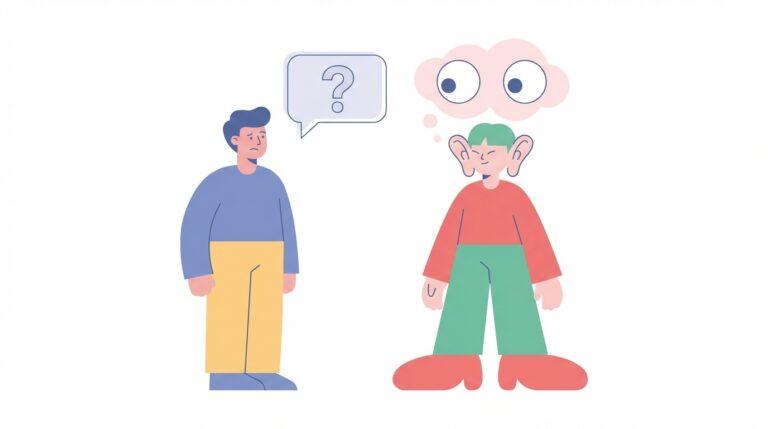
These idioms often use body parts to describe personality traits. If you translate them directly, you’ll end up imagining a monster with huge feet, paper-thin ears, and eyes on top of its head. But if you master them? You will instantly upgrade your Korean from “polite textbook” to “true local insider (인싸).” Let’s decode the top 3 idioms that confuse learners the most!
Phase 2: 핵심 표현 심층 분석 (Deep Dive)
1. 발이 넓다
- Pronunciation: bal-i neolda [Sounds like: bal-ee nul-da – ‘neol’ rhymes with ‘gull’]
- Meaning: (Literal) Wide feet -> (Real) To be well-connected; to have a wide network of acquaintances.
- K-Culture Moment: Think of that one K-Pop idol who is somehow friends with literally everyone in the industry. Fans call them the ultimate ‘Inssa’ (Insider). In daily life, this is your friend who can’t walk down Hongdae street without waving to three different people.
- Editor’s Insight: This isn’t about shoe size! It implies someone “walks around” a lot to meet people. It’s almost always a compliment.
- Situation Spectrum:
[🚫 절대 금지] ———— [⚠️ 주의] ———— [✅ 자유롭게]
- 친구 사이 (Casual): ✅
- 직장 동료 (Semi-formal): ✅
- 직장 상사·어른 (Formal): ⚠️ (Use formal endings: 발이 넓으시네요)
- 🤔 Think About It: Why does Korean use “feet” to describe networking? Before the internet, building a network required physical movement and visiting people. Does your native language have a similar spatial metaphor for relationships?
2. 귀가 얇다
- Pronunciation: gwi-ga yalpda [Sounds like: gwee-gah yalp-dah]
- Meaning: (Literal) Thin ears -> (Real) Gullible; easily persuaded or swayed by others’ opinions.
- K-Culture Moment: You are watching a Korean Home Shopping channel. The host says “Only 5 minutes left!” and your mom immediately grabs her credit card to buy 10 boxes of face masks. You sigh and say, “Mom, your ears are so thin.”
- Editor’s Insight: Imagine your ears are so thin that other people’s words go straight to your brain without any filter. It has a slightly negative or teasing nuance, so be careful who you say it to!
- Situation Spectrum:
[🚫 절대 금지] ———— [⚠️ 주의] ———— [✅ 자유롭게]
- 친구 사이 (Casual): ✅
- 직장 동료 (Semi-formal): ⚠️ (Only if you are close)
- 직장 상사·어른 (Formal): 🚫 (Never use this to criticize a boss!)
- 🤔 Think About It: Koreans highly value community and consensus, which can sometimes make people easily swayed by trends (like the sudden popularity of a specific K-Beauty product). How much do other people’s opinions influence your choices?
3. 눈이 높다
- Pronunciation: nun-i nopda [Sounds like: noon-ee nop-dah]
- Meaning: (Literal) High eyes -> (Real) Picky; having high standards (especially regarding romantic partners or jobs).
- K-Culture Moment: The classic Sogaeting (Blind Date) K-Drama trope! The handsome CEO rejects every potential partner. His mother aggressively fans herself and yells, “Your eyes are too high! That’s why you’re still single!”
- Editor’s Insight: It literally means your gaze is fixed on something unreachable. It’s most commonly used when gossiping about why an attractive friend is still single.
- Situation Spectrum:
[🚫 절대 금지] ———— [⚠️ 주의] ———— [✅ 자유롭게]
- 친구 사이 (Casual): ✅
- 직장 동료 (Semi-formal): ✅
- 직장 상사·어른 (Formal): 🚫 (Too personal)
- 🤔 Think About It: In Korea, finding a partner or a job isn’t just a personal choice; it’s often a family affair. Having “high standards” is sometimes seen as impractical. Are “high standards” viewed positively or negatively in your culture?
Phase 3: 교과서 vs 진짜 한국어 (Textbook vs Real Life)
| 상황 | 📖 교과서 한국어 (Textbook) | 🗣️ 진짜 한국어 (Real Life) | 💡 왜 다를까? (Why the difference?) |
|---|---|---|---|
| Complimenting a friend’s network | 친구가 정말 많으시네요. (You have many friends.) | 와, 완전 마당발이네! (Wow, you’re a front-yard foot!) | “마당발” is a fun noun version of 발이 넓다. It shows you speak natural, colloquial Korean. |
| Teasing a friend for being gullible | 다른 사람 말을 잘 믿네요. (You believe others’ words well.) | 넌 너무 팔랑귀야. (You’re such a fluttering ear.) | “팔랑귀” sounds like ears flapping in the wind. Younger generations love adding sound symbolism! |
| Asking about dating standards | 이상형의 기준이 높아요? (Are your ideal type standards high?) | 혹시 눈이 높으신 편인가요? (Do you tend to have high eyes?) | Direct questions about “standards” sound like a job interview. Idioms soften the blow. |
Bottom Note: As B2 learners, using words like 마당발 and 팔랑귀 shows you have moved beyond memorizing vocabulary and are now absorbing the culture of the language.
Phase 4: 문화적 맥락 — K-Culture 딥다이브 (Cultural Deep Dive)
4-1. 비언어적 요소 (Nunchi and Body Language)
When using these body-part idioms, your non-verbal communication is key. Because idioms like 귀가 얇다 (thin ears) and 눈이 높다 (high eyes) can be interpreted as criticism, you must use 눈치 (Nunchi).
Always smile or use a playful tone to show you are joking. If you say “눈이 높아요” with a deadpan expression, the other person might think you are calling them arrogant!
4-2. K-Drama Connection: The “Sogaeting” (Blind Date) Trope
These idioms are the backbone of K-Drama social scenes. In Korea, being set up on a blind date (소개팅) by friends or coworkers is incredibly common.
When a character is offered a blind date, they might act humble and say, “전 눈 안 높아요” (I don’t have high standards). But then they immediately ask, “Is he tall? Does he look like Cha Eun-woo?”
Critical View: While dramas make it seem like everyone has extreme standards, in real life, most Koreans just want someone who shares their values (and maybe a love for good food!).
Phase 5: 실전 롤플레이 시나리오 (Immersive Roleplay)
시나리오 A: 메인 롤플레이 (The Friday Night BBQ)
Setting: Friday, 7 PM. A smoky Samgyeopsal (pork belly) restaurant near Gangnam Station. Green Soju bottles line the table. You are having a company dinner (회식) with your Korean coworkers.
Characters:
– YOU: A foreign employee who has been working in Seoul for a year. You speak decent Korean but want to impress them.
– Min-su (32): Your friendly Korean coworker who loves playing matchmaker.
Min-su: (Pouring you a drink) OO씨! 주말에 특별한 계획 있어요? 내가 진짜 괜찮은 친구 아는데, 소개팅 할래요?
(OO-ssi! Jumare teukbyeolhan gyehoek isseoyo? Naega jinjja gwaenchaneun chingu aneunde, sogaeting hallayo?)
[OO! Any special plans this weekend? I know a really great friend, wanna go on a blind date?]
YOU: 어… 소개팅이요?
(Eo… sogaeting-iyo?)
[Uh… a blind date?]
Min-su: 네! 성격도 좋고 직장도 탄탄해요. 근데 OO씨 혹시 눈 높아요?
(Ne! Seonggyeokdo joko jikjangdo tantanhaeyo. Geunde OO-ssi hoksi nun nopayo?)
[Yes! Great personality, stable job. But hey, do you have high standards (high eyes)?]
🔀 당신의 차례! 어떻게 대답할까요? (Your Turn! How will you answer?)
– A) “아니요, 제 눈은 얼굴 중간에 있어요.” (No, my eyes are in the middle of my face.)
– B) “에이~ 저 눈 안 높아요! 성격만 봐요.” (Hey~ I don’t have high standards! I only look at personality.)
– C) “네, 저 완전 얼빠예요. 잘생겼어요?” (Yes, I’m totally obsessed with looks. Is he handsome?)✅ Best Choice: B — Reason: In Korea, a little humility goes a long way. Saying “I only look at personality” is the polite, standard response to show you aren’t superficial (even if you secretly care about looks!).
⚠️ Choice A Analysis: A hilarious literal translation fail! You will definitely make them laugh, but they will know you didn’t understand the idiom.
⚠️ Choice C Analysis: ‘얼빠’ (slang for someone obsessed with faces) is very funny and natural among close friends, but a bit too informal and risky for a coworker you don’t know perfectly yet!
시나리오 B: K-Pop Bonus Roleplay (The Rumor Mill)
Setting: A cafe before your favorite K-Pop idol’s fan meeting.
Korean Fan Friend: 야! 트위터 봤어? 우리 오빠 다음 달에 군대 간대! 어떡해 ㅠㅠ
(Ya! Teuwiteo bwasseo? Uri oppa daeum dare gundae gandae! Eotteokhae TT)
[Hey! Did you see Twitter? They say our bias is going to the military next month! What do we do TT]
YOU: 공식 발표 안 났잖아. 안티팬이 쓴 글일걸? 넌 진짜 귀가 얇구나.
(Gongsik balpyo an natjana. Antipaen-i sseun geurilgeol? Neon jinjja gwi-ga yalguna.)
[There’s no official announcement. Probably written by an anti-fan. You really have thin ears (are gullible).]
Phase 6: 10초 섀도잉 드릴 (Shadowing Drill)
Practice saying these out loud with the right emotion and rhythm! The slashes (/) indicate where to pause naturally.
- 😊 Playful/Humble:
에이~ / 저 / 눈 / 안 높아요! / 진짜예요.
(Ei~ / jeo / nun / an nopayo! / jinjjayeyo.)
[Hey~ I don’t have high standards! Really.] -
😲 Impressed:
와, / 민수 씨는 / 정말 / 발이 넓으시네요!
(Wa, / Minsu-ssineun / jeongmal / bal-i neolbeusineyo!)
[Wow, Min-su, you really are well-connected!] -
😤 Teasing a friend:
야, / 너 / 또 속았어? / 진짜 / 귀가 얇다니까.
(Ya, / neo / tto sogasseo? / jinjja / gwi-ga yalptanikka.)
[Hey, you got tricked again? Seriously, you are so gullible.]
Phase 7: K-Culture 미니 사전 (K-Culture Glossary)
| 한국어 | Romanization | English | 맥락 설명 (Context) |
|---|---|---|---|
| 눈치 | nunchi | Social sense / tact | The Korean superpower of reading the room. Crucial when using idioms! |
| 회식 | hoesik | Company dinner | A cornerstone of Korean corporate culture. Usually involves lots of meat and alcohol. |
| 소개팅 | sogaeting | Blind date | A one-on-one date set up by an acquaintance. Very common in your 20s and 30s. |
| 인싸 | inssa | Insider | Slang for someone who is popular, outgoing, and “발이 넓다” (well-connected). |
| 팩폭 | paek-pok | Fact-bomb | Slang for dropping a harsh truth. Telling a friend “눈 좀 낮춰” (Lower your standards) is a total 팩폭. |
Phase 8: 여행자 서바이벌 키트 (Traveler’s Survival Kit)
Wait, do you need idioms for traveling? YES! If you are “thin-eared” (귀가 얇다), you might end up buying unnecessary things at tourist traps!
🆘 서바이벌 표현 (Survival Phrases for Shopping)
– 🇰🇷 “아, 조금 더 둘러보고 올게요.” (Ah, jogeum deo dulleobogo olgeyo.)
– 🗣️ Meaning: “Ah, I’ll look around a bit more and come back.”
– 📍 Where to use: Underground shopping malls (Goto Mall), cosmetic shops in Myeongdong.
– 💡 Pro Tip: When a salesperson is heavily pressuring you (and your thin ears are giving in), this is the polite, universally accepted Korean way to walk away without actually promising to return.📌 Editor’s Travel Note
– Haggling: Haggling is acceptable in traditional markets (Namdaemun, Dongdaemun) but NEVER in department stores, convenience stores, or restaurants.
– Don’t be a 팔랑귀 (gullible shopper): If a skincare salesperson grabs your arm and says this essence will change your life, smile, use your survival phrase, and walk away!
Phase 9: 비판적 사고 코너 — “한 발 더 깊이” (Think Deeper)
🧠 언어와 권력 (Language & High-Context Culture)
Why does the Korean language rely so heavily on body parts to describe personality? Korean culture is deeply “High-Context.” Rather than directly stating an abstract psychological trait, Koreans historically observed physical behaviors to imply meaning. A person who is well-connected must physically walk around a lot (wide feet). Someone who listens to everything lacks a barrier in their ears (thin ears). This reflects a highly observant, interdependent society where people constantly read each other’s physical cues (Nunchi).
💬 Your Turn: Does your native language use body parts to describe someone’s personality? For example, in English, we say someone is “nosy” or has a “big mouth.” Share your culture’s funniest idiom in the comments!
Phase 10: FAQ & 오해 방지 (Troubleshooting)
- Q: Can I tell my boss “부장님은 귀가 얇으시네요” (Boss, you have thin ears)?
- A: NO! 🚫 Even if you use the polite form, “귀가 얇다” is inherently a flaw. Pointing out a superior’s flaw directly violates Korean workplace hierarchy.
- Q: Can I use “발이 넓다” with older people?
- A: YES! ✅ But make sure to use honorifics: “선생님은 정말 발이 넓으시네요.” It is considered a compliment about their social influence.
❌ 흔한 실수 (Common Mistake): Mixing up body parts!
I once had a student say “저는 발이 얇아요” (My feet are thin) when they meant they were gullible. The Koreans at the table just stared at their shoes in confusion!
✅ Fix: Memorize idioms as complete blocks, not individual words.
Phase 11: 요약 및 액션 아이템 (Wrap-up)
💡 One-Liner Summary: In Korea, if your feet are wide, you’re popular; if your ears are thin, you’re gullible; and if your eyes are high, you’re picky!
🎯 Action Mission 3단계:
– 🥉 Bronze (Solo): Stand in front of a mirror and practice the 3 expressions while pointing to your feet, ears, and eyes.
– 🥈 Silver (Online): Go to a language exchange app (like HelloTalk) and post: “저는 귀가 얇은 편이에요. 그래서 쇼핑할 때 조심해야 해요!”
– 🥇 Gold (Real World): The next time a Korean friend suggests a restaurant, jokingly tell them: “저는 입맛 기준이 높아요! (눈이 높다 applied to taste!).”
🍿 K-Culture Mission:
Turn on a modern K-Drama (like Queen of Tears or Business Proposal). Pay close attention during any blind date scene or gossip scene. I guarantee you will hear “눈이 높다” or “발이 넓다” at least once!
Phase 12: 퀴즈 — 인터랙티브 챌린지 (Interactive Quiz)
1. Situational Judgment: Your friend Min-ji just bought a $500 vacuum cleaner because a YouTuber said it was “life-changing.” What should you tell her?
– A) 넌 발이 너무 넓어!
– B) 넌 눈이 너무 높아!
– C) 넌 귀가 너무 얇아!
(Answer: C. She is easily persuaded!)
2. Fill in the Blank:
“재석 씨는 아는 사람이 정말 많네요. 완전 ( ___ )이 넓으시네요!”
(Answer: 발 – bal. Meaning well-connected.)
3. True or False – K-Culture Edition:
In Korea, it is completely unacceptable to ask someone if they have “high standards” (눈이 높다) regarding dating when you are close friends.
(Answer: False. Friends ask this all the time, especially when offering to set you up on a blind date / Sogaeting!)
4. Roleplay Consequence: In Phase 5, if you chose Option A (“My eyes are in the middle of my face”) during the company dinner, what would happen?
(Answer: It’s a literal translation fail. They would laugh, but they’d realize you completely missed the cultural idiom about having high dating standards.)
Frequently Asked Questions (FAQ)
Q: What does "발이 넓다" mean in Korean and how do you pronounce it?
A: In Korean, "발이 넓다" is pronounced [bal-i neolda [Sounds like: bal-ee nul-da - 'neol' rhymes with 'gull'] and means: (Literal) Wide feet -> (Real) To be well-connected; to have a wide network of acquaintances.
Q: What does "귀가 얇다" mean in Korean and how do you pronounce it?
A: In Korean, "귀가 얇다" is pronounced [gwi-ga yalpda [Sounds like: gwee-gah yalp-dah] and means: (Literal) Thin ears -> (Real) Gullible; easily persuaded or swayed by others' opinions.
Q: What does "눈이 높다" mean in Korean and how do you pronounce it?
A: In Korean, "눈이 높다" is pronounced [nun-i nopda [Sounds like: noon-ee nop-dah] and means: (Literal) High eyes -> (Real) Picky; having high standards (especially regarding romantic partners or jobs).







