

Phase 1: Immersive Hook (Welcome to the K-Apartment Life!)
Hello! I’m the Lead Editor at Daily Hangul.
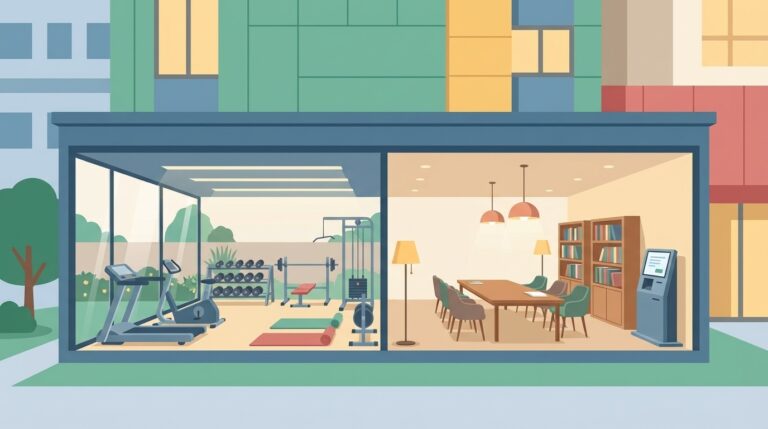
Picture this: You are watching a K-Drama like Sky Castle or Happiness. The characters don’t just live in their apartments; they socialize, scheme, and fall in love in the building’s pristine gym, the elite study room, or the indoor golf zone. You might be wondering, “Do Korean apartments really have all that?”
Yes, they do! Modern Korean apartment complexes (아파트 단지) are like self-contained mini-cities. These premium “Community Centers” (커뮤니티 센터) are exclusively for residents (입주민). Whether you are renting a place in Seoul, staying at an Airbnb, or visiting a Korean friend, navigating these facilities is a true insider experience.
But here is the catch: You can’t just walk in. There are strict rules, access cards, and a whole lot of Nunchi (Korean social sense) involved. If you don’t know the right phrases, you might get turned away at the gym door! Today, let’s learn how to access and use these facilities like a true local.
Phase 2: Deep Dive into Core Expressions
Let’s look at the 3 most crucial expressions you need to survive the community center.
1. 몇 동 몇 호 사세요? (Which building and unit do you live in?)
- Pronunciation: myeot dong myeot ho saseyo? [myeot-dong myeot-ho sa-se-yo]
- Meaning: Literal: What building and what unit do you live in? / Real nuance: Prove you live here.
- K-Culture Moment: You walk into the apartment gym (헬스장) looking ready to work out. The trainer at the desk politely stops you. In Korean apartment complexes, buildings are categorized by ‘Dong’ (동 – Building) and ‘Ho’ (호 – Unit number), like 101-dong 203-ho.
- Editor’s Insight: This isn’t small talk! They are verifying if you are an authorized resident. Always memorize your Dong and Ho.
- Situation Spectrum:
[🚫 Never] ———— [⚠️ Be Careful] ———— [✅ Freely]
- Security/Staff asking you (Formal): ✅
- Asking a stranger in the elevator (Casual): 🚫 (Too invasive!)
- 🤔 Think About It: In many Western countries, knowing your neighbor’s exact apartment number isn’t common unless you’re close. Why do you think Korean society organizes residential identity so strictly by building and unit numbers?
2. 입주민 카드 찍어주세요. (Please tap your resident card.)
- Pronunciation: ipjumin kadeu jjigeojuseyo. [ip-ju-min ka-deu jji-geo-ju-se-yo]
- Meaning: Literal: Please stamp the resident card. / Real nuance: Scan your access card here.
- K-Culture Moment: To enter the study room (독서실) or use the gym lockers, you usually need a physical card or a QR code on your apartment app. The verb 찍다 (to stamp/take a picture) is universally used for tapping any electronic card in Korea.
- Editor’s Insight: If you hear the word “찍어주세요” (jjigeojuseyo), just look for the glowing card reader and tap your phone or card!
- Situation Spectrum:
[🚫 Never] ———— [⚠️ Be Careful] ———— [✅ Freely]
- Staff to resident (Polite): ✅
- Resident to friend (Casual): ✅ (e.g., “네 카드 찍어” – Tap your card)
- 🤔 Think About It: Korea is incredibly digitalized. From buses to apartments, everything is “tapped” (찍다). How does this cashless, keyless culture change daily interactions?
3. 조금만 조용히 해 주실 수 있나요? (Could you please be a little quieter?)
- Pronunciation: jogeumman joyonghi hae jusil su innayo? [jo-geum-man jo-yong-hi hae ju-shil su in-na-yo]
- Meaning: Literal: Could you do quietly just a little? / Real nuance: You are being too loud, please keep it down.
- K-Culture Moment: You are in the apartment’s study room (독서실). It is dead silent. Someone is aggressively clicking their multi-color pen or breathing too loudly. You use this polite but firm phrase.
- Editor’s Insight: Korean study rooms are fiercely quiet. You can’t just yell “Be quiet!” (조용히 해!). You must use this extremely polite, indirect request to avoid a huge conflict.
- Situation Spectrum:
[🚫 Never] ———— [⚠️ Be Careful] ———— [✅ Freely]
- Stranger in a study room (Polite): ✅
- Close friend (Casual): 🚫 (Too formal, just say “야 조용히 해” – Hey, keep it down)
- 🤔 Think About It: Why does Korean have such long, indirect phrasing for asking someone to stop doing something? It’s all about saving face (체면).
Phase 3: Textbook vs Real Life
| Situation | 📖 Textbook Korean | 🗣️ Real Korean | 💡 Why the difference? |
|---|---|---|---|
| Staff asking for your ID | 여기는 주민 전용 시설입니다. (This is a resident-only facility.) | 입주민이신가요? (Are you a resident?) | “Are you a resident?” is a softer, more indirect way to check your status. |
| Trying to find a seat in the study room | 빈자리가 없습니다. (There are no empty seats.) | 만석이에요. (It’s full.) OR 자리 다 찼어요. (Seats are all filled.) | 만석 (Manseok) is a common Hanja word for “fully booked” used everywhere from cafes to buses. |
| Checking in at the gym desk | 이름과 호수를 적으십시오. (Please write your name and unit.) | 동호수 적어주세요. (Please write Dong and Ho.) | Efficiency! Koreans shorten ‘Building and Unit’ to the compound word 동호수 (Dong-ho-su). |
Bottom Note: Stick to “만석이에요” when checking if the study room is full. It sounds incredibly natural and fluent!
Phase 4: Cultural Deep Dive
4-1. Non-verbal Communication: The “Study Room Stare”
In an apartment 독서실 (study room), spoken language is actually your last resort. Before saying “조금만 조용히 해 주실 수 있나요?”, Koreans use a non-verbal warning: The Stare. They will sigh softly, look up from their book, and make brief eye contact with the noisy person. This is applied Nunchi (눈치). If you get ‘The Stare’, quickly check if your earphones are leaking sound!
4-2. K-Culture Connection: The K-Drama “Premium Apartment” Trope
If you’ve watched K-Dramas featuring wealthy families, the apartment community center is the ultimate social battlefield. In reality, these facilities are a huge point of pride for Koreans. Real estate values often depend on how good the gym (헬스장), indoor golf simulator (골프장), and kids’ cafes are!
Critical View: Dramas show perfectly styled characters working out alone in an empty, glittering gym. Real life? The apartment gym at 7 PM on a weekday is a battlefield of tired office workers fighting for the last available treadmill! Also, remember to bring your indoor shoes (실내화); using outdoor shoes in the gym is a huge taboo.
Phase 5: Immersive Roleplay
Scenario A: The Gym Gatekeeper
- Setting: 7:30 PM on a Tuesday. The sleek, brightly lit gym of ‘Xi Apartments’ in Gangnam. You are staying at your friend’s place for a month and want to hit the treadmill.
- Characters:
- YOU: Confident but slightly jet-lagged.
- Trainer Kim (28): Friendly but strictly follows the rules.
Trainer Kim: 안녕하세요! 입주민이신가요? 🏋️♂️
(annyeonghaseyo! ipjuminisingayo?)
[Hello! Are you a resident?]
(🎭 Stage Direction: Trainer Kim politely stands up from the front desk)
YOU: 네, 맞아요.
(ne, majayo.)
[Yes, I am.]
Trainer Kim: 아, 네! 출입 명부에 동호수 먼저 적어주세요.
(a, ne! churip myeongbue donghosu meonjeo jeogeojuseyo.)
[Ah, okay! Please write your Dong and Ho on the entry log first.]
🔀 Your Turn! How do you reply?
– A) “저 외국인인데요?” (I am a foreigner.)
– B) “네, 102동 504호예요.” (Yes, it’s Building 102, Unit 504.)
– C) “동호수가 뭐예요?” (What is Dong-ho-su?)✅ Best Choice: B — Always have your Dong and Ho memorized! If you are a guest, make sure your host registered you.
⚠️ Choice A Analysis: Being a foreigner doesn’t exempt you from the resident verification rules. It might just cause confusion!
Scenario B: The Study Room Silence
- Setting: 11 PM in the apartment 독서실. It’s so quiet you can hear a pin drop.
- Situation: The person next to you is listening to K-Pop, and the bass is leaking through their headphones.
- YOU: 저기요… 죄송하지만 노래 소리 조금만 줄여주실 수 있나요?
(jeogiyo… joesonghajiman norae sori jogeumman juryeojusil su innayo?)
[Excuse me… I’m sorry, but could you turn down the music volume just a little bit?] - Neighbor: 앗, 죄송합니다! (Takes off headphones in a panic and bows head)
Phase 6: 10-Second Shadowing Drill
Practice these sentences out loud to nail the intonation!
- 😊 밝게 (Brightly):
저 / 101동 203호 / 입주민인데요.
(jeo / baeg-il-dong i-baek-sam-ho / ipjumonindeyo.) -
🥺 미안한 듯이 (Apologetically):
죄송하지만, / 조금만 조용히 / 해 주실 수 있나요?
(joesonghajiman, / jogeumman joyonghi / hae jusil su innayo?)
Phase 7: K-Culture Glossary (Mini Dictionary)
| Korean | Romanization | English | Context |
|---|---|---|---|
| 단지 | danji | Apartment complex | A group of apartment buildings managed together. |
| 입주민 | ipjumin | Resident | The magic word that grants you access to all facilities. |
| 동호수 | donghosu | Bldg & Unit No. | Your ultimate ID inside the complex. (e.g., 101동 203호) |
| 헬스장 | helseujang | Gym/Fitness center | “Health Jang” is Konglish for Gym. |
| 독서실 | dokseosil | Study room | A highly regulated, silent room for studying. |
| 실내화 | sillaehwa | Indoor shoes | Crucial for the gym! Do not wear street shoes. |
Phase 8: Traveler’s Survival Kit
Even if you’re just renting an Airbnb for a week in Korea, you might have access to these facilities! Here is your quick survival kit.
🆘 Survival Expression #1
– 🇰🇷 “게스트 출입 되나요?” (geseuteu churip doenayo?)
– 🗣️ Sound guide: [ge-seu-teu chu-rip dwe-na-yo?]
– 📍 Where to use: Asking if friends/guests can enter the facility.
– 💡 Pro Tip: Most premium apartments charge a small fee (e.g., 3,000 KRW) for guests, which is automatically billed to the resident’s monthly maintenance fee!📌 Editor’s Travel Note
– The Wall Pad (월패드): Most reservations for the gym, golf screen, or study room are done via a smart tablet on the living room wall of the apartment, or a dedicated smartphone app.
– Trash Rules: Don’t throw your personal trash in the community center. Korean recycling (분리수거) is strict!
Phase 9: Think Deeper — “One Step Further”
🧠 Think Deeper: Media vs Reality & The Study Culture
In K-Dramas, apartment study rooms are often depicted as places where rich kids are forced to study for college entrance exams (Suneung). However, if you visit a real apartment 독서실, you will see a different reality. You’ll find 40-something office workers studying for professional real estate licenses, or 20-somethings preparing for civil service exams. The “study room” represents Korea’s lifelong learning culture and the intense societal pressure to constantly upgrade one’s qualifications. The absolute silence demanded in these rooms isn’t just a rule; it’s a communal respect for everyone’s hard work.
💬 Your Turn: Does your country have a culture of silent, public study spaces? How do adults in your culture prepare for career changes? Share in the comments!
Phase 10: FAQ & Troubleshooting
Q: Can I use informal language (반말) with the gym staff if they look younger than me?
A: 🚫 No! Always use polite language (존댓말). They are providing a service, and maintaining a respectful distance is expected in Korean society.
Q: What happens if I lose my resident card (입주민 카드)?
A: Go to the Management Office (관리사무소 – gwallisamuso). Say: “입주민 카드 잃어버렸어요” (I lost my resident card).
❌ Common Mistake #1: Walking into the gym with the sneakers you wore outside.
✅ Do this instead: Bring a separate pair of clean indoor shoes (실내화) in your bag and change in the locker room. This is a very strict rule in Korea!
❌ Common Mistake #2: Eating snacks in the study room.
✅ Do this instead: Drink water or coffee quietly, but crunchy snacks or smelly food are strictly forbidden.
Phase 11: Wrap-up & Action Items
✨ One-Liner Summary: To enjoy Korea’s luxurious apartment facilities, memorize your “Dong and Ho” and master the art of silent Nunchi!
🎯 Action Mission 3 Steps:
– 🥉 Bronze (Solo): Say “저는 (Your Building)동 (Your Unit)호 입주민입니다” out loud 3 times.
– 🥈 Silver (Online): Comment below with your favorite community facility you’d love to try (Gym, Study Room, Golf, Sauna?).
– 🥇 Gold (Real Life): Next time you stay in Korea, confidently write down your 동호수 at the front desk without asking for help!
🎬 K-Culture Mission:
Watch a modern K-Drama (like Queen of Tears or Penthouse) and spot a scene that takes place in an apartment community center. Notice how they treat the staff and other residents!
Phase 12: Interactive Quiz
1. You are at the gym desk and the trainer asks: “몇 동 몇 호 사세요?” What should you do?
– A) Say “I am American.”
– B) Give them your building and unit number (e.g., 105동 302호).
– C) Give them your phone number.
2. Fill in the blank:
You want to enter the study room, but the door is locked. A sign points to the scanner. You remember the phrase: “입주민 카드를 ______ 주세요.”
– A) 먹어 (eat)
– B) 버려 (throw away)
– C) 찍어 (tap/scan)
3. True or False – K-Culture Edition:
“It is perfectly fine to take a quick phone call inside the apartment 독서실 (study room) as long as you whisper.”
(Answers: 1. B, 2. C, 3. False – Always step outside the room to take any phone calls!)
Did you survive the community center? Leave a comment below if you have ever experienced Korean apartment culture!
Frequently Asked Questions (FAQ)
Q: What does "몇 동 몇 호 사세요? (Which building and unit do you live in?)" mean in Korean and how do you pronounce it?
A: In Korean, "몇 동 몇 호 사세요? (Which building and unit do you live in?)" is pronounced [myeot dong myeot ho saseyo? [myeot-dong myeot-ho sa-se-yo] and means: Literal: What building and what unit do you live in? / Real nuance: Prove you live here.
Q: What does "입주민 카드 찍어주세요. (Please tap your resident card.)" mean in Korean and how do you pronounce it?
A: In Korean, "입주민 카드 찍어주세요. (Please tap your resident card.)" is pronounced [ipjumin kadeu jjigeojuseyo. [ip-ju-min ka-deu jji-geo-ju-se-yo] and means: Literal: Please stamp the resident card. / Real nuance: Scan your access card here.
Q: What does "조금만 조용히 해 주실 수 있나요? (Could you please be a little quieter?)" mean in Korean and how do you pronounce it?
A: In Korean, "조금만 조용히 해 주실 수 있나요? (Could you please be a little quieter?)" is pronounced [jogeumman joyonghi hae jusil su innayo? [jo-geum-man jo-yong-hi hae ju-shil su in-na-yo] and means: Literal: Could you do quietly just a little? / Real nuance: You are being too loud, please keep it down.







