

Phase 1: The Immersive Hook
Greeting: 안녕하세요! This is your Daily Hangul Senior Editor.
Imagine a scene from a classic K-Drama like Descendants of the Sun or early episodes of D.P. The protagonist is cut off from the world, writing a tearful handwritten letter by moonlight, wondering if his love is waiting. Cut to 2024.
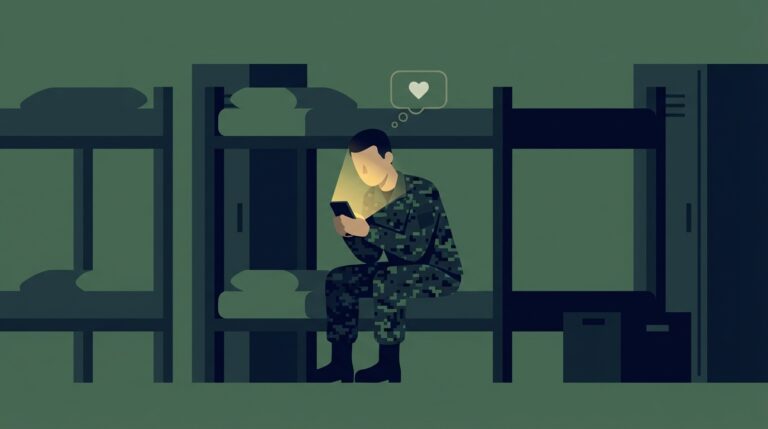
It’s 5:30 PM in a barracks in Gangwon-do. A whistle blows, but instead of rushing to a formation, soldiers rush to a locker. Why? It’s ‘Phone Bulchul’ (폰 불출 – Phone Distribution) time. Suddenly, the barracks are filled with the sounds of KakaoTalk notifications, YouTube intros, and video calls to girlfriends.
The Korean military has undergone a massive paradigm shift. For a C2 learner, understanding this isn’t just about vocabulary; it’s about understanding the clash between strict hierarchy and the digital generation. Today, we explore how smartphones have rewritten the script of mandatory service.
Phase 2: Deep Dive into Core Expressions
1. 일과 후 (Ilgwa Hu)
- Pronunciation: [il-gwa-hu]
- Meaning: After daily duties / After working hours
- Nuance: Ilgwa refers to the strictly scheduled daily routine of a soldier. Adding hu (after) marks the transition from “soldier mode” to “civilian mode” within the base. This is the ‘golden time’ for phone usage.
- K-Culture Moment: In recent reality shows like The Iron Squad (강철부대), you often hear soldiers reminiscing, “일과 후에는 헬스장에서 살았습니다” (I lived in the gym after duty hours).
- Editor’s Insight: This term represents freedom within confinement. It’s the time when rank matters slightly less, and personal identity returns.
- Situation Spectrum:
[🚫 Formal Report] ———— [⚠️ Semi-Formal] ———— [✅ Casual]- Note: This is a standard administrative term, safe to use in all contexts, but the activities described during this time define the formality.
- 🤔 Think About It: Why does the Korean military emphasize the distinction between ‘duty’ and ‘rest’ more strictly than civilian jobs? How does this reflect the concept of Gong-Sa (Public vs. Private) distinction?
2. 개인 정비 (Gaein Jeongbi)
- Pronunciation: [gae-in-jeong-bi]
- Meaning: Personal Maintenance Time
- Nuance: Literally “fixing/maintenance of the individual.” In the past, this meant polishing boots, sewing buttons, or resting. Now, it is synonymous with “Smartphone Time.”
- K-Culture Moment: If you follow K-Pop idols currently serving (like BTS members), when they post on Weverse, they are doing it during Gaein Jeongbi.
- Editor’s Insight: It sounds mechanical, doesn’t it? Calling free time “maintenance” implies that even rest is for the purpose of being ready for the next battle.
- Situation Spectrum:
[🚫 Civilian Life] ———— [⚠️ Ex-Military Chat] ———— [✅ Military Context]- Civilians rarely use this unless joking about “maintaining” themselves (showering/resting).
- 🤔 Think About It: The term treats the soldier as a ‘machine’ or ‘asset’ to be maintained. How does language shape the dehumanization or objectification necessary in military culture?
3. 보안 위반 (Boan Wiban)
- Pronunciation: [bo-an-wi-ban]
- Meaning: Security Violation
- Nuance: The biggest fear regarding smartphones. Taking photos of maps, screens, or classified equipment.
- K-Culture Moment: You might see news articles where a soldier is punished for uploading a photo of the barracks interior to Instagram. That is a classic Boan Wiban case.
- Editor’s Insight: This is the “Red Line.” The freedom of the smartphone ends where Boan begins.
- Situation Spectrum:
[🚫 Casual Joke] ———— [⚠️ Warning] ———— [✅ Serious Context]
Phase 3: Textbook vs. Real Life
| Situation | 📖 Textbook Korean | 🗣️ Real Korean (Army Ver.) | 💡 The Cultural Why |
|---|---|---|---|
| Receiving the phone | 핸드폰을 받았습니다. (I received the phone.) |
폰 불출받았습니다. (I got phone ‘distribution’.) |
‘불출’ is military/admin jargon for issuing supplies. It emphasizes the item belongs to the state, not you. |
| Calling a lover | 보고 싶어서 전화했어. (I called because I miss you.) |
그린비 말고 카톡으로 봐. (Let’s use Kakao, not Greenbee.) |
‘Greenbee’ was the expensive payphone service. Now, video calls on Kakao are the norm. Efficiency wins. |
| End of usage time | 이제 전화를 끊어야 해요. (I have to hang up now.) |
폰 반납할 시간이야. (It’s time to ‘return’ the phone.) |
You don’t just ‘stop using’ it; you must physically surrender (반납) the device to the command center. |
💡 Editor’s Note: Even with smartphones, the vocabulary remains administrative. It reminds soldiers that the privilege can be revoked at any time.
Phase 4: Cultural Deep Dive — The Death of the ‘Collect Call’
4-1. Non-verbal: The 9:00 PM Silence
Just as Cinderella leaves at midnight, Korean soldiers must return their phones by 9:00 PM (usually). The atmosphere shifts instantly. The collective dopamine hit ends, and the reality of the barracks returns. If you are dating a soldier, never keep them on the phone past 8:58 PM. It causes immense stress regarding their unit hierarchy.
4-2. K-Culture Connection: The Evolution of ‘Gomsin’
- The Old Trope: In older ballads and dramas, the “Gomsin” (rubber shoes – waiting girlfriend) would write a letter daily and wait weeks for a reply.
- The New Reality: Now, couples use apps like ‘The Camp’ (더캠프) to check meal plans and training schedules in real-time. The romantic longing (Han) has been replaced by digital anxiety (“He read my message but didn’t reply? Is he training or ignoring me?”).
- Critical View: Does constant connection make the service feel shorter, or does it prevent the soldier from fully adapting to military life? This is an ongoing debate in Korean society.
Phase 5: Immersive Roleplay
Setting: 20:50 (8:50 PM). Inside the barracks (생활관). Tension is rising as the deadline to return phones approaches.
Characters:
– YOU: A Sergeant (병장) who is relaxed but needs to set an example.
– Min-jae: A new recruit (이등병) who is frantically texting his girlfriend and losing track of time.
Dialogue:
Min-jae: (Typing furiously, sweating) 아, 제발 조금만 더…
(Ah, jebal jogeumman deo…)
(English) Ah, please, just a little more…
YOU: 야, 김민재. 너 시계 안 보냐? 불출함 잠그기 5분 전이다.
(Ya, Kim Min-jae. Neo sigye an bonya? Bulchulham jamgeugi obun jeonida.)
(English) Hey, Kim Min-jae. Don’t you see the clock? 5 minutes before we lock the distribution box.
Min-jae: 죄송합니다, 김 병장님! 여자친구가 울고 있어서… 1분만 더 하면 안 되겠습니까?
(Joesonghamnida, Gim byeongjangnim! Yeojachinguga ulgo isseoseo… ilbunman deo hamyeon an doegessseumnikka?)
(English) I’m sorry, Sergeant Kim! My girlfriend is crying… can I just have 1 more minute?
🔀 Decision Point: How do you respond?
Option A) “안 돼. 지금 바로 반납해. 너 때문에 우리 분대 전체가 욕먹어.” (Strict discipline)
Option B) “야, 나도 겪어봐서 아는데… 딱 1분이다. 걸리면 네가 책임져.” (Empathy with risk)
Option C) “울면 네가 달래줘야지. 내가 당직사관님한테 말 잘 해줄게.” (Unrealistic hero)
✅ Best Choice: Option A.
Why? In the military, Collective Responsibility (연대 책임) is king. If one person is late, the whole squad loses phone privileges tomorrow. Option B is kind but risky. Option C is a fantasy; a Sergeant cannot override the Officer on Duty easily.
Phase 6: 10-Second Shadowing Drill
Feel the urgency and relief of connecting with the outside world.
😊 (Relieved/Excited):
드디어 / 일과 끝났다! / 폰 켜니까 / 살 것 같네.
(Deudieo / ilgwa kkeutnatda! / Pon kyeonica / sal geot ganne.)
“Finally, the daily routine is over! Turning on my phone makes me feel alive.”
Phase 7: K-Culture Mini Glossary
| Korean | Romanization | Meaning | Context |
|---|---|---|---|
| 곰신 | Gomsin | Rubber Shoes | A girlfriend waiting for her partner to finish military service. |
| 군돌이 | Gundori | Army Boy | An app soldiers use to calculate exactly how many days are left until discharge. |
| 행정반 | Haengjeongban | Admin Office | The place where phones are stored and charged (the ‘morgue’ for phones). |
| 전역 | Jeonyeok | Discharge | The ultimate goal. Soldiers check their D-Day app every single day during ‘Personal Maintenance’. |
Phase 8: Traveler’s Survival Kit (Military Context)
While tourists don’t serve, you might visit the DMZ or encounter soldiers on leave in areas like Yongsan or Dongseoul Terminal.
🆘 Survival Expression: Prohibited Areas
– 🇰🇷 “여기 사진 찍으면 안 되나요?” (Yeogi sajin jjigeumyeon an doenayo?)
– 🗣️ Meaning: “Is it forbidden to take photos here?”
– 📍 Context: Near military bases, airports, or DMZ tours.
– 💡 Pro Tip: If a sign says ‘보안 구역’ (Security Zone), put the phone away immediately. Military police take Boan Wiban very seriously, even for tourists.📌 Editor’s Note:
If you see soldiers in uniform at a cafe, they are likely using their precious smartphone time. Avoid staring or filming them, as they are sensitive about their image being uploaded online while in uniform.
Phase 9: Critical Thinking — “Think Deeper”
Topic: Connectivity vs. Security (The Dual-Edged Sword)
The introduction of smartphones in 2020 was a historic human rights improvement for Korean soldiers, drastically reducing suicide rates and deserter incidents. However, it introduced a new vulnerability: Cyber Security.
🧠 Think Deeper:
The Korean military now demands soldiers to install a security app that disables the camera. But tech-savvy soldiers find ways around it. Is total control possible in a digital age? Furthermore, does being connected to social media make the relative deprivation (seeing friends party while you serve) more painful?💬 Your Turn: In your country’s military, are smartphones allowed? Do you think the mental health benefits outweigh the security risks?
Phase 10: FAQ & Troubleshooting
Q: Can I send a KakaoTalk message to a soldier anytime?
A: You can send it, but they will only see it after 17:30 (5:30 PM). Do not expect a reply during the day. If they reply during duty hours, they are risking serious punishment.
Q: Do K-Pop idols get special treatment with phones?
A: Generally, no. The scrutiny is higher for celebrities. If an idol posts on Instagram during duty hours, netizens will report it immediately. They are very careful to only post during Personal Maintenance Time.
❌ Common Mistake: asking a soldier “Are you free now?” at 2:00 PM.
✅ Correction: Assume they are busy. Send a message saying, “일과 끝나고 연락줘” (Contact me after duty is over).
Phase 11: Wrap-up & Action Mission
One-Liner Summary:
Smartphones have transformed the Korean military from an isolated island into a connected (but strictly regulated) digital space called ‘Personal Maintenance Time’.
🚀 Action Missions:
– 🥉 Bronze: Practice saying “일과 후 (After duty)” and “개인 정비 (Personal maintenance)” out loud.
– 🥈 Silver: Search for the hashtag #곰신 (Gomsin) on Instagram and see how couples communicate digitally.
– 🥇 Gold: If you have a Korean male friend who served recently, ask him: “군대에 있을 때 핸드폰이 얼마나 중요했어?” (How important was the phone when you were in the army?)
Phase 12: Interactive Quiz
1. Situational Judgment:
It is 13:00 (1 PM) on a Tuesday. Your soldier friend’s KakaoTalk profile just changed to “Online”. What is the most likely situation?
– A) He is skipping training to chat.
– B) He is on vacation (Huga) or has a weekday off.
– C) The military allows phones 24/7 now.
Answer: B). Phones are strictly locked away during the day. If he is online at 1 PM, he is likely on leave.
2. Fill in the Blank:
“Soldiers must return their phones to the _________ before 9 PM.”
– A) PX (Post Exchange)
– B) 행정반 (Admin Office)
– C) 노래방 (Karaoke)
Answer: B) 행정반.
Frequently Asked Questions (FAQ)
Q: What does "일과 후 (Ilgwa Hu)" mean in Korean and how do you pronounce it?
A: In Korean, "일과 후 (Ilgwa Hu)" is pronounced [il-gwa-hu] and means: After daily duties / After working hours
Q: What does "개인 정비 (Gaein Jeongbi)" mean in Korean and how do you pronounce it?
A: In Korean, "개인 정비 (Gaein Jeongbi)" is pronounced [gae-in-jeong-bi] and means: Personal Maintenance Time
Q: What does "보안 위반 (Boan Wiban)" mean in Korean and how do you pronounce it?
A: In Korean, "보안 위반 (Boan Wiban)" is pronounced [bo-an-wi-ban] and means: Security Violation







