

Phase 1: The “Read” Receipt Nightmare
Hello! This is your Daily Hangul editor.
You know that feeling. You sent the apology text. You see the little “1” disappear on KakaoTalk (meaning they read it). And then… silence. Nothing. Just the digital void staring back at you.
In K-Dramas, this is usually where the protagonist stands outside the other person’s house in the rain, looking pathetic but handsome. In real life? You’re just staring at your phone, sweating, wondering: “Are they still mad? Did they accept my apology? Should I send another cat sticker?”
Today, we are tackling a situation that makes even advanced learners nervous: worrying if an apology will be accepted.
Korean culture places a huge emphasis on feelings (gibun) and the atmosphere between people. Simply saying “I’m sorry” is often just the start. You need to know how to check the temperature of the room without making it colder.
Let’s figure out how to smooth things over without making it awkward.
Phase 2: Deep Dive — Reading the Room
Here are three ways to check if the storm has passed, ranging from cute to serious.
1. 화 풀렸어? (Hwa pul-ryeoss-eo?)
- Pronunciation: [Hwa pul-ryeoss-eo]
- Meaning: “Has your anger untied?” (Literal) / “Are you not mad anymore?” (Real nuance)
- K-Culture Moment: Think of a rom-com where the boyfriend pokes the girlfriend’s cheek after a fight. He’s checking if the “knot” of anger is gone.
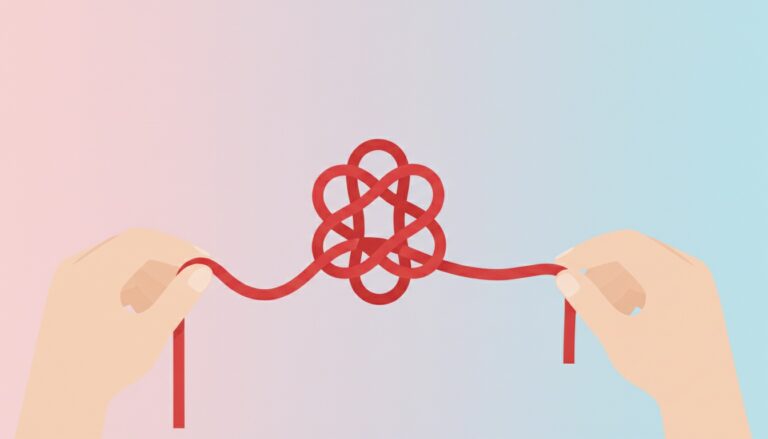
- Editor’s Insight: Korean views anger as a knot or a cramp that needs to be released or untied (pulda). You aren’t just asking if they are okay; you are asking if the tension is gone.
- Situation Spectrum:
[🚫 Boss] ———— [⚠️ Colleague] ———— [✅ Friend/Partner]- 🤔 Think About It: Why do you think Koreans use the verb “untie” for anger? Does your language treat emotions as physical objects like knots?
2. 아직도 삐졌어? (Ajikdo ppijyeoss-eo?)
- Pronunciation: [Ah-jik-do ppi-jyeoss-eo]
- Meaning: “Are you still sulking?”
- K-Culture Moment: K-Pop idols use this constantly with their members. It implies the anger is petty or cute, not life-ruining.
- Editor’s Insight: Warning! Use this only with very close friends or partners. If you say this to someone who is genuinely furious or someone older than you, you are pouring gasoline on the fire. It minimizes their feelings slightly.
- Situation Spectrum:
[🚫 Everyone Else] ———— [✅ Best Friend/Lover]3. 제 사과 받아주시는 거죠? (Je sagwa badajusineun geojyo?)
- Pronunciation: [Je sa-gwa ba-da-ju-si-neun geo-jyo]
- Meaning: “You are accepting my apology, right?”
- Editor’s Insight: This is polite but slightly presumptive. You are gently nudging them toward a “Yes.” It’s a soft way to confirm peace has been restored in a semi-formal setting.
- Situation Spectrum:
[🚫 Close Friend] ———— [✅ Colleague/Senior] ———— [🚫 CEO]
Phase 3: Textbook vs. Real Life
| Situation | 📖 Textbook Korean | 🗣️ Real Korean | 💡 Why different? |
|---|---|---|---|
| Checking if they are okay | 화가 풀리셨습니까? (Did your anger untie?) | 이제 괜찮아? (Okay now?) | The textbook version sounds like a robot or a historical drama servant. |
| Asking for forgiveness | 저를 용서해 주세요. (Please forgive me.) | 한번만 봐줘~ (Let it slide just this once~) | “Forgive” is too heavy for being late. “Look past it” is more social. |
| Still silent? | 왜 말이 없으세요? (Why do you have no words?) | 진짜 화났나 보네… (I guess you’re really mad…) | Koreans often talk to themselves out loud to prompt a reaction. |
Bottom Note: Unless you committed a crime, don’t use “용서” (forgiveness). It’s too dramatic for everyday mistakes.
Phase 4: Cultural Context — The Art of “Pula” (Untying)
4-1. The Knot of Anger
In the West, we might “get over” anger. In Korea, we “untie” (풀다) it. This implies that anger is a tangible blockage in the relationship flow. If you apologize but the other person doesn’t “untie” their feelings, the relationship is still blocked. This is why you’ll often see people buying food or drinks after a fight. Eating and drinking together is the fastest way to loosen that knot.
4-2. K-Food Connection: The “Soju” Summit
If you see a scene in a drama where two enemies are pouring Soju for each other at a Pojangmacha (tent bar), they are in the process of “untying.” You don’t ask “do you forgive me?” You just pour the drink. If they drink it, you’re forgiven. If they leave it on the table… run.
Phase 5: Roleplay — The “Late Again” Scenario
Setting: A cafe in Hongdae. Saturday afternoon. You are 30 minutes late. Again. Your friend Min-ji is sipping her iced Americano aggressively. She isn’t looking at you.
Characters:
– YOU: The chronically late friend.
– Min-ji: Your best friend, currently holding a grudge.
Dialogue:
YOU: (Sitting down breathlessly) 민지야! 진짜 미안해! 버스가 너무 안 왔어.
(Min-ji-ya! Jinjja mianhae! Beoseu-ga neomu an wass-eo.)
Min-ji! I’m so sorry! The bus just didn’t come.
Min-ji: (Staring at phone) …어, 왔어?
(…Eo, wass-eo?)
…Oh, you’re here?
(🎭 Stage Direction: Her voice is -50 degrees Celsius.)
YOU: 커피 내가 살게! 진짜… 많이 기다렸지?
(Keopi naega salge! Jinjja… mani gidaryeotji?)
I’ll buy the coffee! You waited a long time, right?
Min-ji: (Sighs) 됐어. 이미 마셨어.
(Dwaesseo. Imi masyeosseo.)
Forget it. I already drank.
🔀 Decision Point! Min-ji is still cold. How do you check if she’s okay?
– A) “야~ 아직도 삐졌어?” (Hey~ Are you still sulking?)
– B) “화 풀릴 때까지 내가 다 쏠게!” (I’ll treat you until your anger unties!)
– C) “왜 말을 그렇게 해?” (Why are you talking like that?)✅ Best Choice: B. Bribery with food/money is the most effective way to show sincerity in Korea. It acknowledges her anger (“until it unties”) and offers a solution.
⚠️ Choice A Analysis: Risky. If she’s actually mad, calling it “sulking” (삐지다) might annoy her more.
Phase 6: 10-Second Shadowing Drill
Let’s practice the “Magic Fix” sentence. Use this when you want to bridge the gap.
Sentene: “Don’t be mad anymore, I’ll do better!”
🥺 (Cute/Sincere) 이제 / 화 풀어요 / 제가 / 더 / 잘할게요! (ije / hwa pureoyo / jega / deo / jalhalgeyo!)
Key: Stretch the “yoooo” (요) slightly at the end to sound softer.
Phase 7: K-Culture Glossary
| Korean | Rom | English | Context |
|---|---|---|---|
| 뒤끝 | Dwikkeut | Grudge / Aftertaste | Literally “the end.” If someone has “no dwikkeut,” they don’t hold grudges after a fight. |
| 밀당 | Mildang | Push and pull | The psychological game of playing hard to get. Often happens during apologies too. |
| 홧김에 | Hwatgime | In a fit of anger | Doing something impulsive because you were mad (and regretting it later). |
| 눈치 | Nunchi | Social intuition | The essential skill needed to know when to apologize. |
Phase 8: Traveler’s Survival Kit
If you accidentally bump into someone on the subway or spill water in a restaurant, don’t overthink “forgiveness.” Just do this.
🆘 Survival Expression: The “Are You OK?” Combo
– 🇰🇷 “죄송합니다, 괜찮으세요?” (Joesong-hamnida, gwaenchaneuseyo?)
– 🗣️ Sounds like: Jay-song-ham-ni-da, gwen-chan-u-say-yo?
– 📍 Where: Anywhere you make a physical mistake.
– 💡 Pro Tip: Don’t just say sorry. Asking “Are you okay?” is the key to showing you care about the consequence of your mistake, not just your own embarrassment.
Phase 9: Think Deeper — “Dwikkeut” (The Aftertaste)
Food and Identity:
Koreans often talk about “Dwikkeut” (뒤끝). It literally means the “aftertaste” of a drink or food, but in relationships, it means “holding a grudge.” There is a societal pressure in Korea to be “cool” (쿨하다) and have no “dwikkeut.” Once the apology drink is consumed, the fight is supposed to be erased from history.
🧠 Think Deeper: Does your culture value “erasing” the conflict quickly, or is it normal to bring up past mistakes later? Is “forgiving and forgetting” considered a virtue or a weakness?
Phase 10: FAQ & Troubleshooting
Q: Can I use Aegyo (acting cute) to fix a mistake?
A: Only if you are: 1. Younger, 2. Very close to the person, and 3. The mistake is small (like being late or forgetting a snack). If you crashed your dad’s car or lost a client’s file, acting cute will get you in serious trouble.
Q: They said “It’s okay” (괜찮아), but they aren’t smiling. Are they okay?
A: Probably not. This is where Nunchi comes in. In Korea, “It’s okay” often means “I don’t want to fight anymore, but I’m still annoyed.” Give them space or offer a small gift (coffee/snacks).
❌ Common Mistake: Asking “Why are you mad?” (왜 화났어?) immediately.
✅ Better Way: Ask “Did I make a mistake?” (내가 실수한 거 있어?) first. It lowers their defense.
Phase 11: Wrap-up & Action Items
Summary: Checking if an apology is accepted is about “untying” (pulda) the knot of anger, not just exchanging words.
Action Mission:
– 🥉 Bronze: Look in the mirror and practice the “Cute/Sincere” shadowing sentence.
– 🥈 Silver: Watch a K-Drama scene where a couple fights. Watch for the moment they start eating or drinking together. That’s the reconciliation.
– 🥇 Gold: Next time you are late for a meeting with a Korean friend, don’t just say sorry. Buy them a convenience store drink and say, “This is for you. Hwa pureoyo (Untie your anger)!”
💬 Your Turn: How do you say “Let’s make up” in your language? Tell me in the comments!
Phase 12: Quiz — Will They Forgive You?
Situation: You forgot your Korean friend’s birthday yesterday. You text them today. They reply with “ㅇㅇ” (Short for “Okay”).
- Is the friend happy?
a) Yes, they said okay.
b) No, “ㅇㅇ” is too short. They are definitely annoyed. -
What is the best follow-up?
a) “Great! See you later!”
b) “Are you sulking?”
c) “I’m so sorry! I’m sending you a chicken coupon right now!”
Answers:
1. (b) In Korean texting, length = politeness/warmth. “ㅇㅇ” is cold.
2. (c) Immediate material compensation (Chicken) is the safest way to survive this.
Frequently Asked Questions (FAQ)
Q: What does "화 풀렸어? (Hwa pul-ryeoss-eo?)" mean in Korean and how do you pronounce it?
A: In Korean, "화 풀렸어? (Hwa pul-ryeoss-eo?)" is pronounced [Hwa pul-ryeoss-eo] and means: "Has your anger untied?" (Literal) / "Are you not mad anymore?" (Real nuance)
Q: What does "아직도 삐졌어? (Ajikdo ppijyeoss-eo?)" mean in Korean and how do you pronounce it?
A: In Korean, "아직도 삐졌어? (Ajikdo ppijyeoss-eo?)" is pronounced [Ah-jik-do ppi-jyeoss-eo] and means: "Are you still sulking?"
Q: What does "제 사과 받아주시는 거죠? (Je sagwa badajusineun geojyo?)" mean in Korean and how do you pronounce it?
A: In Korean, "제 사과 받아주시는 거죠? (Je sagwa badajusineun geojyo?)" is pronounced [Je sa-gwa ba-da-ju-si-neun geo-jyo] and means: "You are accepting my apology, right?"







