

Phase 1: Greeting & Introduction
“Is Korea just K-Pop and neon lights?”
안녕하세요! This is your Lead Editor at Daily Hangul.
Today, we are stepping away from the bustling streets of Hongdae and stepping into a topic that shows you truly understand Korean society on a deep, C1 level: Social Inequality and Welfare.
Imagine you are watching the evening news or discussing current affairs with your Korean colleagues. The topic of the ‘Welfare Blind Spot’ (복지 사각지대) comes up. If you only nod and smile because the vocabulary is too hard, you miss a chance to connect on a human level.
This lesson isn’t just about words; it’s about having the emotional intelligence to discuss those who are left behind in a rapidly developing society. Let’s learn how to express empathy and social responsibility like a true intellectual.
Phase 2: Deep Dive into Core Expressions
Here are the top 3 expressions that will take your Korean from “Tourist” to “Sociologist.”
1. 복지 사각지대 (Welfare Blind Spot)
- Pronunciation:
[Bok-ji Sa-gak-ji-dae]
- Tip: The ‘k’ in Bok and Gak is a sudden stop, like a hiccup. Jji is strong and sharp.
- Meaning:
- Literal: Welfare dead angle (like the blind spot in a car’s side mirror).
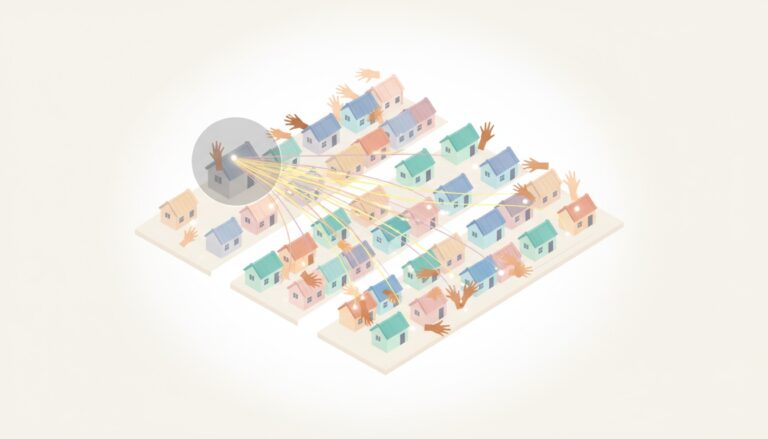
- Real Nuance: Areas or groups of people who desperately need help but are missed by the government’s support system.
- Editor’s Insight: This is the #1 keyword in Korean social news. Using this shows you understand that systems aren’t perfect.
- Situation Check: 💼 Formal / News / Serious Discussions.
2. 발굴하다 (To Excavate / To Discover)
- Pronunciation:
[Bal-gul-ha-da]
- Tip: Bal sounds like ‘Ball’, Gul sounds like ‘Ghoul’.
- Meaning:
- Literal: To dig up artifacts (archaeology).
- Real Nuance: In a welfare context, it means actively seeking out people who are hiding in poverty or isolation.
- Editor’s Insight: We don’t just “find” (찾다) them; we “excavate” (발굴하다) them because they are often hidden from society’s view due to shame or isolation.
- Situation Check: 💼 Formal / Administrative.
3. 촘촘한 안전망 (Tight/Dense Safety Net)
- Pronunciation:
[Chom-chom-han An-jeon-mang]
- Tip: Chom sounds like ‘Chomp’ without the ‘p’.
- Meaning:
- Literal: A safety net with very small holes.
- Real Nuance: A comprehensive social security system that ensures no one falls through the cracks.
- Editor’s Insight: Use this when proposing a solution. “We need a tighter net.”
- Situation Check: 💼 Formal / Policy suggestion.
Phase 3: Textbook vs. Real Life
At the C1 level, you must distinguish between “Standard” and “Sophisticated.”
| Textbook Korean (Standard) | Real Advanced Korean (Sophisticated) |
|---|---|
| 가난한 사람들을 찾아야 해요. (We need to find poor people.) |
소외 계층을 적극적으로 발굴해야 합니다. (We need to actively discover marginalized groups.) |
| 정부의 도움이 필요합니다. (Government help is needed.) |
행정력의 손길이 미치지 못하는 곳이 있습니다. (There are places where administrative power fails to reach.) |
| 혼자 사는 노인들을 돌봐야 해요. (We must take care of elders living alone.) |
독거노인에 대한 모니터링을 강화해야 합니다. (We must strengthen monitoring for the solitary elderly.) |
Note: The expressions on the right give you an air of professionalism and authority.
Phase 4: Cultural Context & Manners
The Culture of “Nunchi” and Pride
In Korea, poverty often carries a deep sense of shame (체면 – Face/Reputation). Many elderly people in the ‘blind spot’ will refuse help even if they are starving because they don’t want to become a burden (민폐) to their neighbors or children.
- Non-verbal Tip: When discussing this topic, keep your tone grave and empathetic. Do not smile brightly. Use a lower pitch.
- The “Yakult Lady” System: Interestingly, Korea uses Yakult (yogurt drink) delivery ladies as unofficial social workers. If the yogurt pile up at a door, they report it. This is a classic example of “Life-friendly Welfare” (생활밀착형 복지). Mentioning this will impress any Korean!
Phase 5: Real-Life Scenario
Setting: A community center (주민센터) meeting. A foreign resident representative is talking to a Korean social worker.
- Cast:
- Mark (You): Foreign resident representative.
- Ms. Choi: Social Worker Team Leader.
Dialogue:
(Mark looks at the map on the wall with a serious face)
- Mark: 팀장님, 서류상으로는 문제가 없지만 실제로는 힘든 분들이 많을 것 같습니다.
- (Ms. Choi, on paper there are no issues, but in reality, there seem to be many struggling people.)
- Ms. Choi: 맞아요. 그게 바로 우리가 말하는 복지 사각지대예요.
- (That’s right. That is exactly the welfare blind spot we talk about.)
- Mark: 단순히 기다리지 말고, 통장님들과 협력해서 위기가구를 발굴하는 건 어떨까요?
- (Instead of just waiting, how about cooperating with the Tong-jangs [neighborhood heads] to excavate [identify] households in crisis?)
- Ms. Choi: (Nods impressed) 좋은 생각이에요. 더 촘촘한 안전망을 만들 수 있겠네요.
- (Good idea. We could build a tighter safety net.)
Phase 6: 10-Second Shadowing
Let’s practice a sentence you can use to summarize your opinion.
“Our goal / is to ensure / no neighbor is left behind / in the blind spot.”
Korean:
우리의 목표는 / 어떤 이웃도 / 복지 사각지대에 / 방치되지 않도록 하는 것입니다.
Pronunciation Guide:
U-ri-ui mok-pyo-neun / eo-tteon i-ut-do / bok-ji sa-gak-ji-dae-e / bang-chi-doe-ji an-to-rok ha-neun geo-sim-ni-da.
- Focus: Emphasize ‘방치’ (neglect) and ‘사각지대’ (blind spot).
Phase 7: FAQ & Troubleshooting
- Q: Can I use the word ‘발굴하다’ (excavate) when I lose my keys and find them?
- A: No! That sounds very strange. ‘발굴하다’ is for archaeological artifacts, hidden talents, or hidden social issues. For keys, just use ‘찾다’ (find).
- Q: Is this topic too heavy for a dinner party?
- A: Yes. Avoid this at a fun chimac (chicken & beer) party. Use this in serious discussions, debates, or when watching the news with close friends.
Phase 8: Wrap-up
One-Liner Summary:
Don’t just look at the system; look for the “Welfare Blind Spot” (복지 사각지대) where the system fails.
Your Mission:
Next time you see a news headline with “사각지대,” try to read the full sentence. Or, ask a Korean friend, “요즘 복지 사각지대 문제가 심각하다면서요?” (I heard the welfare blind spot issue is serious these days?) and watch their jaw drop at your fluency.
Phase 9: Pop Quiz
1. Which word best fills the blank?
“We need to _______ hidden households in crisis.”
(위기 가구를 _______ 해야 합니다.)
A) 쇼핑 (Shopping)
B) 발굴 (Excavation/Discovery)
C) 여행 (Travel)
2. What does ‘촘촘한 안전망’ mean metaphorically?
A) A fishing net for catching tuna.
B) A detailed and thorough social support system.
C) A literal safety net for construction sites.
3. True or False:
Using formal terms like ‘소외 계층’ (marginalized class) is appropriate when talking to a close friend about a funny K-Drama.
(True / False)
(Answers: 1. B, 2. B, 3. False)
Frequently Asked Questions (FAQ)
Q: What does "복지 사각지대 (Welfare Blind Spot)" mean in Korean and how do you pronounce it?
A: In Korean, "복지 사각지대 (Welfare Blind Spot)" is pronounced [Bok-ji Sa-gak-ji-dae] and means: a key conversational Korean expression covered in this lesson.
Q: What does "발굴하다 (To Excavate / To Discover)" mean in Korean and how do you pronounce it?
A: In Korean, "발굴하다 (To Excavate / To Discover)" is pronounced [Bal-gul-ha-da] and means: a key conversational Korean expression covered in this lesson.
Q: What does "촘촘한 안전망 (Tight/Dense Safety Net)" mean in Korean and how do you pronounce it?
A: In Korean, "촘촘한 안전망 (Tight/Dense Safety Net)" is pronounced [Chom-chom-han An-jeon-mang] and means: a key conversational Korean expression covered in this lesson.







