

Phase 1: Introduction
Hello! This is your Senior Editor at Daily Hangul.
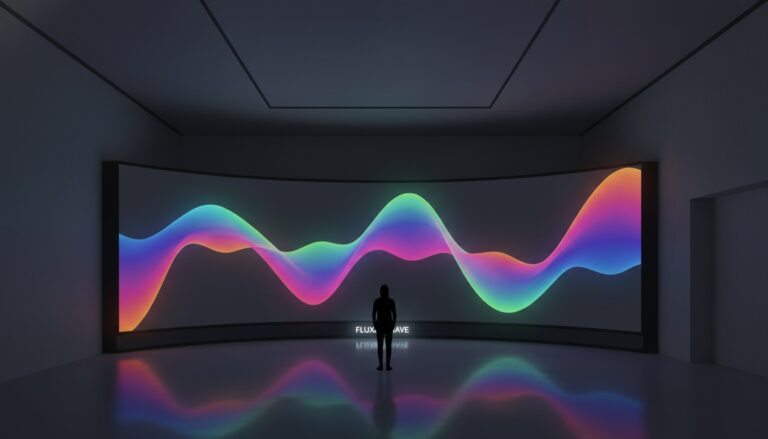
Imagine you are at the MMCA (National Museum of Modern and Contemporary Art) in Seoul or the Leeum Museum of Art. You are standing in front of a massive, glowing media art installation. Your Korean friend turns to you and asks, “How does this make you feel?”
If your answer is stuck at “Wow, it’s big” or “It’s beautiful,” you might feel a bit frustrated. As an advanced learner (C1), you want to express nuance—the overwhelming scale, the confusing yet intriguing abstractness, or the immersive quality of the sound.
Modern art, especially Installation Art (설치 미술) and Media Art (미디어 아트), requires a specific vocabulary set to truly sound like an intellectual “insider.” Don’t worry—even Koreans find modern art difficult! Today, I’ll give you the words to articulate your artistic sensibilities perfectly.
Phase 2: Deep Dive into Core Expressions
Here are the top three expressions to elevate your art critique.
1. 압도적이다 (To be overwhelming/commanding)
- Pronunciation: [Ap-do-jeok-i-da] Sounds like ‘Up-do’ + ‘jug’ (like a water jug) + ‘ee-da’.
- Meaning: Literally “overwhelming.” It describes something so grand in scale or atmosphere that it dominates your senses.
- Editor’s Insight: Use this for massive media art walls (like the famous ‘Wave’ at COEX) or room-filling installations. It’s a compliment about the power of the artwork.
- Situation Check: Perfect for both casual chats and formal discussions.
2. 난해하다 (To be abstruse/esoteric/hard to understand)
- Pronunciation: [Nan-hae-ha-da] Note: The ‘h’ is soft. It flows like ‘Nan-ae-ha-da’.
- Meaning: A sophisticated way of saying “I don’t get it.” Instead of saying “몰라요” (I don’t know), which sounds ignorant, this suggests the work itself is deep and complex.
- Editor’s Insight: If you stare at a pile of bricks in a gallery and don’t know why it’s art, say, “약간 난해하네요” (It’s a bit abstruse). It makes you sound thoughtful, not clueless.
- Situation Check: Very common in the art world.
3. 몰입감 (Sense of immersion)
- Pronunciation: [Mo-rip-gam] ‘Mol’ (rhymes with mole) + ‘lip’ + ‘gam’ (like gum but with an ‘a’).
- Meaning: Immersion. Crucial for media art.
- Editor’s Insight: You usually say “몰입감이 뛰어나다” (The immersion is outstanding) or “몰입감이 장난 아니다” (The immersion is no joke).
Phase 3: Textbook vs. Real Life
Let’s upgrade your vocabulary from standard textbook Korean to what people actually say at an exhibition opening in Hannam-dong.
| Textbook (Standard) | Real Life (Trendsetter/Native) |
|---|---|
| 이 작품은 정말 큽니다. (This work is very big.) |
스케일이 압도적이네요. (The scale is overwhelming.) |
| 이해하기 어렵습니다. (It is hard to understand.) |
심오해서 좀 난해하네요. (It’s profound, so it’s a bit abstruse.) |
| 음향 효과가 좋습니다. (The sound effects are good.) |
사운드 덕분에 몰입감이 확 사네요. (The immersion really comes alive thanks to the sound.) |
Bottom Note: At the C1 level, mixing English loanwords like “스케일” (scale), “바이브” (vibe), and “텍스처” (texture) naturally into your sentences is very common in the Korean art scene.
Phase 4: Cultural Context & Manners
The “Insa-shot” (인생샷) Culture
In Korea, exhibitions—especially media art ones—are often treated as prime photo spots. It is not considered rude to take photos in many modern galleries (unless specified). In fact, “Instagrammability” is a huge factor.
- Quiet Observation vs. Active Interaction: Traditional museums require silence, but for interactive media art, standing still might be weird. If there is a sensor, move around! Koreans call this “참여형 전시” (participatory exhibition).
- Nunchi Tip: If everyone is lining up to take a photo at a specific spot, don’t stand in front of the artwork for too long just looking at it. Take your photo or look quickly, then move aside. That’s Global Manner mixed with Korean Nunchi.
Phase 5: Real-Life Roleplay
Setting: A dark room featuring a projection mapping exhibit.
Characters: Alex (Foreigner, C1 level) and Minji (Korean Art Major friend).
Minji: 와, 여기 들어오니까 분위기가 확 달라지네.
(Wow, the atmosphere changes completely once we enter here.)
[Wa, yeogi deureoonikka bunwigiga hwak dallajine.]
Alex: 그러게. 영상이랑 음악이 어우러져서 몰입감이 장난 아니다.
(I know. The video and music blend together, so the immersion is no joke.)
[Geureoge. Yeongsangirang eumagi eoureojeoseo moripgami jangnan anida.]
Minji: 근데 저 패턴은 뭘 의미하는 걸까? 좀 어렵네.
(But what do those patterns mean? It’s a bit difficult.)
[Geunde jeo paeteoneun mwol uimihaneun geolkka? Jom eoryeomne.]
Alex: 작가의 의도는 난해하지만, 시각적으로는 확실히 압도적이야.
(The artist’s intention is abstruse, but visually, it’s definitely overwhelming.)
[Jakkaui uidoneun nanhaehajiman, sigakjeogureoneun hwaksilhi apdojeogiya.]
Minji: 오, 알렉스. 평론가 같은데? (웃음)
(Oh, Alex. You sound like a critic! laughs)
Phase 6: 10-Second Shadowing
Read this sentence aloud to practice flow and intonation. Focus on the pauses /.
“가상과 현실의 경계가 / 모호해지는 느낌이라 / 더 압도적인 것 같아요.”
- Translation: “It feels like the boundary between virtuality and reality is becoming blurred, so it seems even more overwhelming.”
- Pronunciation Focus:
- 경계가 [gyeong-gye-ga] (Double ‘g’ sound)
- 모호해지는 [mo-ho-hae-ji-neun] (Smooth ‘h’ sounds)
Phase 7: FAQ & Troubleshooting
- Q: Can I use “난해하다” to a generic difficult situation?
- A: Not really. If a math problem is hard, use “어렵다.” If a situation is awkward, use “곤란하다.” 난해하다 is reserved for abstract concepts, art, philosophy, or very confusing texts.
- Q: How do I ask if I can touch an installation?
- A: politely ask: “이거 만져봐도 되나요?” (Can I try touching this?) or check for the sign “눈으로만 봐 주세요” (Please look only with your eyes).
Phase 8: Wrap-up
One-Liner Summary:
Use 압도적이다 for scale, 난해하다 for complexity, and 몰입감 for the feeling of being inside the art.
Your Mission:
Next time you see a strange advertisement or a unique building design, tell your Korean friend: “디자인이 약간 난해한데?” (The design is a bit abstruse/odd, isn’t it?). Watch their surprised reaction!
Phase 9: Pop Quiz
Which word fits best in the blank?
“The sound system in this theater is amazing, so the ______ is incredible.”
(이 영화관은 사운드가 좋아서 ______이/가 뛰어나요.)
- 배신감 (Sense of betrayal)
- 몰입감 (Sense of immersion)
- 거리감 (Sense of distance)
(Check the answer by highlighting the text below!)
!Answer: 2. 몰입감!<
Frequently Asked Questions (FAQ)
Q: What does "압도적이다 (To be overwhelming/commanding)" mean in Korean and how do you pronounce it?
A: In Korean, "압도적이다 (To be overwhelming/commanding)" is pronounced [Ap-do-jeok-i-da] and means: Literally "overwhelming." It describes something so grand in scale or atmosphere that it dominates your senses.
Q: What does "난해하다 (To be abstruse/esoteric/hard to understand)" mean in Korean and how do you pronounce it?
A: In Korean, "난해하다 (To be abstruse/esoteric/hard to understand)" is pronounced [Nan-hae-ha-da] and means: A sophisticated way of saying "I don't get it." Instead of saying "몰라요" (I don't know), which sounds ignorant, this suggests the work itself is deep and complex.
Q: What does "몰입감 (Sense of immersion)" mean in Korean and how do you pronounce it?
A: In Korean, "몰입감 (Sense of immersion)" is pronounced [Mo-rip-gam] and means: Immersion. Crucial for media art.







