

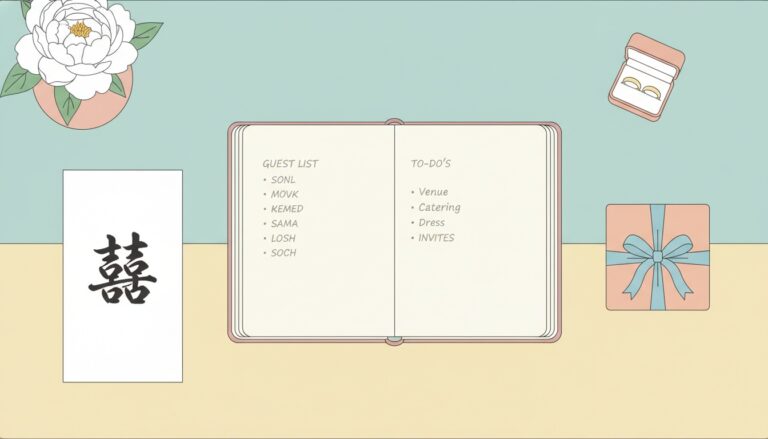
Post-Wedding Survival Guide: Mastering the Money Ledger (Chug-ui-geum)
Introduction
Hello, this is Daily Hangul!
The wedding ceremony is over, the makeup is off, but for Korean couples, the “real work” starts now. If you have married into a Korean family or are helping a close Korean friend, you might be shocked to see them open a thick notebook or an Excel sheet immediately after the honeymoon.
📁 Case Study: The “Excel Sheet” Shock (Synthetic Case)
(Note: This is a composite example based on common experiences shared by international spouses in Korea.)
Many foreign spouses report feeling confused when their Korean partner obsesses over the “Guest Book” (Bang-myeong-nok) and envelopes. One learner, “Mark,” mentioned he thought it was rude to count money so openly. However, in Korea, this isn’t just greed—it’s accounting. You are recording a “debt of gratitude” that you must repay when those guests get married or have funerals.
Why isn’t a simple “Thank you” enough? Because Korean weddings rely on Pumasi (Exchange of labor/help). Today, we will learn how to handle the delicate art of Chug-ui-geum (Congratulatory Money) and Dap-rye-pum (Return Gifts).
At a Glance
- Today’s Expressions: Essential terms for managing money and gratitude.
- Safe Zone: Use these when talking to your spouse, family, or wedding planner.
- Difficulty: High (C1-C2). These terms deal with money and social hierarchy, so nuance is critical to avoid sounding materialistic.
Table of Contents
- Today’s Key Expressions Deep Dive
- Textbook vs. Real Korean
- Analyzing the “Money Temperature”
- Real-Life Role Play
- Shadowing Challenge
- FAQ
Today’s Key Expressions Deep Dive
1. 축의금 정산하다 (To settle the congratulatory money)
- Romanization: Chug-ui-geum jeong-san-ha-da
- Meaning: To calculate and organize the wedding money.
📌 Usage & Register
* To whom: Spouse, parents, close family members.
* Tone: Serious and focused (Usually 해요 or 해 styles).
🤫 Tutor’s Secret Note
This is a sensitive time. Use this phrase when you are ready to sit down and do the math. Do not say this in front of guests. It sounds like you are only interested in the cash.
👄 Pronunciation Clinic
* [추귀금] (Chu-gwi-geum): The ‘의’ (ui) in 축의금 is often pronounced as ‘이’ (i) or ‘위’ (wi) in casual speech, making it sound like Chu-gi-geum or Chu-gwi-geum.
Examples:
1. “오늘 밤에 축의금 정산하자.” (O-neul bam-e chug-ui-geum jeong-san-ha-ja.)
* Let’s settle the wedding money tonight.
2. “식대 빼고 정산해 봤어?” (Sik-dae ppae-go jeong-san-hae bwas-seo?)
* Did you calculate it excluding the catering costs?
3. “부모님 거랑 우리 거랑 따로 정산해요.” (Bu-mo-nim geo-rang u-ri geo-rang tta-ro jeong-san-hae-yo.)
* Let’s calculate the parents’ portion and ours separately.
Alternatives:
* Formal: 장부를 정리하다 (Jang-bu-reul jeong-ri-ha-da) – To organize the ledger.
* Casual: 돈 계산하다 (Don gye-san-ha-da) – To count the money.
🧩 Mini Quiz (Click to see answer)
Q. Fill in the blank: “We need to check the list while doing the ______.”
“_____ 하면서 명단 확인해야 해.”
Answer: 정산 (Jeong-san)
2. 답례품을 돌리다 (To distribute return gifts)
- Romanization: Dap-rye-pum-eul dol-li-da
- Meaning: To send/give out gifts to thank people for coming (or sending money).
📌 Usage & Register
* To whom: Colleagues, friends, planning with spouse.
* Tone: Professional or friendly.
🤫 Tutor’s Secret Note
“돌리다” (Dol-li-da) literally means “to spin” or “to turn,” but here it means “to distribute to many people.” It implies a repetitive action of giving out the same item to a group (like an office).
👄 Pronunciation Clinic
* [담녜품] (Dam-nye-pum): Due to nasalization rules, ‘ㅂ’ becomes ‘ㅁ’ and ‘ㄹ’ becomes ‘ㄴ’. It is NOT Dap-rye.
Examples:
1. “회사에 답례품 언제 돌릴 거야?” (Hoe-sa-e dap-rye-pum eon-je dol-lil geo-ya?)
* When are you going to distribute return gifts at work?
2. “답례품으로 쿠키를 돌리는 게 무난해요.” (Dap-rye-pum-eu-ro ku-ki-reul dol-li-neun ge mu-nan-hae-yo.)
* It’s safe/standard to distribute cookies as return gifts.
3. “휴가 다녀와서 돌릴게요.” (Hyu-ga da-nyeo-wa-seo dol-lil-ge-yo.)
* I’ll distribute them after coming back from vacation.
Alternatives:
* Formal: 답례품을 보내다 (Dap-rye-pum-eul bo-nae-da) – To send return gifts.
* Fancy: 감사의 마음을 전하다 (Gam-sa-ui ma-eum-eul jeon-ha-da) – To convey a heart of gratitude.
🧩 Mini Quiz (Click to see answer)
Q. True or False: “돌리다” in this context means you are physically spinning the gifts.
Answer: False (It means to distribute.)
3. 빠뜨리다 (To omit/leave out accidentally)
- Romanization: Ppa-tteu-ri-da
- Meaning: To miss someone on the list; to forget.
📌 Usage & Register
* To whom: Self-reflection or checking with partner.
* Tone: Worried or checking thoroughly.
🤫 Tutor’s Secret Note
This is the biggest fear in Korean networking. If someone gave you money but you “빠뜨렸다” (missed) sending a thank-you message or gift, the relationship could turn cold immediately.
Examples:
1. “혹시 명단에서 빠뜨린 사람 없어?” (Hok-si myeong-dan-e-seo ppa-tteu-rin sa-ram eop-seo?)
* Is there anyone we missed on the list by chance?
2. “김 부장님을 빠뜨릴 뻔했어!” (Kim bu-jang-nim-eul ppa-tteu-ril ppeon-haes-seo!)
* I almost forgot Manager Kim!
3. “실수로 감사 인사를 빠뜨렸어요.” (Sil-su-ro gam-sa in-sa-reul ppa-tteu-ryeos-seo-yo.)
* I accidentally omitted the thank-you message.
Textbook vs. Real Korean
Situation: Discussing the money received.
| Type | Expression | Romanization | Nuance |
|---|---|---|---|
| Book Korean | 축의금을 많이 받았어요. | Chug-ui-geum-eul ma-ni bad-as-seo-yo. | Grammatically correct, but sounds like a kid counting allowance. |
| Real Korean | 생각보다 많이 들어왔어. | Saeng-gak-bo-da ma-ni deur-eo-was-seo. | “It came in more than expected.” Uses ‘came in’ (passive flow) which sounds more sophisticated for funds. |
| Book Korean | 누구한테 줄까요? | Nu-gu-han-te jul-kka-yo? | “Who shall we give to?” (Too simple). |
| Real Korean | 누구누구 챙겨야 해? | Nu-gu-nu-gu chaeng-gyeo-ya hae? | “Who do we need to take care of?” Implies looking after relationships, not just handing over things. |
Exclusive Analysis: The “Money & Gift” Etiquette Table
How do you decide the value of the Dap-rye-pum (Return Gift)? It depends on the relationship and whether they attended.
| Guest Type | Attendance | Gift Strategy | Typical Item |
|---|---|---|---|
| VIP (Close Family) | Yes | Separate expensive gift | Beef set, Ginseng, Luxury bedding |
| Office Colleague | No (Sent money) | Mass distribution | Cookies, Traditional Tea, Hand soap |
| Friend | Yes | Meal provided at wedding | No extra gift needed (Meal = Gift) |
| Close Friend | Yes (+ Big money) | Housewarming invite | Dinner at home + Alcohol |
Note: If someone sent a LOT of money (e.g., $300+) but couldn’t come, sending a $10 cookie set might be considered weak. You might send a mobile coupon (Starbucks/Chicken) individually.
Real-Life Role Play
Scenario: A newlywed couple, Min-su (Korean) and Sarah (Foreigner), are sitting in their living room with the wedding ledger.
Min-su: “자, 이제 슬슬 축의금 정산해 볼까?”
(Ja, i-je seul-seul chug-ui-geum jeong-san-hae bol-kka?)
Okay, shall we start settling the wedding money now?
Sarah: “응, 엑셀 파일 열었어. 김 차장님은 얼마 하셨어?”
(Eung, ek-sel pa-il yeor-eos-seo. Kim cha-jang-nim-eun eol-ma ha-syeos-seo?)
Yeah, I opened the Excel file. How much did Deputy General Manager Kim give?
Min-su: “10만 원. 근데 식사는 안 하고 가셨네.”
(Sip-man won. Geun-de sik-sa-neun an ha-go ga-syeon-ne.)
100,000 won. But he left without eating.
Sarah: “그럼 답례품을 따로 챙겨 드려야겠다. 와인 어때?”
(Geu-reom dap-rye-pum-eul tta-ro chaeng-gyeo deu-ryeo-ya-get-da. Wa-in eo-ttae?)
Then we should take care of him with a separate return gift. How about wine?
Min-su: “좋아. 아, 혹시 명단에서 빠뜨린 사람은 없는지 잘 봐줘.”
(Jo-a. A, hok-si myeong-dan-e-seo ppa-tteu-rin sa-ram-eun eom-neun-ji jal bwa-jwo.)
Good. Ah, please check carefully to make sure there’s no one we missed on the list.
🎭 Culture Tip:
Notice Sarah suggested a gift because the guest gave a decent amount (100k) but did not eat. The meal cost (usually 50k-80k) was saved, so it’s polite to return that value in a gift.
Shadowing & Speaking Challenge
Imagine you are sending a text to a colleague who sent money but couldn’t attend.
- Script: “바쁘신데 축하해 주셔서 감사합니다. 답례품으로 약소하지만 쿠키를 준비했습니다.”
- Romanization: Ba-ppeu-sin-de chu-ka-hae ju-syeo-seo gam-sa-hap-ni-da. Dap-rye-pum-eu-ro yak-so-ha-ji-man ku-ki-reul jun-bi-haet-seum-ni-da.
- Meaning: Thank you for congratulating me despite being busy. As a return gift, I prepared some cookies, though it’s small.
Checklist:
– [ ] Say it slowly (Focus on ‘Dap-rye-pum’).
– [ ] Say it at normal speed.
– [ ] Record yourself and check the ‘Dam-nye-pum’ pronunciation.
FAQ (Frequently Asked Questions)
Q1: Can I just ignore the ledger if I’m a foreigner?
A: Your spouse can’t. In Korea, the ledger is basically a “loan record.” Your parents-in-law will use it to know exactly how much to pay back when those guests have events. It’s crucial family data.
Q2: What is “식권” (Sik-gwon)?
A: It’s a “Meal Ticket.” You give this to guests who bring money. If they don’t take a meal ticket, you usually owe them a Dap-rye-pum.
* Ex: “식권 받으셨어요?” (Sik-gwon bad-eu-syeos-seo-yo? – Did you receive a meal ticket?)
Wrap-up & Action Item
Wedding prep doesn’t end until the last “Thank You” text is sent! Today we learned how to calculate the money (Jeong-san) and distribute gifts (Dap-rye-pum).
🚀 Today’s Mission:
If you have a Korean friend who recently got married, send them a message: “정산하느라 고생이 많지?” (You’re working hard settling the accounts, right?). They will be amazed by your empathy!
💬 Comment below:
In your country, do you keep a record of who gave what gift? Or is it considered rude? Tell me in the comments!
Final Quiz
- What is the correct pronunciation of 답례품 (Return Gift)?
a) Dap-rye-pum
b) Dam-nye-pum
c) Dal-le-pum -
Which verb is best used with 장부 (Ledger) or 축의금 (Money) when organizing it?
a) 요리하다 (To cook)
b) 정산하다 (To settle/calculate)
c) 운동하다 (To exercise) -
Fill in the blank: “Don’t _____ anyone on the list!”
“명단에서 사람을 _____지 마!”
Answers:
1. b) Dam-nye-pum
2. b) 정산하다
3. 빠뜨리 (Ppa-tteu-ri)
Frequently Asked Questions (FAQ)
Q: What does "축의금 정산하다 (To settle the congratulatory money)" mean in Korean and how do you pronounce it?
A: In Korean, "축의금 정산하다 (To settle the congratulatory money)" is pronounced [see lesson guide] and means: To calculate and organize the wedding money.
Q: What does "답례품을 돌리다 (To distribute return gifts)" mean in Korean and how do you pronounce it?
A: In Korean, "답례품을 돌리다 (To distribute return gifts)" is pronounced [see lesson guide] and means: To send/give out gifts to thank people for coming (or sending money).
Q: What does "빠뜨리다 (To omit/leave out accidentally)" mean in Korean and how do you pronounce it?
A: In Korean, "빠뜨리다 (To omit/leave out accidentally)" is pronounced [see lesson guide] and means: To miss someone on the list; to forget.







