

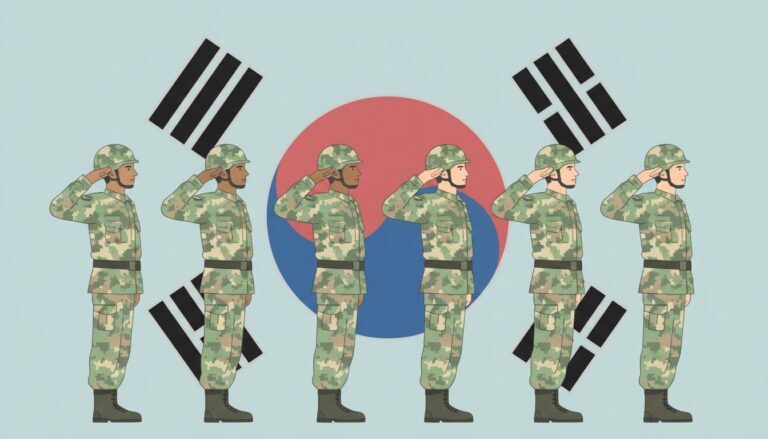
The Changing Face of Korea: When “Different” Becomes “Us”
Introduction
Hello, this is Daily Hangul!
When you think of Korea, do you still picture a homogeneous society? Think again! Today, we are diving into a slightly heavier but incredibly meaningful topic: The rise of multicultural families (다문화 가정) and their children entering the military and the workforce.
We often receive questions from long-term residents about deep social issues. Since we don’t have a specific user story for today, I’ve created a “Composite Case” (합성 사례) based on interviews with actual multicultural youths preparing for their mandatory military service.
Meet “Leo.” He was born in Korea to a Korean father and a Vietnamese mother. He looks slightly different, but his Korean is perfect. Now, at 20, he faces the biggest rite of passage for Korean men: The Army.
Why learn this? Because if you want to reach Advanced (C1/C2) levels, you need to understand the language of social issues, identity, and integration.
At a Glance: Today’s Summary
- Key Expressions: Vocabulary related to duty, overcoming prejudice, and belonging.
- Safety Level: These are formal/serious expressions suitable for discussions, news, or deep conversations with close Korean friends.
- Difficulty: High (C1). We are moving beyond “Where is the bathroom?” to “What does it mean to be Korean?”
Table of Contents
- Today’s Key Expressions Deep Dive
- Textbook vs. Real Korean: The Nuance of “Us”
- Unique Analysis: 다르다 (Different) vs. 틀리다 (Wrong)
- Real Scenario Role Play: In the Barracks
- Shadowing Challenge
- FAQ: Military & Dual Citizenship
- Final Quiz
Today’s Key Expressions Deep Dive
1. 입대하다 (Ip-dae-ha-da)
Meaning: To enlist in the military / army
Usage & Register:
* Who: Used in news, formal discussions, or when stating the fact of joining the army seriously.
* Tone: Formal (Haeyo-che / Hamnida-che).
Tutor’s Secret Note:
While friends say “군대 가다” (go to the army), 입대하다 sounds much more official and respectable. Using this word shows you understand the gravity of the duty.
* Warning: Do not use this for casual trips! You cannot “입대” to a summer camp.
Pronunciation Clinic:
* [입때하다 / Ip-ttae-ha-da]: The ‘ㄷ’ becomes a tense sound (ㄸ) because of the ‘ㅂ’ patchim before it.
Examples:
1. (News) 올해 다문화 장병의 수가 크게 늘었습니다.
* Ol-hae da-mun-hwa jang-byeong-ui su-ga keu-ge neu-reot-seum-ni-da.
* The number of multicultural soldiers increased significantly this year.
2. (Conversation) 제 친구 레오가 다음 달에 입대해요.
* Je chin-gu Re-o-ga da-eum da-re ip-dae-hae-yo.
* My friend Leo is enlisting next month.
3. (Formal) 입대 전 준비해야 할 서류가 많습니다.
* Ip-dae jeon jun-bi-hae-ya hal seo-ryu-ga man-seum-ni-da.
* There are many documents to prepare before enlistment.
Alternatives:
* Formal: 복무하다 (Bong-mu-ha-da) – To serve (in the military).
* Casual: 군대 가다 (Gun-dae ga-da) – To go to the army.
Mini Quiz (Click to see answer)
Fill in the blank: “Korean men must ______ in their 20s.”
한국 남자는 20대에 ______해야 합니다. (Answer: 입대)
2. 편견을 깨다 (Pyeon-gyeon-eul kkae-da)
Meaning: To break (overcome) prejudice
Usage & Register:
* Who: Used when discussing social changes, success stories, or personal struggles.
* Tone: Can be used in any register depending on the verb ending.
Tutor’s Secret Note:
Koreans often talk about “breaking” stereotypes rather than just “overcoming” them. It implies an active, forceful change. If you say this about a multicultural friend who is succeeding, it’s a huge compliment.
Pronunciation Clinic:
* [편견을 깨다]: Make sure to pronounce the double consonant ‘ㄲ’ (kkae) sharply. Don’t say ‘kae’ (dog).
Examples:
1. (Interview) 그는 실력으로 사람들의 편견을 깼어요.
* Geu-neun sil-ryeo-geu-ro sa-ram-deu-rui pyeon-gyeon-eul kkae-sseo-yo.
* He broke people’s prejudice with his sheer skill.
2. (Social) 아직 우리 사회에는 깨야 할 편견이 많아.
* A-jik u-ri sa-hoe-e-neun kkae-ya hal pyeon-gyeon-i ma-na.
* There are still many prejudices to break in our society.
3. (Self-talk) 저는 편견을 깨고 당당하게 살고 싶습니다.
* Jeo-neun pyeon-gyeon-eul kkae-go dang-dang-ha-ge sal-go sip-seum-ni-da.
* I want to break prejudice and live confidently.
Alternatives:
* Softer: 인식을 바꾸다 (In-si-geul ba-kku-da) – To change perception.
* More Formal: 고정관념을 타파하다 (Go-jeong-gwan-nyeom-eul ta-pa-ha-da) – To abolish stereotypes.
Mini Quiz (Click to see answer)
Fill in the blank: “Let’s ______ prejudice together!”
같이 편견을 ______! (Answer: 깨요 / 깹시다)
3. 녹아들다 (No-ga-deul-da)
Meaning: To blend in / To melt into (integrate)
Usage & Register:
* Who: Used to describe successful adaptation to a group or society without friction.
* Tone: Warm and metaphorical.
Tutor’s Secret Note:
Literally “to melt into.” This is a beautiful way to say someone has adapted well. Instead of just “surviving” (생존하다), they have become part of the mixture.
Pronunciation Clinic:
* [노가들다 / No-ga-deul-da]: Liaison rule! The ‘ㄱ’ moves to the next syllable.
Examples:
1. (Workplace) 그 신입사원은 팀에 빠르게 녹아들었어요.
* Geu si-nip-sa-wo-neun ti-me ppa-reu-ge no-ga-deu-reo-sseo-yo.
* That new employee blended into the team quickly.
2. (Society) 다문화 가정이 한국 사회에 잘 녹아들도록 도와야 해요.
* Da-mun-hwa ga-jeong-i Han-guk sa-hoe-e jal no-ga-deul-do-rok do-wa-ya hae-yo.
* We must help multicultural families blend well into Korean society.
3. (Vibe) 분위기에 자연스럽게 녹아드세요.
* Bu-nwi-gi-e ja-yeon-seu-reop-ge no-ga-deu-se-yo.
* Please blend naturally into the atmosphere.
Alternatives:
* Direct: 적응하다 (Jeo-gung-ha-da) – To adapt.
* Colloquial: 섞이다 (Seo-kki-da) – To mix.
Mini Quiz (Click to see answer)
Fill in the blank: “He ______ into the culture perfectly.”
그는 문화에 완벽하게 ______. (Answer: 녹아들었어요)
Textbook vs. Real Korean
Context: Describing someone from a multicultural background who speaks perfect Korean.
| Type | Expression (Korean/Romanization) | Nuance |
|---|---|---|
| Book Korean | 한국말을 잘하시네요. (Han-gung-ma-reul jal-ha-si-ne-yo) |
“You speak Korean well.” (Polite, but implies they are an outsider/foreigner). |
| Real Korean | 그냥 한국 사람이네! (Geu-nyang Han-guk sa-ra-mi-ne!) |
“You’re just a Korean!” (The highest compliment implying total acceptance). |
| Book Korean | 외국인입니까? (Oe-gu-gi-nim-ni-kka?) |
“Are you a foreigner?” (Factual, dry). |
| Real Korean | 혹시 혼혈이세요? (Hok-si hon-hyeo-ri-se-yo?) |
“Are you perhaps mixed-blood?” (Cautious asking. Note: Use carefully, context matters!) |
Unique Analysis: 다르다 vs. 틀리다
This is the #1 Mistake even native Koreans make when talking about diversity. Understanding this distinguishes an educated speaker.
The “Tone Thermometer” of Difference
| Level | Word | Meaning | Context | Appropriateness |
|---|---|---|---|---|
| Correct | 다르다 (Da-reu-da) | Different | “Your eyes are a different color than mine.” | ✅ Respectful. Acknowledges diversity. |
| Incorrect | 틀리다 (Teul-li-da) | Wrong | “Your eyes are wrong (implies different).” | ❌ Offensive (though often unintentional). Implies one is correct and the other is an error. |
Tutor’s Advice: If you hear a Korean say “너는 얼굴이 틀려” (Your face is wrong), they usually mean “different,” but it’s a bad habit. As a learner, if you use 다르다 correctly, you show respect for diversity.
Real Scenario Role Play: In the Barracks
Setting: An army base at night. Min-soo (Senior soldier) is talking to Leo (Junior soldier, multicultural background).
Min-soo: 레오야, 오늘 훈련 힘들지 않았어?
(Re-o-ya, o-neul hul-ryeon him-deul-ji a-na-sseo?)
(Leo, wasn’t the training hard today?)
Leo: 아닙니다! 조금 힘들었지만 괜찮습니다.
(A-nim-ni-da! Jo-geum him-deu-reot-ji-man gwaen-chan-seum-ni-da.)
(No, sir! It was a bit tough, but I’m okay.)
Min-soo: 너 진짜 한국말 나보다 잘하는 것 같아. 가끔 보면 그냥 한국 사람이야.
(Neo jin-jja Han-gung-mal na-bo-da jal-ha-neun geot ga-ta. Ga-kkeum bo-myeon geu-nyang Han-guk sa-ra-mi-ya.)
(You really seem to speak Korean better than me. Sometimes I look at you and you’re just a Korean.)
Leo: 감사합니다. 저도 여기서 동기들이랑 지내는 게 제일 편합니다.
(Gam-sa-ham-ni-da. Jeo-do yeo-gi-seo dong-gi-deu-ri-rang ji-nae-neun ge je-il pyeon-ham-ni-da.)
(Thank you. I also feel most comfortable hanging out with my squadmates here.)
Min-soo: 그래, 우린 다 같은 군인이니까. 푹 쉬어라.
(Geu-rae, u-rin da ga-teun gu-ni-ni-ni-kka. Puk swi-eo-ra.)
(Yeah, we are all the same soldiers anyway. Rest well.)
Culture Tip: In the military, rank defines everything. However, the phrase “우린 다 같은 군인” (We are all the same soldiers) is a powerful equalizer that removes ethnic barriers.
Shadowing Challenge
Goal: Speak with conviction about identity. Repeat 3 times.
“생김새는 조금 다를 수 있지만, 저도 대한민국을 지키는 자랑스러운 군인입니다.”
Romanization:
Saeng-gim-sae-neun jo-geum da-reul su it-ji-man, jeo-do Dae-han-min-gu-geul ji-ki-neun ja-rang-seu-reo-un gu-ni-nim-ni-da.
Meaning:
“My appearance might be a little different, but I am also a proud soldier protecting the Republic of Korea.”
Checklist:
* [ ] Pronounced 생김새 (Saeng-gim-sae) clearly?
* [ ] Did not confuse 다르다 with 틀리다?
* [ ] Felt the pride in the word 자랑스러운 (Proud)?
FAQ: Questions You Might Be Afraid to Ask
Q1: Do dual citizens HAVE to join the Korean army?
A: Generally, yes. If a male holds Korean citizenship (even if he has another one), he must choose to either serve in the military or renounce Korean citizenship by age 18. If he keeps it, 국방의 의무 (Guk-bang-ui ui-mu – Duty of national defense) applies.
Q2: Is “Damunhwa” (Multicultural) a bad word?
A: Not officially, but some people dislike being labeled. They prefer just being called Korean. Use the term carefully.
* Ex: 그냥 한국 사람으로 봐주세요. (Please just see me as a Korean person.)
Wrap-up & Action Item
Today we explored how Korean society is becoming more diverse and how language reflects that integration.
Today’s Mission:
Next time you watch a Korean drama or news clip featuring a non-ethnic Korean speaking fluent Korean, try to listen for the word “편견” (Prejudice) or “차별” (Discrimination). See how they address it!
Question for you:
Does your country have mandatory military service? How does that affect society? Tell me in the comments!
Final Quiz
- Which word means “to enlist in the military” formally?
a) 입학하다
b) 입대하다
c) 입국하다 -
What is the correct word for “Different” (not Wrong)?
a) 틀리다
b) 나쁘다
c) 다르다 -
Fill in the blank: To blend naturally into a group is called ______.
(Hint: Starts with ‘N’)
Answers: 1. (b), 2. (c), 3. 녹아들다 (No-ga-deul-da)
Frequently Asked Questions (FAQ)
Q: What does "생김새" mean in Korean and how do you pronounce it?
A: In Korean, "생김새" is pronounced [Saeng-gim-sae] and means: clearly?
Q: What does "국방의 의무" mean in Korean and how do you pronounce it?
A: In Korean, "국방의 의무" is pronounced [Guk-bang-ui ui-mu - Duty of national defense] and means: applies.
Q: What does ""차별"" mean in Korean and how do you pronounce it?
A: In Korean, ""차별"" is pronounced [Discrimination] and means: . See how they address it!






