

Introduction
Hello, everyone! 😊 This is Daily Hangul, here to upgrade your Korean skills!
Have you ever watched a K-drama set in an office (like Misaeng or Start-Up) and noticed the tension between older bosses and young employees? Or maybe you’ve seen variety shows where idols struggle to understand older slang?
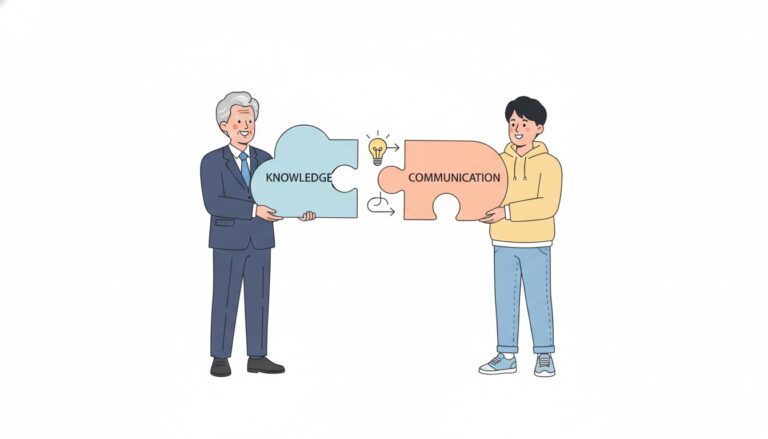
Today, we are going to talk about “Bridging the Generation Gap”! Learning a language isn’t just about grammar; it’s about connecting with people of all ages. To be a true master of Korean, Lifelong Learning (평생 학습) is key! Let’s learn how to talk about these differences and how to solve them. Ready? Let’s go! 🚀
Key Expressions
Here are 4 useful expressions to discuss generation gaps and communication!
1. 세대 차이 (Sedae chai)
- Pronunciation: [Se-dae-cha-i]
- Meaning: Generation gap
- Explanation: This is the most common word to describe the difference in thinking or lifestyle between generations. You often hear this when someone doesn’t understand a trend.
- 💡 Pronunciation Tip: Pronounce each syllable clearly. ‘Se’ sounds like the ‘se’ in ‘set’.
2. 소통하다 (Sotonghada)
- Pronunciation: [So-tong-ha-da]
- Meaning: To communicate
- Explanation: In Korean society, ‘Sotong’ is a buzzword! It implies not just talking, but truly understanding each other.
- 💡 Pronunciation Tip: The ‘t’ in ‘tong’ is an aspirated sound (ㅌ), so a small burst of air should come out. Think of the ‘t’ in ‘top’.
3. 신조어 (Sinjoeo)
- Pronunciation: [Sin-jo-eo]
- Meaning: New words / Slang / Neologisms
- Explanation: Language changes fast! Older generations often study ‘Sinjoeo’ to keep up with the younger generation.
- 💡 Pronunciation Tip: ‘Sin’ is short and crisp. ‘Jo-eo’ flows together smoothly.
4. 배우다 (Baeuda)
- Pronunciation: [Bae-u-da]
- Meaning: To learn
- Explanation: The core of our topic! Whether it’s K-pop dances or new words, we always need to ‘learn’ to stay young at heart.
- 💡 Pronunciation Tip: ‘Bae’ sounds like the ‘be’ in ‘bed’, not ‘bay’.
Real-life Conversation
Imagine a senior manager (Kim) and a new employee (Lee) talking during a coffee break. ☕
Manager Kim: 이 단어가 무슨 뜻이야? 정말 모르겠어.
(I daneoga museun tteusiya? Jeongmal moreugesseo.)
Meaning: What does this word mean? I really don’t know.
Employee Lee: 아, 이건 요즘 유행하는 신조어예요!
(Ah, igeon yojeum yuhaenghaneun sinjoeoyeyo!)
Meaning: Ah, this is a popular new slang these days!
Manager Kim: 역시 우리는 세대 차이가 나네.
(Yeoksi urineun sedae chaiga nane.)
Meaning: As expected, there is a generation gap between us.
Employee Lee: 아니에요! 저한테 배우시면 돼요. 우리 소통해요!
(Anieyo! Jeohante baeusimyeon dwaeyo. Uri sotonghaeyo!)
Meaning: No! You can learn from me. Let’s communicate!
Culture Tip: “Latte is Horse” 🐴☕
Have you heard the phrase “Latte is horse” (라떼는 말이야) in Korean variety shows?
It is a funny pun! Older people in Korea often start sentences with “나 때는 말이야…” (Na ttae-neun mariya…), which means “Back in my day…” when giving unwanted advice to younger people.
Since “Na ttae” sounds like “Latte”, and “mari” sounds like “horse” (mal), young Koreans jokingly say “Latte is horse” to tease older generations who are being a bit too preachy! Knowing this joke shows you really understand modern Korean culture! 😉
Conclusion & Quiz
Learning Korean is a lifelong journey! Don’t be afraid of the generation gap; use it as a chance to communicate and make new friends. Keep practicing!
📝 Mini Quiz
- How do you say “Generation gap” in Korean?
( ) - True or False: “Sotonghada” means only “to speak.”
( O / X ) - What is the funny Korean term for “Back in my day”?
( Latte is )
Answers:
1. 세대 차이 (Sedae chai)
2. X (It means “to communicate” or understand each other)
3. Horse (or 라떼는 말이야)
Frequently Asked Questions (FAQ)
Q: What does "세대 차이 (Sedae chai)" mean in Korean and how do you pronounce it?
A: In Korean, "세대 차이 (Sedae chai)" is pronounced [Se-dae-cha-i] and means: Generation gap
Q: What does "소통하다 (Sotonghada)" mean in Korean and how do you pronounce it?
A: In Korean, "소통하다 (Sotonghada)" is pronounced [So-tong-ha-da] and means: To communicate
Q: What does "신조어 (Sinjoeo)" mean in Korean and how do you pronounce it?
A: In Korean, "신조어 (Sinjoeo)" is pronounced [Sin-jo-eo] and means: New words / Slang / Neologisms
Q: What does "배우다 (Baeuda)" mean in Korean and how do you pronounce it?
A: In Korean, "배우다 (Baeuda)" is pronounced [Bae-u-da] and means: To learn







